Litter Removal Laws (and litter abatement orders)

A pile of takeaway wrappers gathers outside a shop every weekend. Someone keeps dropping cans behind the bins. By Monday, it looks like the place has “given up”, even if the staff haven’t.
In the UK, litter removal laws give councils powers to step in when land stays in a littered state. Sometimes that starts with a quiet word. Other times it becomes a formal notice, with a deadline. In more serious or long-running cases, a litter abatement order can bring the court into it.
The law says that if you drop litter, the council (or police) can fine you, as it’s a criminal offence under the Environmental Protection Act 1990, either with a fixed penalty notice (from £100 to £500) with more for vehicle littering. If not paid, you can get a maximum fine of £2500 and a criminal record.
Just like vehicle parking offences, some councils will reduce the fine for early payment. Note that offences include dropping cigarette butts, chewing gum, food wrappers and throwing litter from a vehicle:
- If you smoke, buy a cheap personal ashtray, which automatically extinguishes cigarettes until you find a bin – also prevents fires and wildfires.
- If you chew gum, get a gum bin (personal or wall-based for offices, schools etc). This gum is then sent off to be recycled into industrial goods like piping).
- If you drive, invest in a car trash bag, to keep litter with you until you get home. Throwing it out the window leads to birds and wildlife getting killed (and further wildlife killed for scavenging on their dead bodies).
One farmer wants fast food receipts to include vehicle registrations. So if people throw the packaging out the window on the way home, they get a fine in the post, just like for speeding.
So what’s gone wrong? England is so smothered in litter that American writer Bill Bryson is appalled, saying he just can’t believe how people who live here, let it get this way.
There are many inventions (like big colourful bins with slogans) to help prevent street litter. Alas our government is delaying deposit return schemes (where people get money for returning cans and bottles), because it wants to not include glass (even though European mainland countries have been including glass for years in deposit return schemes).
The litter-clean up campaign CleanUp UK (which lends out equipment for volunteer litter clean-ups) wants National Highways to stop mowing grass verges (which only they can do) before cleaning up litter, at present they are spraying glass and plastic fragments everywhere beforehand.
Nearly all litter dropped (now and that which has been languishing on streets and clogging up rivers for years) is made up of the same few items:
- Cigarette butts (the world’s most littered item)
- Sweet and chocolate wrappers and crisp packets
- Drinks containers (plastic bottles, cans and coffee cups)
The BBC reports that nearly all our litter comes from 10 brands:
- 3 alcohol brands (does not say which)
- Coca-Cola and Red Bull
- Cadbury
- McDonald’s
- Walker’s crisps
- Lucozade bottles (many people have found bottles from the 70s in bushes)
- Tesco packaging (often their Express stores don’t have litter bins outside)
Which begs the question – why aren’t councils doing their job? They have paid staff to pick up litter, and even people on community service, who pick it up for free.
The answer is always that there is not a big enough budget (there is enough budget for any council to place a few bins everywhere, empty them regularly and employ people to pick up litter).
The other excuse is the ‘not my responsibility’. That’s also where councils are wrong.
Report Litter on Public Land
No matter who dropped it, it’s the council’s responsibility to clear it up on public land (that’s why you pay council tax). If you see any litter, report it at Fix My Street (with photos if possible). If enough people make these public complaints, usually something is done (they are sent direct to councils and you get updates – or not).
What about Litter on Private Land?
If litter is on private land, councils again can serve a Litter Abatement Order, and issue a fine if it’s not cleared. If the fine is not paid or the litter not cleared, the council can employ people to clean it up, and issue an invoice to the landowner.
Who’s Responsible for Clearing Illegal Waste Dumps?
We’ve all seen the awful illegal waste dumps on TV, where companies dump millions of tons of illegal waste, that then fester and ruin the lives of local people.
Obviously it’s really on the part of the people who dumped it to clear it up. But they are not going to, as firstly they have not been found. And even if they were, they wouldn’t clear it up.
But the same rules apply. It’s thought that there are now hundreds of illegal dump sites in England. These are not only illegal and cause stenches and health concerns, but are also fire hazards (tyres for instance are a fire hazard if dumped, which is why they should always be recycled).
What is Illegal Dumping?
Also called fly-tipping, it’s the dumping of liquid or solid commercial waste on public or private land, instead of taking it to the recycling centre, or paying companies to recycle it. Classified as environmental crime, you can report it (which includes illegal fishing) at Crimestoppers (anonymous).
It’s estimated that around 38 million tons of waste are illegally dumped annually, with penalties ranging from fines of £400 to up to 5 years in prison. Common items dumped range from everyday household items (mattresses, furniture, black bags of rubbish) to construction, demolition, commercial and toxic waste.
A Waste Dump (partly owned by Duchy of Lancaster)
A recent Channel 4 investigation expressed concern over one dump in Wigan. The landowner went bust, so the land automatically went to the Duchy of Lancaster, a vast estate owned by King Charles III.
When he inherited the land, the King said that profits would be used to help communities and sustainability. Yet so far has refused to pay to clean the waste up. Lawyers are now trying to give the land back to the council. So yes, you, the taxpayer would be responsible for clearing it up.
The site contains 25,000 tonnes of rubbish next to homes (who say it’s hell living next door due to the stench) including primary schools. One mother had rats in her roof, and has had to adopt one child (with health issues) out to relatives, who can’t return until the dump is cleared.
Due to feudal laws, the Duchy of Lancaster does have to follow the same laws.
But again considering King Charles stated that private profits (no inheritance or corporation tax is paid) would be used to help communities, a quick cheque could solve everything for local people, the environment and wildlife (which the king says he is so passionate about).
The estimated cost to clear the Wigan dump would be around £4.5 million, yet the Duchy of Lancaster income is around £27.4 million a year.
How councils deal with litter on land, and what the law expects
Councils have a general duty to keep public areas clean, and they also have enforcement powers where land is “defaced” by litter. In plain terms, that means they can ask for litter to be cleared, and in some cases they can require it.
It helps to separate two situations. First, someone drops litter. That person commits an offence if the council can identify them. Second, land is left in a littered condition. In that case, the council may focus on the owner or occupier, because they control the site.
That can feel unfair at first. Why should a business clear up after strangers? The council’s view is practical: if litter keeps building up in the same spot, someone needs to manage it so it doesn’t become the new normal.
The table below shows the difference in the way councils tend to treat common problems.
Which places are covered, and who counts as the ‘occupier’
Councils deal with litter complaints in all sorts of locations. The usual hotspots are predictable, because they sit on busy routes or near food and drink.
Common examples include shop fronts, private forecourts open to the public, alleyways beside restaurants, car parks, housing blocks, building sites, and land next to highways. Bin stores also attract attention, because loose waste spreads fast.
The word “occupier” often matters more than “owner”. An occupier is the person or business in day-to-day control. They can arrange cleaning, move bins, or change how the space is used. A freeholder who never attends the site may still have duties, but councils often start with whoever runs the place.
Tricky cases come up. Vacant units can leave a grey area. Managing agents may control communal areas. Leaseholders may control the frontage even if the freeholder owns it. If you’re unsure, the quickest way forward is to ask the council which boundary they think applies.
A quick self-check can help you guess whether you’re the likely contact:
- Control: Do you control access, bins, or cleaning on the land?
- Benefit: Is the land used for your customers, tenants, or deliveries?
- Closeness: Is the litter right outside your entrance or on your forecourt?
- Contract: Does your lease or management agreement mention cleaning?
If most answers are “yes”, expect the council to treat you as the occupier.
What council enforcement usually looks like (warnings, notices, fixed penalties)
Most council action follows a steady pattern. A complaint comes in, an officer inspects, and they decide whether it’s a one-off mess or a repeating problem. After that, they may start informally, because it’s faster and cheaper than formal action.
You might get a phone call, a visit, or an email asking you to tidy the area. If the issue continues, the council can move to a written notice that sets out what must be done and by when. The wording varies, but the aim is the same: stop the land staying littered.
Fixed penalty notices sit slightly apart. Those are usually for littering, where an officer sees someone drop litter or has evidence that links it to them. A clean-up notice is different. It focuses on the condition of the land, not the act of dropping the item.
Keep it simple: ask for the legal basis in writing, then keep copies of everything you send and receive.
Dated photos help more than people expect. Take wide shots for context, then close-ups for detail. If the council visits, note the time and who attended. It’s boring admin, yet it often clears up disputes early.
Litter abatement orders explained, when they happen and what the court can require
A litter abatement order is a court-backed route used when land keeps ending up in a littered condition. It’s not meant for a single bad day. It’s meant for ongoing neglect, or for a pattern that doesn’t change after warnings.
In broad terms, an application goes to the Magistrates’ Court. The applicant is often the council, although the law also allows others to apply in some situations. The court then decides whether the land is regularly defaced by litter, and whether an order is needed to put it right.
This is where tone matters. A litter abatement order isn’t just a stronger letter. It’s a legal order with consequences if you ignore it. At the same time, courts tend to look for practical fixes, not perfection.
Think of an abatement order as a “keep it under control” instruction, not a demand for spotless paving every minute.
If you act early and show a routine, you may never get near this stage. If you do, your aim is to show the court that you take the problem seriously and have a workable plan.
How a litter abatement order starts, and what evidence matters
The build-up to an order often begins with repeated complaints. The council inspects, records the condition of the land, and gathers enough evidence to show the problem is not isolated. Time matters here. A photo taken once proves litter existed. Photos taken over weeks can show regular defacement.
Useful evidence tends to be simple:
- Dated photos from more than one day, showing the same areas
- Notes from staff or residents, with times and what was seen
- Incident reports for fly-tipping, including reference numbers
- Cleaning invoices, rota records, or contractor schedules
- Emails and letters with the council, including any promised actions
The court will also look at context. A busy takeaway row will always produce some litter. A court is more likely to focus on whether reasonable steps were taken, and whether the site was left to drift into a mess.
What the order can include, deadlines, and what happens if you ignore it
- A litter abatement order can require you to clear existing litter and take steps to prevent a repeat. The details depend on the site, because what works for a block of flats won’t suit a small café.
- Orders can include requirements such as adding bins, increasing sweeping, putting up signage, changing waste storage, or improving how bags are secured. Sometimes the answer is as basic as moving bins away from an alley opening, so people can’t tear them open.
- Deadlines matter. An order may set a time to complete an initial clean, then ongoing duties after that. If you miss deadlines, you risk more court action and extra costs. Even if you disagree with parts of the order, ignoring it is rarely the best move.
- If you’re working with the council, get clarity on what “good enough” looks like. Ask which areas they will inspect, and what photos or records they expect you to keep.
Long term fixes that councils like to see (and that cut costs)
- Councils tend to respond well to routines, because routines are easy to inspect. A simple cleaning schedule, even if it’s short, can make a difference.
- Secure storage helps too. Lidded bins, locked bin stores, and sturdier bags reduce scatter. Staff training matters in food sites, because one torn sack can turn into a street full of wrappers. In shared areas, a basic agreement with neighbours can stop the “not my job” loop.
- For fly-tipping, report it each time and keep a log. Don’t move hazardous waste yourself. If you use CCTV, do it lawfully and keep signage clear.
- Over time, those small steps can reduce complaints, and they also give you strong evidence if enforcement escalates.
Report Litter Eyesores to Fix My Street
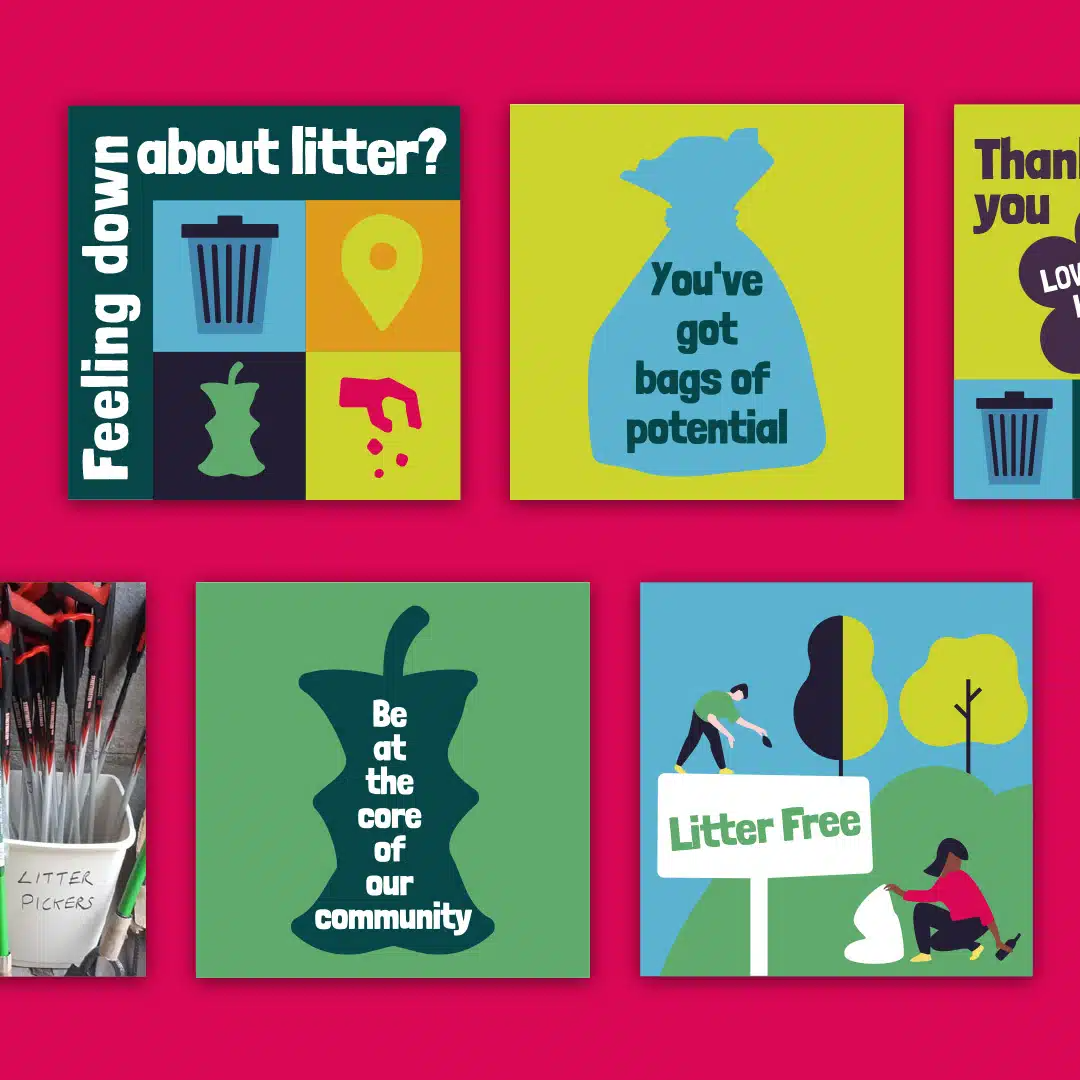
Fed up of seeing litter strewn all over your local town or village? Despite England being absolutely covered in litter, it’s actually illegal to drop it (but the law is not followed through – in Switzerland if you drop so much as a sweet wrapper, a policeman comes to tell you to pick it up).
Litter fines are around £80 (again in Switzerland they rise so if they found those vandals who dumped all that litter in Oxfordshire, they would be fined millions and likely sent to prison).
For now, here’s what you can do. You can report any litter you see to Fix My Street, an open-source website where you can upload reports and photos, using the maps (and ask for updates, if wished).
The difference from reporting litter to your council direct, is that the website sends your complaint to the council, but as it’s made public on the website, something usually gets done. Especially if lots of people complain about the same thing (from litter to potholes to fly-tipping).
What Can Councils Do About Fast Food Litter?
A lot, if they do their job. It could ask fast food outlets to provide more bins (some fast food joints and local supermarkets don’t have bins outside, which they should have considering they sell so much disposable packaging).
No matter who dropped it, it’s your council’s responsibility to clear up litter on public land (paid for by council tax, which is why it’s good to not drop it in the first place).
For private land, councils can serve litter abatement orders, which means the landowners are fined if they don’t clear it up. Or alternatively, the council can clear it, then bill the landowner.
If councils did their jobs properly, we should have litter-free cities, towns and villages everywhere. And considering fast food litter is a big part of this, it makes a good start.
Some fast food restaurants (like London’s Unity Diner which serves vegan food to fund its farm sanctuary) only serves items in compostable packaging, to avoid littering of plastic. So why can’t all the others do that too?