Learn To Live at Nature’s Pace (not by the clock)
Breaking free from the clock (unless it’s very necessary for your job) can help to shift your focus from rigid rules to natural energy and intuition. Years ago, nobody had clocks and likely were all the better for it.
If you need to tell the time, invest in a vegan sustainable watch!
Not using a watch or clock (at least on days off) helps you to live in the present moment. Not checking your phone all the time also helps your mind to slow down, and just enjoy being in the present.
Shift from strict meal times and just eat when you’re hungry. Rest when you’re tired and sleep when your eyes start to close. This can help to restore your internal biological rhyhtms and even help cure insomnia.
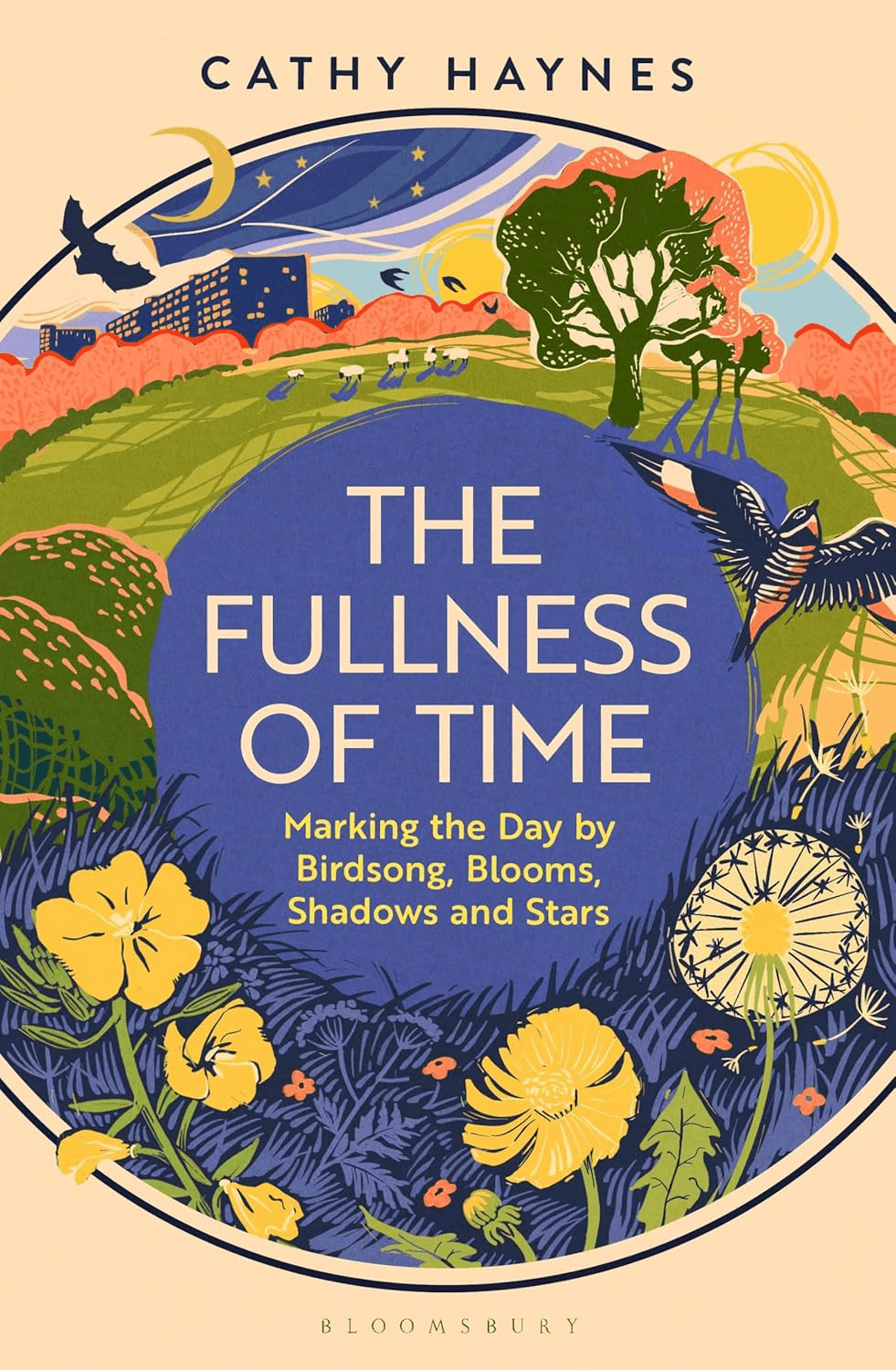
The Fullness of Time (a journey back into nature)
The Fullness of Time is a journey into the forgotten art of marking time through sings in the world around us – from the slow sliding of sunbeams to the wheeling of the stars.
Past generations would tell time by shadows shrinking (think of a sundial), the midday glow over a mountaintop, or the crowing of the rooster in darkness (today, city dwellers move to the country then complain about the cockerel waking them up at dawn!)
Years ago, people would notice flowers that close at noon, sensed how the quality of life changes at dusk, and marked time at night, by the motion of the stars.
Yet today in our clock-bound, screen-immersed world, most of us rely on machines to mark the hours. But what riches may we gain, from reclaiming the forgotten art of sensing time, by events in the living world?
Roaming from ancient download to city streets, this book is an adventure in search of the patterns that once shaped the rhythm of our days, and an invitation to discover the simple sensory joys of truly paying attention.
Most books about time teach you how to control your hours. This one teaches you how to inhabit them. Haynes shows how past generations read the day in flower petals, birdsong and the slant of light – and what we lost when we stopped. Daniel H Pink
Reminds us that we get to choose where we focus our attention, between one dawn and the next. Tristan Gooley
Cathy Haynes is a curator, writer, artist and educator who has been Timekeeper in Residence at Petrie Museum of Egyptian Archaeologist, artist in residence in Victoria Park for a gallery and curator for art on the underground. She lives in London.#
Healthy at 100? They don’t use clocks!
In his book Healthy at 100 (which looked at the world’s four-longest-lived communities), one interesting thing he found (apart from that none of them knew what an atheist was!) was that they worked almost until they died. But not by clocks.
For instance, if they were picking berries off a bush, they finished as the light began to fade. Even if they were only half-way through a hedge. They didn’t go ‘I must just do this last bit to finish in another 20 minutes’.