Is Off-Grid Living Right for You? Costs, Challenges, and Rewards
Living off-grid means meeting your own needs for power, water, and often waste, without fully relying on public services. That can sound big, even a bit stern at first. In practice, it usually starts much smaller.
For some people, it means solar panels and stored rainwater. For others, it also includes heating with wood, growing food, and using a compost toilet. The appeal is easy to see, freedom, lower bills, and a closer grip on daily life. Still, it takes planning, money, and steady effort. If you’re new to it, the good news is simple, you don’t need to do everything at once.
Imagine waking up to the sound of birds, not alarms. No flickering screens. No static from the radio or hum from the mains. Just crisp air, wide skies, and the knowledge that you’re shaping your own day, not the other way round. Living off-grid in England is no longer a quirky side project, it’s an option more people are choosing.
Drawn by the promise of sustainability, independence, and a deeper sense of wellbeing, off-grid life is gaining ground. Nature cabins have become beacons for anyone itching to unplug and find out what living off-grid feels like, even for a short spell.
What does living off-grid really mean?
You often hear people talk about ‘going off-grid’ but what does it actually involve? It basically means cutting ties with the national utilities networks, no longer relying on the electric grid or mains gas.
Water comes from the sky (say from water butts and rainwater harvesting). Instead of a tap linked to a city reservoir. Energy comes from green buildings that need far less energy (usually produced in the form of a solar panel). And Internet is replaced by reading books, or going outdoors!
It doesn’t have to be all-or-nothing. If you don’t fancy living in the woods, you can simply be inspired and take small steps:
- Electricity in the hands of the sun. Solar panels or even small hydro set-ups keep the lights on.
- Collecting and purifying your own water, harvested from rainfall, wells, or streams.
- Heating using wood stoves or biomass, rather than gas.
- Simple, low-impact living, sometimes with composting toilets.
- Power a Life makes pocket phone chargers and Wee Pal Power Bank (made from recycled plastic bottles). Again, profits help solar charities.
I’d put my money on the sun and solar energy. What a source of power! I hope we don’t have to wait until the oil and gas run out, before we tackle that. I had I had more years left. Thomas Edison (American inventor who died in 1931). He would not be that impressed.
Live Off Grid (a good site to inspire)
Live Off Grid is a good site from experts, who cover all the bases. It offers nice halfway-houses that let you kind of live off-grid in garden buildings. Giving the mod cons and far lower bills, without building your own mud hut in the woods.
This 20ft shipping container is portable and eco-friendly, with open plan living space, a side entrance with sliding doors, triple-glazed windows and doors, plus full electrical installation and plumbing (including a loo – not ‘shi**ing in the woods!’
Growing your own food
Many off-grid homes include a no-dig veg patch. This closes the loop on food and waste, helping create a resilient, low-cost lifestyle.
If you share your home with animal friends, learn about pet-friendly gardens (many plants and mulches are unsafe near animal friends). And use nontoxic humane slug and snail deterrents.
Avoid netting and read tips for wildlife-friendly gardens. Also how to create safe havens for garden birds and stop birds flying into windows.
Unplugged (off-grid short breaks in nature)
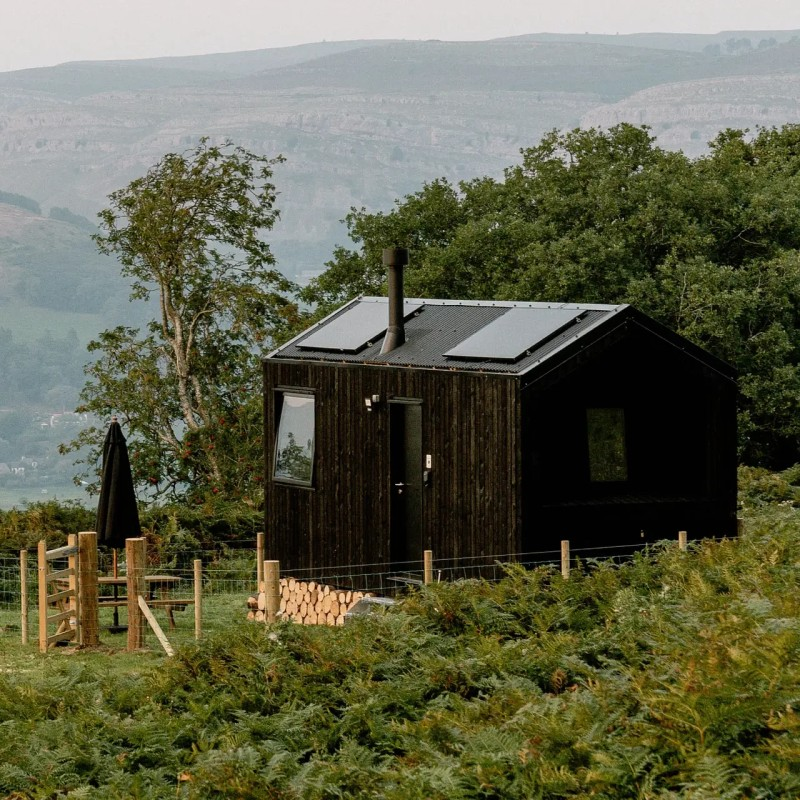
Unplugged is a unique company, which offers off-grid cabins in nature, where you can switch off completely for three days. With over 20 nationwide locations (all near a city and public transport). Then just a short taxi ride from a parking space to your cabin of choice. Some cabins offer hampers (you have to pre-order veggie options).
Some cabins are dog-friendly, do check as others are not, to protect both dogs and wildlife (due to unfenced areas).
All cabins are sustainably-built in remote areas, with solar-powered showers, kitchens and comfy beds. But there are no phones or wifi, so you won’t be checking your phone within 15 minutes of waking up! It’s time to refresh your mind (not your browser!)
Guests are asked to voluntarily lock away phones and laptops on arrive (there is an old Nokia phone for emergencies). Then just take in views from panoramic windows, or read one of the books or play a board game. There is also a radio, to wind down for early nights, as you immerse yourself in nature.
Unplugged was founded by two young men, who thought that getting away from it all and being in nature should be simple, without any ‘woo-woo’. You don’t need to chant mantras or take crystals, or belong to some religious sect. You can just find somewhere nice to stay without technology, and wind down simply.
Founded by two burned out businessmen!
Working at a tech start-up, they in the past were working up to 11 hours a day online, then partying hard to wind down after. When they realised this lifestyle was not working, they slowed down, and now help others to as well.
So one went off a fortnight in the Himalayan mountains for some peace, quiet and reflection. He was so refreshed on his return, that he immediately quit his job, to avoid going back to the same lifestyle. Realising what just a few weeks could do for others, the business idea was born.
His co-founder was ‘far less Zen’ and had no intention to go off to meditate with monks. But seeing how his friend’s time away had benefited him, he was willing to get on board to help himself and others have more ‘life time’ and less ‘screen time’.
Little luxuries (come as standard)
These are not scruffy tents! They are luxury little cabins with proper hot water showers, luxury linen bedding and all the home comforts, but without TV, laptops or phones. And you get solar-powered cabins with picture windows, so you can watch nature spectacles outside. Far more interesting!
Most are just 1 to 2 hours from a city, and have their own parking spaces. The kitchen has all mod cons (along with your basics like good tea, coffee and olive oil), although there is no oven (so it’s pasta tonight!) You’ll find a nice bathroom with modern composting toilet and even a selection of wellies for use outside the door!
The breaks are quite pricey (around £400 for 3 or 4 nights). But if you think that most hotels charge £100 for bed-and-breakfast, these are luxurious in their offerings. And the idea is that you can really wind down and have a life inventory.
So when you go back to ‘normal life’, you likely will be so used to the simple life, that you’ll spend less anyway. Parts of the lifestyle you ‘take up’ here will soon become part of daily life (nature walks over ‘getting smashed’ in the pub). And quiet simplicity, over shopping malls! And making home-cooked simple meals!