How to Make (or Buy) Proper Healthy Bread

Doves Farm is an organic flour company that is widely sold in health shops and supermarkets, if you like to make your own bakes and cakes and bread. Also look in your area, as many other organic flours are sold, some even help to keep windmills in use, to avoid them being turned into holiday homes.
Keep fresh dough and other bread ingredients (salt, onion, garlic, dried fruits etc) away from pets. Read more on food safety for people and pets. Just bin allium scraps (onion, garlic, leeks, shallots, chives) and tomato/citrus/rhubarb scraps, as acids could harm compost creatures (they are okay to go in food waste bins, as this is made into biogas).
For tinned foods, rinse then remove lids (pop in cans) or pop ring-pulls back over holes. Pinch or flatten cans, to stop wildlife getting trapped.
Also don’t give leftover stale/mouldy/crusty bread to garden birds or wildfowl (due to salt and fat, which can smear on feathers, affecting waterproofing/insulation).
Alongside usual wholegrain and white flours, you’ll find specialty flours like:
- Spelt flour (lighter on digestion)
- Chickpea flour (good to make vegan omelettes!)
- Various seed flours (high in protein and calcium)
- Pasta and pizza flours
- Ancient flours (rye, Emmer, Einkorn)
- Buckwheat flour (good for allergies)
- Sacks of flour (for professional chefs & catering)
- Organic baking powders and quick yeasts

The recipe pages includes information on how to make:
- Wholemeal Spelt Air-Fryer Bread
- Heritage Seeded Sourdough Loaf
- Air-fryer Loaves (white or wholemeal)
- Simple Machine Loaves
- No Knead Overnight Bread
- Malthouse Bread Rolls
- Soda Bread
- Rye Bread & Scones
- 2-Hour Wholemeal Bread
- Breadsticks
- Chapati Flatbreads
- Focaccia & Ciabatta
Basics of Bread (an e-book of simple recipes)
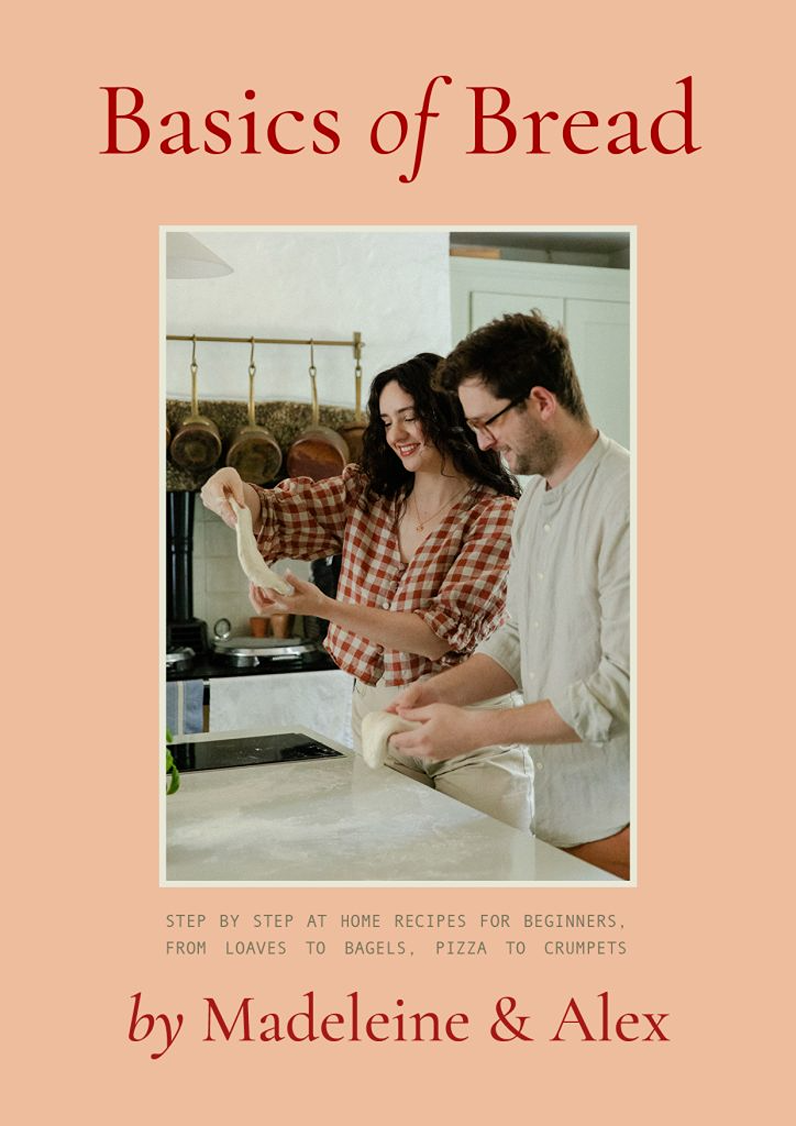
Basics of Bread is a beautiful e-book from Madeleine Olivia and her husband Alex, on how to make 20 simple plant-based bread recipes for beginners. The book features the basics of how to knead bread plus recipes for pizza dough and bagels, to focaccia, hot cross buns and cinnamon rolls.
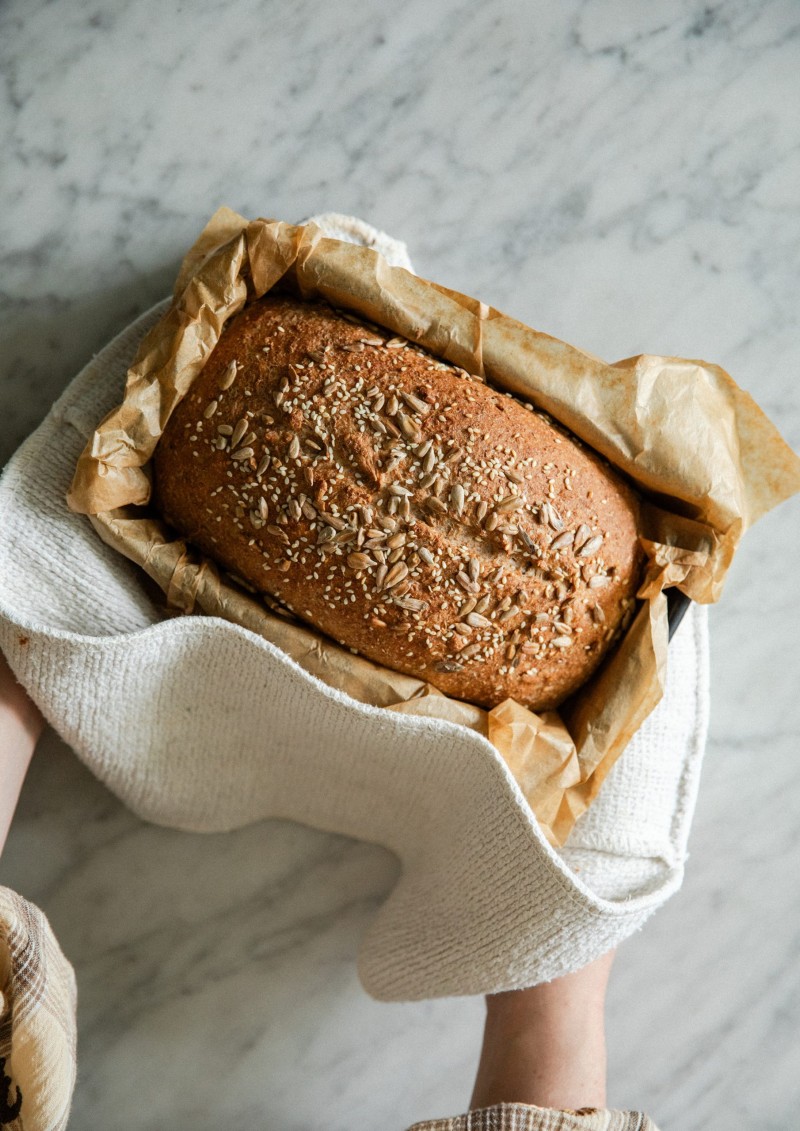
If you like making homemade bread, check out US author Shane’s two books:
The Vegan Bread Machine Cookbook has 65 recipes, and his book Baking Vegan Bread at Home has simple recipes for:
- White or Wholewheat Sandwich Loaf
- Rapid-rise White Bread
- Sprouted Wheat Bread
- Jalapeno ‘Cheese’ Bread (above)
- Oatmeal Bread with Sunflower Seeds
- Rosemary & Thyme Gluten-Free Bread
- Speedy Herb Focaccia
- Bread Machine Cinnamon Rolls
- Walnut Cranberry Artisan Loaf
- Celebration Challah
- Panettone Christmas bread
You’ll also find expert tips on how to get the best performance from your bread machine, especially when working with vegan ingredients. Plus tips on how to store and freeze your homemade bread.
In the UK, look for strong white bread flour (it has more protein than plain flour, so it builds better structure). Wholemeal flour works too, but it benefits from being blended with white flour at first. Yeast is the engine, salt brings flavour and strengthens the dough, and water controls texture.
The Honest Crust Act (buy real bread!)
Most supermarkets sell part-baked loaves that are shipped to be heated in ‘bread tanning salons’ and not real artisan bread.
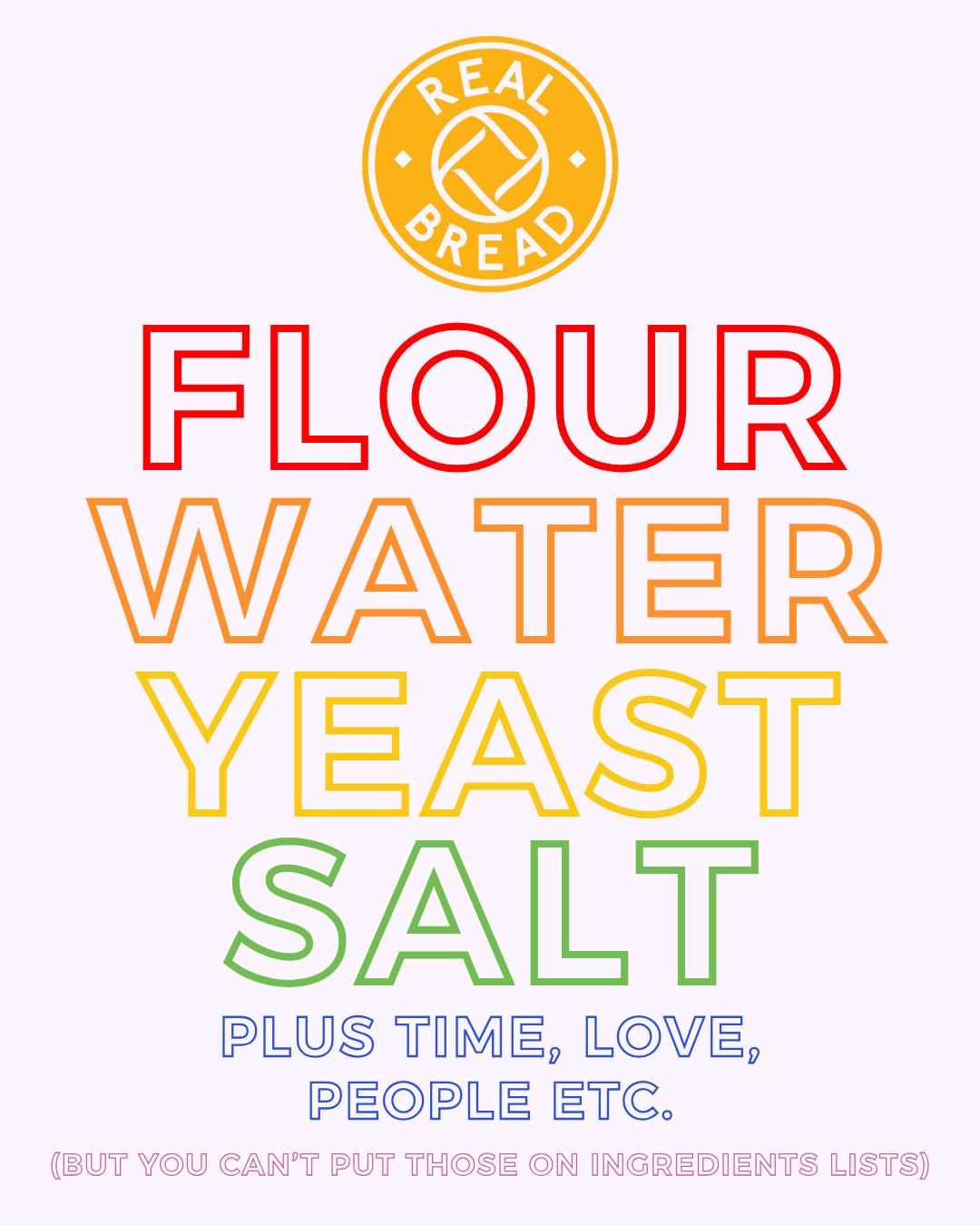
Real bread is made with water, flour, salt and yeast (quick-breads without yeast like banana bread or gingerbread are not technically breads, they are more cakes). Obviously there are add-on flavour ingredients, but real bread does not contain chemical improvers, palm oil, milk etc.
If making bread, keep fresh dough (and salt, dried fruit, onion, garlic) away from pets. Also don’t give leftover stale/mouldy/crusty bread to garden birds or wildfowl (due to salt and fat, which can smear on feathers, affecting waterproofing/insulation).
Real bakers get up at 3am and knead the dough, and you can buy a freshly-made loaf in the early hours that is far more nutritious.
In France, bakers don’t go on holidays at the same time, ensuring everyone can visit a boulangerie on any given day, as freshly-baked bread is deemed an important part of life.
As well as supermarket bakeries not making real bread from scratch, they are not supporting local wheat farmers, they are often adding palm oil (from thousands of miles away).
And most loaves are sold in plastic packaging (more litter, and the bags also make the bread sweat). This makes bread go off quicker, and contributes to the massive amount of bread waste.
Real Bread Campaign’s Honest Crust Act
This campaign has been submitted to DEFRA, to ask that a full revision of bread and flour regulations comes into place, so that people know what they are buying. This would mean that anything sold as ‘bread’, could not use processing aids or other additives.
All loaves would need to display a full list of ingredients, including at point-of-display (say for loose rolls in supermarkets). It also must legally say if the item was baked from scratch in the last 12 hours, or just ‘baked’ in store from delivered pre-made products.
There would also be a ban on ‘wholemeal’ products that contained refined ingredients, and stricter legislation on items sold as sourdough loaves.
Keeping the real bread industry alive could support up to 75,000 meaningful and sustainable jobs (twice that of present ‘big baking industry’, if more support and transparency was used.
Recently, some big brands have had to amend their labelling, due to ‘greenwashing’ the public:
- Kingsmill had to remove their nutritional claims, after Real Bread Campaign made a complaint to the Advertising Standards Authority. It was claiming that its 50/50 loaf (with some white flour) was meeting UK nutritional guidelines (it was using the US guidelines).
- Ocado had to rename its sourdough loaf as it was not really sourdough, more ‘sourfaux’, made with additional ingredients.
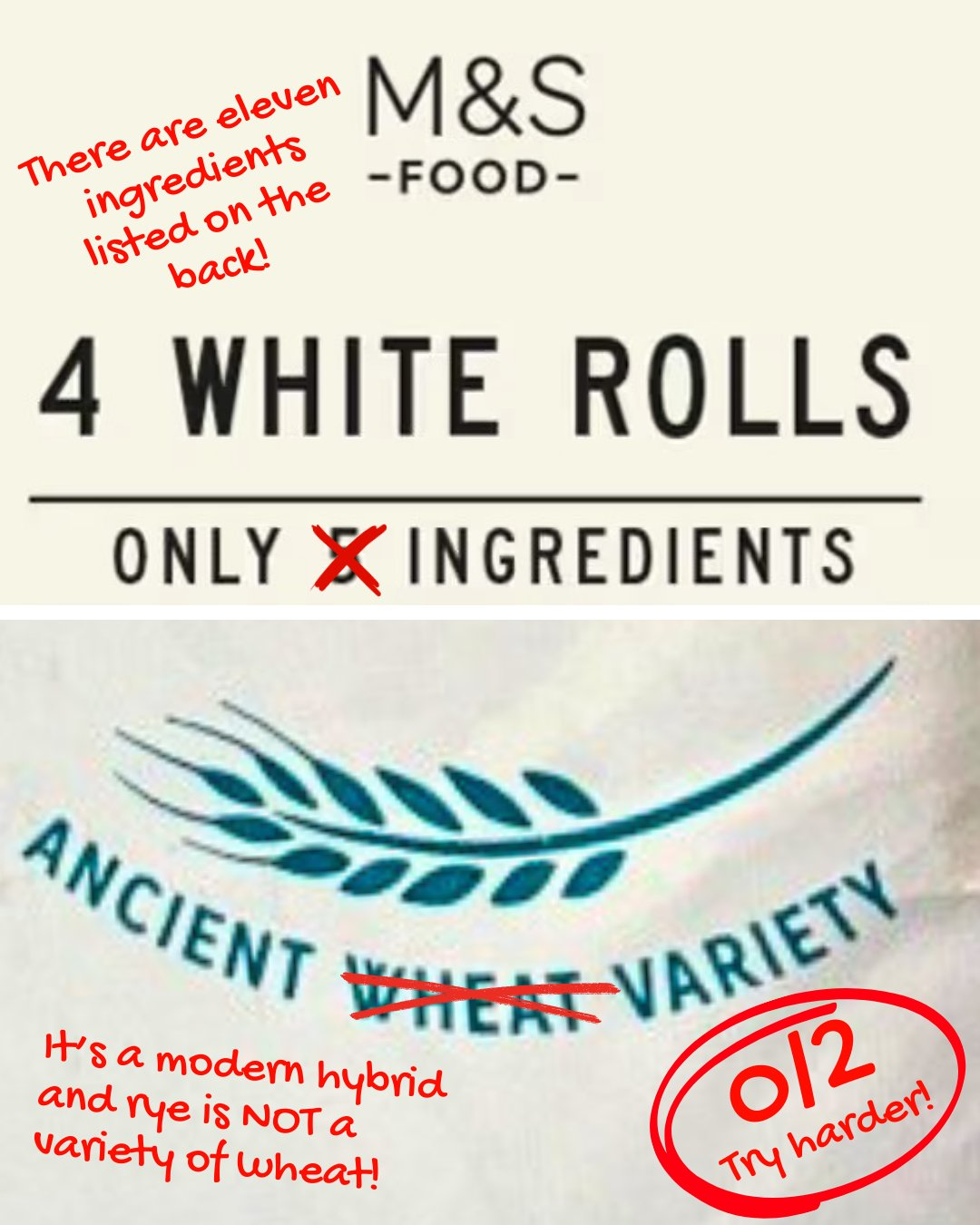
- Marks and Spencer has launched a range of five-ingredient items. But Real Bread Campaign found the bread rolls had 11 ingredients!
- Their granary loaf sounds healthy and natural. But look at the ingredients, to find palm oil (from Indonesia) and ascorbic acid (a flour treatment agent).
Real bread is made without chemical raising agents or processing aids. It hasn’t been stripped of its soul, just to be cheaper and faster.
The industrial dough sector should come up with a more appropriate name, for the additive-laced products they churn out. Real Bread Campaign
Battle Green’s Organic Cotton Bread Bag
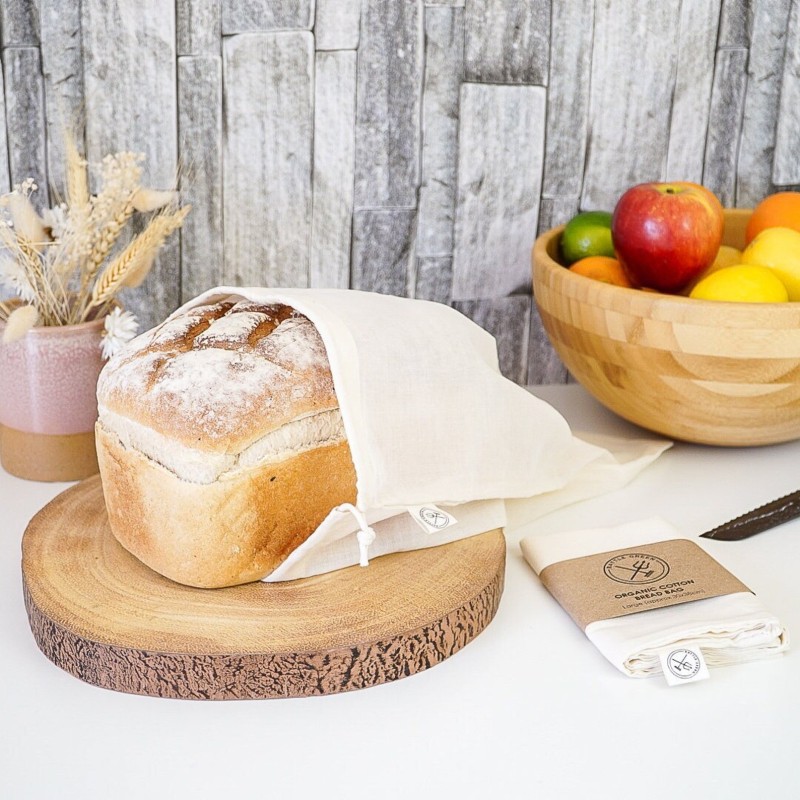
Battle Green organic cotton bread bag is the ideal way to keep your bread loaves fresh, so you can buy plastic-free loaves at local bakeries or supermarkets. It can easily handle a large loaf or several bread rolls, and is wrapped in a recycled card ‘belly band’.
Wash on a cool setting and allow to air-dry. Made from organic cotton, so it won’t release plastic microfibers during washing.
The bag is made from GOTS certified organic Fair Trade cotton, with a label number inside each bag, meaning it is also made in fair working conditions and uses eco dyes.
Freshpaper (organic bread saver sheets)
Most bread on sale is wrapped in plastic, but this is actually not good to keep bread fresh, as it traps moisture, and causes the crust to soften and encourages mould growth. Bread is one of the top food waste items (often because loaves are sold in too-large a size for one-or-two person households.
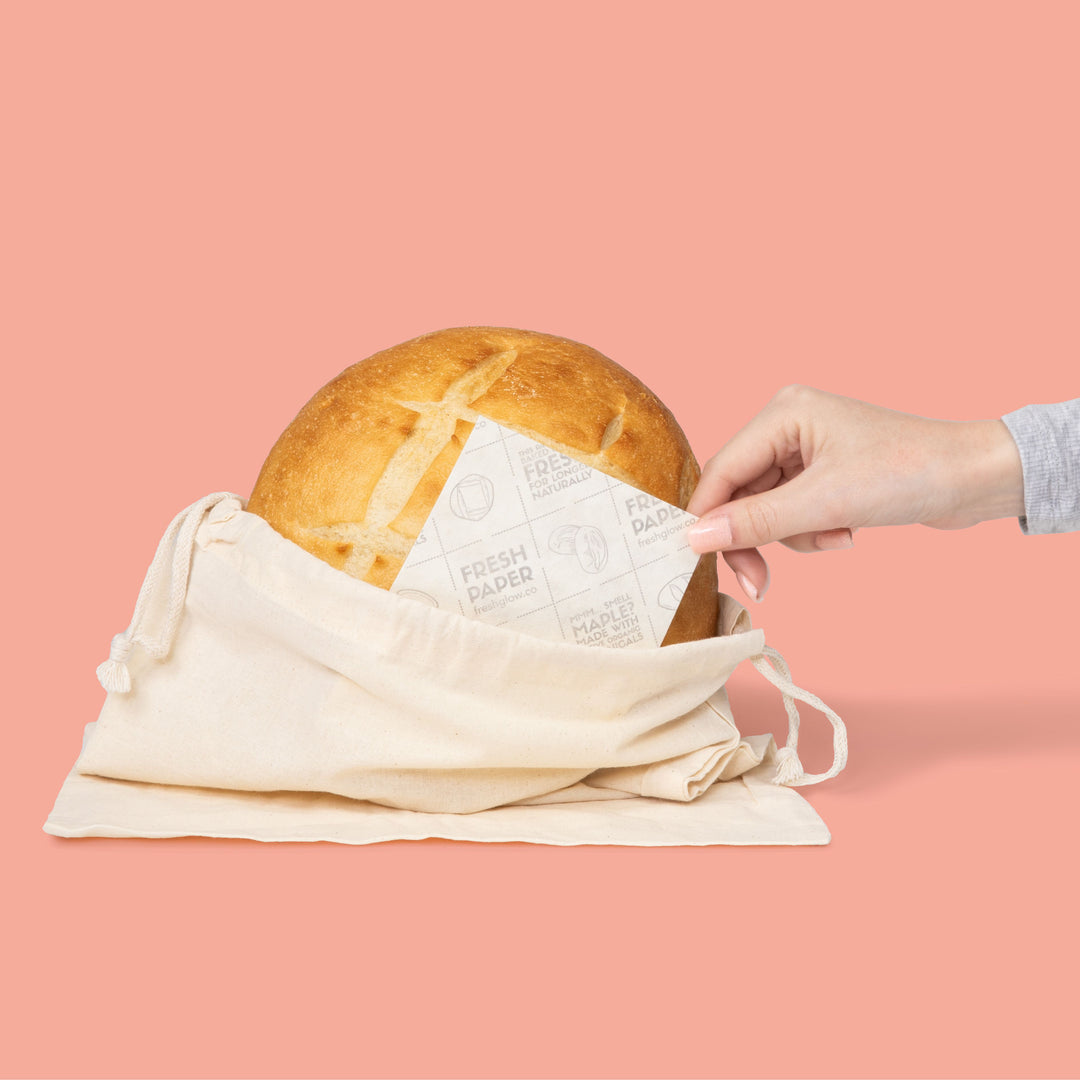
FreshPaper Bread Saver Sheets are one of our ‘not sold here but should be’ posts (Lakeland stores sell something a bit similar). Inspired by the founder’s Indian grandmother’s method of using oils to preserve food (there’s also a version for the fruit bowl), they basically keep bread fresh for longer.

Just drop a sheet into a bowl or bin containing baked goods, and the organic spices keep them fresher for longer. Ideal for fresh-from-the-bakery or homemade bread, and also good for anything else. This brand has over 5000 good reviews!
One pack of 8 sheets should last around 3 months, and pays for itself in two weeks, due to saving money on bread that goes stale too soon.
WRAP research says around 900,000 tons of bread is thrown out each year in the UK, along with 750,000 tons of potatoes and 490,000 tons of milk. Yet we have people not being able to afford food. And enough food waste on earth to feed every single hungry person on earth.