Quiet social justice: massive impact without the noise
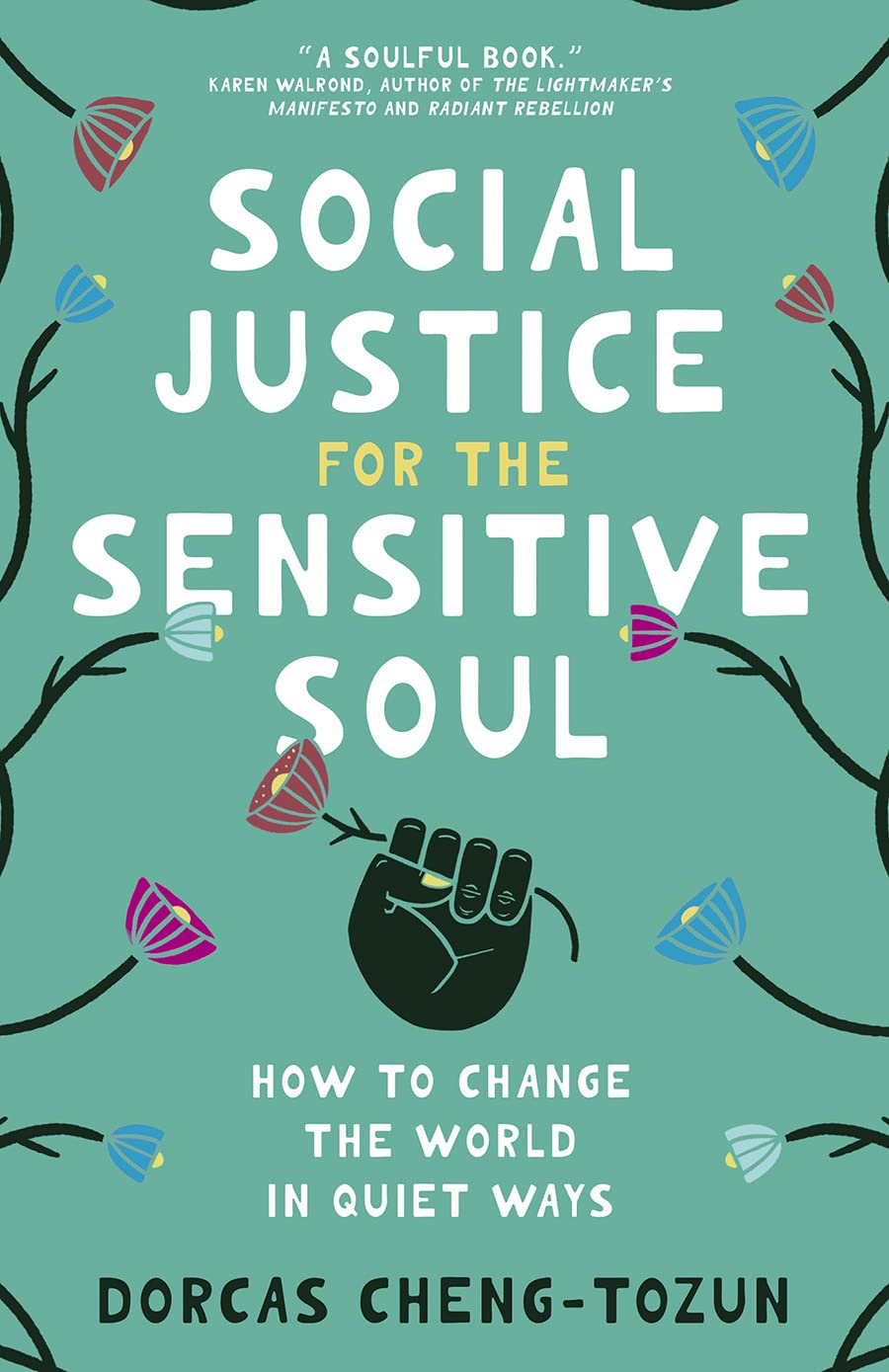
Social Justice for the Sensitive Soul is a book that explores six possible pathways to change the world, if you’re the quiet and sensitive type. Find your way to help, without burnout and avoid giving yourself a nervous breakdown:
- Connectors – build conversations and interactions for change
- Creatives – artists and creators can bring issues to public awareness
- Record keepers – archivists preserve information for collective history
- Builders – tips for inventors, engineers and programmers to change society
- Equippers – educators, mentors and elders to build skills and knowledge
- Researchers – data-driven individuals who use info as tools for change
Social justice work is not just about raised voices and raised fists. The author (a quiet change-maker herself) looks how to be a peacemaker (and peaceful too!)
Dorcas Cheng-Tozun is a writer and leader whose work with various non-profits, social enterprises and faith-based organisations has led her to engage and help on a broad range of issues including homelessness, affordable housing, youth leadership, HIV/AIDS and international development.
Sensitivity often gets misunderstood, as if you need to ‘toughen up’. In fact, being sensitive is a strength, as it means you are kind and have empathy, something that is sorely lacking in today’s nasty world. If we had no sensitive souls, goodness knows what worse state the world would be in.
Signs you might be a sensitive soul
- You can’t watch the news, as it’s too upsetting
- You are haunted by any cruelty to animals, children etc.
- You can’t scroll social media, as it upsets you too.
- You prefer a couple of close friends, a happy hermit!
- You listen, then think before speaking.
- You get upset if you accidentally upset someone.
- You would be horrified if someone called you cruel.
- You abhor conflict, even if you ‘win’ debates
- You feel guilty if you rest, as someone has it worse.
Quiet ‘world changing’ actions you can take
- Email your local councillor about a local issue.
- Set up a monthly donation to a struggling animal shelter.
- Support an online petition, to see what needs backing.
- Volunteer from home (use techy skills to help animals worldwide)
- Help a neighbour with forms, especially housing and benefits
38 Degrees (an effective online petition site)

38 Degrees is a million-plus strong community of residents who are creating people-power-change through online petitions, to businesses and government. It has had huge successes over the years, the project named after the degree at when an avalanche occurs.
‘Funded by fivers’ from a nationwide community of nurses, taxi drivers, parents, shopkeepers and pensioners, users basically contact head office with a campaign. And if it’s worth doing, receive all the tools to get the petition online, and ready for others to sign and take action.
Previously successful petitions include:
- Reversing Cameron’s government’s decision to sell off our remaining public forests to private ownership in a bid to ‘protect them’. It later said it had been a huge error of judgement.
- Helping a grandad in South Wales, to provide recycling points for Walker’s crisps.
- Pushing British Gas to change their prices, to help single parents.
- Keeping a ban on pesticides, to protect endangered bees.
- Having the government fund 700,000 urgent dental appointments.
- Scrapping the two-child benefit to lift 450,000 children (70% of whose parents are in full-time work) out of poverty.
Present campaigns include:
- Making hedgehog highways law (so hogs can travel around at night to find food and shelter)
- Keeping chlorine-washed chicken off supermarket shelves
- Not backing down over tariff threats (to stand with Greenland)
- Save the 15 penguins living in a dark basement in a London aquarium
- Stop the weakening of planning laws, which could threaten our National Parks with replacing wild places (such as the Lake District and Dartmoor) with bulldozers, building and car parks.
- Make swift bricks mandatory in all new building projects (this has just passed in Scotland, but the English government still wants it to be voluntary, despite swifts at risk of extinction due to loss of habitat).
- Hold water companies accountable for discharge of raw sewage.
- Scrap all hospital car parking charges (which especially affects visitors to patients with long-term sickness).
- Say no to second jobs for MPs (like ‘Farage’ on GB News)
How to Save the World (without annoying everyone)

How Not to Save the World (without annoying everyone) is of course an ironic title for this book, as it’s actually about saving the world! But bringing people with you, which usually means not telling them what you’re doing!
Many people become irked by climate and other campaigners, shouting and berating others. And then nothing works, as no-one listens. It’s important to treat business leaders and politicians with special care and attention. As then they listen. It’s the planet at stake, so it’s a good thing to do!
In this book, the author offers hope for those who want to change the world, but wonder if there’s any point trying. With so much apathy, climate science denial and lack of empathy towards animals and war victims.
The honest truth is that sometimes we get so passionate and angry, we don’t see that perhaps we come across as self-righteous, and that’s just the kind of behaviour (preachy vegan?) that puts people off.
Also found in religion, the politics of ‘I am better than you, and will show you how to act’ has most people running in the opposite direction. You can’t convince others, once you’ve alienated them.
Anthea Lawson has campaigned for over 30 years on ending the arms trade and tax loopholes, and even launched a campaign for transparency on company ownership, which resulted in dozens of countries changing the law.