Read Positive Newspapers (and Still Stay Informed)

If you’ve ever opened your phone for a quick check of the news and ended up feeling tense, you’re not alone. A constant stream of conflict, scams, and disasters can make the world feel like it’s falling apart, even when your own street looks fine.
That’s where positive newspapers can help. They don’t ask you to ignore real problems. Instead, they balance the hard stuff with progress, solutions, and human stories that don’t rely on fear to keep your attention.
In this post, you’ll learn how positive reporting can support your mental health, why it can give a more accurate view of life, and how to choose a source that stays upbeat while still being honest.
Why avoid (constant) negative news?
Swiss thinker Rolf Dobelli gave up reading the news years ago, and has never looked back. He asks you – out of all the thousands of news items you have read in the last year – which have done you any good – or helped others? Likely none of them.
Far better instead to educate yourself by reading good books, then donating to small charities that help, of your own choosing.
News stories are overwhelmingly about things you cannot influence. It grinds us down and I would not be surprised if news consumption at least partially, contributes to the widespread cause of depression.
I know a bunch of viciously uncreative minds who consume news like drugs. If you want to come up with old solutions, read news. If you are looking for new solutions, don’t. Rolf Dobelli
We all know what it’s like to wake up to the sound of a news alert, only to be greeted by stories that can dampen our spirits. Starting your day with a dose of negativity can set a gloomy tone for the hours ahead. Instead, consider the power of positive news!
Positive news can protect your mental health
Bad news grabs the brain fast. That’s not a character flaw, it’s how we’re wired. When headlines shout danger, your body can react as if the threat is close, even when it isn’t. Over time, that can leave you on edge.
Positive newspapers offer a different rhythm. They still report serious issues, but they don’t stop there. They also show what people are doing about those issues, what’s improving, and where support is working. As a result, you can stay aware without feeling emotionally battered.
This matters because news isn’t just information. It’s also a daily input, like food or sleep. If most of what you consume is grim, your mood often follows.
It calms the feeling that everything is going wrong
A steady diet of crisis stories keeps your mind scanning for danger. You might notice it in small ways, like reading one alarming story and then expecting the next one to be worse. That “always on” feeling can raise stress and feed worry.
Positive newspapers reduce the pressure by widening the frame. They may cover the same problem, but they add context, responses, and outcomes. That doesn’t erase the issue, but it softens the sense of doom.
Timing also matters. For example, reading intense headlines right before bed can make your thoughts race. On the other hand, reading a balanced, constructive article in the morning can set a calmer tone. If you want a simple test, try this for a few days: keep heavy breaking news for earlier hours, then switch to positive news after dinner.
It can lift your mood and motivation
Hope is practical. When you feel a bit lighter, you’re more likely to cook, walk, call a friend, or go to bed on time. When you feel drained, everything gets harder, even simple tasks.
Positive newspapers can give you small boosts of energy because they highlight effort and progress. A story about a community repairing a park, a local school improving attendance, or a new medical approach that reduces harm can remind you that action still exists. That feeling often carries into your day.
Keep it grounded, though. No newspaper can fix your mood on its own. Yet a healthier news mix can support better choices. A simple routine works well: read 10 minutes of positive news after lunch, then close the app. That gives your brain something useful without pulling you into hours of scrolling.
Positive news builds a more accurate view of life
Traditional news often focuses on what’s new, sudden, or shocking. That makes sense for attention, but it can distort reality. Plane crashes make headlines, safe flights don’t. Crime stories travel fast, quiet acts of care don’t. Over time, you can start to believe the worst is the norm.
Positive newspapers help correct that bias. They report progress that happens slowly, like safer roads, cleaner rivers, or better treatment for certain illnesses. They also cover ordinary people solving ordinary problems, which is a big part of how society actually functions.
Progress and solutions (not hopelessness)
Solution-focused reporting asks different questions. It still names the problem, but it also explores what has been tried, what worked, what failed, and what comes next. That approach can reduce helplessness because it shows pathways, not just pain.
When you read these stories regularly, you build a sense of “things can change”. That feeling supports mental health because it increases hope and a sense of control, even when life feels messy.
It encourages empathy and connection
A lot of negative news is framed like a fight. There’s a villain, a side to pick, and a comment section ready to explode. That framing can spill into real life. You might snap more quickly, assume bad intent, or feel exhausted by other people.
Positive newspapers often use a more human style. They focus on lived experience, repair, and the reasons behind behaviour. That doesn’t excuse harm, but it can lower the temperature.
It also changes how you talk online. When your feed includes stories about people cooperating, you’re more likely to listen before replying. Even your relationships can benefit, because you bring less simmering anger into daily chats.
The Happy News (wake up to something positive!)

When the headlines feel heavy, it helps to know some people are spreading light and hope on purpose. The Happy News — founded by Emily Coxhead — proves that good stories still matter.
Emily Coxhead created The Happy News in 2015 to share stories of hope and joy. Frustrated with the constant stream of negative news, she wanted something that celebrated the good in the world.
What started as a Kickstarter project now reaches thousands of readers. Each issue highlights real people and positive events from across the globe. The paper reminds everyone that hope can be found in everyday life.
Every edition of The Happy News is packed with stories about ordinary people doing good things. From neighbours checking in on one another, to strangers leaving uplifting notes on park benches, the newspaper stories inspire readers to look for little ways to help and connect with others.
As well as celebrating real heroes (like Sir David Attenborough), The Happy News shines a light on people who make a difference but rarely get attention. Bus drivers, nurses, teachers, and volunteers often feature on its pages.
One thing that sets The Happy News apart is its global coverage. You’ll find heart-warming stories from all corners of the planet. These stories remind readers that people everywhere care about each other and the planet, and they’re working to make things better.
Colourful design and artwork
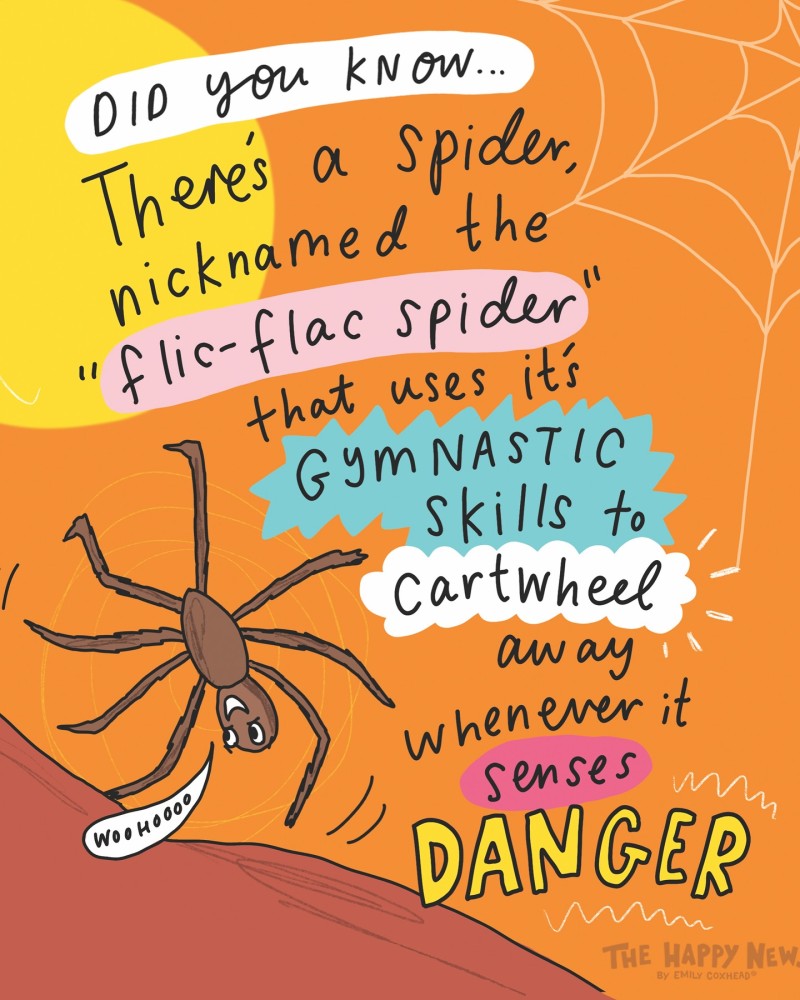
Emily Coxhead is not just a reporter, but also a designer and illustrator. Each issue is full of bright colours, cheerful doodles, and playful layouts.
Subscribers don’t just read The Happy News; many become part of its growing community. People share stories, photos, and messages of hope with each other through social media and local meet-ups.
Emily’s books for happy adults and children!
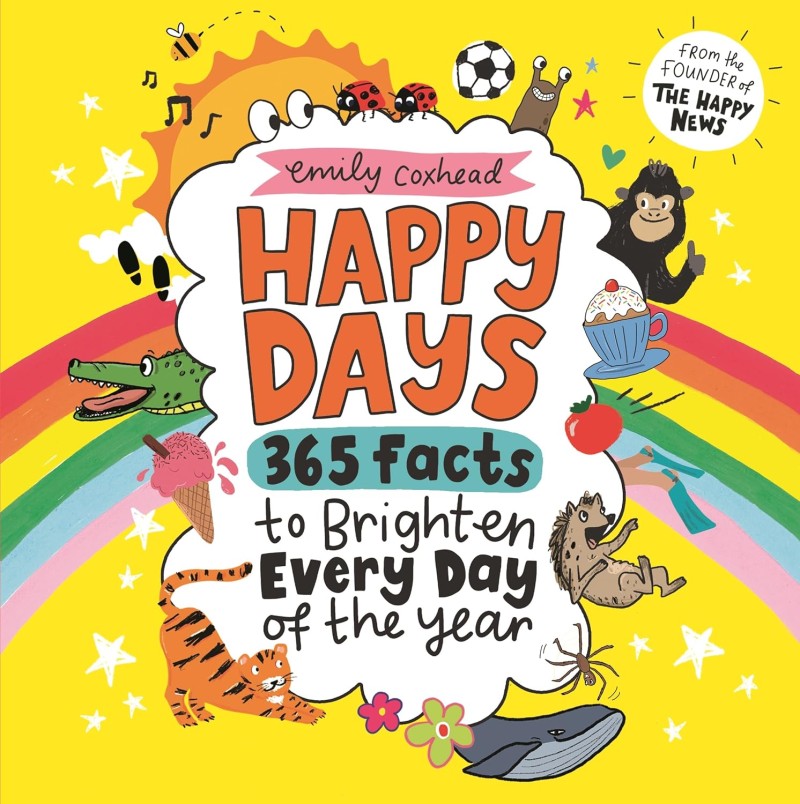
Happy Days follows on, with a book of happy facts throughout the year. You’ll discover delightful facts to cheer up your day (like bees hold hands, when they move!) And prairie dogs greet each other, with kisses!

Feel Your Happy is Emily’s beautifully illustrated book for young people, to help them stay happy in a frightening world.
Positive.News magazine (inspiring current affairs)

Positive.News is published quarterly, and includes stories of social and environmental progress, quality independent reporting focused on solutions, and tips to boost wellbeing.
You can find this sometimes in local veggie cafes and independent shops. Sample articles include:
- Recycled musical Instruments donated to youngsters
- Organisations helping indie artists thrive
- Communities of regenerative farmers
- Life after sexual assault and leaving cults
- Singer Sam Ryder’s life lessons!
Goodnewspaper (look for the helpers!)
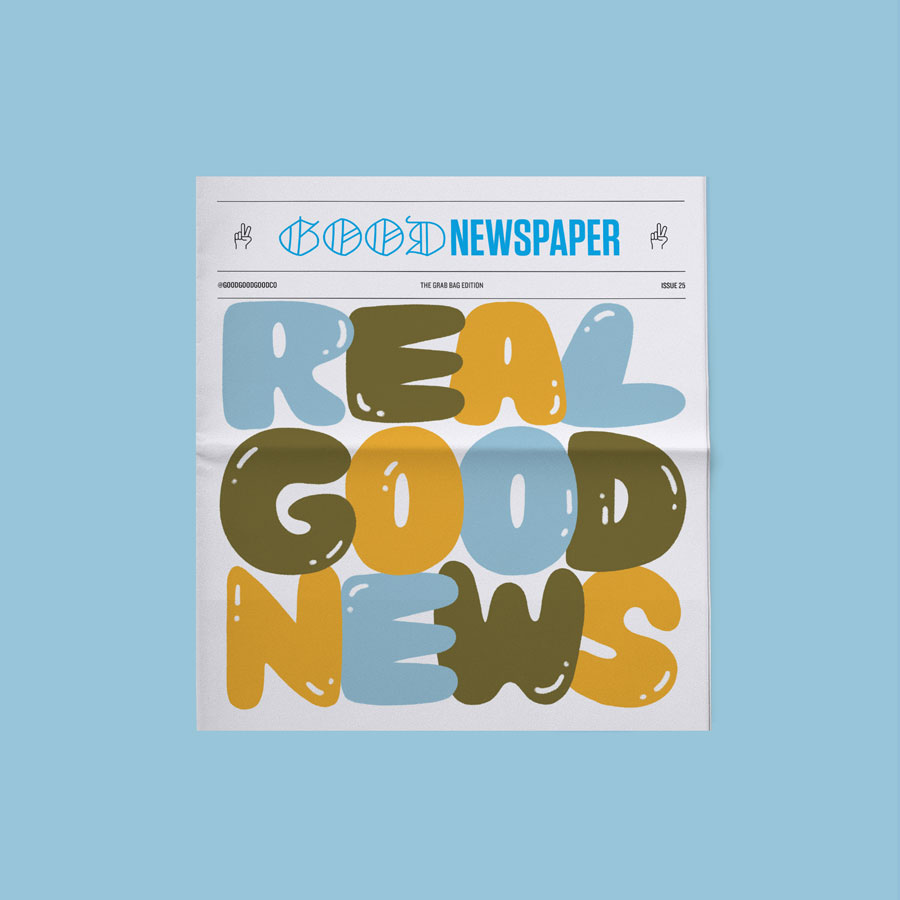
Goodnewspaper is a lovely monthly newspaper from the USA, that focuses on sharing the good in the world, and leaving you feeling more hopeful and informed, after reading it.
It has a super post on how to help Ukraine (including organisations that help animals in war zones)).
You can also subscribe to the goodnewsletter and the Sounds Good podcast that hosts interviews with those who are helping to make the world a better place.

The founder Branden Harvey was inspired to create a community of 500,000 world-changers, from a quote by Fred Rogers:
When I was a boy and I would see scary things in the news, my mother would say to me, “Look for the helpers. You will always find people who are helping.”
Each edition follows a theme. For example:
The Helpers
- Providing life-saving aid in Gaza
- Protecting immigrant neighbours in communities
The Fashion Edition
- Making clothing disability-inclusive
- How textile recycling is slowing fast fashion
- A lesson in upcycling clothes
The Dogs Edition
- How volunteer vets help homeless dogs
- Heart-warming science on dog companionship
The Education Edition
- How ‘free-range kids’ are understanding nature
- Dolly Parton’s legacy on children’s literacy
The Happy Broadcast (positive news, with cartoons!)
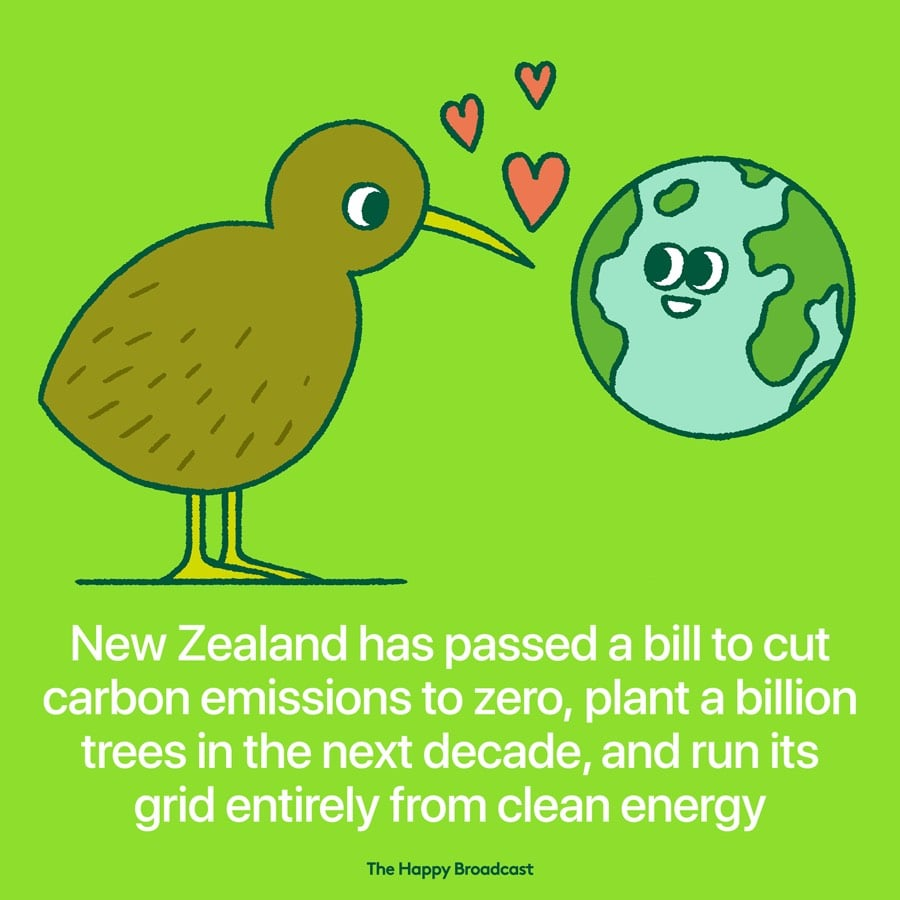
The Happy Broadcast is a fun site run by an Italian cartoonist who lives in the US. He found that after reading the news, it upset his day, so instead decided to create daily cartoons to highlight the good things that are happening in the world.
Latest good news includes:
- Australian koala populations show signs of recovery
- Water purification technology benefits billions
- Norway officially ends fur farming
- French parliament votes to ban forever chemicals
- Mexico puts animal welfare into constitution
There – you feel better already, don’t you?
The Good News Post (in memory of Jill Dando)

The Good News Post is an online digital newspaper, packed with good stories. It’s a lovely story, powered by an ‘expanding army’ of young journalists age 4 to 21.
All trained by professionals, inspired by the memory of BBC TV reporter Jill Dando, in her manner of kindness, empathy and positivity (her brother who is also a journalist helps out).
Already some have interviewed MPs and the site has its own mental health and disabilities correspondents. There are now an expanding group of Good News Rooms across the UK and around the world (including Malawi), and the Jill Dando Garden (first planted with Alan Titchmarch on Ground Force 26 years ago) is looking to be revamped.
What an exciting project that the Good News Post now has a mission to go global, especially in our negative news world. Her brother is over the moon that the project hopes to inspire one million children to be ‘positive reporters’ within a few years, with a blue plaque honouring her home town of Weston-super-Mare.
Not only was Jill a fantastic journalist, but as everyone said who knew her, she always did it with a smile and she loved the positive stories. Everybody just had so many nice things to say about her. Shane Dean, Good News Post editor
Recent stories include:
- Allotment holders help local homeless people
- Teen who survives cardiac arrest teaches CPR
- Weekend Dental Clinics Help Homeless People
- A Rescued Horse Starts New Happy life
- Kittens Found In Landfill Rescued by Volunteers
- Supporting locally-made blinds (good to prevent bird strike)
- How to Live in Harmony with Seagulls!