Upcycled newspaper pencils: a sustainable way to write
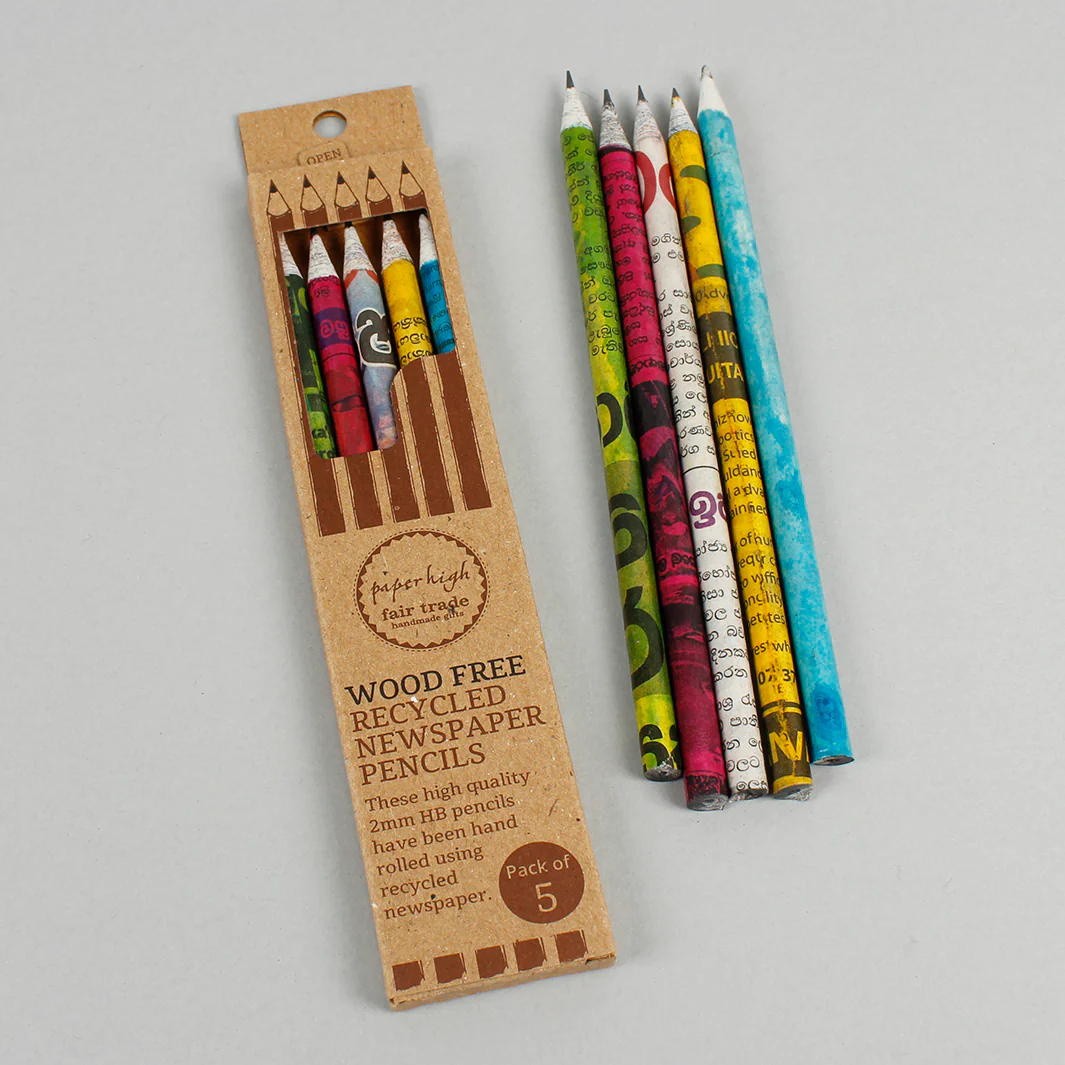
What happens to a newspaper after it has been read? For many people, the answer is simple: it goes into the recycling bin or, unfortunately, the rubbish. But what if old newspapers could have a second life as something useful, creative, and surprisingly practical?
That is the idea behind upcycled newspaper pencils. This pack includes five high quality HB pencils with 2mm nibs, hand-rolled using bright colours of recycled newspaper. The pencils are made by artisans at a social enterprise in Sri Lanka, to give good jobs and income.
Upcycling is an increasingly popular approach to sustainability because it encourages us to think differently about waste. Rather than seeing an unwanted material as something with no value, we can ask whether it can become something useful.
Keep pencils away from young children and pets, and never litter them (they end up in the sea, and you will know how it hurts, if you ever accidentally stabbed your hand with a pencil or pen.
Most plantable pencils use seeds from abroad (not native species) and many flowers, herbs and onions are toxic to pets. Only use if made with native seeds, for pet-free homes/gardens.
What are upcycled newspaper pencils?
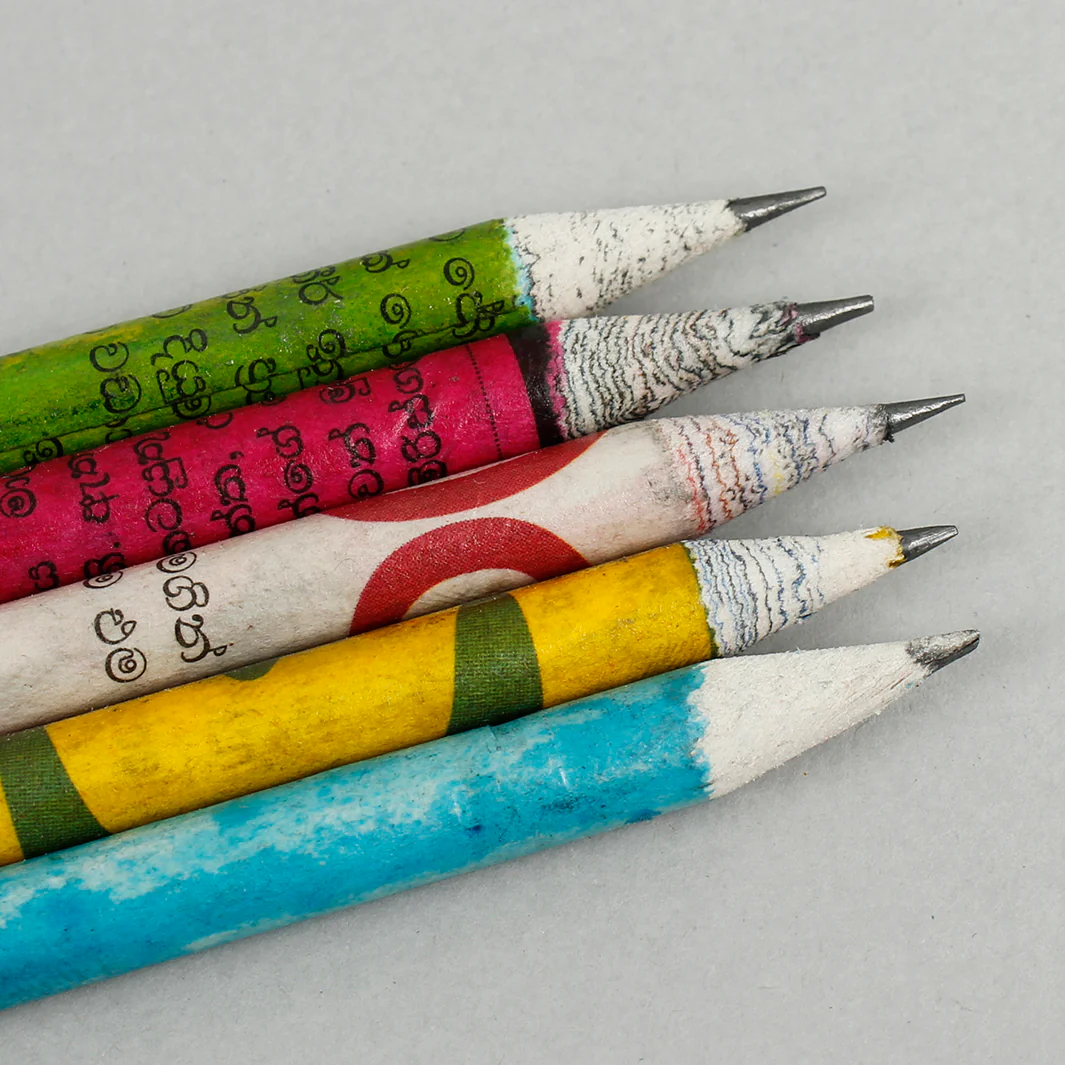
Upcycled newspaper pencils are pencils made using layers or strips of recycled or upcycled paper, such as newspaper, rather than a conventional wooden casing.
The paper is generally processed, rolled, compressed, or bonded into a firm barrel around a graphite core. Once shaped and finished, the result can function as a writing instrument.
The important idea is that the pencil replaces or reduces the need for a traditional wooden barrel by using a paper-based material. This makes the pencil particularly interesting from a design perspective.
How can newspaper become a pencil?
It might seem surprising that something as thin and flexible as newspaper can become a solid pencil barrel. The secret is in how the paper is prepared and combined.
Individual sheets of paper are not particularly strong when used alone. But when multiple layers are tightly rolled, compressed, and bonded together, they can form a much more substantial structure.
Manufacturers can shape the paper around the graphite core and use adhesives or other processes to hold the layers together. The finished material needs to be strong enough to withstand normal handling, sharpening, and writing.
From waste paper to useful stationery
A newspaper is usually associated with a short lifespan. It may be printed in the morning, read during breakfast or a commute, and then set aside.
Instead of being viewed simply as waste paper, it can be incorporated into another product. This idea is at the heart of the circular economy, where materials are kept in use for as long as possible rather than following a simple pattern of “make, use and throw away’.
Why choose wood-free pencils?
Traditional wooden pencils have been used for generations and remain practical, affordable, and widely available. However, wood-free pencils offer an alternative approach to pencil design.
A newspaper-based pencil does not require the pencil barrel to be carved from a conventional piece of wood. Wood-free pencils can also have another interesting advantage: their appearance.
Because they are made from layers of printed paper, some designs have a distinctive textured or patterned look. This makes them stand out from standard stationery.
The environmental benefits of upcycling
When a material is reused in a new product, there is an opportunity to keep that material in circulation rather than sending it directly towards disposal.
The environmental impact of any product depends on its complete life cycle, including how its materials are sourced, how it is manufactured, how far it travels, and what happens when it is no longer useful.
Therefore, it is important not to assume that every upcycled product automatically has a smaller environmental footprint. However, the concept itself is valuable.
Using existing materials can reduce the demand for virgin resources in some applications. It can also demonstrate that products can be designed with material reuse in mind.
Pencils pots made from recycled newspaper
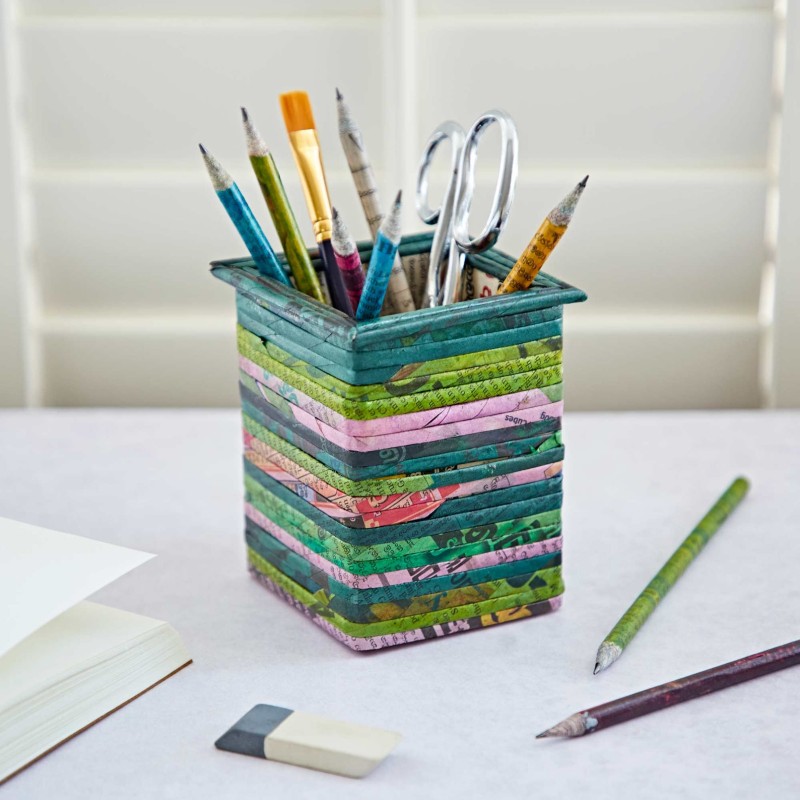
These pencil pots made from recycled newspaper (also in round versions) are naturally colourful, and made by artisans in India. They can match colours with your office!
Every recycled newspaper pencil pot looks a bit different, thanks to the mix of headlines, photos, and the original print. You rarely get two that look exactly the same.
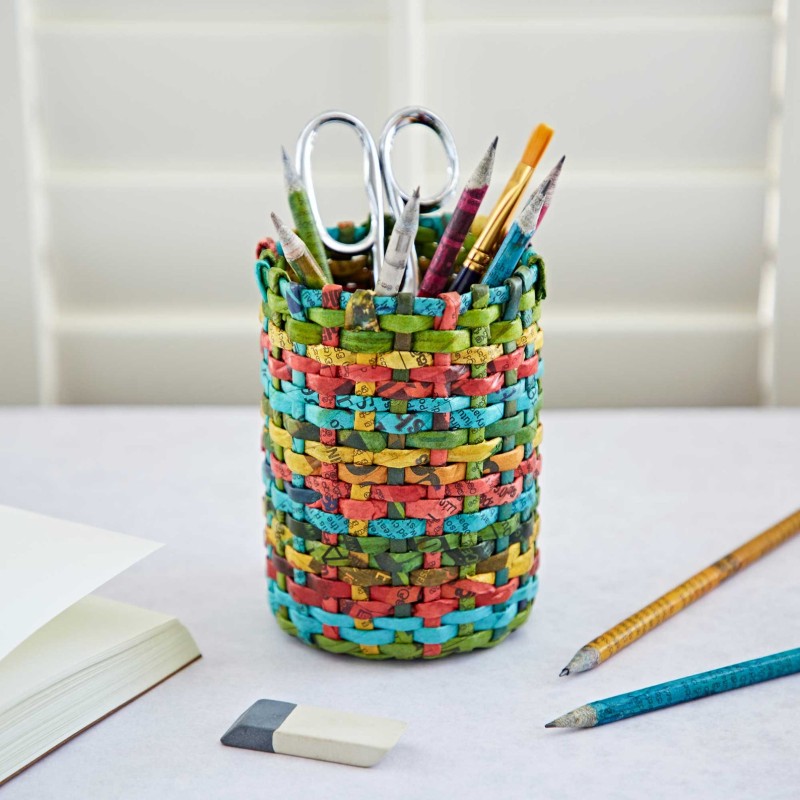
Many people think paper won’t last, but these pencil pots are surprisingly strong. Most can handle pens, scissors, and other desk items without bending or breaking. Unlike glass or metal pots, these are lightweight and safe even for children to use. If they drop one, it won’t shatter or dent floors.