Saint Cuthbert (England’s first environmental saint)
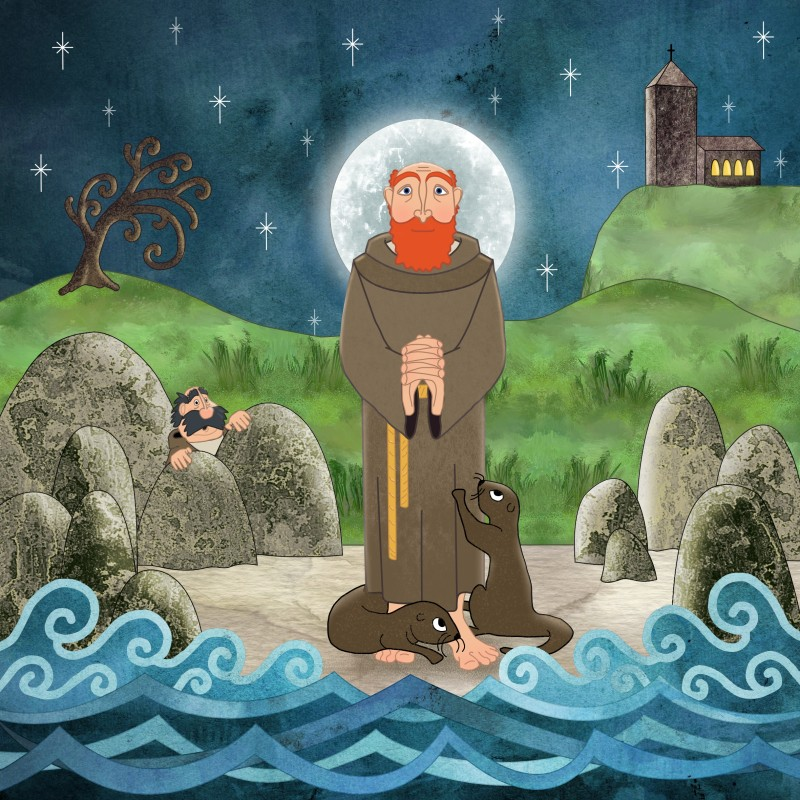
St Cuthbert was one of the northern saints, who lived mostly on the holy island of Lindisfarne. He campaigned for the welfare of eider ducks (and the legend is that otters would dry his skin with their fur, after he had gone swimming in the icy North Sea!)
He became a monk after witnessing angels carrying St Aidan (the monastery’s abbot) to Heaven. After he died, St Cuthbert’s body was taken back to Lindisfarne, where the many claimed miracles at people who prayed by his grave, led to him being declared a saint.
He is buried in Durham cathedral, which is why it remains a pilgrimage destination today for many Roman Catholics and those on the Northern Saints trail.
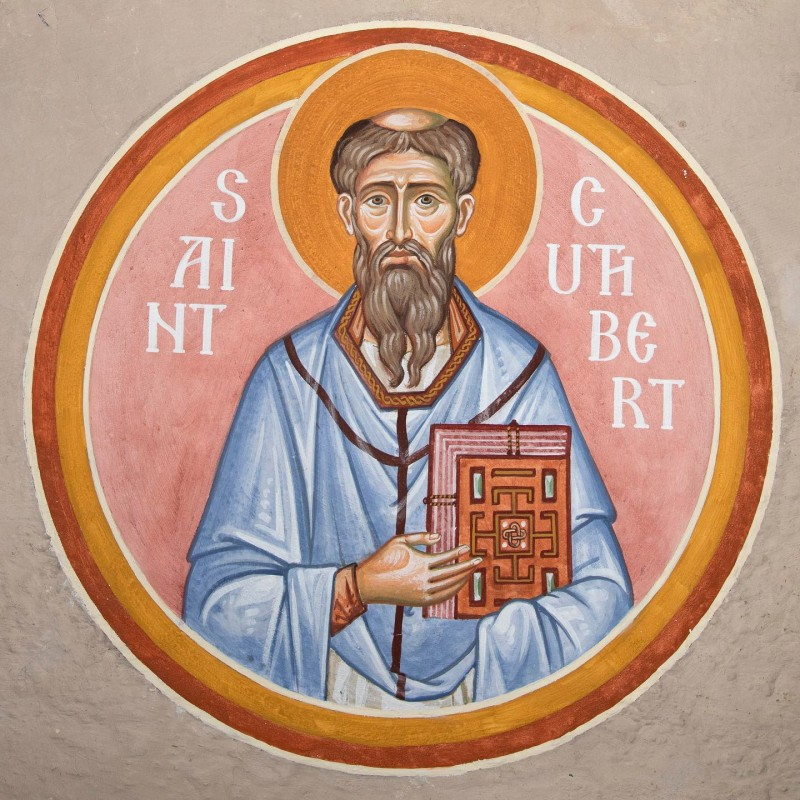
As well as protecting local wildlife, Saint Cuthbert was also a hermit who performed miracles including:
- Calming a raging sea, so stranded monks could return to shore.
- Stopping a strong wind that was hindering boatmen carrying wood.
- Extinguished a fire, saving a village by the power of his prayers.
- He reportedly purified the Farne Islands of demons on his arrival.
- He also knew when he was going to die. And when he did, examination of his body found it had not decayed, after 11 years.
Look out for the upcoming publication Lives of the Wild Saints, by Paul Kingsnorth.
The Holy Island of Lindisfarne
With just 200 residents, Lindisfarne is a small island off Northumberland’s coast, with a strong history of northern saints. It also is resident to many birds and seals, and 650,000 yearly tourists.
If you do visit, check the tide times, as it’s a causeway that gets cut off twice a day by the North Sea. People then have to be rescued. Avoid poor weather/dusk (most people use the bus!)