Give Up Climate Anxiety (we can save the planet!)
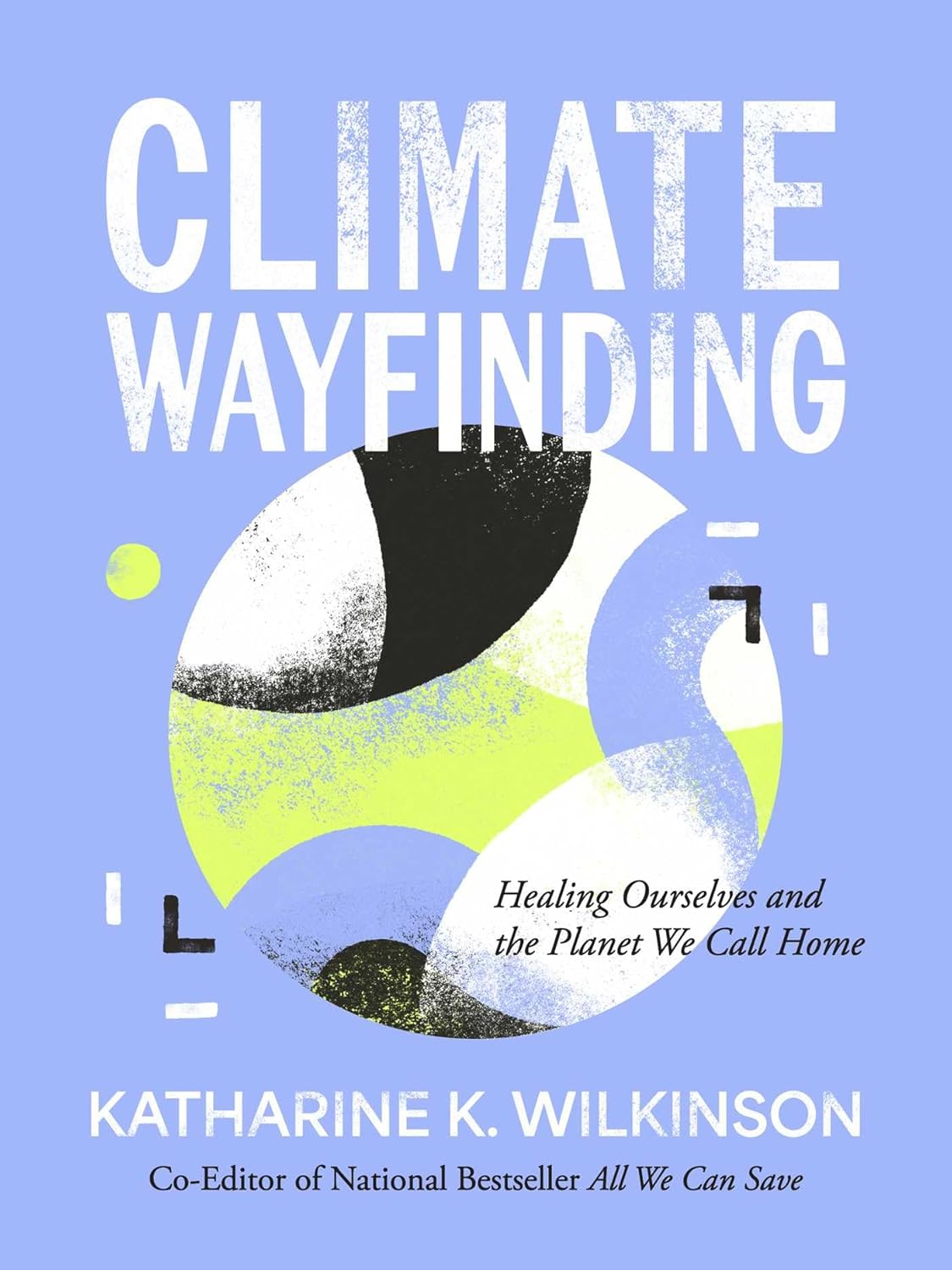
Climate Wayfinding is a book about finding your way in a world that is so uncertain, both in the natural and political worlds. When maps come up short and the path ahead is uncertain, how do we find our way?
This book by a visionary climate leader offers a compassionate and empowering guide to turn ache to action, and doubt to possibility. Find a process to look inward with care, outward with curiosity, and forward with courage.
Ultimately, readers can chart a course, towards playing a unique part in our collective planetary healing. Using personal essays, poetry, art and song. Includes practical exercises and guides for conversation.
Katharine K Wilkinson is a writer and creator, who holds a DPhil in geography and environment from the University of Oxford, where she was a Rhodes Scholar, and a BA in religion from Sewanee University in Tennessee.
Time magazine has named her one of 15 ‘women who will save the world’. She lives in Georgia, USA amid mountains and horses.
Nature is the Answer (a toolkit for eco-positivity)
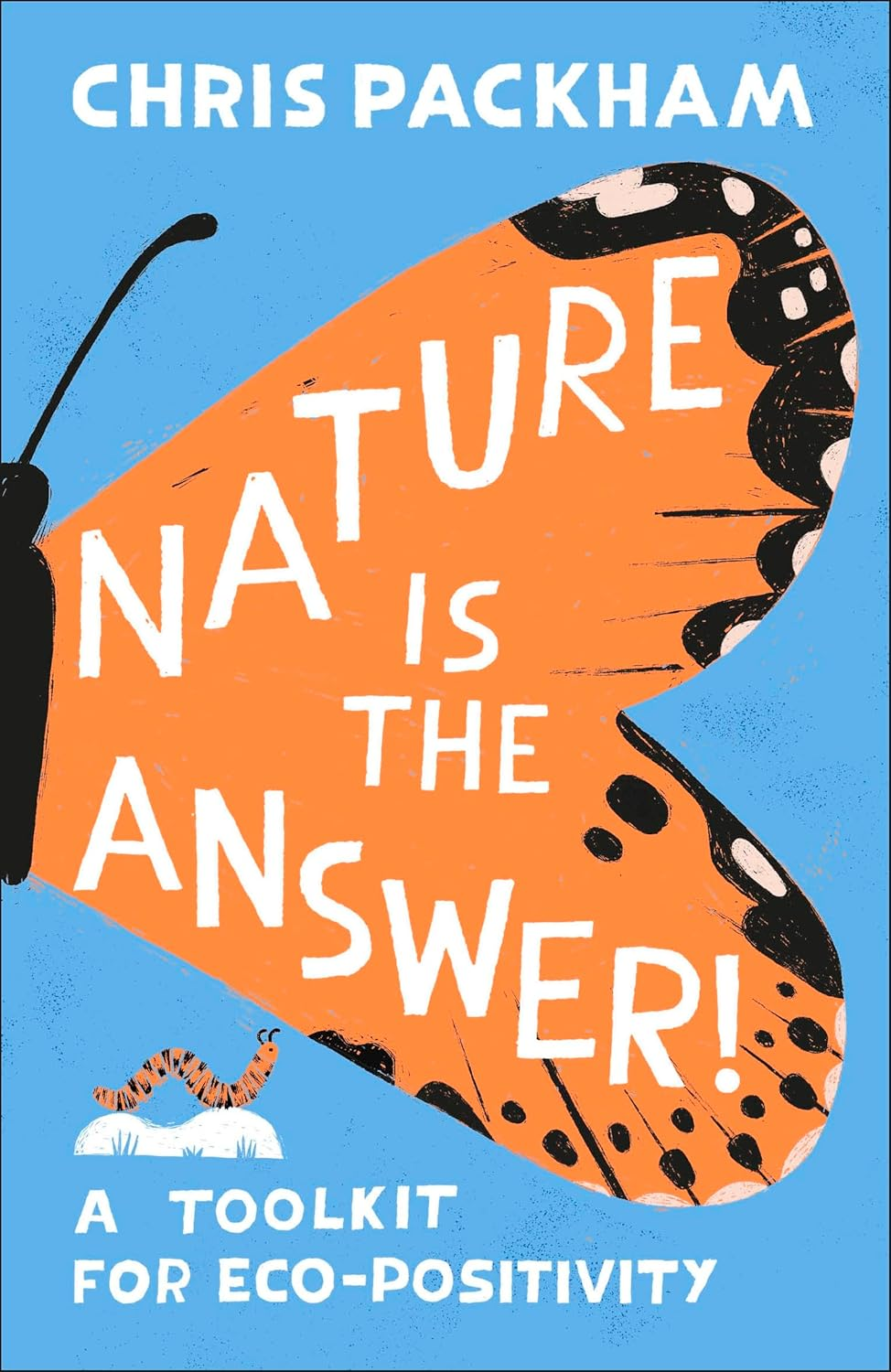
Nature is the Answer is a book about facing eco-anxiety, but turning your concerns about the climate and wildlife into something positive.
Climate breakdown (for those of us who believe the scientists over media and politics) can feel overwhelming. Literally the world will end, unless those in power listen too.
But that doesn’t mean you have to get down. The wild world is an amazing and resilient place. And if eco-anxiety is caused by the state of nature, perhaps the state of nature has answers to our eco-anxiety!
This book (by a popular wildlife presenter who also has Asperger’s Syndrome (which means like Greta Thunberg, he struggles in social situations) knows what it’s like to suffer from eco anxiety. And has developed ways to turn this into a strength, so you can too!
Walks through forest will do far more for your worries, than reading about what Reform UK will do, if elected to power. Apparently the party has just hired an environmentalist, after finding out that 80% of their voters are just as concerned about their (non-existent) policies for wildlife, as with immigrants.
The book also includes information on how to navigate social media (be nice!) and discerning ‘fake news’ (that’s climate science denial, not any channel that’s not Fox News!)
Chris Packham is one of England’s most popular TV wildlife presenters, who hosts BBC Springwatch and Autumnwatch alongside Michaela Strachan and Iolo Williams, and he is step-father to fellow conservationist Megan McCubbin, with whom he often works.
A real champion of native wildlife, he even took the government to court (he lost) to try to stop HS2 (due to it decimating our forests and wildlife). And has written an open letter to Ant and Dec, to ask them to stop presenting a program that kills wildlife (and disrupts ecosystems) for ‘entertainment’.
Circuses and dancing bears have gone, cock-and-dog fighting are the preserve of psychopathic criminals. We have no performing dolphins, no chimpanzees dressed up for tea time. Exploitation of wildlife for entertainment, damages the reputation of a ‘nation of animal lovers’.
A qualified zoologist, Chris used science to oppose the badger cull, which has now been cancelled, but not with immediate effect. Read more on how to prevent bovine TB (without harming badgers).
Why climate anxiety feels so heavy
A dramatic headline hits fast. A flood video lingers. After a while, doomscrolling trains your attention to hunt for danger. As a result, your body stays tense, even when you want to switch off.
Helpful concern has a clear direction. It points to a next step, even a small one. Anxiety feels different. It blurs the edges, so everything seems urgent and nothing feels possible. You might swing between frantic Googling and total avoidance. You might also start thinking you’re personally responsible for fixing a global system.
A good rule: if your climate feelings lead to steady action, they’re serving you. If they lead to shutdown, they need care, not more pressure.
The three traps that make you feel powerless
- First, all-or-nothing thinking says, “If I can’t do everything, why try?” The fix is to choose a “good enough” step you can repeat. One regular action beats ten perfect plans you never start.
- Second, personal blame overload tells you your lifestyle is the whole problem. Yes, choices matter, but so do energy systems, transport, housing, and policy. The fix is to pair one personal habit with one collective action, like writing to your MP.
- Third, the doom loop media trap feeds you fear without context. The fix is to pick a couple of trusted sources, then balance hard news with solutions and local progress. Your brain needs the full picture to stay steady.
What is already working now
Hope isn’t pretending everything is fine. Hope is noticing what’s changing, then pushing it faster. While emissions still need to fall quicker, real solutions are spreading because they’re practical, cheaper, or simply better.
Clean electricity is growing. Transport is changing too, with more electric options and better public transport in many places. Buildings matter as well, because insulation and efficient heating cut bills as well as carbon.
Nature work is expanding, from peatland restoration to better tree cover, because healthy ecosystems store carbon and reduce flood risk. Methane cuts are also gaining attention, because they can cool near-term warming faster than many people realise.
Progress is uneven. Some regions move quickly, others lag. Still, direction matters. Once a technology, policy, or habit becomes normal, change tends to speed up.
The quiet wins you may have missed
Here are a few signs of climate progress that don’t always make the front page:
- More electric buses and cars: fleets are switching, which cuts noise and tailpipe pollution in towns.
- Homes getting more efficient: insulation upgrades and heat pumps are growing, even if slowly.
- Cities and firms setting targets: not all targets are perfect, but they shape budgets and plans.
- Cleaner air rules: stronger air-quality policies push cleaner heating and transport choices.
- Nature restoration projects: local groups are restoring rivers, peat, and habitats that store carbon.
Turn anxiety into quite action
Start with consistency over intensity. Pick a small set of actions you can repeat for months. Then add one community or political action, because that’s where the biggest levers sit. Finally, protect your headspace, because stressed people don’t stay in the fight for long.
A simple weekly routine can help. Choose one short slot, maybe 20 minutes on a Sunday. Use it to do one action (email, switch, book, donate, talk), then stop. You’re building a habit, not a crisis response.
Think of climate action like brushing your teeth. Small, regular, and boring beats rare bursts of effort.
Pick your three: one home win, one money win, one voice win
Choosing three keeps it realistic. Mix and match based on your budget, health, and time:
- Home win: improve insulation, switch to a green electricity tariff, reduce food waste, or plan for a heat pump when you’re ready.
- Money win: buy less and repair more, choose lower-carbon banks or funds where you can, and review pensions or savings if you have them.
- Voice win: vote, write to your MP or councillor, join a local group, talk with family without lecturing, or support a trusted climate charity.
Set boundaries with climate news
Staying informed helps, but constant exposure can drain you. Try these simple boundaries:
- Choose one or two sources you trust, then ignore the rest.
- Set a time limit, like ten minutes a day, and stick to it.
- Avoid late-night scrolling, because sleep is part of your resilience.
- Follow solutions too, so your feed includes context and progress.
- Take planned breaks during stressful weeks, without guilt.
- Do one action after reading, even a small one, to close the loop.
If your body feels wired, reset it. Take a brisk walk, breathe slowly for a minute, or talk it out with someone grounded. Your nervous system needs signals of safety.