Leaf, Cloud, Crow: A Weekly Backyard Journal
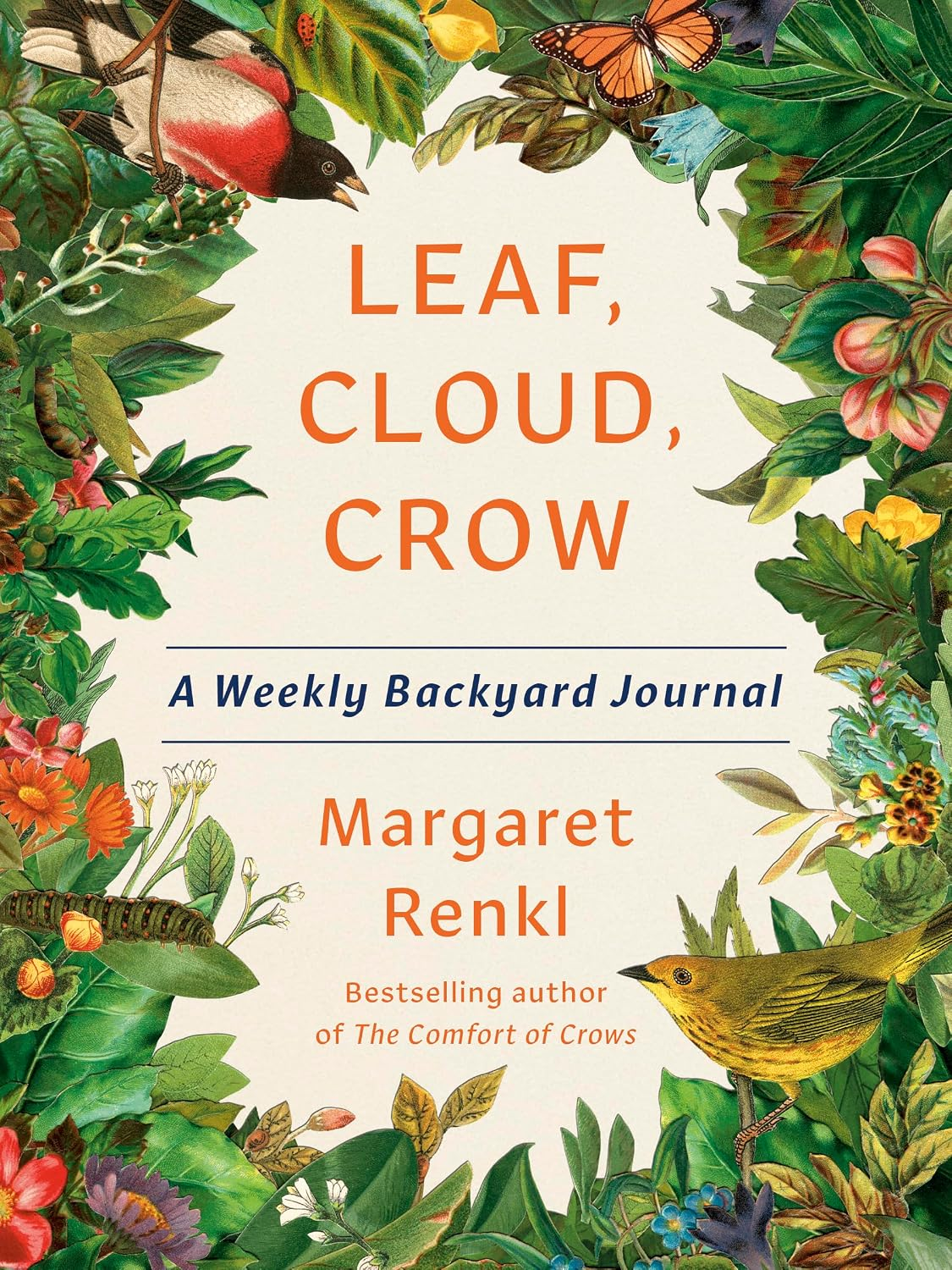
Leaf, Cloud, Crow is an illustrated journal to guide observations of nature in gardens and yards, city parks and vacant lots, or even the sky, enhanced by inspiring prompts from the author.
What do the bare branches of winter allow you to see? How does summer’s abundance provide for different wild animals, and can you find abundance in your own life? What changes have you noticed in natural habitats near you – not just from month to month, but from year to year?
If inspired to draw in nature, know that mushrooms and bluebells are toxic to pets. Read more on pet-friendly gardens. Use your nature journal with eco-friendly pencils or nontoxic watercolour paints.
Grow more attuned to all the ‘radiant things bursting forth in the darkest places, in the smallest nooks and deepest cracks of the hidden world’.
A howling love letter to the world, the story of what we’ve lost and what we can save and the abundance of wonder in our own backyard.
Who wrote this nature journal?
Margaret Renkl is an opinion editor for The New York Times, where her essays appear weekly. She is also founding editor of Chapter 16 (a daily literary publication in Tennessee) and a graduate of Auburn University and University of South Carolina. She lives in Nashville, USA.
Time in Nature is Therapeutic
Nature journaling requires present-moment awareness. When you are focused on capturing the silhouette of a red-tailed hawk or sketching the delicate petals of a wildflower, your mind stops spinning about school, work, or social media.
This state of immersive focus acts as a form of meditation. Breathing fresh air while engaged in a calm, creative activity lowers cortisol levels, reduces anxiety, and helps restore mental energy. It gives you a dedicated space where there are no deadlines, notification pings, or pressure to perform.
Creates a Unique Record of Seasonal Shifts
Phenology is the study of cyclic and seasonal natural phenomena—such as when flowers bloom, when leaves change color, or when migratory birds arrive. By keeping a nature journal over months or years, you create a personalized historical record of your local ecosystem.
Flipping back through past entries allows you to track patterns over time:
When did the first robins appear last spring?
How long did the oak tree take to drop all its leaves in the autumn?
What was the temperature when the first monarch butterfly arrived?