Stout Brummie (brewed in Birmingham!)

Stout is simply fermented ale, usually made with roasted barley, with coffee, caramel or chocolate notes, invented in the 18th century as a stronger version of porter (an affordable drink for manual workers.
Stout Brummie (also in a ‘sober version’) is Birmingham’s answer to Guinness. Profits stay within the West Midlands, unlike big brands that go off to shareholders who-knows-where. And a portion of profits go to local charities (presently an air ambulance and Sober Brummie, which helps locals with alcohol addiction). It also sells other beers (and a gin).
0.5% is the legal ‘no alcohol’ label, but know that even bread and fruit has a little. So it’s still best to avoid for pregnancy and nursing.
Always pop ring-pulls back over holes (and pinch tops) before recycling, to stop wildlife getting trapped. If you see any plastic-beer-can wraps, rip up the holes and place in a secure covered bin, again to stop birds and wildlife being harmed. They should be banned.
If you run a shop, off license, pub, restaurant or hotel, get in touch for trade order queries.
After a long campaign, Guinness is now vegan. But it’s still owned by a big-multi-nation, and it’s not even Irish (the brand was founded by a Protestant who would not allow Catholics to work for him, although he did use profits to help peace?)
But he famously would not let the newly-formed Irish government use his ‘harp logo’. That’s why the government had to turn the harp around in order to legally use it. If you look closely, you’ll find that the business and government have harps facing different directions!
The other main brand of stout in pubs (Belhaven) is not vegan, meaning it uses isinglass (fish bladder) to filter impurities (not good for other creatures, and sign of a drink that’s also not good quality – better brands use better and slower methods to filter drinks).
Common types of stout you’ll find are:
- Dry (Guinness is the classic example)
- Milk (this is obviously not vegan)
- Oatmeal (oats create a creamy nutty texture)
- Imperial (very strong, with intense flavours)
Other good brands of artisan vegan stout
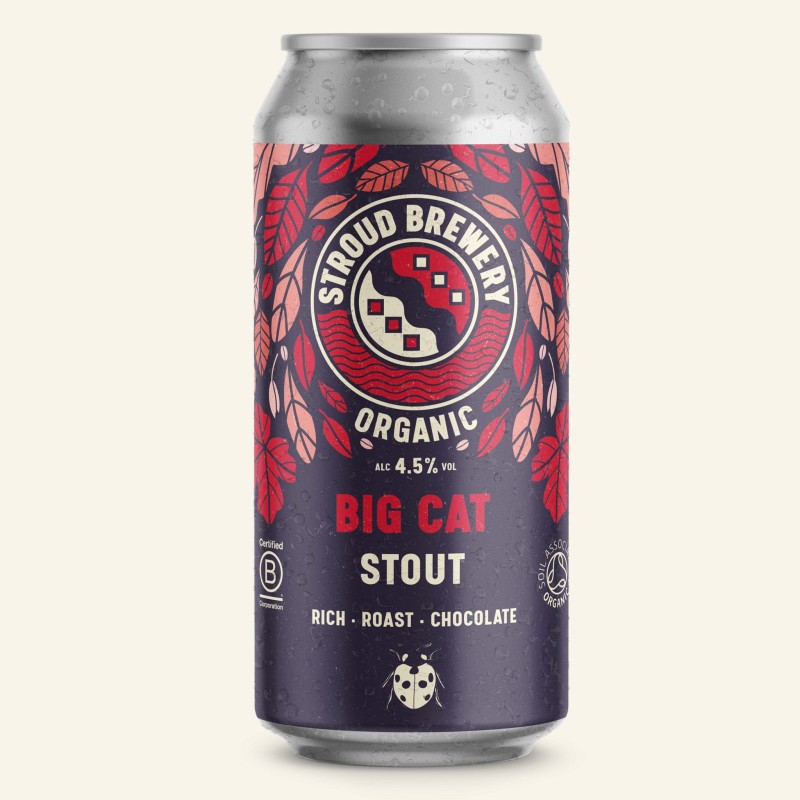
Stroud Brewery Big Cat Stout is (like all their beers) vegan-friendly. Brewed in a town that is known as ‘Notting Hill with wellies!’
Below Brew Pastry Stout (low alcohol) is like ‘liquid chocolate’, with flavours of chocolate and honeycomb (sounds like a Crunchie bar!)
Girls Who Grind Coffee also offer a no-alcohol vegan stout, an ideal alternative to Guinness. Brewed by women, this has a touch of sweetness, with the gentle lift of hops.
Nirvana Brewery offers alcohol-free beers created by a woman, who wanted her dad to still enjoy beers, after he gave up alcohol. This stout has aromas of chocolate, roasted barley and coffee, with a hint of vanilla sweetness. It also uses a special enzyme during fermentation to result in a beer that’s lab-tested to contain less than 20ppm of gluten.
Note its mocha porter is not vegan-friendly (contains lactose).
Best ways to enjoy vegan stout
As you likely know if you’ve ever done bar work (ah, student memories!), you pour a stout by tilting the glass near the end, with a steady had. This is to ensure the roast and chocolate notes taste better (why, who knows?)
You can also cook with stout, it brings depth of flavour in the way as slow-cooked onions do (you can even use it in dessert recipes).
Try serving stout with:
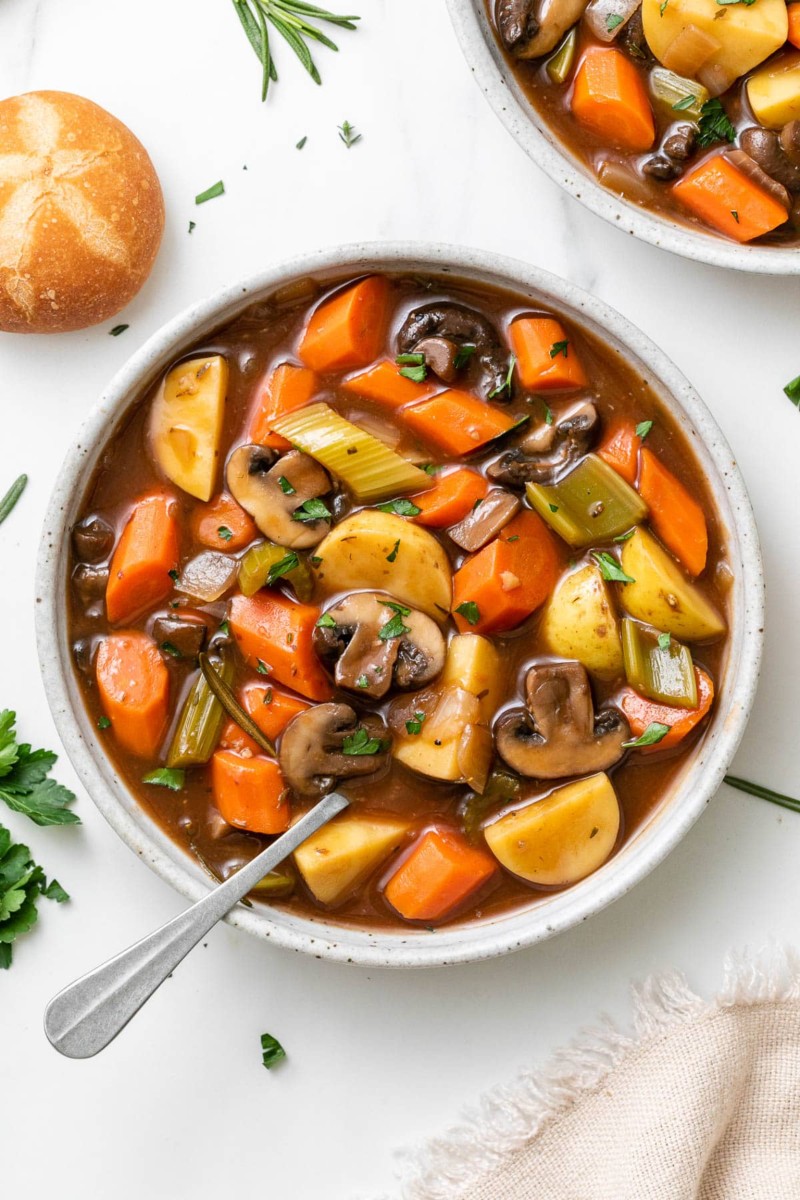
- Vegan Irish Stew (The Simple Veganista) is the obvious recipe choice.
- A stout float sounds odd until you try it. Pour a small glass of vegan stout, then add a scoop of vegan vanilla ice cream. It turns into a coffee iced dessert.
The roasted bitterness of stout loves salt and smoke. So if you are going to be inspired by French people (and drink alcohol with food, rather than sip pint after pint until you fall over), think of pairing dark chocolate with sea salt, for a few ideas on good meals to serve it with:
Before cooking, read up on food safety for people and pets (many foods like alliums, mushrooms, salt and chocolate are unsafe near animal friends). Bin allium scraps (onion, leeks, garlic, shallots, chives) along with rhubarb, tomato and citrus scraps, as acids may harm compost creatures. It’s okay to put them in food waste bins (made into biogas).