Why linen is a sustainable fabric choice
Wild Linens (quality linen fabric for sewing)
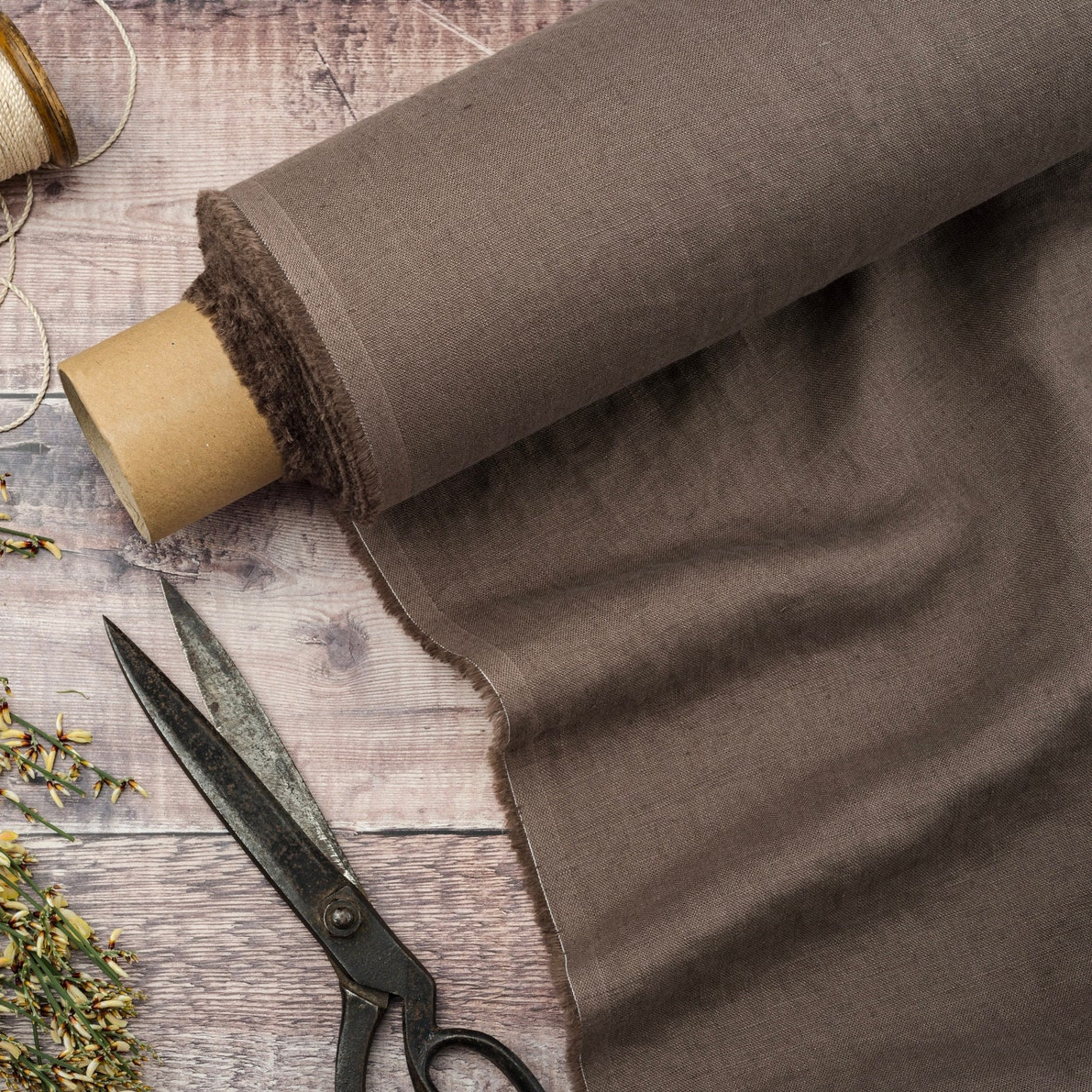
Wild Linens is one of the best places to source linen fabric, if you like sewing your own clothes. Linen is from the flax plant, and it can (unlike cotton) be grown in Europe, a real popular industry is in Lithuania, in Eastern Europe.
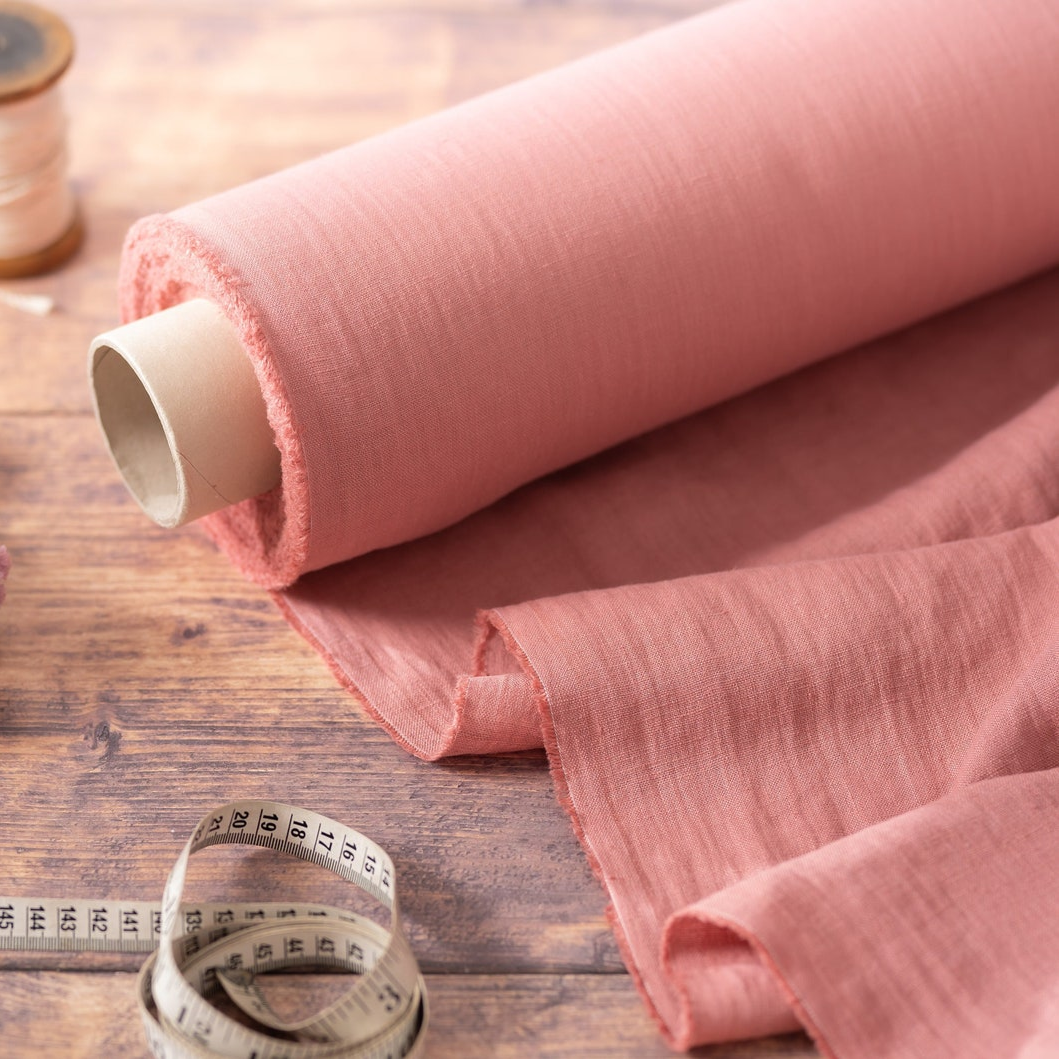
Linen is warm in water and cool in summer, is easily laundered without any worry about micrplastics, and gets better and softer with age. It uses 3% of the water needed to make cotton.
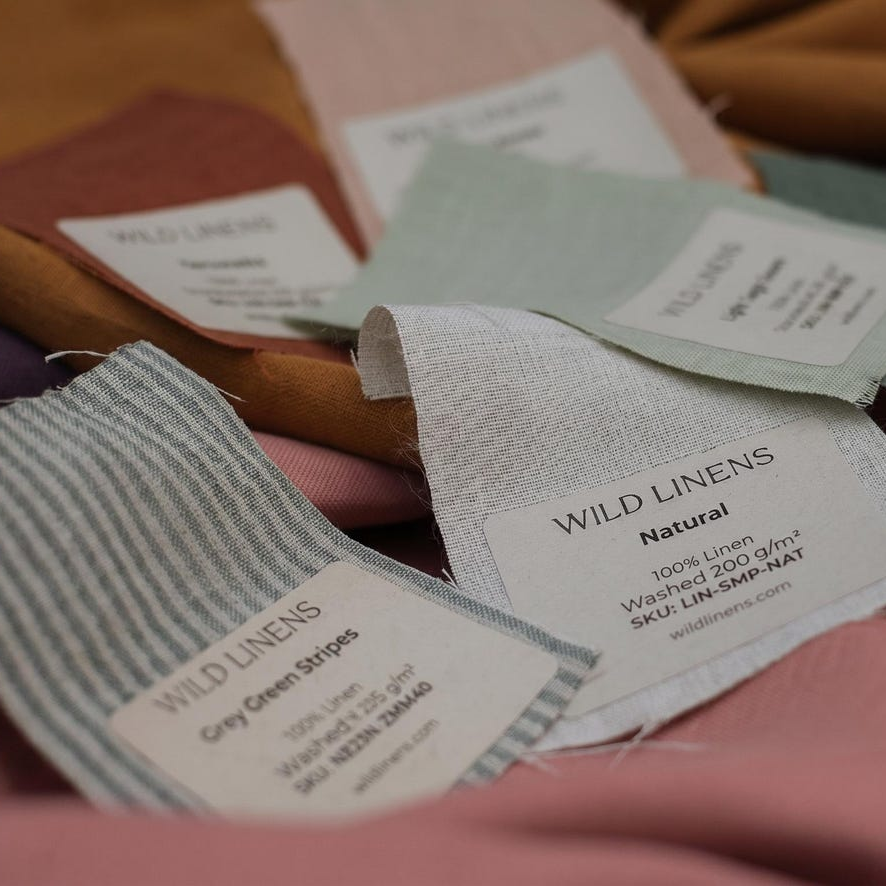
This online shop has several colours to choose from! You can also buy small fabric samples, to try before you buy a whole order. Colours include:
- Oatmeal
- Rose pink
- Cocoa brown
- Pale yellow
Linen lampshade safety tips
If you buy the linen lampshades, use LED light bulbs that produce less heat and follow the lamp’s maximum lumen/wattage advice. This brand’s lampshades are backed with a white fire-resistant PVC lining and pass the Lighting Association’s glow wire test for safety (it recommends using low-energy bulbs).
A set of 2 waffle linen hand towels
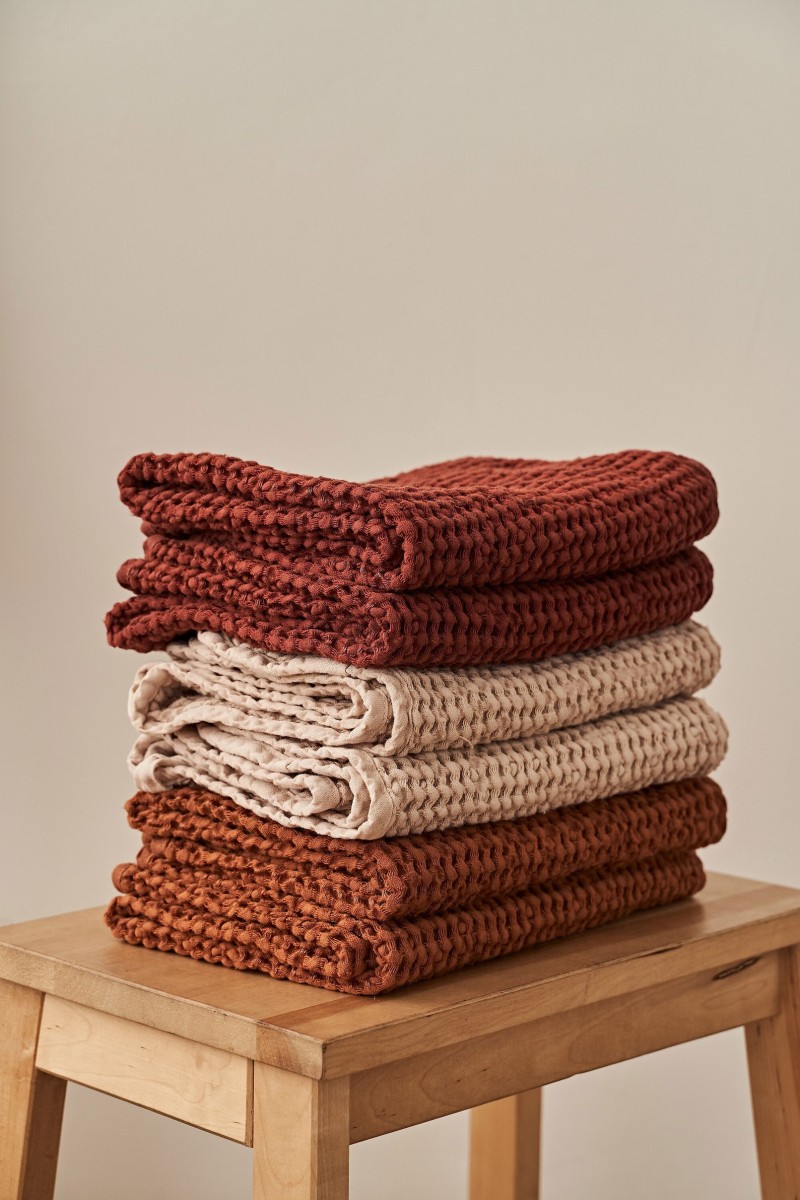
This set of 2 waffle linen hand towels is an ideal gift to yourself or others, they absorb moisture well and bring charm to your bathroom or kitchen. Linen is an eco material made from the flax plant. Blended with cotton.
In unique colours, each towel is dyed and washed in small batches, made from European linen fabric that is OEKO-TEX 100 certified for quality and sustainability.
Even the threads are made from cotton. Made in Lithunania, one of the popular places for quality linen fabrics.
Where is Lithuania?
Lithuania is a beautiful forested country in Eastern Europe, home to one of the world’s oldest languages, similar to Sanskrit. It’s also a very religious country, with Hill of Cross having over 100,000 crosses placed by pilgrims and visitors.
Its national dish is Pink Soup, made from cold beetroot!
Where to recycle old towels
You don’t have to throw them out. You can just deposit them (even frayed or stained) in textile banks (materials are shredded to make insulation and other industrial goods).
Don’t use towels with tassels to line wildlife rescue boxes, as they could trap paws and claws.
Luxury linen towels (in 5 sizes)
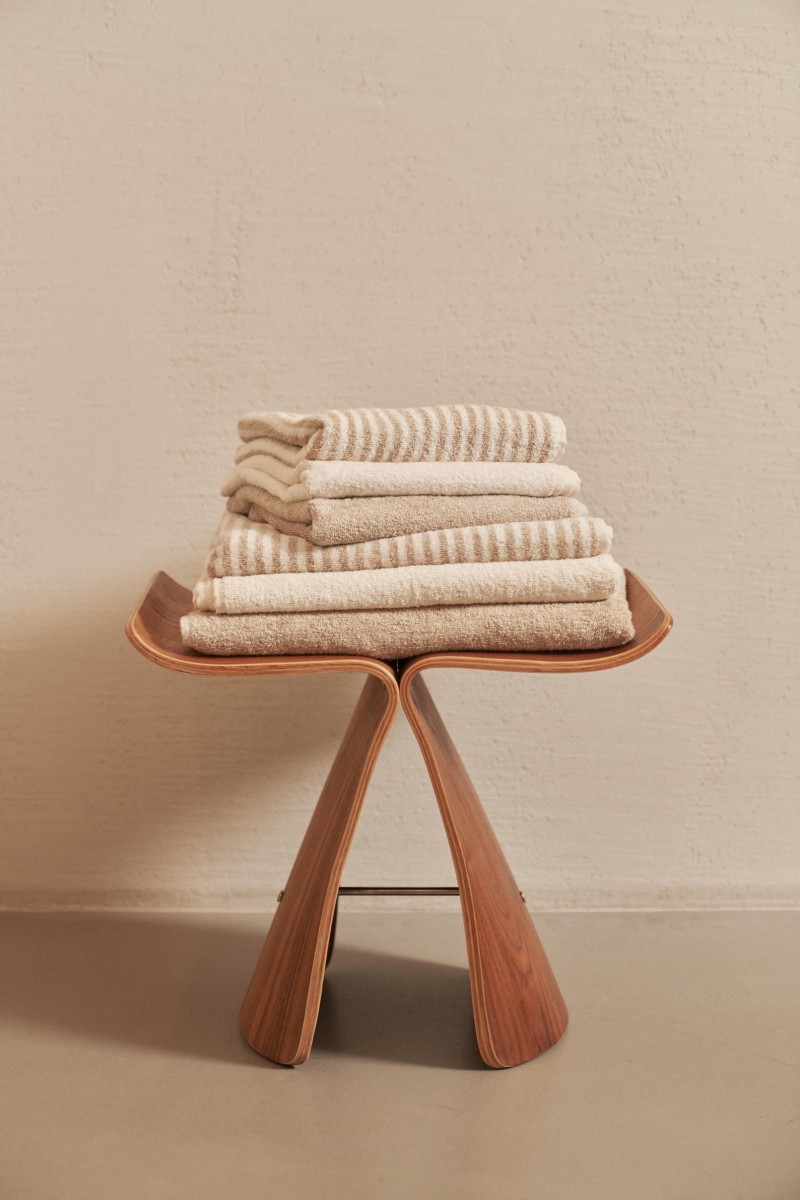
These luxury linen towels are as sort and absorbent as you can get. Linen (which unlike cotton can be grown in Europe) is from the flax plant, and gets softer with each wash, and lasts for years.
These towels offer a plush feel to wick away moisture after a shower or bath, while the cotton base provides structure and more softness. Together they form a dense yet lightweight weave.
Safe to launder without releasing microplastics, these are perfect also for spas and saunas, for unequalled comfort and elegance.
The towels are sold in 5 sizes, with linen hanging loops for easy storage and drying. They are also stone-washed for maximum softness, in a natural colour to blend with any bathroom decor.
Where to recycle old towels
You don’t have to throw them out. You can just deposit them (even frayed or stained) in textile banks (materials are shredded to make insulation and other industrial goods).
Don’t use towels with tassels to line wildlife rescue boxes, as they could trap paws and claws.
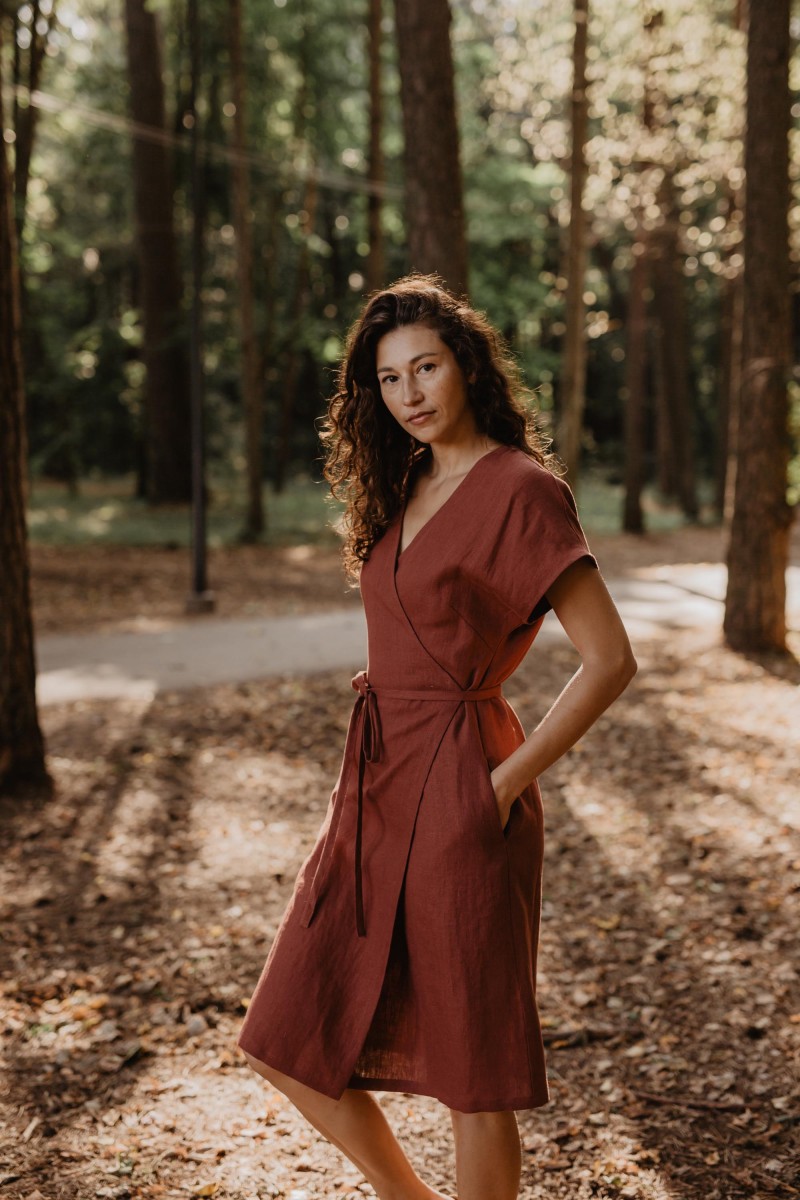
Amour Linen is a sustainable brand of linen clothing for men and women, from the beautiful country of Lithuania. Linen is from the flax seed plant. And unlike cotton, can be grown in Europe. Cool in summer and warm in winter, it is also easily laundered, without releasing microplastics in washing machines.
Linen is a lovely fabric that (unlike cotton) can be grown in Europe. It’s made from the flax plant, and far less ‘ thirsty’ than cotton, so can be grown in areas with less rainfall.
It can also grow in por soils and so easier to grow organically. Once grown, other parts of the plant can be used (the oil for seeds both for humans and animals).
Then it biodegrades at end of use. The material lasts for years, becoming softer with each wash. It also feels warm in winter and cool in summer, and can be used for both clothing and bedding.
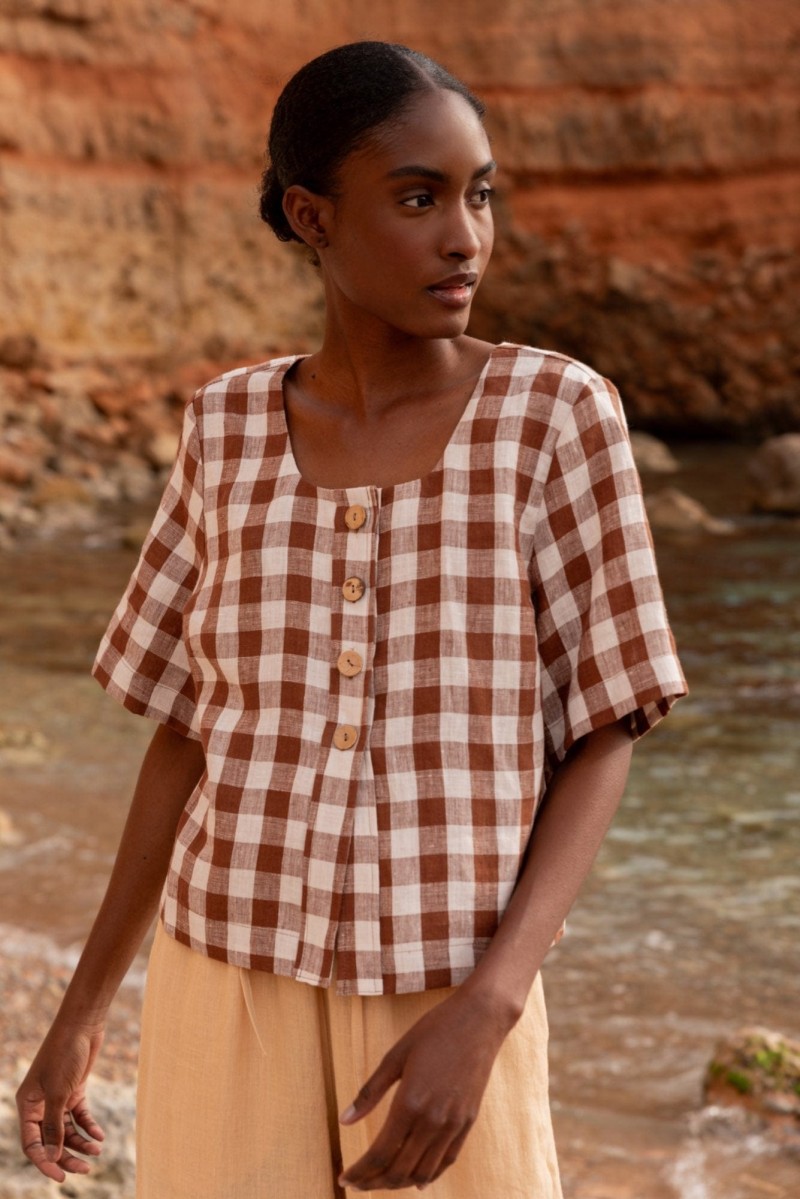
With a slogan of ‘buy less, buy better’, linen has deep roots in Lithuania, and all these items are made by the companies in-house seamstresses. The natural fibres are also locally sourced, and there is also a zero waste line of items, made from leftovers.
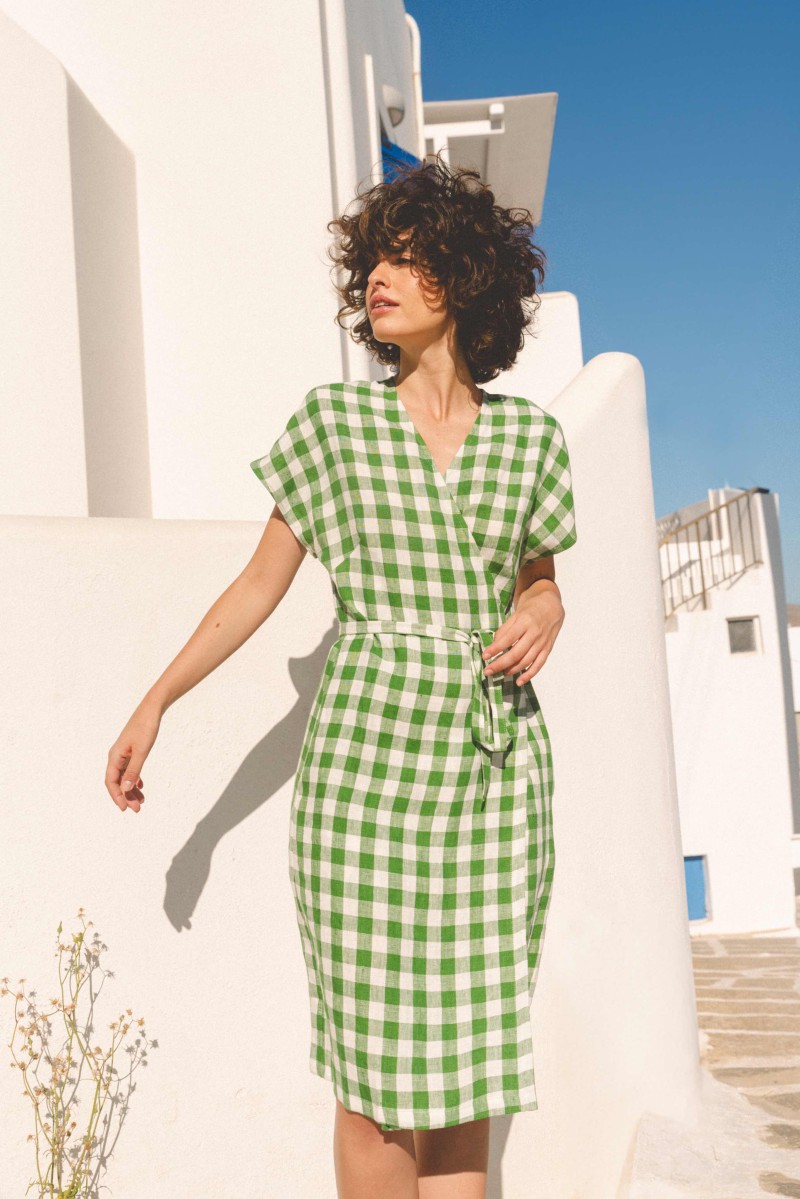
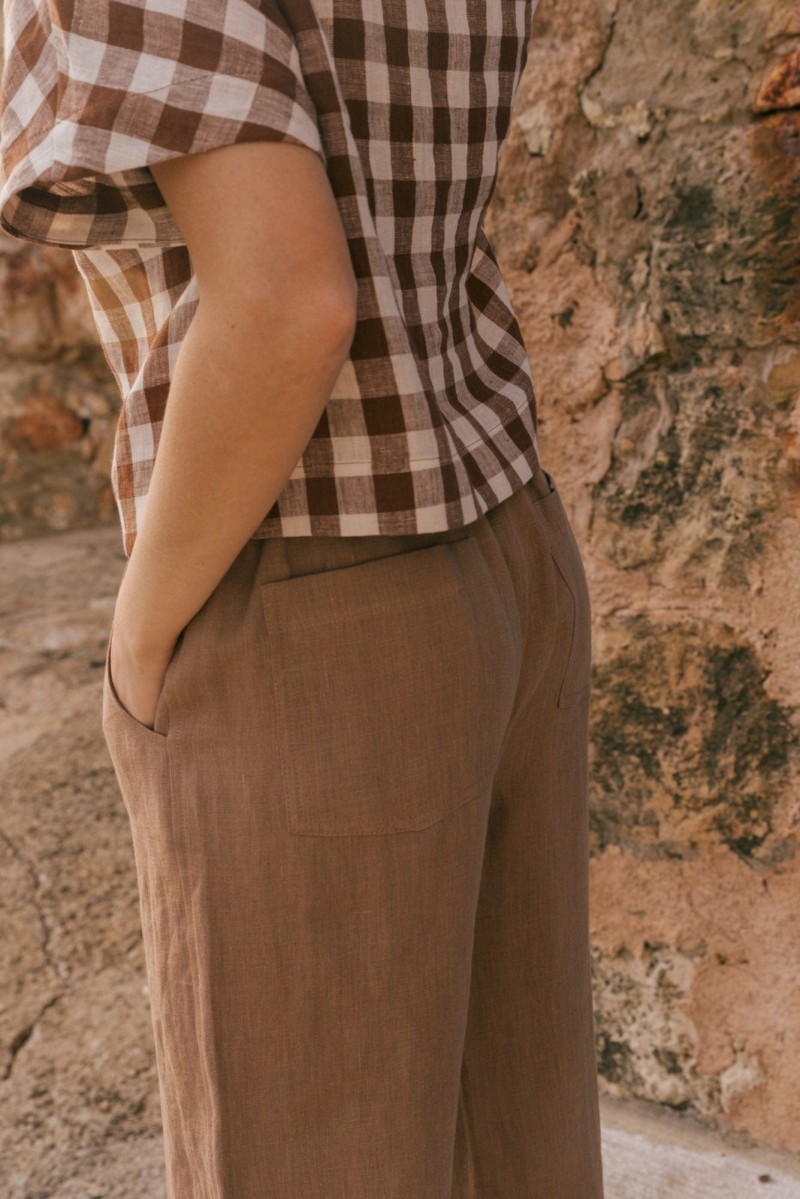
There are pretty dresses in plain or gingham style, plus trousers for summer days.
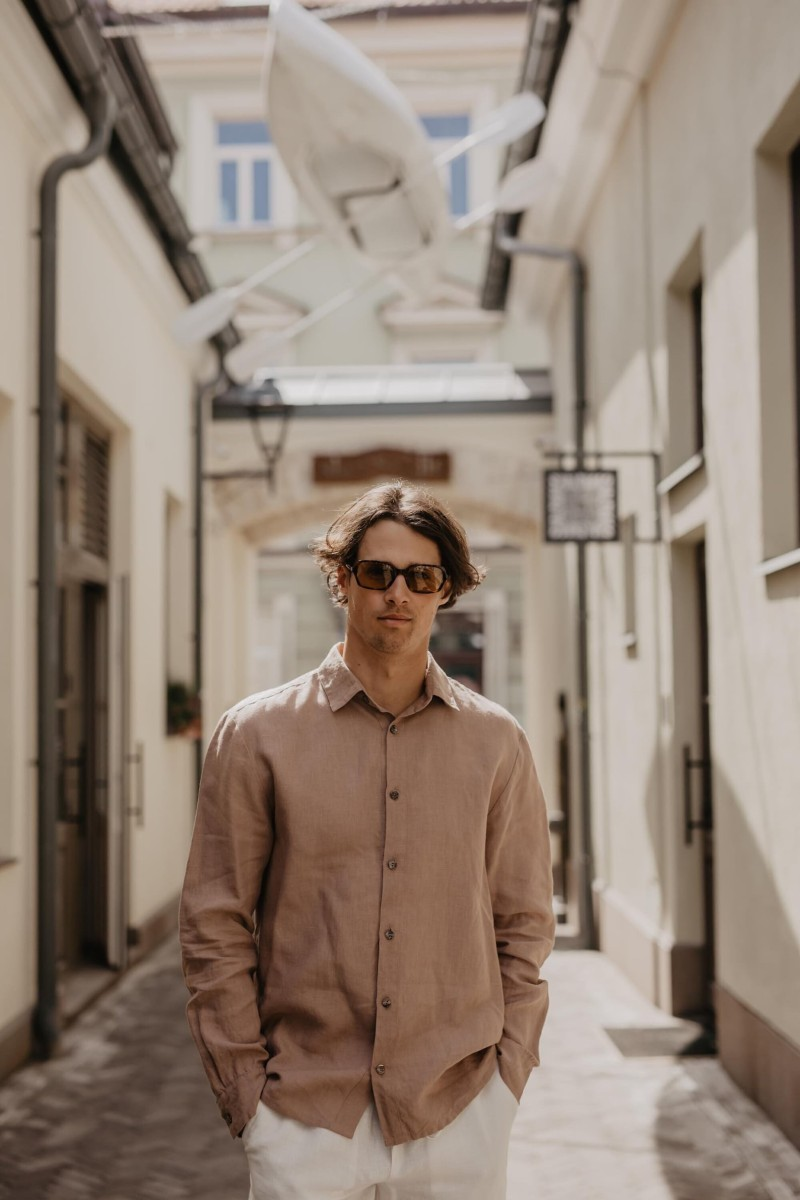
Plus shirts and shorts for men:
Amour linen bedding
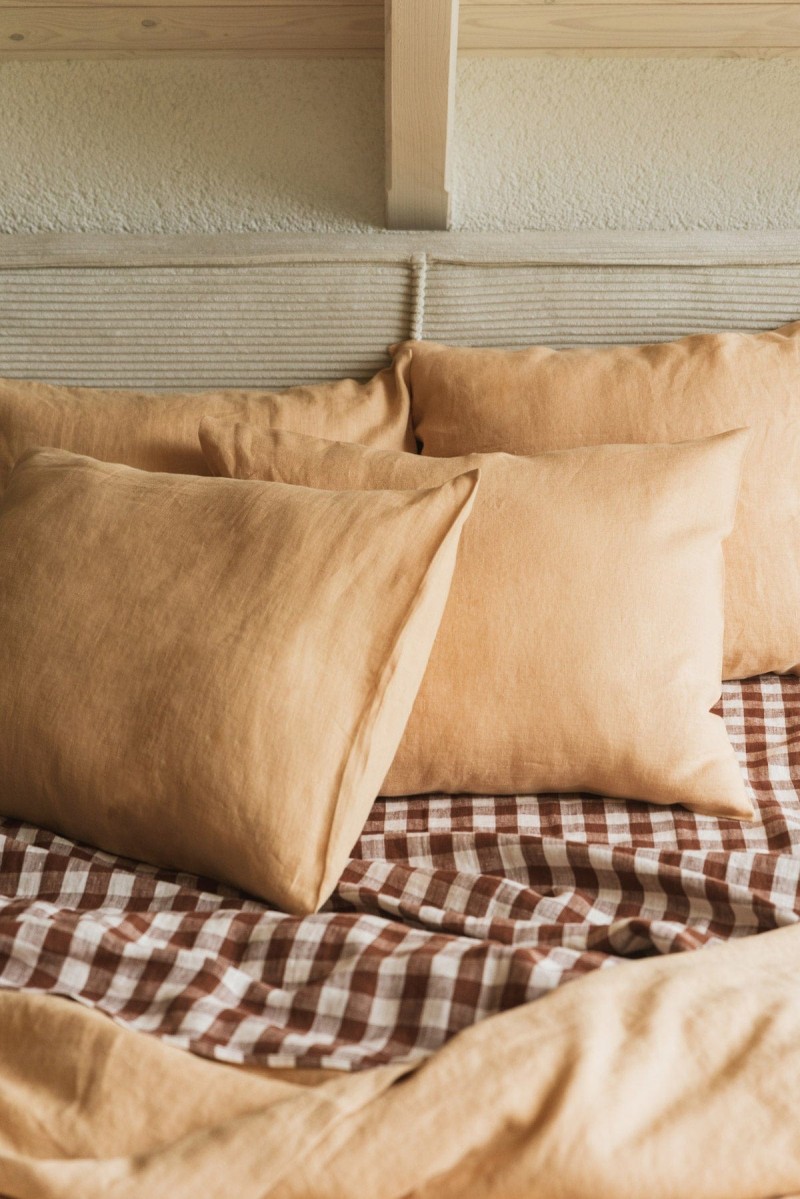
Amour Linen also makes a line of linen bedding, much of it stone-washed. Ideal for a cheerful touch of decor to your bedroom. The range includes waffle blankets made cotton blend.
Wash natural bedding with mild laundry powder (unscented for pregnancy/nursing and if pets sleep on your bed. Avoid fabric conditioner (reduces absorbency) and line dry bedding where possible, smoothing by hand or ironing while a little damp.
Sustainable bedding and fire regulations
Organic bedding (and pyjamas) are free from chemical fire retardants. They still have to (legally) comply with fire regulations, but as with all bedrooms, use common sense to keep safe in the bedroom:
- Don’t smoke in bedrooms (or indoors – use a personal ashtray outside).
- Avoid overloaded plugs
- Choose oil radiators over convector heaters (these give off hot air through fans, and cause heatstroke in people and pets, as well as being very expensive to run).
- Don’t leave warm laptops or phones on beds.
- Test smoke alarms weekly
- Avoid fabric conditioners (these can increase flammability in fabrics). You can soften clothes naturally by adding half a cup of cleaning vinegar to the rinse cycle (or half a cup of bicarbonate-of-soda to the wash cycle).
Avoid perfumes, essential oils or scented candles in bedrooms near babies or pets. Avoid pet-toxic indoor plants (including sago palm and lilies).