Sustainable showers (soap, shower & plastic-free)
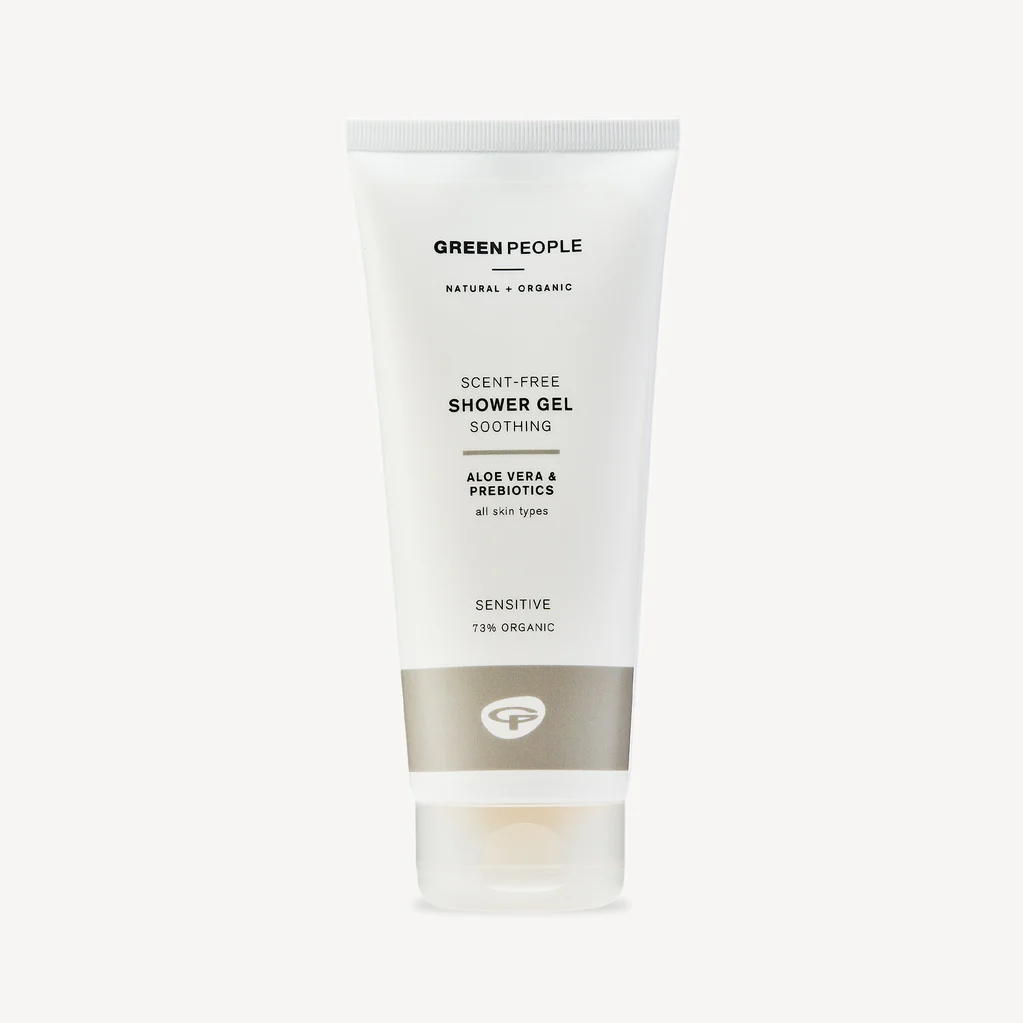
Green People scent free shower gel is made with organic ingredients, and sold in easy-to-recycle packaging. Ideal for sensitive skin or allergies (and also for pregnant/nursing women due to lack of essential oils), this is clinically proven to be kind to skin.
Choose scent-free for pregnancy.nursing.
Suitable also to cleanse the face, just lather up and rinse off in the shower. You can also use this for the bath as a scent-free bubble bath.
This shower gel contains:
- Plant-based polysaccharides for lasting hydration
- Soothing organic aloe vera
- Prebiotics to protect the skin barrier
- Yucca as a soothing foaming agent
Green People moisturising shower gel
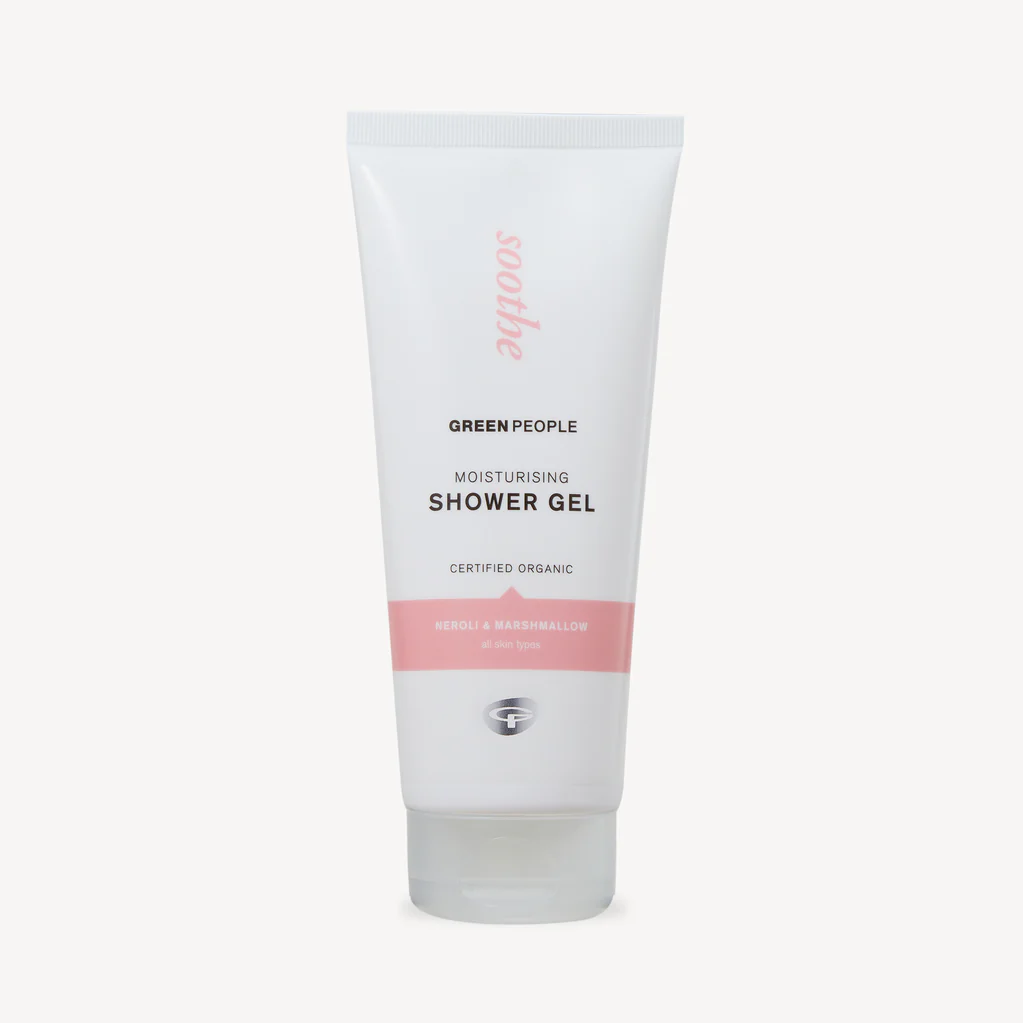
Green People moisturising shower gel is ideal for dry or tight skin, made with organic ingredients and sold in easy-to-recycle packaging. Calming and soothing yucca plant offers lather.
Ideal for gentle skin, it has a floral sweet neroli aroma, to transform an ordinary shower into a spa-like experience. It also can be doubled up as a natural bubble bath. Just pour into running water.
This shower gel also features soothing marshmallow, to calm redness and maintain skin moisture levels. Cooling aloe vera hydrates skin.
At end of use, just place the sugar-cane tube in household recycling.
Green People daily aloe shampoo & shower wash
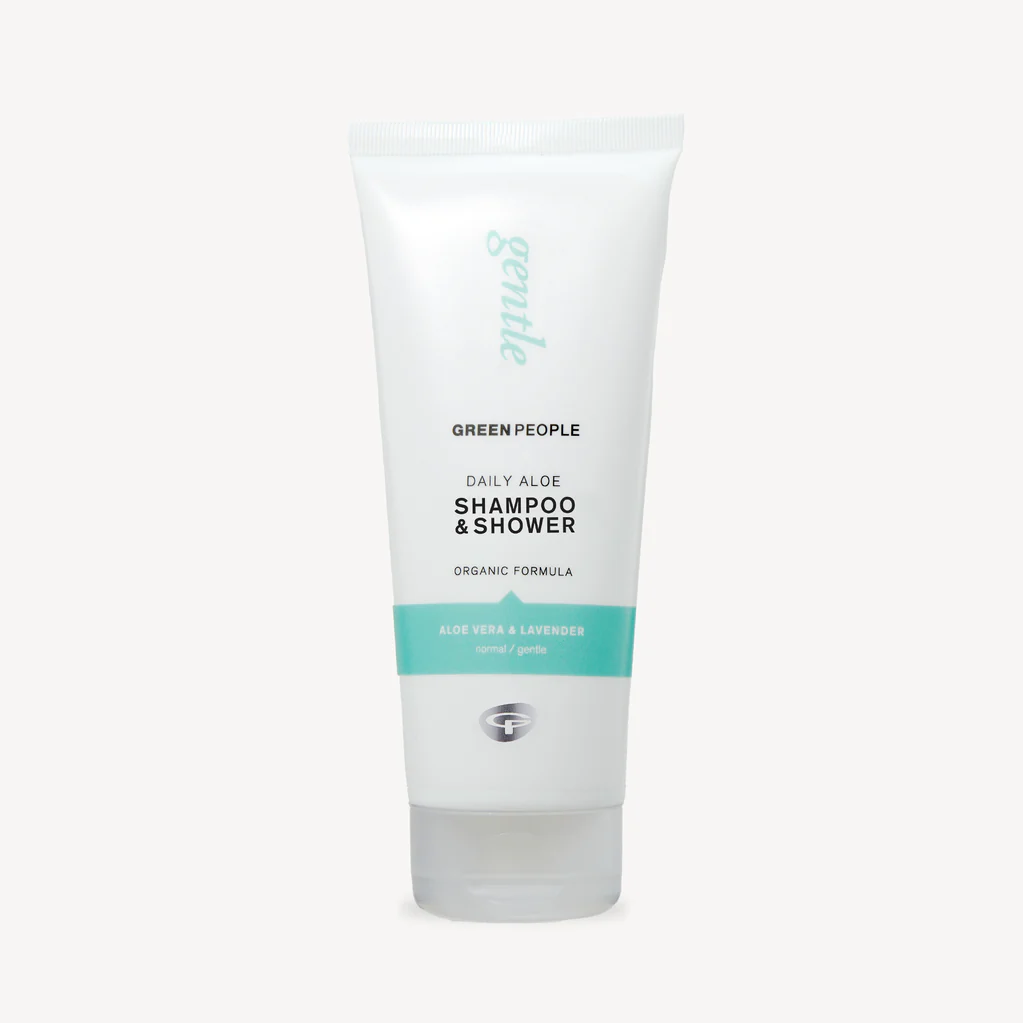
Green People daily aloe shampoo & shower wash is made with organic ingredients, and sold in easy-to-recycle packaging. It’s an ideal multi-purpose product to wash both your hair and body, without need for buying two items.
Free from harsh foaming irritants or scalp-irritating alcohol, this gentle formula is rich in soothing organic aloe vera to nourish from top to toe.
Made with just 10 ingredients, it uses gentle yet deep-cleaning foaming agents derived from coconut and corn, to leave your hair and body super-soft and clean. Features a light lavender aroma for floral notes.
Dispose of empty sugar-cane squeezy tube in household recycling.
Daily aloe hair conditioner
For long, tangled or dry hair, use with the matching daily aloe conditioner. Also scented with lavender, with hair-strengthening B vitamins and quinoa protein.
Miniml refillable natural body washes
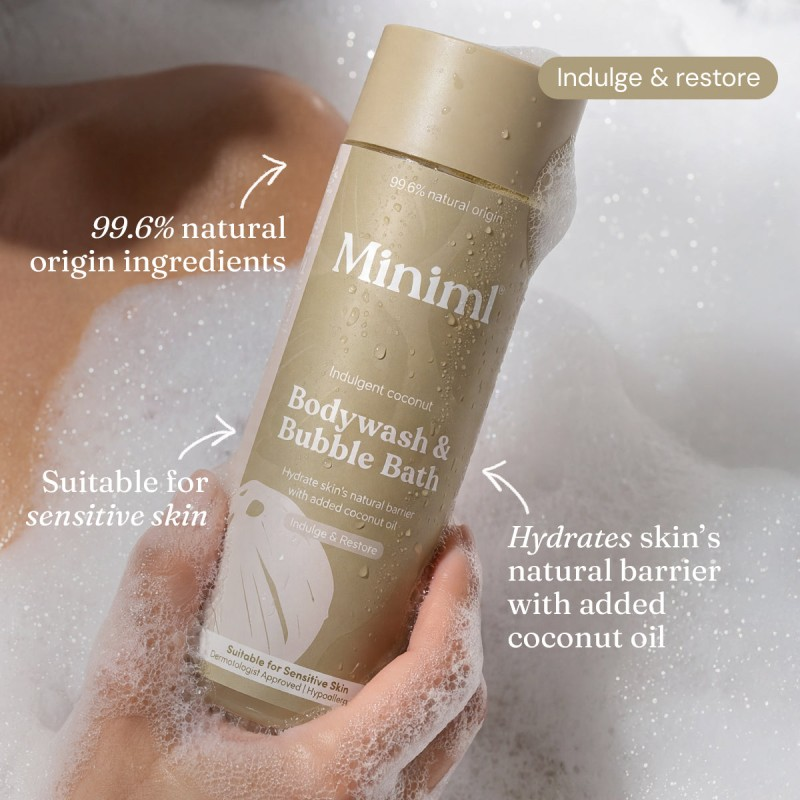
Miniml natural body washes are made with biodegradable ingredients (including Yorkshire water) and scented with real essential oils. They also double up as bubble baths!
Purchase your favourite scent. Then you can buy big refill tubs to decant to save money. You can find many shops nationwide where you can refill. Or use the QR code to send back empty drums for washing and refilling.
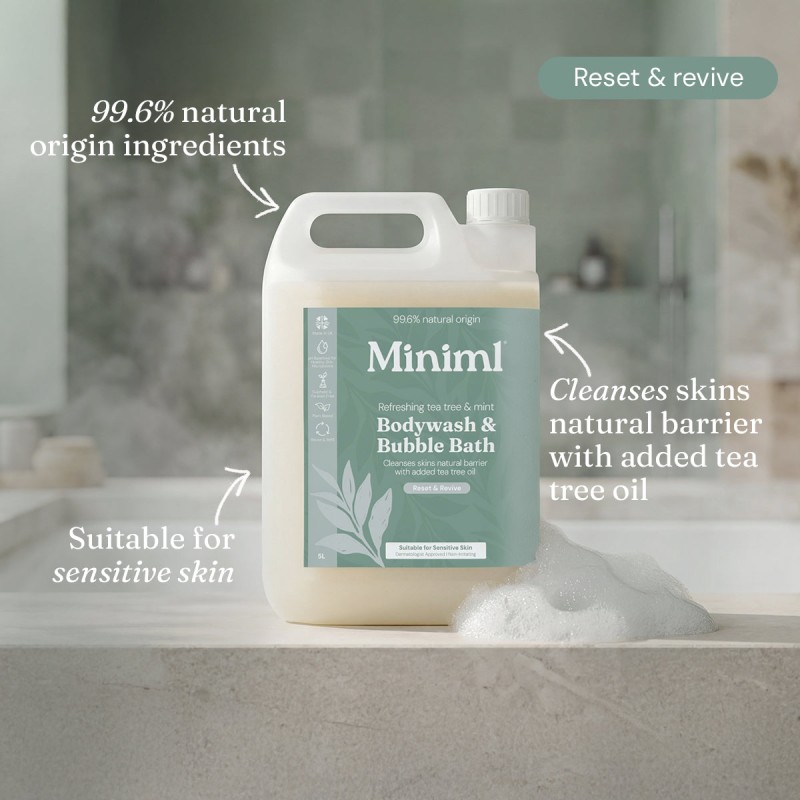
Choose from:
- Indulgent coconut
- Calming lavender
- Refreshing tea tree and mint
- Uplifting pink grapefruit and aloe
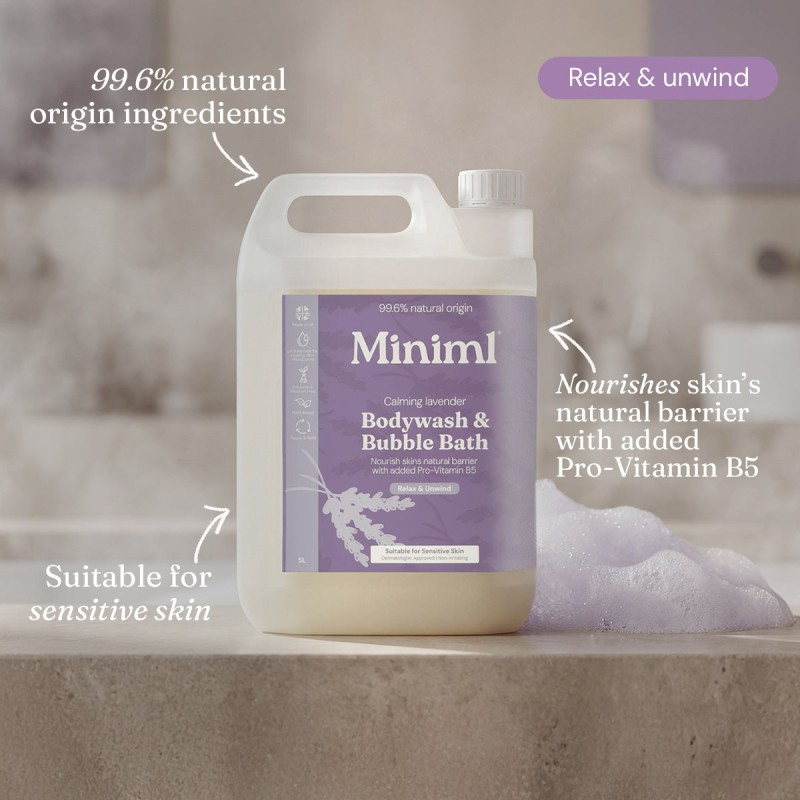
- As body wash, squirt onto hands and lather across the body, then rinse.
- As bubble bath, pour 10ml to 15ml into a warm bath.
Kleen Soaps on ropes (oatmilk or pink/red clay)
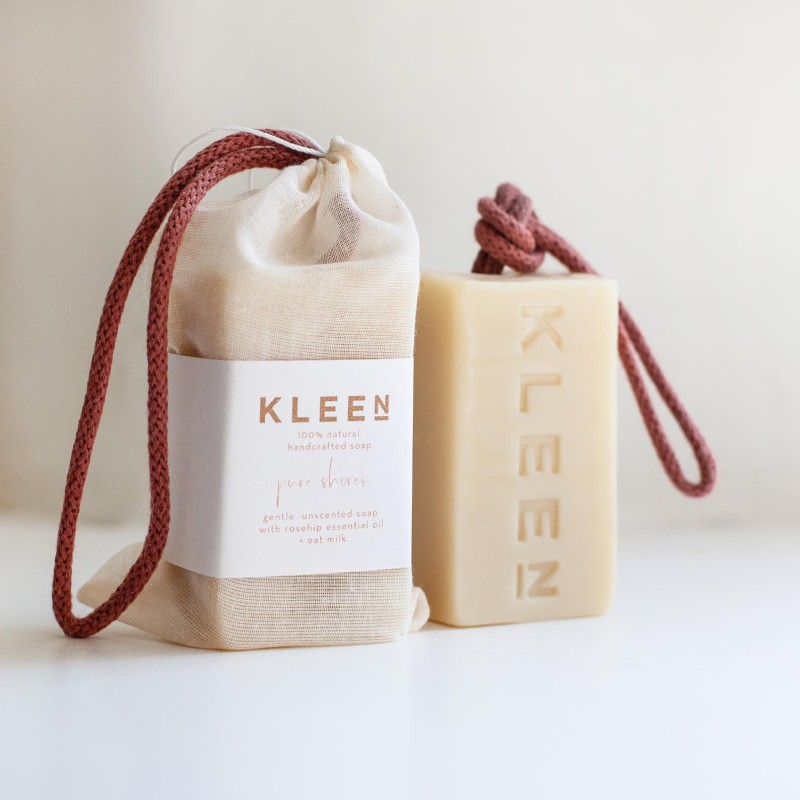
Kleen Oat Milk Soap is as pure and gentle a bar of soap as you can get. Made from oat milk, this is unscented, so ideal for allergies, sensitive skin or pregnant/nursing women. It’s also vegan and free from palm oil.
What makes this soap so unique, is that it is sold with an attached rope. The only caveat with bar soaps is that they can go mushy with water, so you need to use a slatted soap dish. But with this big chunky bar, there’s no need. After your shower, just hang it up to let gravity do the work, and water drain away.
Never use human bar soaps on pets, due to different PH.
Kleen pink or red clay soaps
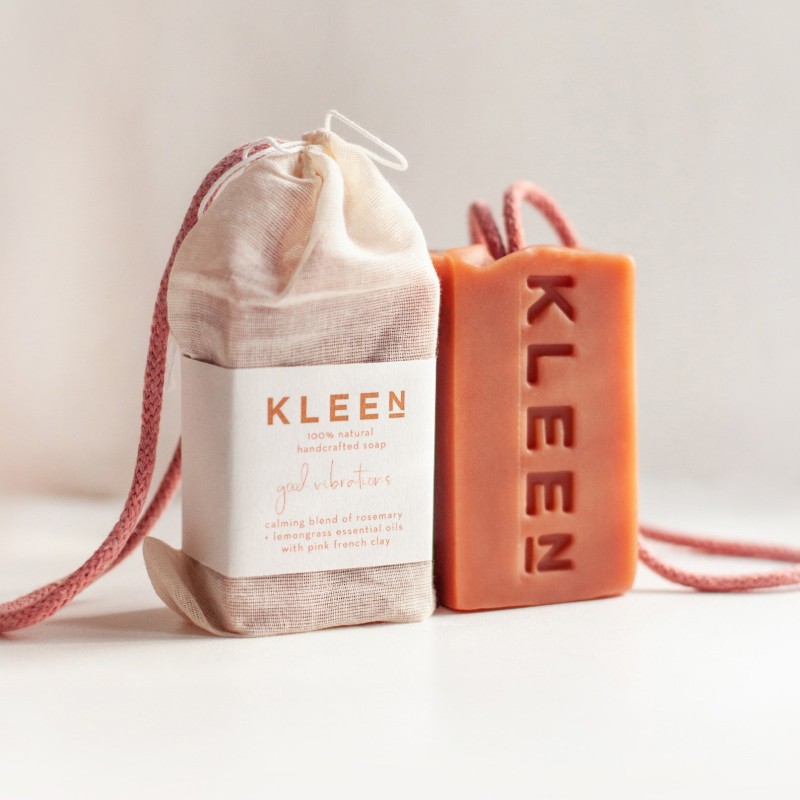
If you prefer a little scent (not for pregnancy/nursing), then there are pink or red clay soaps, each with a little scent from essential oils.
Pink clay soap is ideal to purify congested skin. Scented with refreshing lemongrass and uplifting grapefruit and rosemary oils (not for epilepsy).
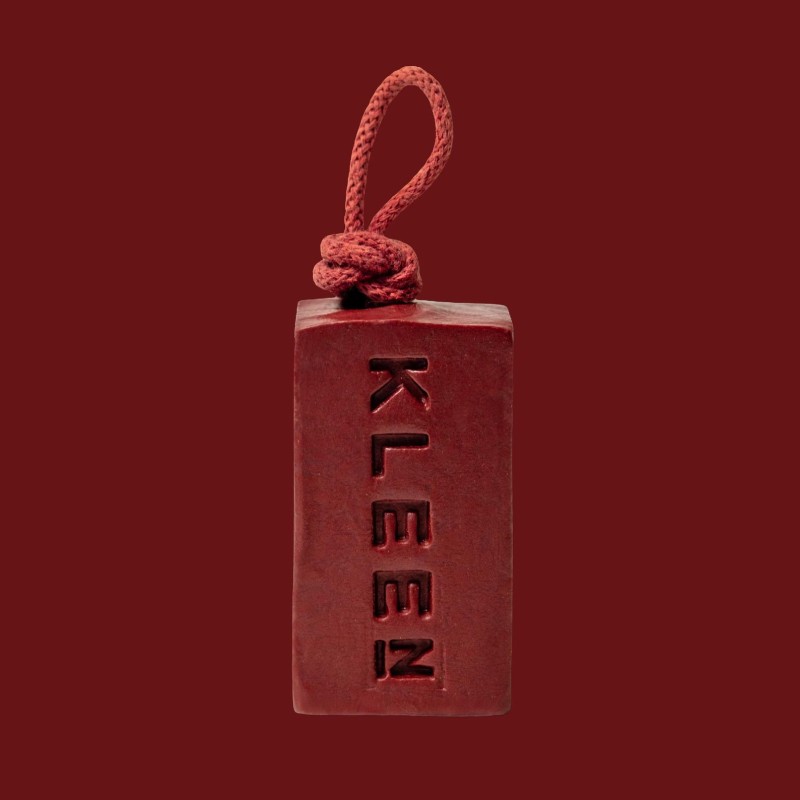
Red rhassoul clay soap is a cherry-red bar with detoxifying clay, along with rich oils of neroli and floral geranium.
Showery water-saving shower heads
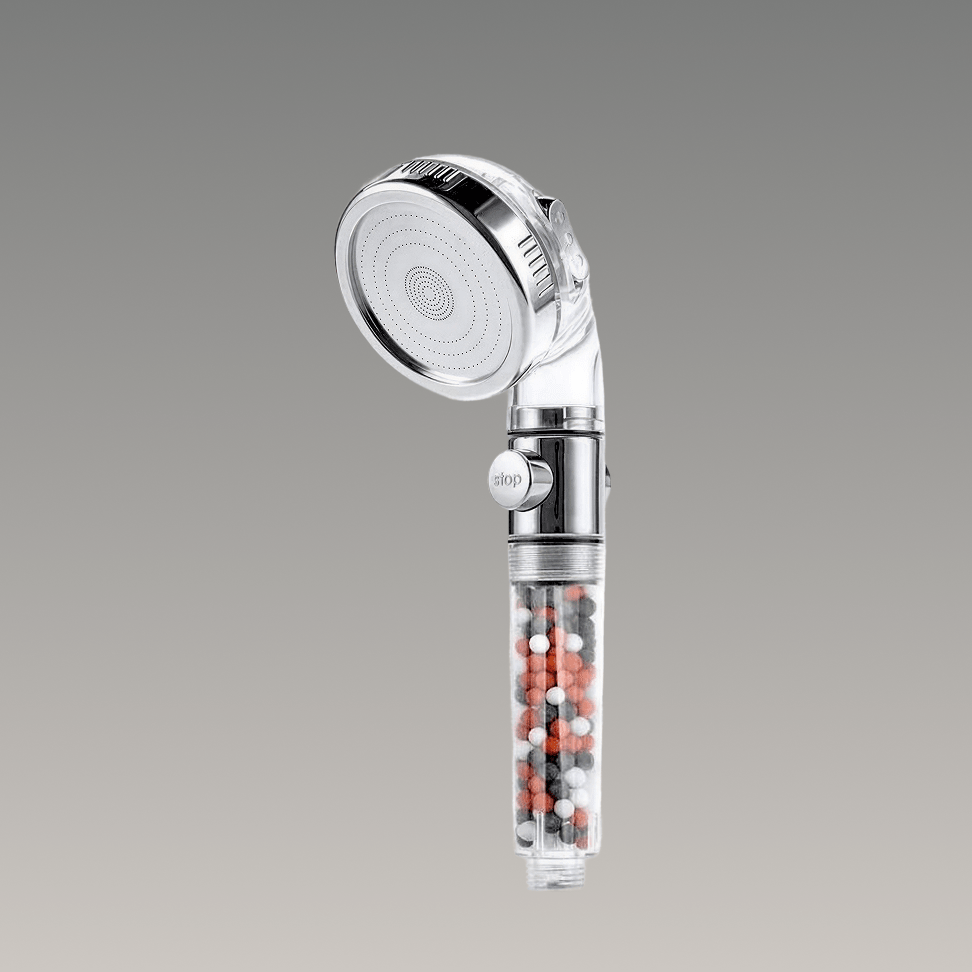
Showery is a reputable brand of water-saving shower heads. These are popular (around 100 sold a day) and carry a 24-month warranty and risk-free 60 day trial.
Many places in England have hard water (high in dissolved minerals) and this can cause limescale and blocked showerheads. And with water bills going through the roof, it’s always good to find an invention to bring your bills down.
Ideal for older showers with wasteful overflow, just screw into place, and be be rewarded by a nicer shower experience. Which also filters out chlorine and other nasties, to leave softer water for better skin and hair.
Ask a plumber or electrician to fit this, if you don’t have the skills.
If you live in a hard water area, this replacement can also boost water pressure. The self-cleaning silicone nozzles prevent limescale build-up, and keep water flowing smoothly. It fits most UK showers.
The showerhead is designed with pressure-boosting microholes and laser-cut nozzles, to instantly increase water pressure, while using up to 40% less water.
The natural stones inside help reduce impurities, you simply replace them when they need refreshing, every few months.
A tree is also planted for each order, and the company also donates to provide fresh safe water for people abroad. It’s also sent in sustainable packaging.
Do you need a water-saving showerhead?
New showers don’t need water-saving heads, though hard water areas may benefit from this invention. To check if your showerhead flows at the correct rate:
Place a 2-litre container on the shower floor. If it takes less than 12 seconds to fill when shower is running on full, you could benefit from a low-flow shower, which is easily replaced.
If you need one, your water board may offer one for free. Always use a qualified electrician to fit one. Always check as some are not suitable for certain showers or gravity-fed systems.
Fix a showerhead clogged with limescale
If your showerhead is clogged with limescale, Mira has a post on how to fix (and prevent) using cleaning vinegar (instructions are different for fixed showerheads). Learn how to fix a dripping showerhead.
Handmade French-style linen shower curtain
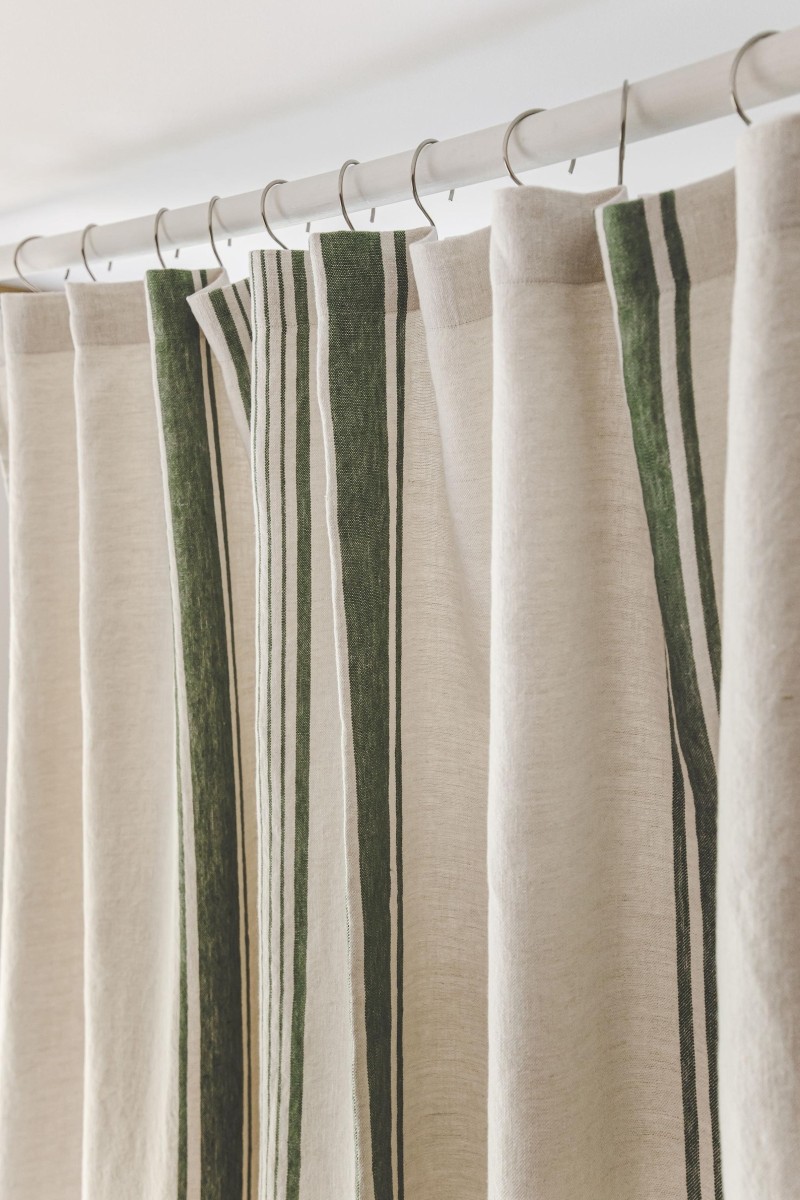
This French-style linen shower curtain is made from a sustainable fabric that is made from flax plants, which are easily grown in Europe (so less ‘fabric miles than cotton – this one is from Lithuania).
Unlike most nylon shower curtains that go slimy and mouldy, this fabric is breathable, so won’t stick to your skin, when you get out the shower!
Choose from four colours:
- Green
- Blue
- Cherry
- Black
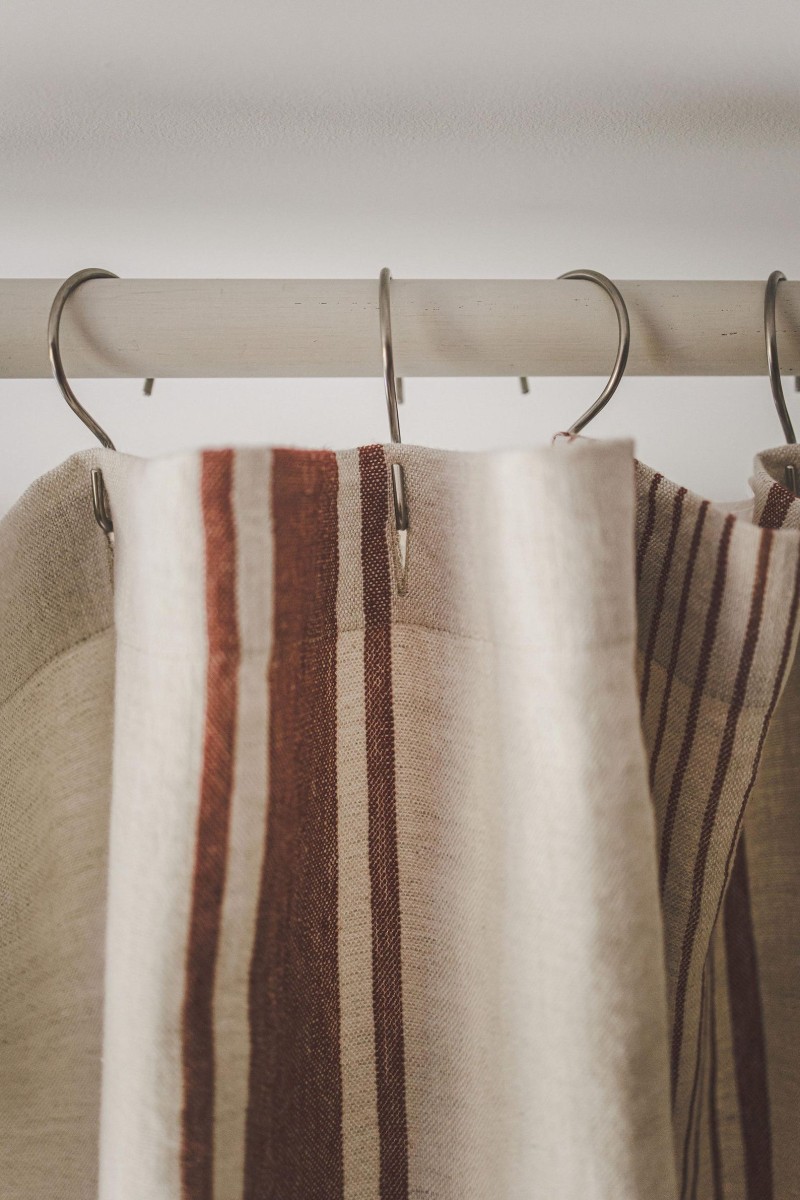
Add a subtle touch of colour and French charm to your bathroom with the gentle stripes. The heavyweight linen means the shower curtain will stay in place, an ideal gift for farmhouse, cottage or rustic homes.
The curtain obviously has a (removable) waterproof liner, as there would otherwise be no point! Remove this before laundering, to safely wash without releasing any microplastics in the machine.
The order includes one single curtain, finished with button holes for shower curtain rings.