North York Moors (heather, ancient trees & coast)
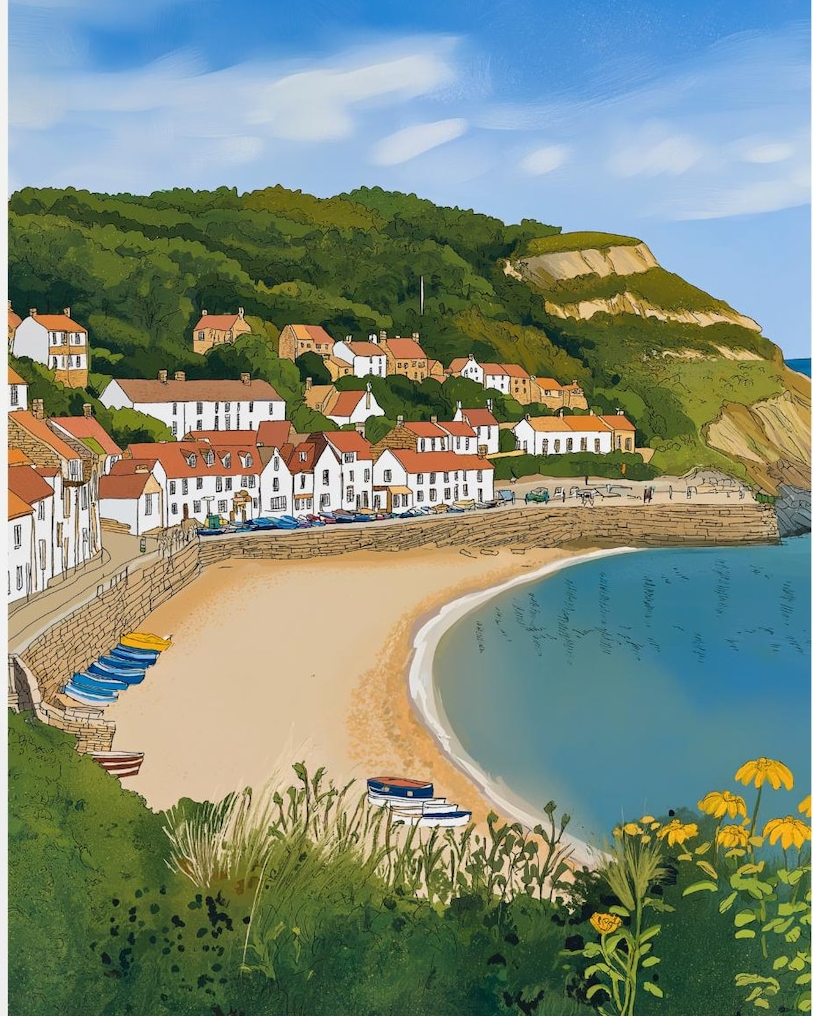
Runswick Bay, Ava Lily
The North York Moors cover 44,000 hectares (from Thirsk and Helmsley to the Whitby coast), and feature some of England’s biggest expanses of heather moorland, and is home to many ground-nesting birds like golden plovers and merlins. It also has one of northern England’s largest concentrations of ancient trees.
It features ancient villages like Staithes and Robin Hood’s Bay (where you paddle your toes, at th end of Wainwright’s Coast-to-Coast Walk, which begins in St Bees in Cumbria).
Hikers can follow the horseshoe-shaped Cleveland Way, which winds around the park for 109 miles. You can also take in plenty of star-gazing, as the Moors are a designated International Dark Sky Reserve.
When out walking, always follow the Countryside Code to keep all creatures safe. Keep dogs away from steep banks, mushrooms (and toxic plants/trees) and on leads near birds, barnyard friends and wild ponies.
If you see a sheep on its back (due to pregnancy or rain-soaked wool), grab a handful of wool on the sheep’s side and gently roll it away from you (to right it back up (simple video). Then stay with it, until the sheep recovers and rain has drained off the wool. Sheep stomachs will ferment grass even when upside down, and this puts pressure on the lungs and heart, so they will die if nobody helps them get back upright.
If at the nearby coast, keep away from nesting birds and never walk on sand dunes. Learn how to keep dogs safe by the seaside (check beach bans before travel).