Torbjørn Ekelund (nature books from a Norwegian writer)
This is one post in a small series of profiles on writers on nature, who can knock together really good books! Inspired by the quote from Japanese writer Haruki Murakami:
If you only read the books that everyone else is reading, you can only think what everything else is thinking.
There is something wonderful about reading a real book, but today it seems to be about grabbing a Kindle to read a celebrity biography. Let’s actually celebrate real books, and nature writers who can write!
For this first post, we’ll profile the books of Norwegian writer Torbjørn Ekelund who not only writes for a daily newspaper in his Nordic homeland, but also is co-editor of a small independent book publishing house. And co-founder of the online magazine Harvest, where he writes on adventures in the wilderness, and the relationship between humans and nature. He lives in Oslo, Norway.
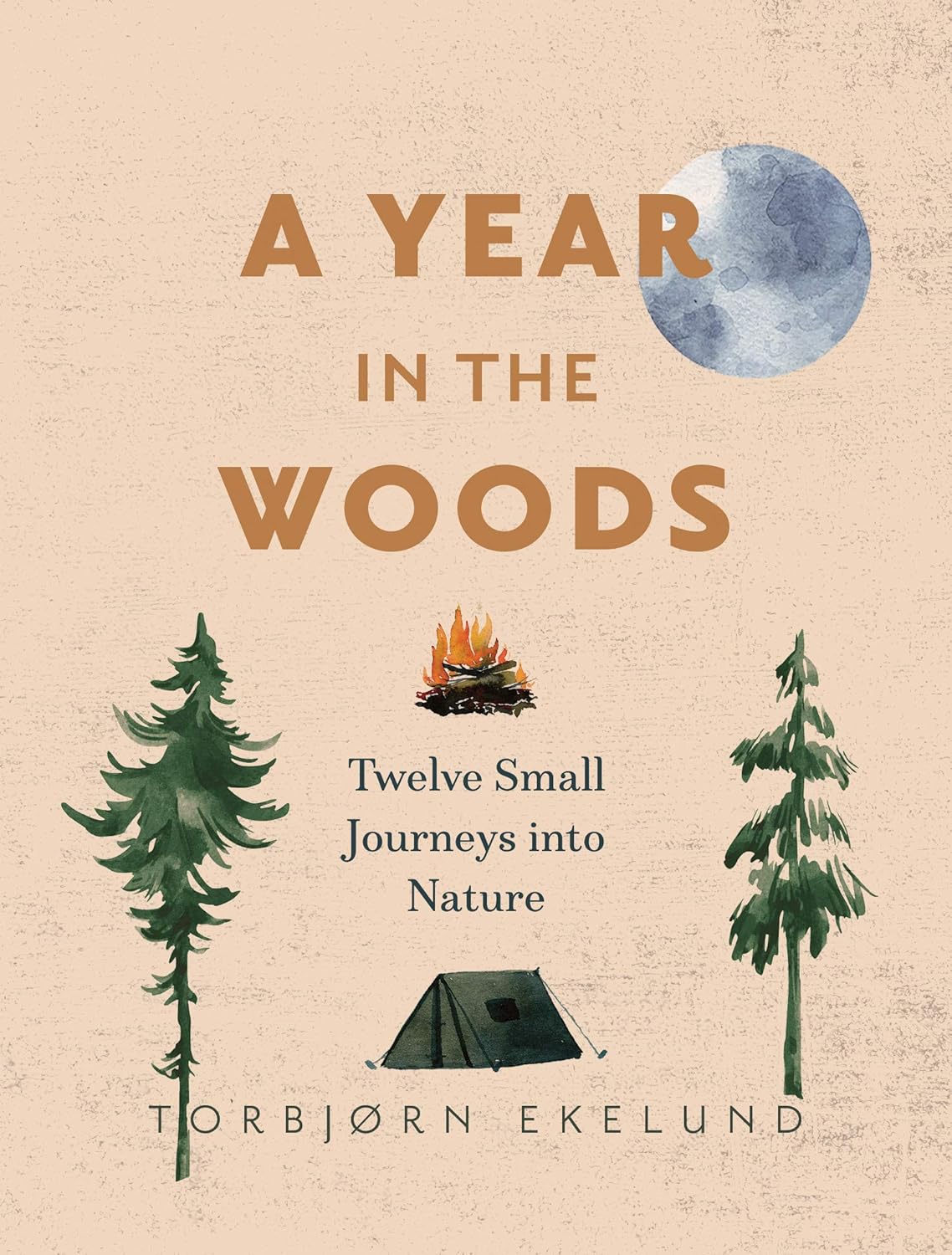
A Year in the Woods is the story of a Norwegian writer, who spent a whole year taking a little time away each month, to spend alone in the woods. He leaves the city after work one day each month to camp near the same tiny pond in a forest, then returns to work the next day.
Being alone is something that many people used to do a lot anyway. Getting away from the rat race does not have to mean becoming a hermit, but being a hermit for just a little while is good! The ritual is far from rigorous and never perfect.
One evening, Ekelund grows so cold in his tent, that he hikes out before daybreak (it’s Norway!)
As Torbjørn greets the same trees and boulders each month, he appreciates the sameness alongside their quiet beauty. He wonders how long they have stood silently in this place, and reflects on his own short existence .
The book asks us to reconsider our relationship with nature. Are we anxious wanderers or mindful observers? Do we honour seasons, or let them pass by? The perfect book for anyone who longs to connect with nature.
Maybe it is not true at all, that when you go alone into the woods, your head fills with great thoughts. Maybe it is the opposite? Maybe your head is then simply emptied of great thoughts.
And what is precisely what seems liberating to us. Because the thoughts that arise in the woods are always very primitive. Warm, cold. Easy, hard. Wet, dry. Happy, sad. Hungry, full. Tired, awake.
In Praise of Paths (how they shape landscapes)
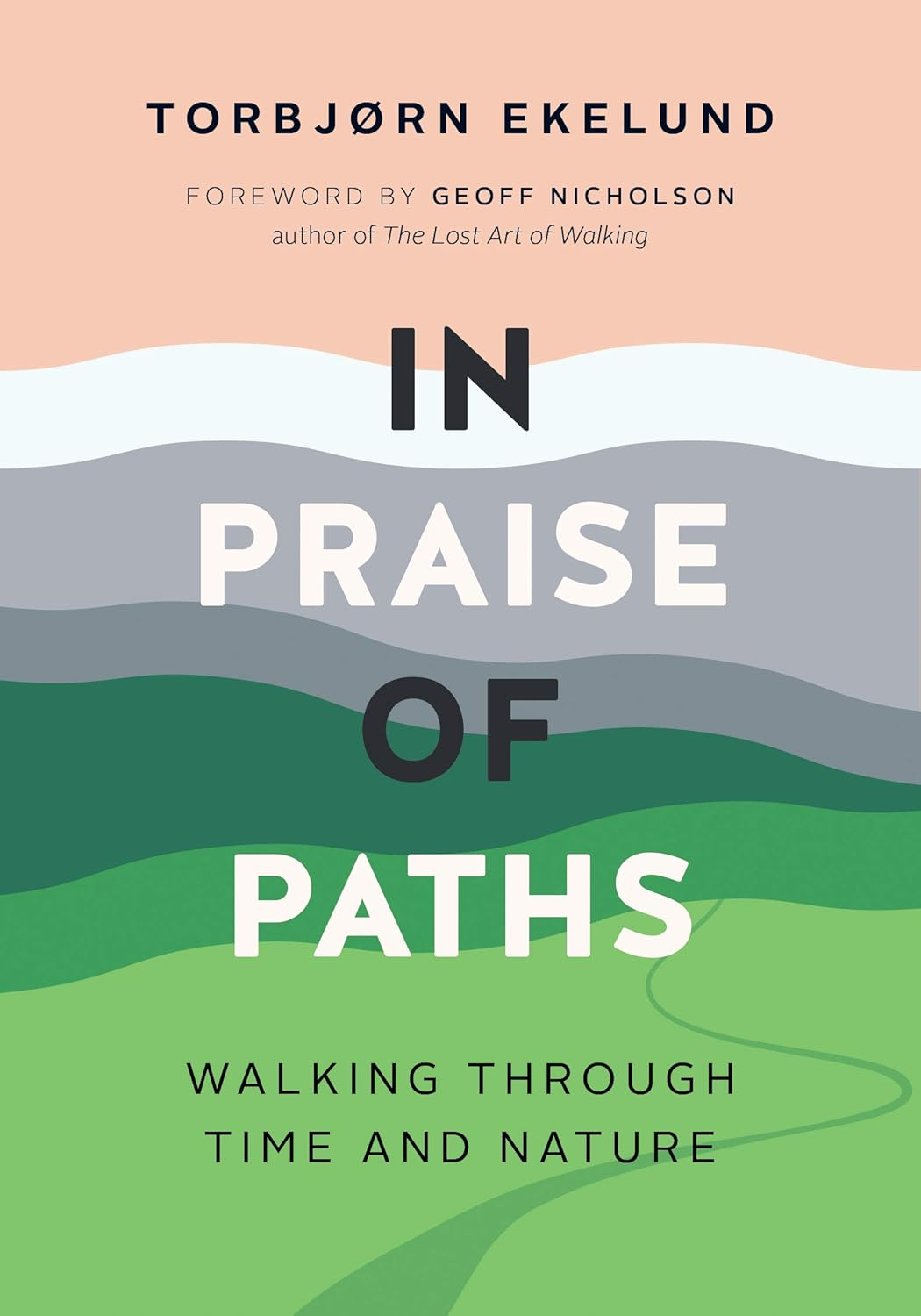
In Praise of Paths tells the story of how he took up hiking, when an epileptic fit prevented him from driving. He began to venture more into nature, and walks with shoes and Torbjørn Ekelund started to walk everywhere, and the more he ventured out into nature, and walks through forest creeks and across urban streets.
Contemplating the early tracks made by ancient snails and traces the wanderings of Romantic poets, amongst other musings. He asks ‘What do we lose in an era of car travel and navigation apps? And what will we gain from taking to paths once again?’
The Boy and the Mountain (retracing steps of a lost boy)
The Boy and the Mountain is the tale of a father and son who ascend a mountain together, retracing the steps of a boy who went missing there 100 years before. A tender meditation on nature, family and the joy of discovery.
In 1894, Hans Torske (six years old) wandered away from his family’s cabin in Norway’s Skrim mountains, and his body found atop a mountain the following summer, on a mountain peak (likely having died from exposure after becoming lost).
Now Torbjørn and his seven-year old son attempt the same summit. Eager to share his love of nature with his son, he also reflects on how parenthood also about watching your child go and explore the world, while also worrying about dangers they face.
A Year of Watching Birds (not yet in English!)
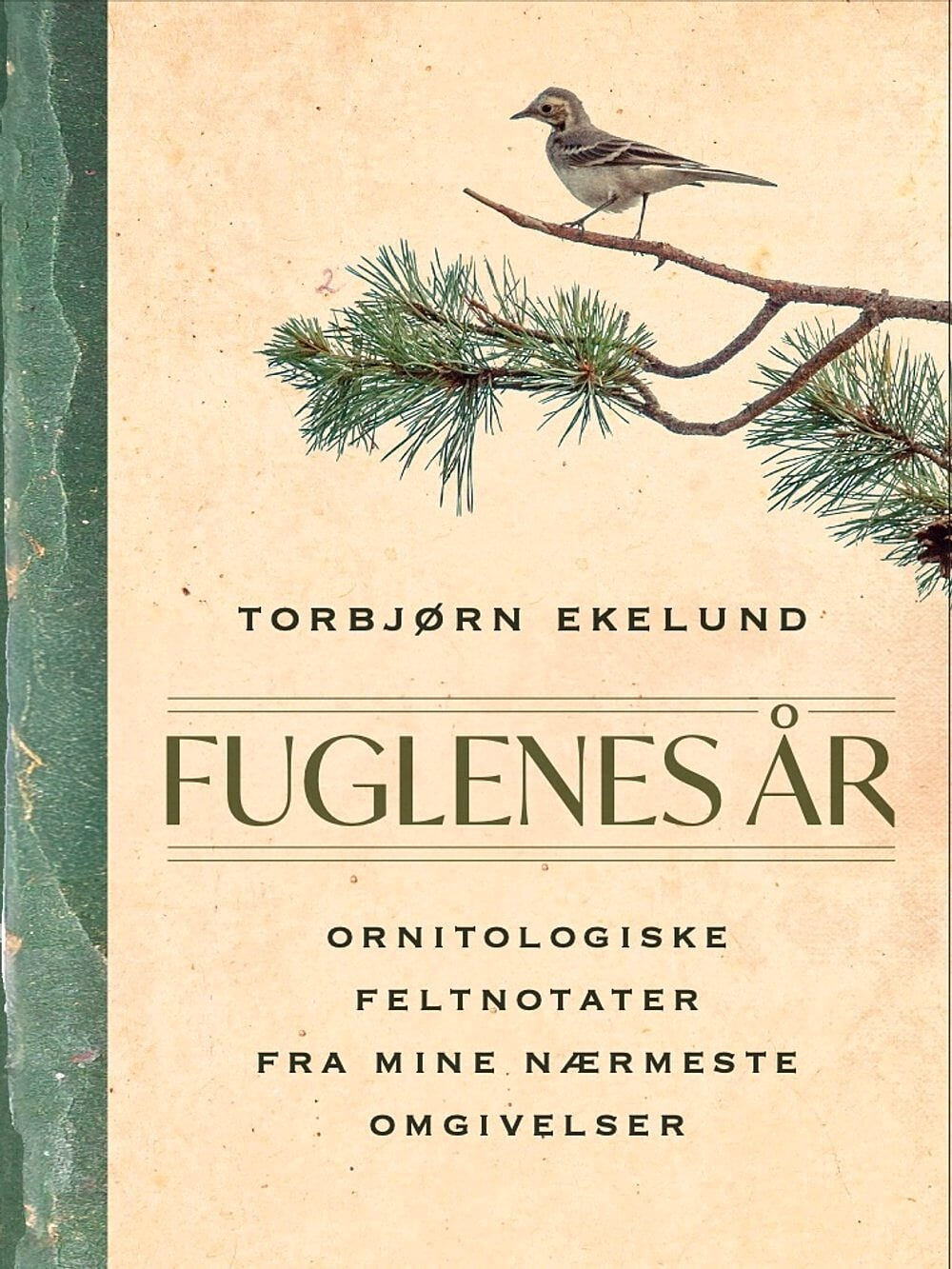
This book is soon to be translated into an English edition, so keep an ear out!
Torbjørn began writing books after taking walks, to cope with his diagnosis of epilepsy, which means he could no longer drive. Now having turned 50 and having felt exhausted from strong medication (often going back to bed after 10 hours sleep), it did mean that he started noticing little things around him – like birds!
Read our posts on creating safe havens for garden birds, and how to stop birds flying into windows.
In this book, he talks about re-noticing the birds that have been in his garden for many years, and how his late mother had taught him about the feathered friends he shared his space with.
So he became an accidental birdwatcher. He says they are the ideal way to teach us about nature. Because it’s rare for most of us to spot a fox or deer or badger (or moose in his case!) But birds are always there, singing and calling us to pay attention to lessons they have to teach.
Winter is drawing to a close. I sit in my home office, taking my medication. The side effects are still there, but I feel a little better. Outside, the birds are flying. Titmouses, sparrows, finches, thrushes. They are building nests. They are singing. It is spring. Soon it will be autumn. Their life on earth is short. They have no time to waste.