Dark Peak and White Peak
The Peak District is divided up into two main landscapes:
- Dark Peak lies mainly in the north. It is characterised by gritstone edges, peat moors, heather and open, windswept landscapes.
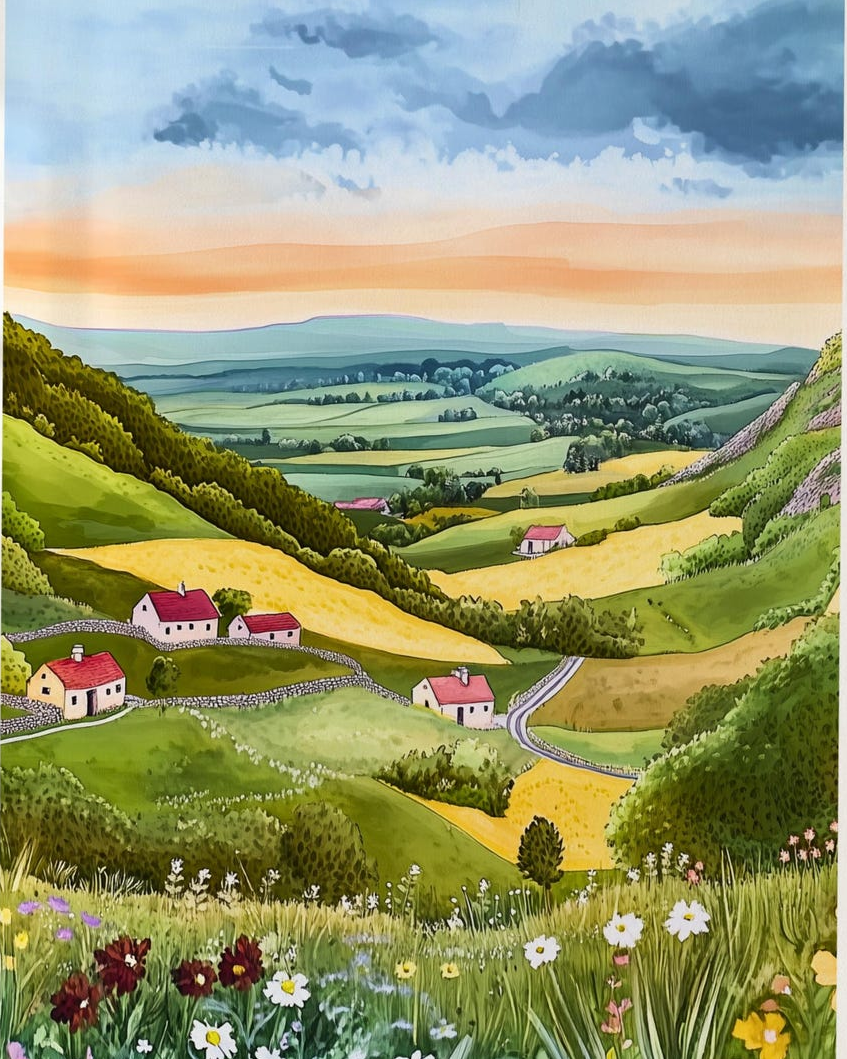
- White Peak, principally in the south, is dominated by limestone. Its valleys tend to be greener and more sheltered, with attractive villages, stone walls and rivers.
Kinder Scout
This is one of the most famous landscapes in the Peak District, a vast upland plateau that rises to over 600 metres above sea level. Its combination of of peat moorland, gritstone edges and dramatic cliffs makes it a major destination for walkers.
Kinder Downfall is particularly famous. The waterfall drops from the plateau edge, and strong winds can blow the water back upwards, creating an extraordinary spectacle.
The summit plateau can be difficult to navigate in poor weather, making preparation important.
Mam Tor
This is one of the Peak District’s most recognised hills. Located near Castleton, it rises above the Hope Valley. Its name means ‘Mother Hill’ and provides spectacular views across the Hope Valley and surrounding hills. The ridge walk from Mam Tor towards Hollins Cross and beyond is particularly popular.
The Hope Valley
This is one of the most beautiful areas, surrounded by dramatic hills, and contaning many preetty villages, the best known being Castleton (known for its nearby caves that houses a rare mineral called Blue John with bands of purple, blue and yellow).
The caves were created as water slowly dissolved limestone over many years, leading to impressive underground chambers and passages. Just don’t get lost!