Together Health Stress Aid supplement: benefits and safety
Stress is a normal part of modern life, but can affect sleep, concentration, mood, energy levels and general wellbeing. This has led to growing interest in supplements designed to support the body’s everyday response to stress.
Understanding what a stress-support supplement can (and cannot) do, as well as knowing the safety considerations, helps consumers to make an informed choice.
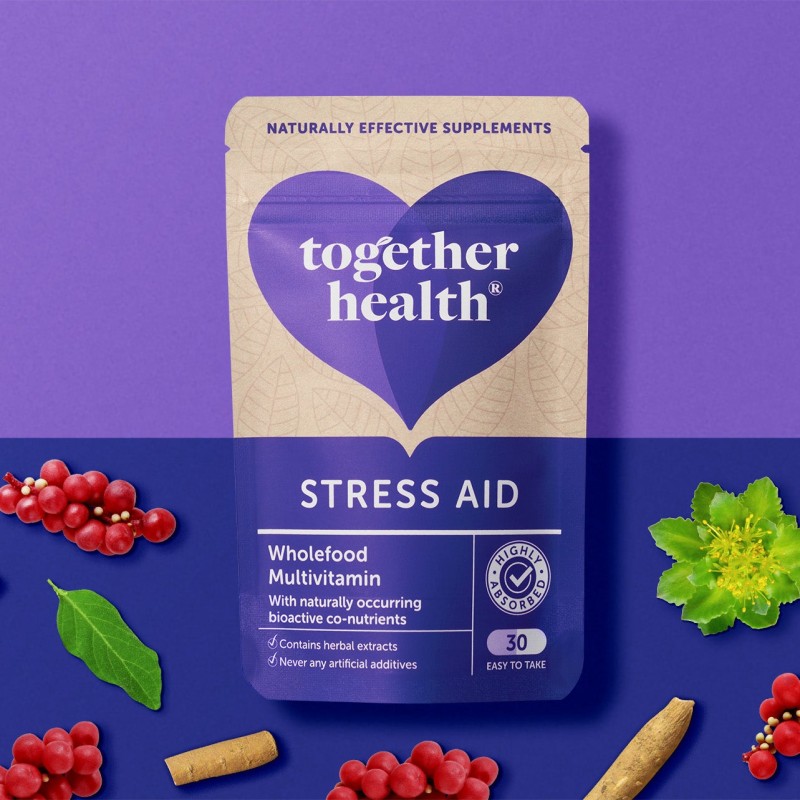
Together Health Stress Aid Complex is a nutritional supplement formulated for people seeking support, during periods of everyday stress. Subscribe online for big savings, and get double rewards cash on orders, you can pause or cancel anytime.
It contains 12 food-based vitamins and minerals with 5 essential B vitamins (good for your nerves) and adaptogenic herbs and magnesium (the ‘sleep mineral’). The capsules are made from plant cellulose from the Pinus Elliottii tree, and can be separated and the contents mixed with food or drink if preferred.
Before taking supplements, check with GP if pregnant/nursing or on medication. Recycle used supplements/medicines at pharmacies (never flush down the loo).
A supplement cannot remove the underlying causes of stress like relationship difficulties, work pressures, financial concerns, lack of sleep, illness, excessive caffeine intake or inequate recovery. So use alongside practical measures like regular exercise, a balanced diet, sufficient sleep and relaxation techniques.
Understanding Together Health’s paper packs
What makes this supplement unique is that it’s not sold in plastic bottles. Instead it’s sold in paper-packaging, even the protective seal is plastic-free. New plastic is made from oil, so less plastic in the world means less oil, less climate change and less wars. Plus there is no plastic contamination in your capsules.
Due to the lack of plastic packaging, these supplements should kept in a cool dark place away from moisture and light. They are also easy to swallow.
Why is ashwagandha used in stress supplements?
Ashwagandha is a plant traditionally used in Ayurvedic medicine. Its botanical name is Withania somnifera, and it’s sometimes referred to as ‘Indian ginseng’ or ‘winter cherry’. Modern supplements commonly use extracts from the root, which is important relating to safety, more on that below.
The biological effects of ashwangandha are complex. One area of interest is that it may influence cortisol levels (the hypothalamic-pituitary-adrenal axis helps regulate the body’s response to stress and is involved in regulation of this hormone).
Is ashwagandha safe?
Some people have become alarmed on hearing that Denmark recently banned the sale of this Indian herb, due to concern over inducing early births and possible toxicity. And it is true that ‘natural’ does not always mean risk-free.
Critics have said that the ban came into force due to animal tests (never accurate) and giving excessively high doses. It also is not taking into account the difference between risky leaf extracts and safer root extracts.
Some people may experience side effects (loose stools, nausea, vomiting or drowsiness), which is why it’s always important to contact your GP if you have any health concerns (these supplements are not recommended for pregnancy/nursing nor children).
It is not recommended for people with thyroid disorders as it could affect hormone levels or medication. Other contraindications include people with liver conditions or blood pressure/blood sugar issues.