Bird & Wild coffee: helping songbirds with every cup
Coffee can be more than just a morning drink. The way coffee is grown can have a big impact on wildlife, farmers and the environment. Bird & Wild is a coffee company that uses its profits to support the RSPB and help protect songbirds in coffee-growing regions.
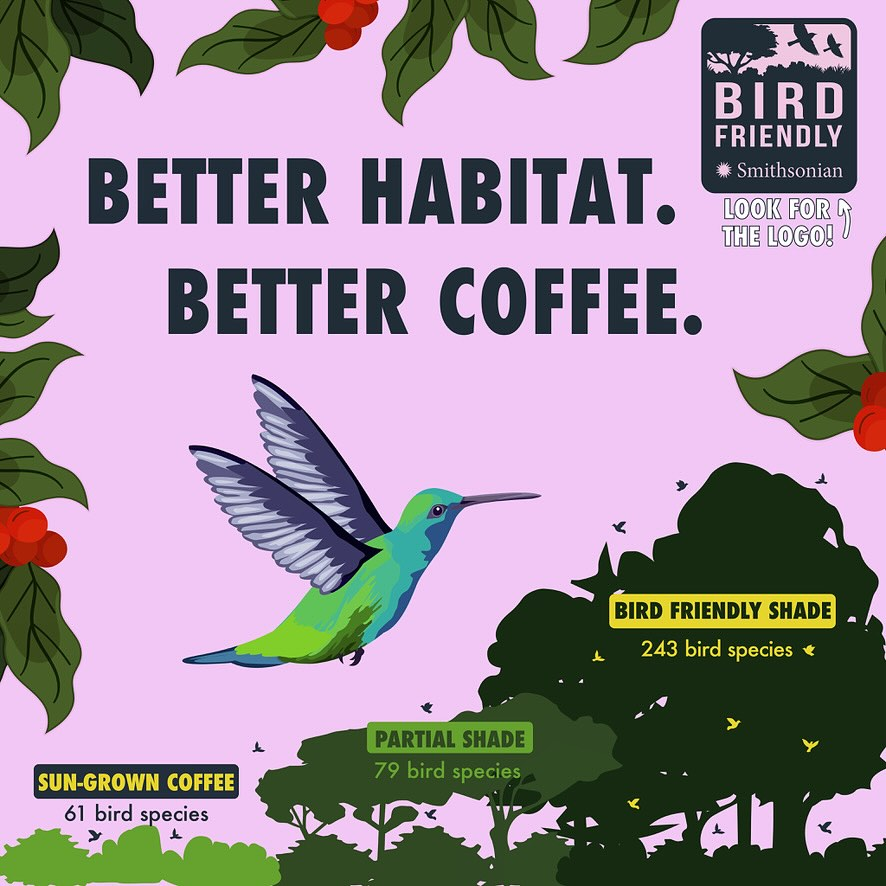
A key part of Bird & Wild’s approach is shade-grown coffee. Instead of growing coffee plants in large, open fields with little other vegetation, shade-grown coffee is grown beneath trees and among other plants. This creates a more natural habitat that supports birds, insects and other wildlife.
Avoid caffeine for pregnancy/nursing.
Swishing coffee grounds into sinks could clog drains, so use a SinkShield. Unless you have a food waste bin, just bin coffee grounds (and tea leaves) to avoid caffeine harming compost creatures.
Why shade-grown coffee is better
Traditional coffee plantations are often grown as sun-loving monocultures, meaning one crop is grown across a large area with little plant variety. These landscapes provide fewer places for wildlife to feed, shelter and nest.
Shade-grown coffee farms are different. The trees and plants around the coffee bushes create a mini-forest environment, to increase biodiversity.
Research has shown a huge difference between shaded and unshaded coffee farms. Unshaded coffee monocultures have been found to support as few as 6 to 12 bird species. In comparison, one shade-grown coffee plantation in Mexico recorded 184 bird species, including 46 migratory birds.
Shade-grown farms can also support mammals and insects. One shade-grown coffee plantation in India recorded 28 species of mammals. The flowering plants found in these systems are also valuable for bees, including endangered bee species that rely on diverse habitats for food.
Read how to create safe havens for birds (feeding, nest-boxes) and preventing bird strike). Don’t play birdsong near birds (confuses and can attract predators).
Packaging and buying Bird & Wild coffee
Bird & Wild coffee is available in glass jars, which can be reused or recycled. The jars are sent using recycled shredded cardboard packaging.
For businesses and organisations, wholesalers can buy coffee by the case at discounted prices, making it easier to provide more sustainable coffee options.