Reasons Why England Needs More Trams
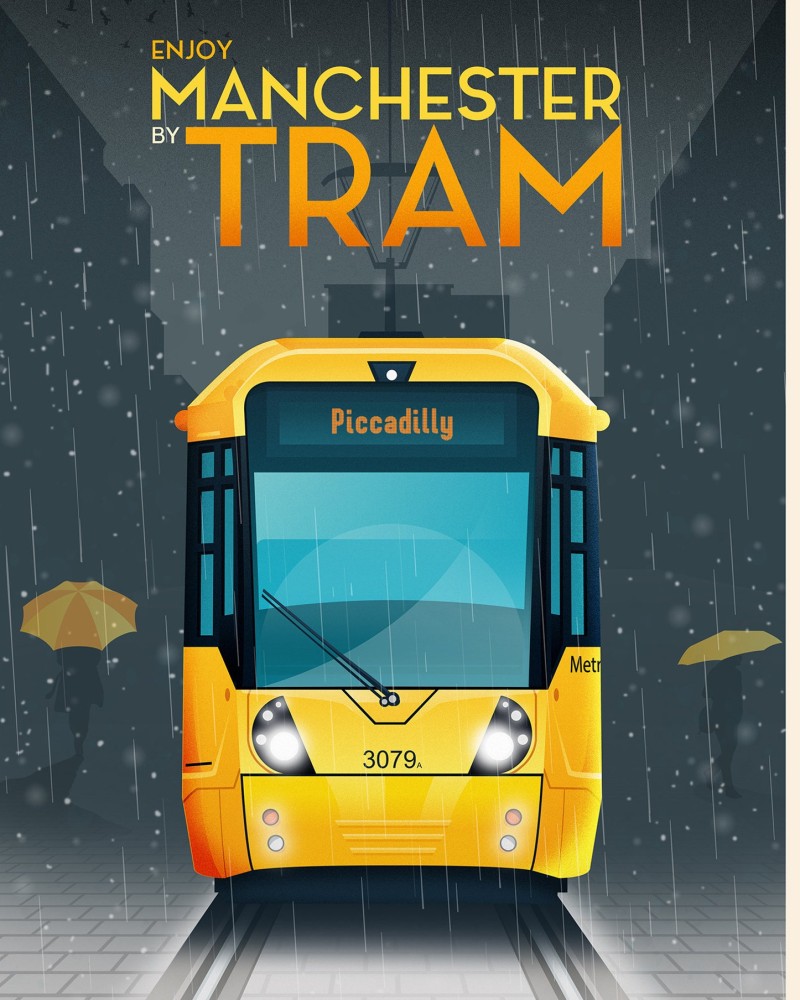
Trams are a great way to get around cities, as they carry more people than cars or buses, but can go up and down hills and are pretty cheap to run. England is one of the few European cities that does not have them in nearly every city, here we’re limited to just a few areas (Manchester, Blackpool, Sheffield, Nottingham etc).
Unlike buses, trams can ‘bend’ around corner and are often used in ‘curvy cities’ (recently, there was a tragic accident in Lisbon, but this is very rare). In cities full of slow and crowded buses and gridlocked traffic, it’s strange how we have so few tram services.
England has many curved streets, so would be ideal to build on. Just like trains, you need to stop before crossing tramlines, as the vehicles require a longer stopping distance than buses (they go faster). And they are also quieter than cars, so don’t wear headphones if walking or cycling nearby.
England’s Main Tram Lines
Nottingham has a 20-mile tram system, and Sheffield operates 4 routes across South Yorkshire. Manchester tram is well-known, as is Blackpool, which doubts back to 1885 (and one of the few double-decker trams in the world).
Yet while England has around 9 tram systems, France has 26 and Germany has 57. Why?
Environmental and Health Benefits of Trams

Our cities need cleaner air for better public health and less roads. But most people don’t hire cycles, and train stations usually are on the outskirts of towns. And buses are often full to bursting. Trams are the ideal answer. They cost a lot to build, but are cheaper to run long-term.
Modern trams run on electricity for less fumes, while diesel buses still cough out nitrogen oxides and particulates on city routes. Trams don’t ‘rattle’ like old buses (in some areas of London, people have made complaints as night buses are making their windows rattle). Trams run on rails, so avoids this. They are also around 5 to 8 decibels quieter than road buses.
Boost to Local Business and Properties
We all want to support small indie businesses. And because trams can glide along the city centres, they encourage people to get off and shop in local shops, or have a drink in local tea rooms or coffee shops.
People can literally hop off in the city centre, unlike most train stations. This has been proven in Blackpool, where small businesses on tram routes have higher sales, even during out-of-season times of the year. This has also happens in European towns like Freiburg and Strasbourg.
Homes within walking distance of tram stops also tend to rent and sell better, so it’s good news for landlords and house owners, but also for tenants, who can easily get to work without the hassle.
The tram extension in Manchester cost £203 million for just under 1 mile of track. Yet in France, transport planners built a 9-mile tram network for £260 million (almost a tenth of the cost). Why?
Blackpool Tramway and Modern Upgrades

Blackpool tram has a proud history, but spent years running older slower cars that creaked along the seafront. Today it has had a revamp, with wider platforms and new trams that go at higher speeds and are more accessible.
They have spacious low floors for step-free boarding, modern ticketing systems and upgraded tracks. While the old trams had around 3 million annual rides, today it’s nearer 5 million.
There are 61 stops in all. One criticism of out-of-town shopping retail parks is that people need a car to drive to them. But Blackpool even has tram stops within 5-minutes walk of the main retail park, for people who don’t have a car, which helps to reduce road traffic.
When Sheffield’s SuperTram was launched, car use in the city centre fell by up to 20% on some key roads. Today over 40,000 use the service.
San Francisco’s Trolley Cars (inspiration)

Of course, the US hilly city of San Francisco is known for its cable cars, which were actually invented by an English mining engineer in the late 1800s, when he witnessed five horses dragged to their deaths, after slipping on wet cobblestones, and sliding backwards under their heavy loads.
These compact trams are nimble enough to twist through narrow streets and go around tight corners. That’s just the kind of design that would be good for many older English towns, where road layouts are similar.
This also would result is minimal need to widen streets, no loss of historic buildings, and more tourism income for local people and independent shops.