Find Trustworthy Nutrition Advice (without bias)
Goodness, what to eat? It’s all so complicated, isn’t it? In fact, it’s not. Whereas people often say that nutrition advice from newspapers and the media often differs, that’s because they are following press releases that in their interest must confuse you, or else you would grow your own brain!
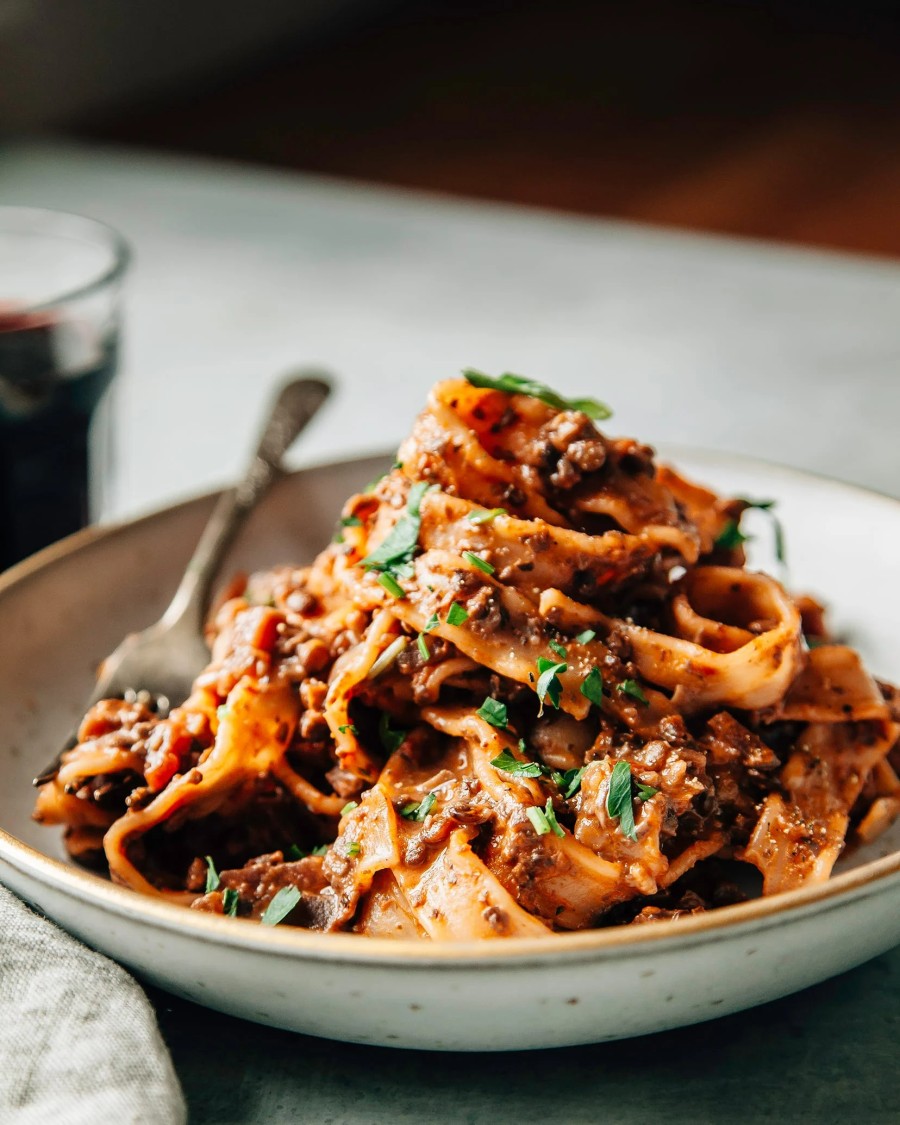
This mushroom and beetroot bolognese (The First Mess) combines veggies and healthy carbs (if you choose wholewheat pasta) – add a cup of cooked lentils for a complete meal.
In fact, all nutrition experts worth their salt say the same thing. Live on plants, or at least mostly. It’s politics and tradition and economics which drives different advice. American food campaigner Michael Pollan (and he’s not vegetarian) says you can some up good eating in six words:
Eat food. Mostly plants. Eat less.
More on him below.
Food Safety Tips for People and Pets
Most people are fine with eating most foods, but some people on medication should avoid certain foods (like grapefruit or too many leafy greens, check paper inserts). Avoid unpasteurised juice for pregnancy/nursing, children and weak immunity.
Many foods are unsafe near pets, to keep away from nosey furry friends. Read more on food safety for people and pets. If growing your own food, read up on pet-friendly gardens (and avoid facing indoor plants to outdoor gardens, to help stop birds flying into windows).
Due to acids, it’s best to avoid composting tomato/citrus/rhubarb scraps (same with alliums – onion, garlic, leeks, shallots and chives). And coffee/tea grounds, due to acids.
If using tinned ingredients, fully remove lids before recycling (or pop ring-pulls back over holes, to prevent curious wildlife getting trapped inside).
Michael Pollan’s 64 Food Rules
Food Rules is a great little book (it costs a fiver) that is ideal to take with you to the grocery store, or just read and enjoy, to learn what to eat. In a nutshell, Michael has condensed all the wisdom of good nutrition, into a book of rules that you can use, to empower your eating and health.
Whatever your diet, this book has your back. If you follow these rules, combined with some exercise (and an optional sustainable vegan supplement to cover any bases), you should enjoy pretty good health.
Good nutrition is not just about avoiding sweets at the checkout. Michael gives you the knowledge you need that you likely already knew – supermarkets don’t really care about your health, they care about profit. He gives a few indicators that you can try looking for yourself:
When we watch TV, our brains go into ‘alpha mode’ (a bit like meditation). Surveys have asked people in supermarkets why they have certain brands in their trolleys, and many have no idea! They have been under hypnosis the night before!
Think about which foods the big supermarkets advertised last time you saw an ad. Were they advertising special offers on organic broccoli? Not likely.
Bit supermarkets have no clocks or supermarkets, so you lose track of time. They are also designed to make you stressed, so you buy more to eat more. Think of Co-op supermarkets, that blast loud music (which could cause pain for older customers with hearing loss). Same reason why McDonald’s is bright red and yellow.
And here’s the biggie. If a big supermarket cared about your health, it would have aisles and aisles of fresh produce, chilled cabinets of healthy fridge goods, and a few processed items. But every one follows the same design:
A couple of aisles of fruits and veggies (mostly not organic). Then perhaps a ‘free-from aisle’ and a small fridge and some part-baked bread in what the Real Bread Campaign calls ‘tanning salons for bread!’
The rest is all processed food and alcohol. Aisles and aisles of beer, wine and cider – then more aisles of processed foods – plastic-wrapped breads and rolls, processed cereals, canned foods and aisles of sweets, chocolate and non-food items.
And as Michael so correctly points out; the special offers are always on the high-profit processed foods at eye-level (Frosties in your face with offers, lowly porridge oats with no offers on the bottom shelf).
And daily staples (like bread and milk) are never near the door. They are always at the far end of the supermarket, to ensure that you pass lots of other foods you don’t want or need, before you get to the checkout. Take a look next time – he’s right.
A Few of Michael’s 64 Food Rules
Most people can’t afford to shop in swanky farm shops, and many people have no access to good indie health shops (most sell supplements over food these days). So in most cases, you’ll be shopping in the big supermarkets. If so, you can still eat healthy, just follow Michael’s rules!
This en-masse would have a knock-on effect. Could you imagine if we all did this? Supermarkets would have to change their ways, and offer customers what they want: good, natural and healthy foods, and more plant-based options than now.
- Avoid food products that contain high fructose corn syrup.
- Don’t eat breakfast cereals, that change the colour of the milk!
- If it comes from a plant, eat it. If it was made in a plant, don’t!
- Don’t get your fuel, from the same place that your car does.
- Avoid food products claiming to be ‘low-fat’ or ‘non-fat’.
- Pay more, eat less.
- Serve a proper portion (and don’t go back for seconds).
- Don’t eat foods with ingredients your grandmother wouldn’t know.
How to Get Your Five (or ten) A Day
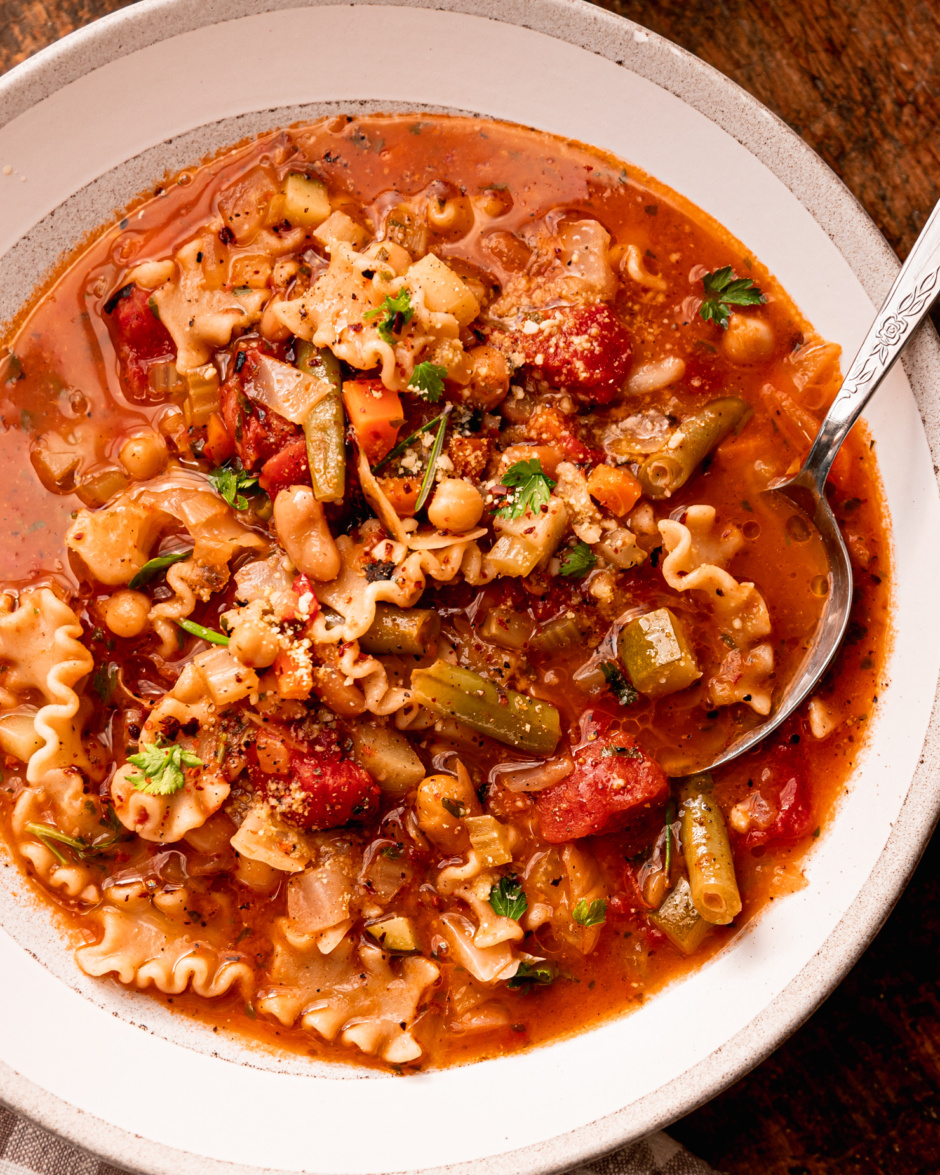
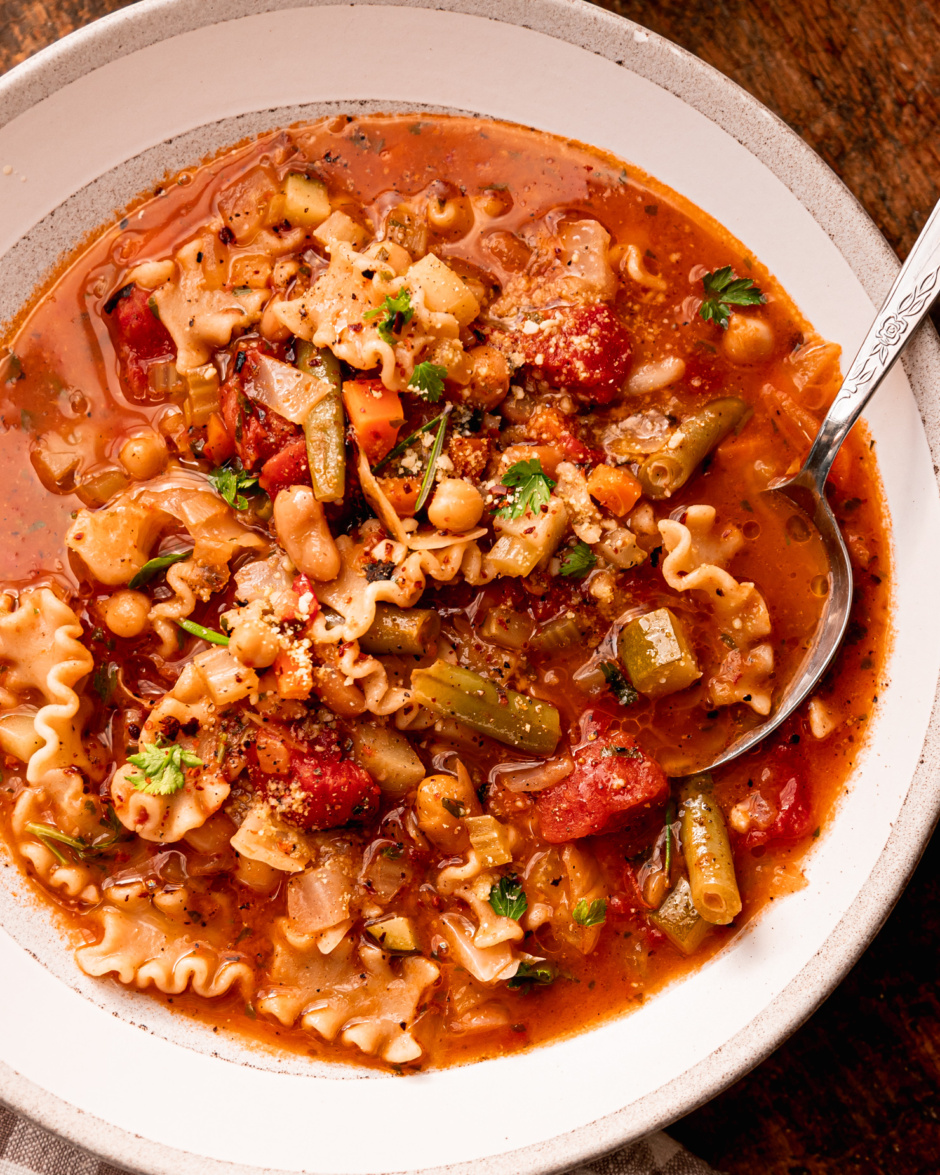
This one-pot minestrone soup (The First Mess) ticks all the nutrition boxes!
Nutrition experts all agree that we should really be eating around 9 or 10 portions of fruit or veg a day, not just five. But five is a good start. Fresh whole produce is good, but it’s perfectly fine to include them in simple recipes, to make up the numbers.
In fact, people in England eat more fresh produce than most other countries, although ‘food desert areas’ (you know the kind, NISA shops selling frozen chips and pizza in low-income areas) means many people don’t get the opportunity.
Avoid choking hazards for children and people with swallowing difficulties (cherries, cherry tomatoes, carrot sticks etc).
If you don’t like munching on organic apples or making salad, there are other ways. You can also eat tinned fruits and vegetables (packed with water or juice) though dried fruit is not god in excess due to sugar, just use for snacks or recipes.
Tinned fruits and veggies (packed in water or juice) are okay, although dried fruit should not be used in excess, due to high sugar. Fruit juice is fine (avoid unpasteurised for pregnancy/nursing, children and weak immunity) although smoothies are better, as they contain fibre.
NHS also says one of your five-a-day can even be beans or pulses (so baked beans on toast counts as a portion, as does adding lentils to your spaghetti with tomato sauce).
Not included are ready-meals with vegetables (not enough in them). It’s far easier to just make your own simple recipes (adding fresh tomatoes to pasta gives more veggie nutrition than a jar of watery tomato sauce).
The same goes for fruits. Buying a ready-made fruit dessert from the supermarket won’t count. But making fresh fruit desserts will.
White and sweet potatoes are nutritious, but as starches, they don’t count as one of your five-a-day (instead use them alongside veggies to make you full up!) A pile of spuds alongside a homemade vegan lasagne, is a great way of combining the benefits of both.
Root vegetables (carrot, parsnip, swede) are also filling, and do count as part of your five-a-day. A good excuse to include them with your Sunday veggie roast!
How Much is 80g in Portion Size?

These vegan peaches and cream muffins (The First Mess) contain real juicy fresh peaches! If topping with the nutmeg-scented sugar, keep well away from pets (this spice is highly toxic to pets).
One serving is around 80g. This should fit in the palm of your hand. As a rough guide, we’re talking:
- 1 apple, pear or peach (or 2 plums, apricots, cherries, strawberries)
- Half a larger fruit (grapefruit, pineapple, melon (store cantaloupe melon away from other foods, due to slight risk of salmonella).
- 2 tinned pear or peach halves, 6 apricot halves, 8 segments of grapefruit
- A few heaped tablespoons of fresh greens, carrots, peas, cauliflower (spinach cooks down a lot, so use more)
- A few celery sticks, cherry tomatoes or 1 celery stick)
NHS Healthy Start Scheme
Families on low incomes qualify for NHS Healthy Start Vouchers, which let you buy fruits and vegetables. The scheme also offers dairy milk (pooh-poohed by nutritionists, as many children especially ethic minorities are lactose-intolerant). So don’t get help for calcium-rich alternatives).
The vouchers can be used to buy fresh, tinned and frozen fruits, vegetables and pulses. The Vegan Society has also criticised the scheme for being discriminatory, for only offering a supplement made with vitamin D from animal fat.