Vegan Breakfast Muffin (homemade recipes)
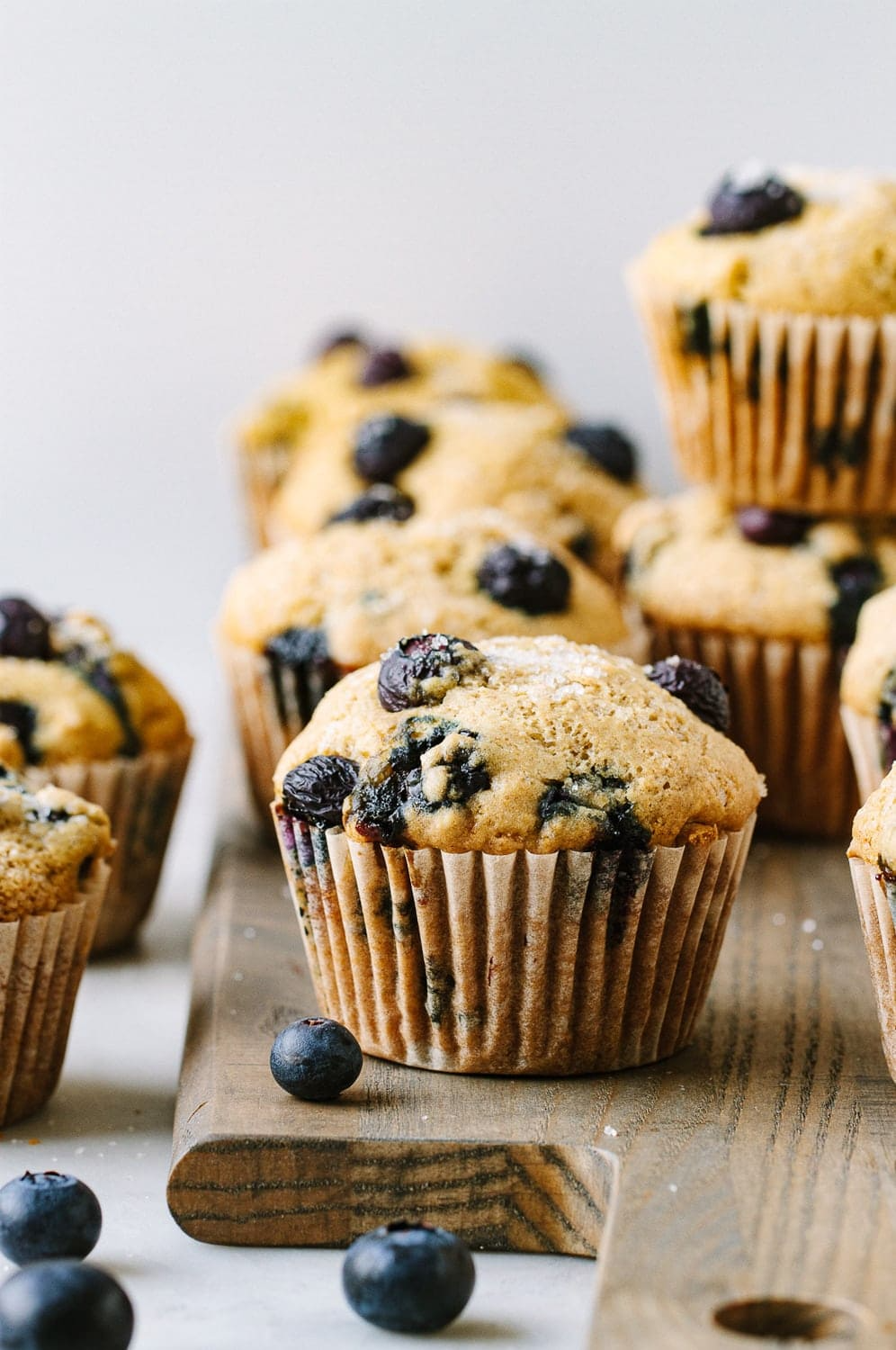
These vegan blueberry muffins (The Simple Veganista) only need a few ingredients. Just mix into a batter, they’re ready in 30 minutes with just 8 ingredients (blueberries, oil, plant milk, flour, baking powder, salt, sugar, vanilla) and one bowl. Also try Julie’s strawberry muffins.
If you bake a lot of muffins, get some large baking cups from If You Care (these are free from chemical linings, and sold in cardboard boxes). Or invest in some silicone muffin cups, which you can use over and over again.
If you’ve found some juicy blueberries at the farm shop (or went overboard at the PYO farm), this cake is just waiting for you to make it! If you can’t find fresh blueberries, PACK’d sells organic frozen berries in paper packaging.
Avoid blueberries for choking hazards, kidney disorders and recent surgery (also check medication). Keep muffins away from pets due to fruit pips/seeds, citrus, chocolate (avoid xylitol sweetener, it’s lethal to pets even in crumbs). Read more on food safety for people and pets.
If used in recipes, bin citrus scraps/rinds, as acids could harm compost creatures (same with tomato/rhubarb scrabs and allium scraps – onion, garlic, leeks, shallots, chives).
For tinned ingredients, pop lids back inside the tin (or pop ring pulls over the holes) before recycling, to avoid wildlife getting trapped.
Why Eat Blueberries?
The question is more, why not? These sweet juicy berries are packed with nutrition. In season from late June to early September, only rinse them just before eating (the ‘silvery bloom’ is what protects them). Once bought, they’ll keep in the fridge for a few days. So eat them up quickly!
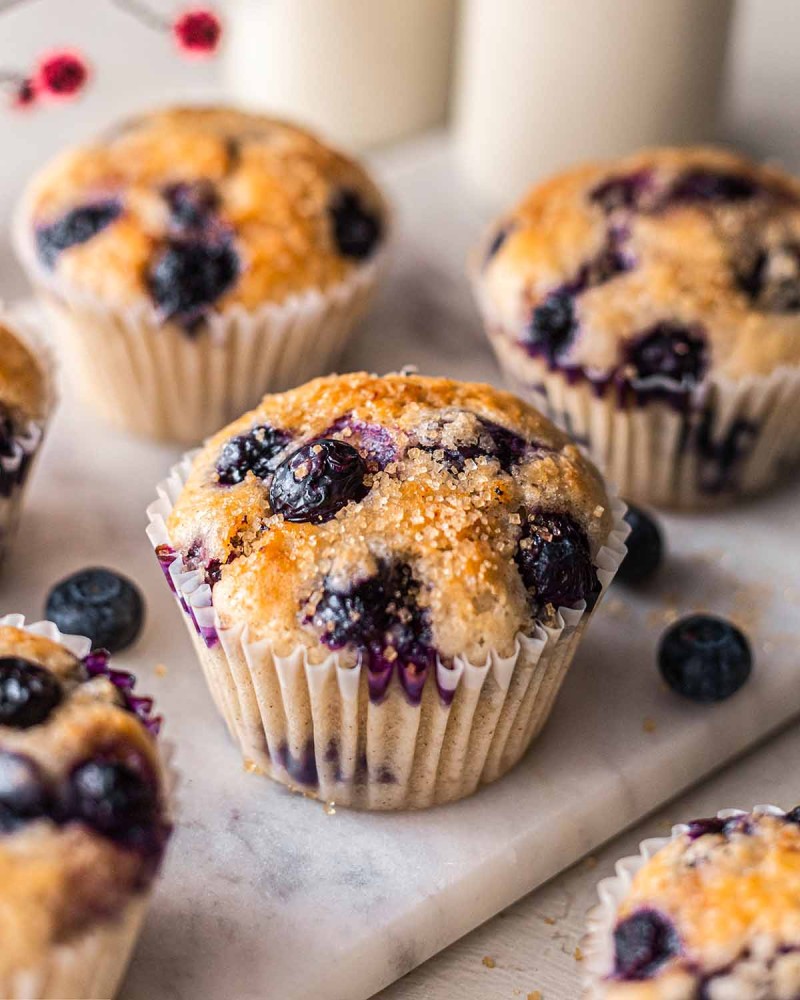
These homemade blueberry muffins (Rainbow Nourishments) are another simple variation.
Homemade Vegan Chocolate Chip Muffins

These vegan chocolate chip muffins (Ela Vegan) are very easy to make, fairly healthy and ideal replacements to over-priced, plastic-wrapped giant chocolate muffins you find in supermarkets and coffee shops.
This is a really simple recipe, a combo of mixing the dry and wet ingredients, then blending them together.
Moo Free Baking Drops can be found in many stores (recycle packaging at supermarket bag bins, if your kerbside does not recycle).
Leftovers can be stored in an airtight container in the fridge, for a few days.
These muffins are packed with nutritious ingredients including oat flour, plant milk, applesauce and organic nut butter, then sweetened with real vanilla and coconut sugar.
Compare that to a store-bought double chocolate muffin (typically containing factory-farmed milk and egg, emulsifiers and chemical raising agents, then packed in plastic).
If you only change one habit, measure flour lightly. Spoon it into the measuring cup, don’t pack it down, or you’ll bake dry muffins.
Easy egg and dairy swaps that work
- Flax egg: mix 1 tablespoon ground flaxseed with 3 tablespoons water, then rest for 10 minutes until gel-like.
- Chia egg: mix 1 tablespoon chia seeds with 3 tablespoons water, then rest for 10 to 15 minutes.
- Mashed banana or applesauce (sweet muffins): use about 60 g to replace one egg’s binding power. Banana adds flavour, applesauce is more neutral.
- Plant yoghurt: add 2 to 4 tablespoons to the batter if you want extra moisture, especially when using wholemeal flour.
For dairy swaps, keep it simple. Use unsweetened plant milk (so you control sweetness), and choose either melted vegan butter or a neutral oil. Oil often gives a softer muffin for longer, which helps if you’re baking for meal prep.
Flavour add-insfruit, nuts, chocolate, or savoury
Mix-ins turn one base recipe into a whole week of different breakfasts. For 12 standard muffins, use one or two of these (don’t overfill, or the muffins won’t rise well):
- Fresh or frozen berries, about 150 to 200 g
- Grated apple, about 1 medium, plus 1 teaspoon cinnamon
- Chopped walnuts or pecans, about 80 to 100 g
- Dark chocolate chips, about 100 to 150 g
- Lemon zest, 1 lemon, plus 1 to 2 tablespoons juice
Common muffin problems and quick fixes
- Dense muffins usually mean you mixed too hard, or your baking powder is past its best. Stir less, and replace old raising agents.
- Dry muffins often come from too much flour or baking too long. Measure flour gently, and pull them out as soon as the tester is mostly clean.
- If muffins stick to cases, let them cool longer, or try better liners. Steam can glue cheap paper to the crumb.
- Soggy berries happen when the fruit sinks and leaks. Toss berries in a spoon of flour before folding them in.
- Flat tops often point to an oven that isn’t hot enough. Preheat properly, and don’t keep opening the door.
How to store and freeze muffins
- Cool muffins completely, then store them in an airtight container.
- Keep them at room temperature for up to 2 days. For longer, use the fridge for up to 5 days, but expect them to dry a little faster.
- Freeze muffins for up to 3 months. Wrap them individually (or separate with baking paper) so you can grab one without defrosting the lot.
- To reheat, warm in the oven at 160 C for 6 to 10 minutes.
Better than American Super-sized Muffins
Not so long ago, a giant American-size muffin was not on the menu anywhere. It’s really only since the influx of coffee shop chains, that these sweet treats have become a ‘thing’.
Note that they are only meant to be enjoyed as a treat. When one French woman was asked in London why French people kept so slim, she replied that it was a different culture in France. A muffin is a treat at weekends, it’s fresh fruit most of the week.
And no French person would dream of eating a giant super-size muffin. A well-made muffin or two as a treat is the norm.
Nutritionist Maya Feller was asked to analyse conventional coffee shop muffins and found that most had huge amounts of both sugar and calories. A third of a woman’s average calorie allowance (and more, with a thick high-calorie coffee with syrup).
She checked old recipe books and found that 30 years ago, muffin recipes were almost a quarter of the size they are now sold in coffee shops. She called one coffee shop to ask for nutritional information (not listed in the shop) and was told that ‘one serving’ was half a muffin. So who is eating the other half?
This is a bit like the traffic light system for bags of salty crisps. If you buy a big bag of salty crisps, it can get away with a ‘green traffic light’, as ‘one serving’ passes the guidelines. But who eats a few crisps, then packs the rest away for another day?
What’s far better is to learn to bake a few homemade plant-based muffins of your own with wholesome natural sweeteners, enjoy one or two each day, and also enjoy better flavour, nutrition and affordability. Plus the natural ingredients and no plastic packaging, is good for animal welfare and the planet.