Saving Oceans from Your Plate: Plant-Based Fish Alternatives
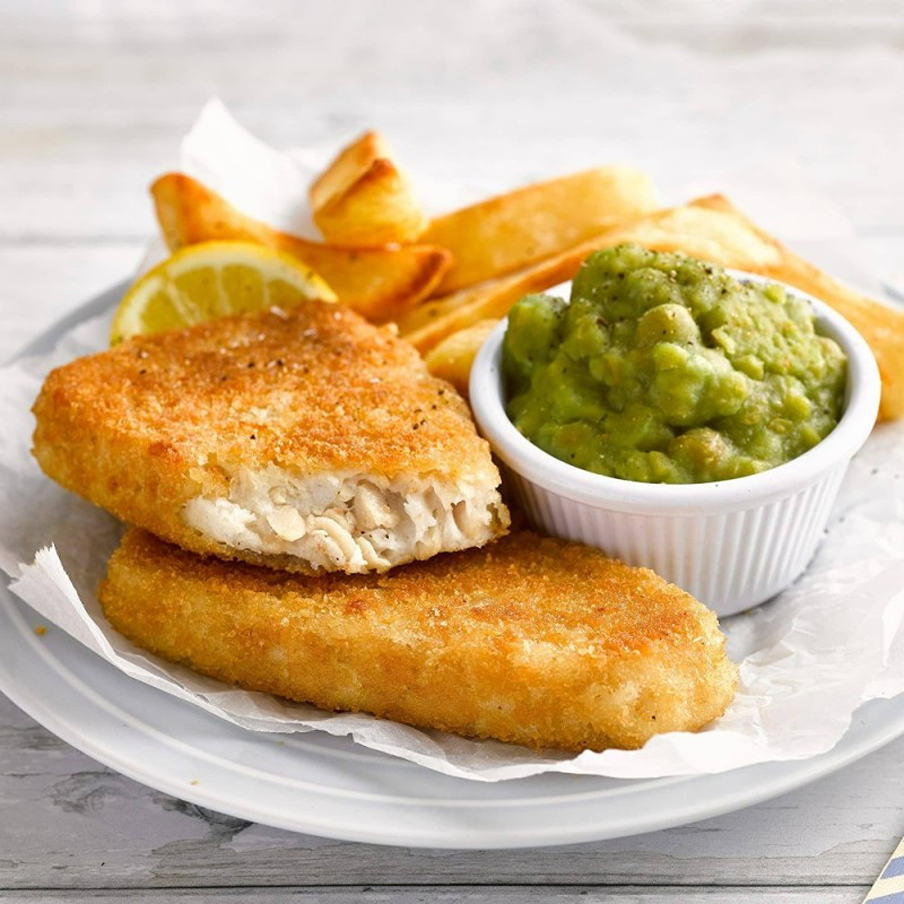
Eating fish in England is nowhere near as popular as meat, as many people don’t like it. The average UK adult consumption is around 135g a week (compared to 850g to 900of meat). And for those that do eat fish, most eat breaded fish like cod and chips, not oily fish.
Choosing plant-based fish alternatives also removes concerns over mercury (to be avoided for children, pregnancy/nursing and low immunity). Read how to get plant-based omega 3 fatty acids (from foods or algae supplements).
We’re not talking here about the lone fisherman who goes out to catch his lunch. But there are huge issues with over-fishing, mercury and by-catch (where fishing nets catch other creatures like dolphins, turtles, whales and seabirds). And ‘ghost’ fishing waste leaves hooks and nets in oceans, harming marine creatures.
Nearly all fish sold in England is from ‘the big five’. These are cod, haddock, salmon, tunn and prawns. Nearly all caught mackerel and herring is exported to continental Europe.
Cod is now a vulnerable species
Not yet officially an endangered fish, cod is however classed as a ‘vulnerable species’, due to severe overfishing (consider how much is served in chip shops) and climate change. In fact, some chip shops now serve ‘rock salmon or huss’ (which is dogfish – shark), due to not finding enough cod to supply British appetites.
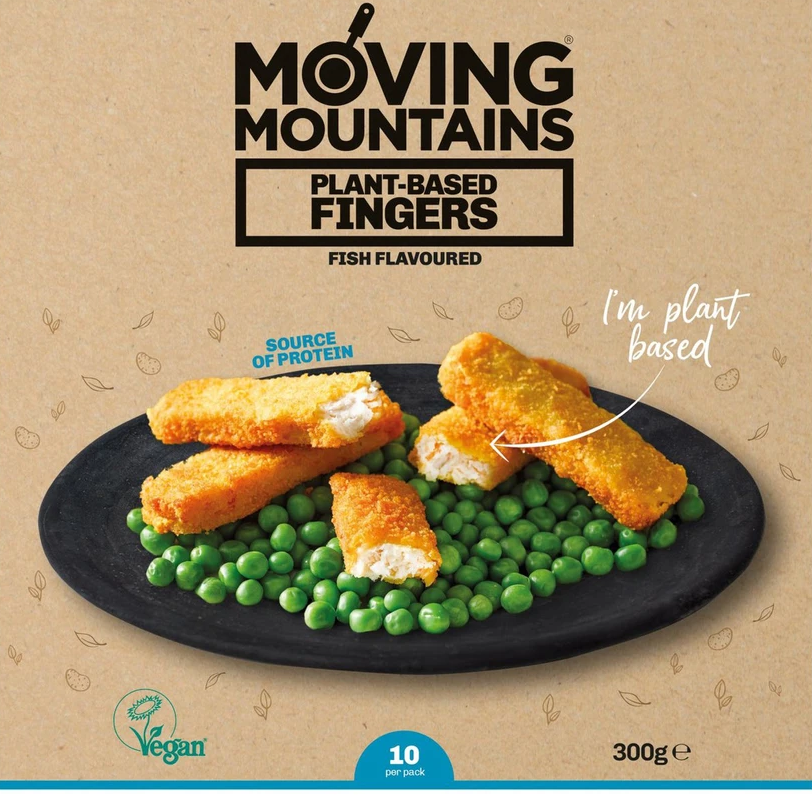
Moving Mountains Fish Fillets are made from high-protein plant ingredients (plus fishless fingers that are as good as the captain’s!), sold in the frozen aisle of most supermarkets. This brand was founded by a vegetarian entrepreneur who was told by his GP to give up animal foods for his health. He got better and his products are now sold nationwide, including for food service. All packaging is easily recycled.
For children and swallowing difficulties, cut fish fingers into small pieces and supervise, as they are choking hazards. Not real fish, so keep away from dogs and cats!
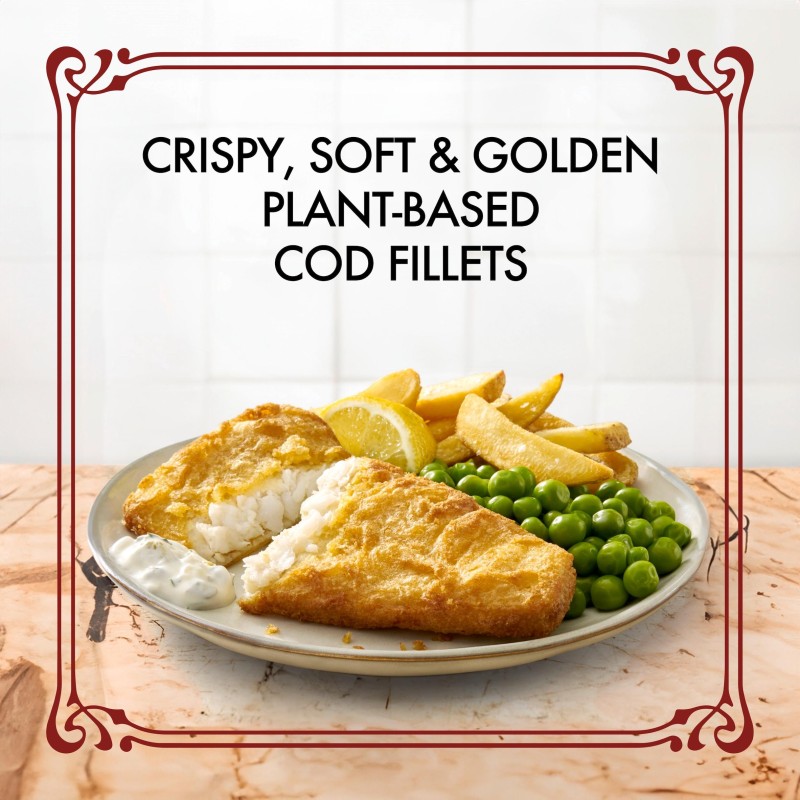
Look in stores for The Vegetarian Butcher’s vegan cod almighty!
Another fish at risk is Atlantic pollock, which is so widely used that one expert said ‘if you don’t know what the fish is’, it’s likely this. It’s the ingredient in McDonald’s Filet-o-Fish (Trump’s favourite meal apparently, which says a lot).
Many people also boycott cod and other seafood (haddock, halibut, shrimp and lobster) from Canada’s Pacific Coast, as a protest to the government in not ending the annual commercial seal hunt, where young seals are clubbed to death. This practice earns only a tiny income for (most comes from fish). The market is now near collapse for seal fur exports, thanks to a ban on EU imports (made possible partly by former MP and Green MP Caroline Lucas).
England’s chip shops (alternative options)
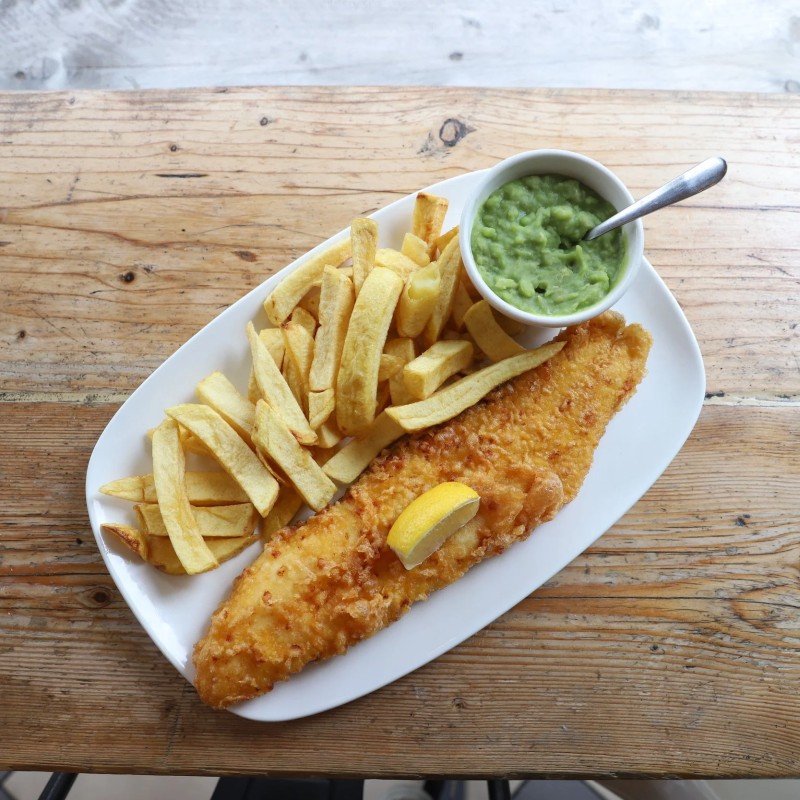
London’s Sutton & Sons offers vegan fish and chips (Hackney, Stoke Newington and Islington – it also serves vegan pie and mash!)
Of course, the English chippy is an institution. Aside from the fact that most chip shops now use palm oil (over rapeseed oil that is more orangutan-friendly and supports local farmers), chip shops could be offering alternatives to cod, as mentioned above is now a vulnerable species.
As well as plant-based cod fillets, why not add Moving Mountains (sausages, burgers, nuggets) and Magpyes (vegan meat pies from Northumberland?)
Chips are no longer wrapped in newspaper, due to food regulations. It’s not good to ‘fish leftovers for cats’, as most are too fatty with hidden bones.
Plastic forks are now banned under the single-used plastic act. But you could go further and avoid serving chips in plastic bags too (bad for the planet and makes chips go soggy).
The No Catch Co: Brighton’s vegan fish and chippy!)
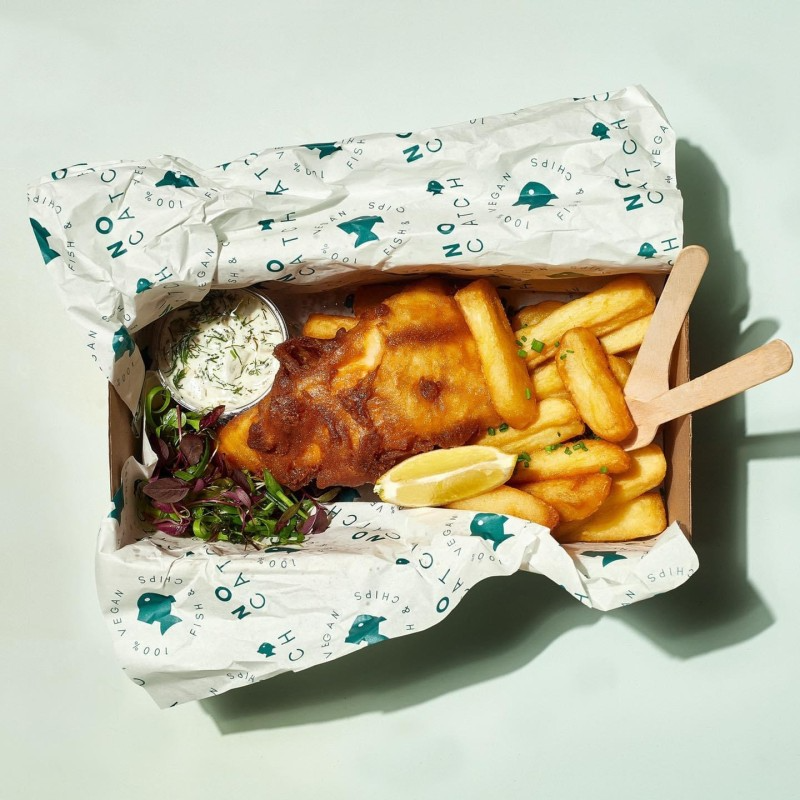
The No Catch Co (Brighton) is England’s first vegan fish and chip shop! Set up by animal welfare campaigners, it uses algae protein to help prevent the 2.3 trillion fish killed each year for food). Everything is sold in zero waste packaging:
Diners are blown away by wonderful alternatives::
- Vegan Cod or Smoked Haddock & Chips
- Jumbo Battered Saveloy & Chips
- Jumbo Lemom Shrimp
- Calamari Sides & Chips
- No-Cow Desserts!
Boycott Scottish farmed salmon
We’ve all heard of Scottish salmon, but Atlantic wild salmon is now classified as from an endangered species (it’s now on the Red List following a massive drop in numbers).
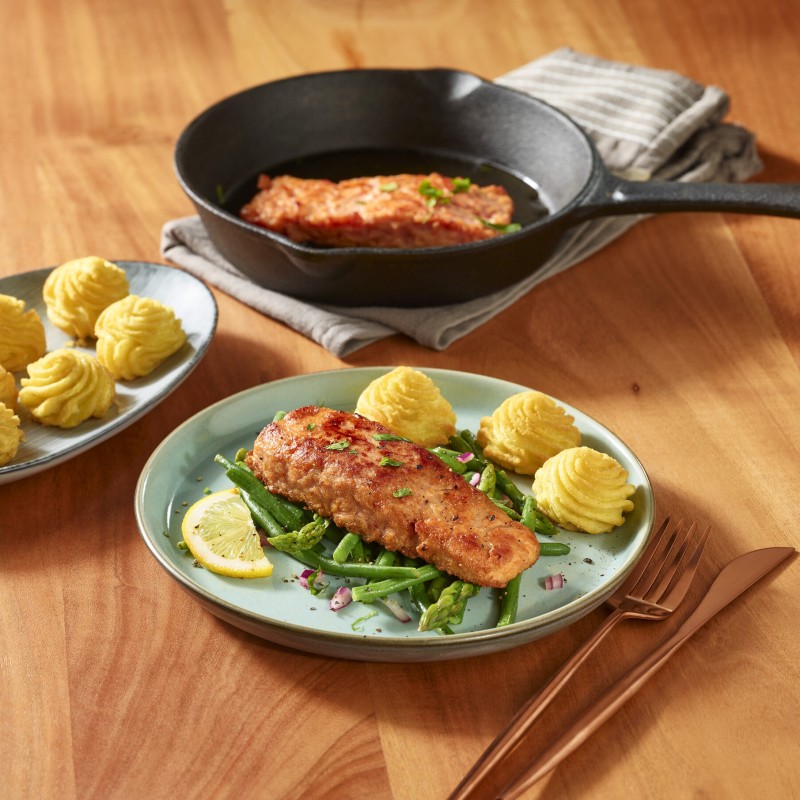
Vivera plant-based salmon fillet are made from quality plant-based ingredients with no palm oil. Just sear them for a few minutes in a pan (or heat in the oven or air-fryer). Packed with protein, fibre and omega 3 fatty acids. You can rinse and recycle the tray, for now you have to remove and bin the top plastic film on top.
It’s now illegal for Scottish fishermen to not follow ‘catch and release policies’.
This is unfathomable. Catch and release still mostly kills fish, who end up dying later on in the sea, due to hook wounds, suffocation (they can’t breathe while out of the water), loss of protective mucous coating that shields from disease and lactic acid build-up in muscles that leads to exhaustion.
There is real controversy around ‘farmed Scottish salmon’. This is now Scotland’s biggest export, yet critics say its use is a major driver behind the decline of wild Scottish salmon.
Fish farms pack millions of fish into tight spaces, which causes parasites like sea lice (fish are eaten alive), which are caught by passing wild juvenile salmon. Smaller wrasse and lumpsuckers are bred to pick lice off salmon (around 7 million of them have also died).
From 2023 to 2025, over 35 million salmon on Scottish farms died prematurely. Due to disease and hydrogen sulphide gas (also lethal to nearby crabs and lobsters).
Farmed salmon fish are in ‘open net systems’, which means faeces, uneaten food pellets and antibiotics drop into the seabed (a single tonne of farmed salmon produces as much waste as 80 humans). People campaign against raw sewage on Lake Windermere, whereas farmed salmon is having the same affect in Scottish waters.
Salmon are natural carnivores, so industrial fleets then catch millions of wild small fish (like anchovies and sardines) in low-income countries in the Global South to grind into pellets to feed them. Experts say these wild fish are mostly fit for direct human consumption, and argue that this is ‘stealing from countries with little food’.
Raw salmon is toxic to pets (due to a fatal parasite, if not treated).
Tuna fishing (responsible for a lot of by-catch)
Tuna populations depend on the type used. Bluefin tuna used for is endangered. Although conventional tuna used in tins is not endangered, there are huge issues with by-catch. If you eat it, looks for brands that don’t use baited hooks or purse seine nets (which also disturb seabeds, home to plants and creatures that support food chains).
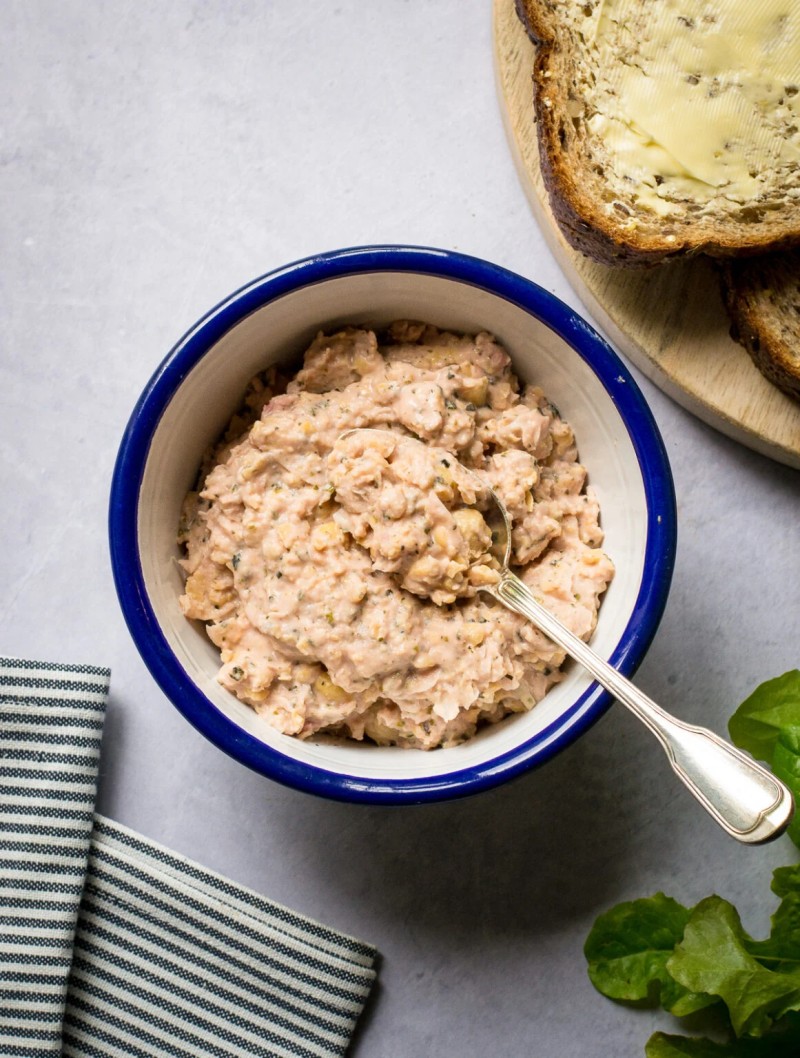
Vegan tuna mayo (above, The Veg Space) is an easy recipe made with chickpeas, vegan mayo, celery and a little nori seaweed.
Avoid seaweed for thyroid and iodine issues. Keep lemon juice away from pets (and bin scraps, as acids could harm compost creatures).
Before recycling cans, rinse then remove lids (pop ring-pulls over holes). Then use your fingers/thumb to ‘pinch’ inner rims together, to avoid wildlife getting trapped.
A simple 4-ingredient vegan tuna recipe
Mix 1 400g of drained and rinsed chickpeas with 3 tablespoons of vegan mayo, 1 tablespoon of lemon juice and 1 crushed sheet (or flakes) of nori seaweed.
Most stores now sell cans of ‘vegan tuna’, and they aren’t half-bad. Funnily, supermarket-own brands (like Sainsbury’s vegan mayo tuna) are nicer (and likely taste more like the real thing) than John West (who offers plant-based versions but they are all curry-versions, not likely to be enjoyed by those who prefer the classic tastes).