How to Make Your Own Vegan Cheesecakes
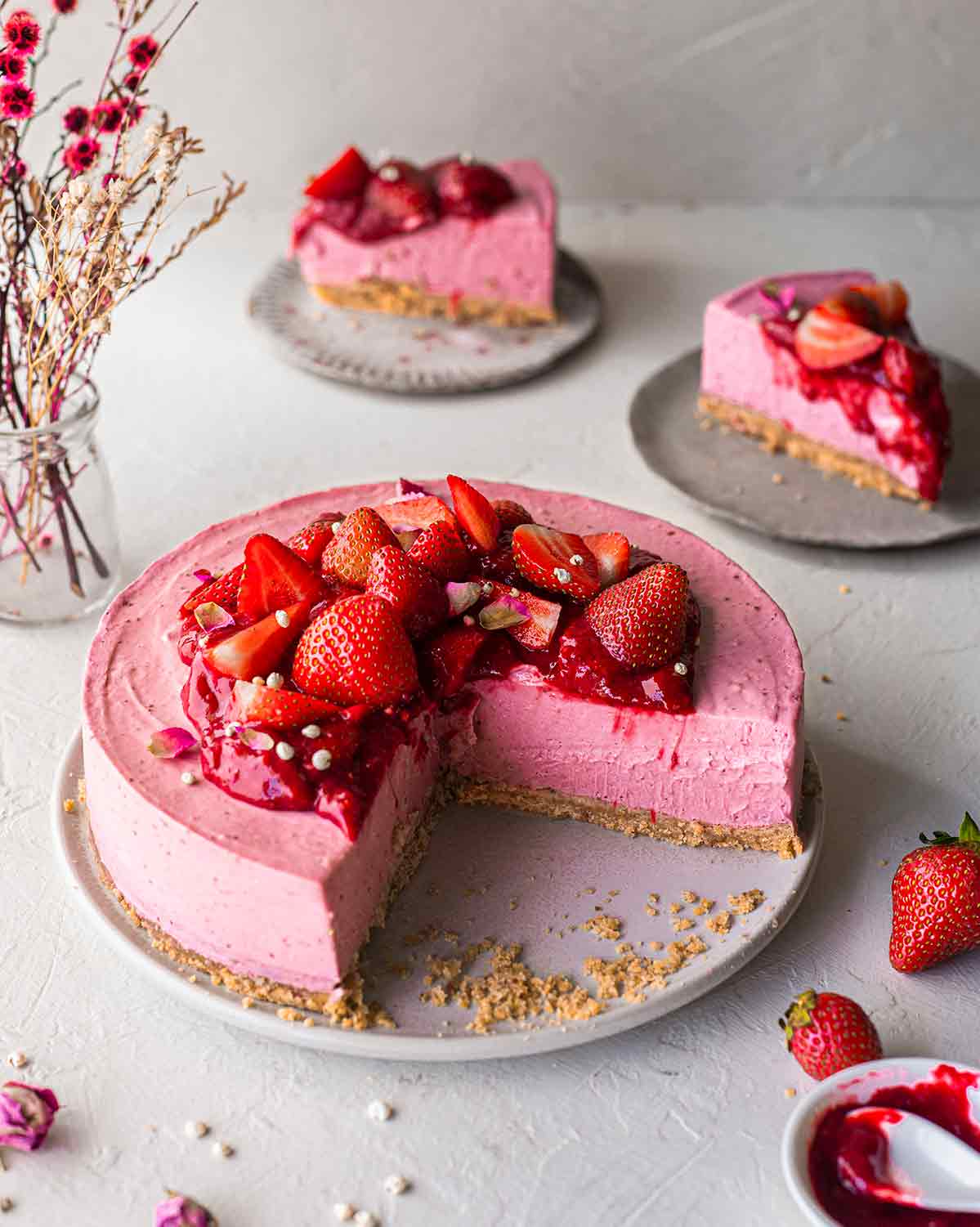
This vegan strawberry cheesecake (Rainbow Nourishments) is a stunning summer dessert, and a great way to use up leftover strawberries, if you went overboard at the pick-your-own farm! Strawberries are one of the so-called ‘dirty dozen’ that are often sprayed with pesticides, so splurge on organic!
Before cooking, read up on food safety for people and pets.
How about this for a healthy cake? It contains 4 whole cups of fresh strawberries! The only fruits to have their seeds on the outside, strawberries (related to roses) are packed with goodness.
This cheesecake uses coconut cream to replace the dairy, cornstarch and a tiny amount of coconut oil (no taste) to set the filling. The only taste is strawberries, strawberries, strawberries!
You can use any crumbled cookies for the base. We like Rhythm 108 (they have no palm oil). This Swiss brand offers many flavours including salted caramel and coconut crunch.
Despite not being a local food, cheesecake (invented in New York) is very popular in England. Look around the web, there are oodles of plant-based alternatives. Simple ones (like this) use vegan cream cheese (found in any supermarket).
The more advanced and ‘natural’ vegan cheesecakes are mostly based around soaked cashew nuts, for the same buttery flavour. They are simple to make (as long as you remember the soak the nuts a few hours before making the recipe!)
No-Bake Vegan Blueberry Cheesecake
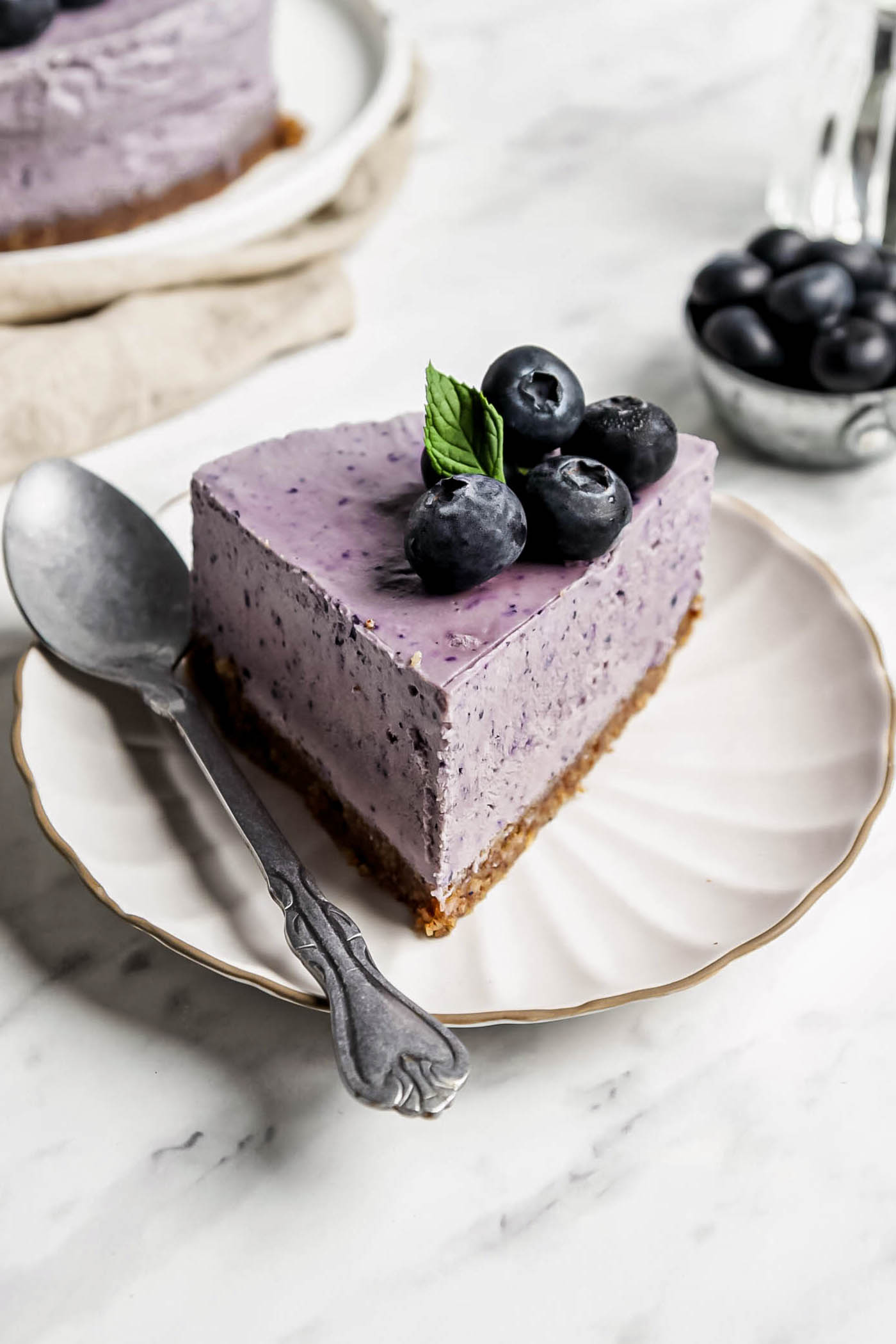
Ideal for summer (and to reduce oven bills), No-Bake Blueberry Cheesecake (Running on Real Food) starts with a homemade cinnamon-pecan crust (sweetened with maple syrup) then the filling is made from soaked cashews and coconut cream. Freeze to set, then thaw for 30 minutes at room temperature (or an hour or two in the fridge).
Avoid blueberries for choking hazards, kidney disorders and recent surgery (also check medication).
If you have a nut allergy, swap cashews for silken tofu or extra coconut cream with oats. Cashews and blueberries are expensive, but the other ingredients (oats!) are not. If you can’t find fresh blueberries, PACK’d sells organic frozen berries in paper packaging.
Why Eat Blueberries?
The question is more, why not? These sweet juicy berries are packed with nutrition. In season from late June to early September, only rinse them just before eating (the ‘silvery bloom’ is what protects them). Once bought, they’ll keep in the fridge for a few days. So eat them up quickly!
Vegan Lemon Cheesecake (just 6 ingredients)
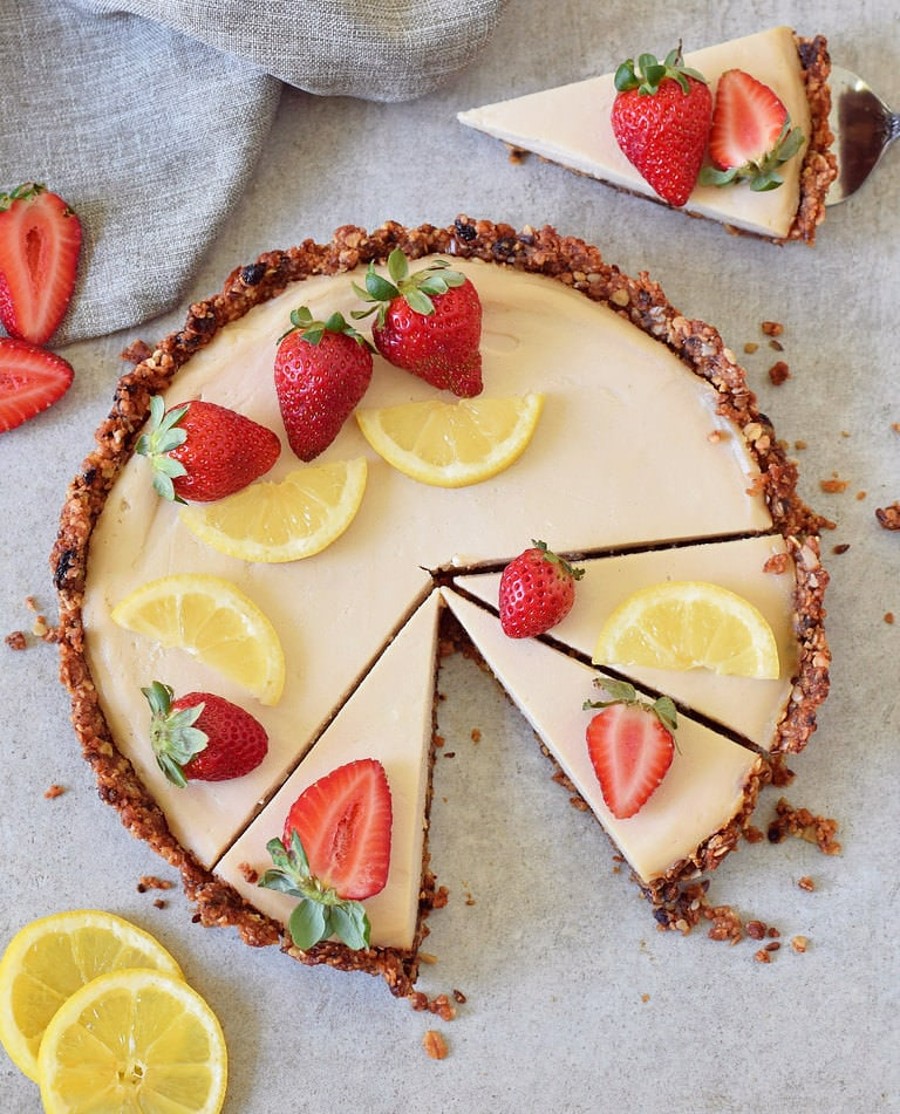
This 6-ingredient lemon cheesecake (Ela Vegan) is decorated with fresh strawberries. The granola crust is made with coconut butter, and sweetened with maple syrup.
Bin citrus scraps/rinds, as acids could harm compost creatures.
Vegan Pumpkin Cheesecake Recipe
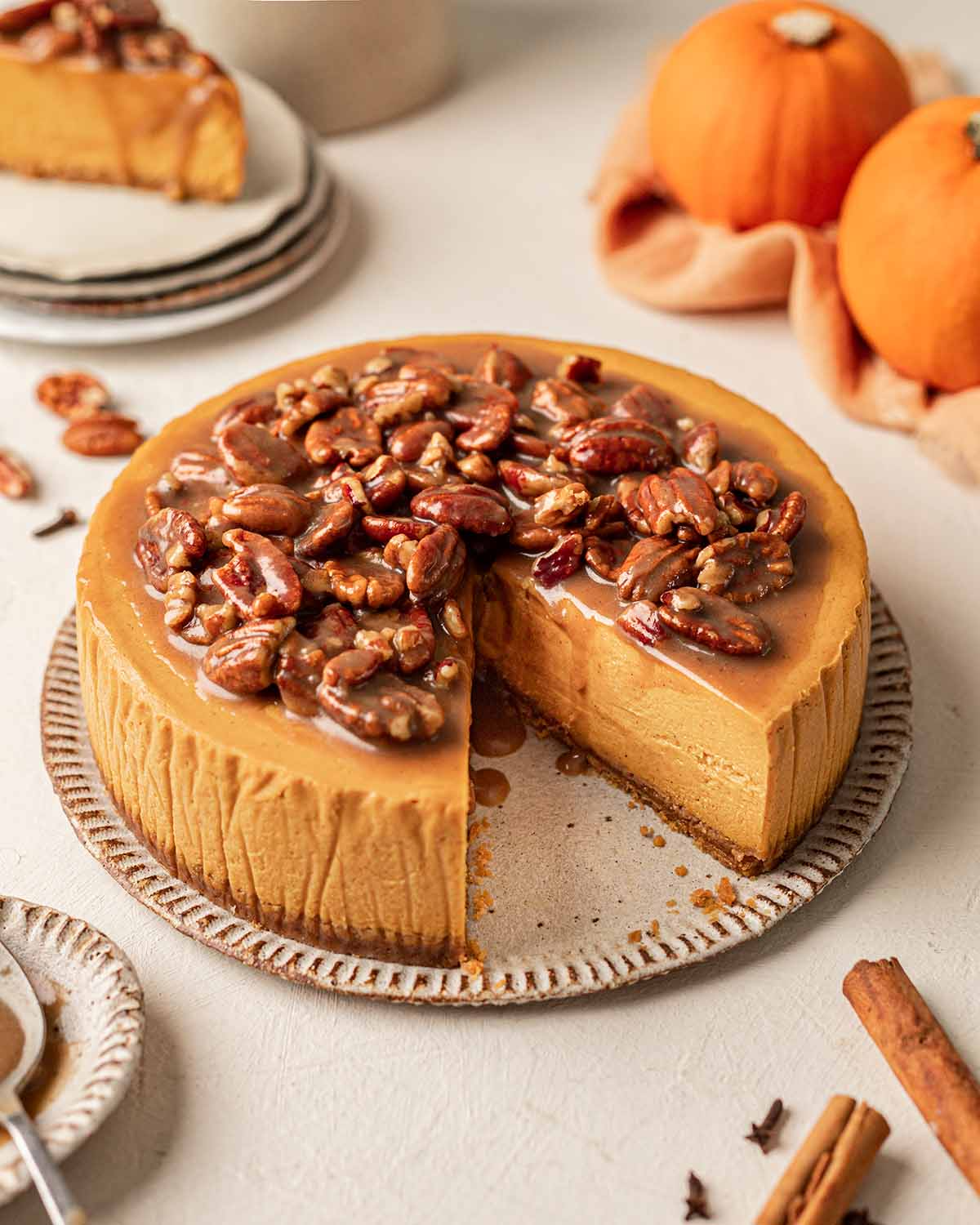
Baked Vegan Pumpkin Cheesecake (Rainbow Nourishments) uses ready-made ginger cookies (Mr Organic and Rhythm 108 are both free from palm oil) for the crust, and tops with a caramel pecan glaze.
This is a baked vegan cheesecake that is really easy to make, using warm spices and vegan cream cheese. If you can’t find canned pumpkin puree (and don’t want to make from scratch) you can use cooked sweet potato (also make ‘pumpkin pie spice’ by blending sweet spices (cinnamon, ginger etc).
Choose Small Pumpkins for Best Flavour

Pumpkins are a tasty winter squash, the small ones are better (you can also roast and eat the seeds, which are high in zinc). The word is from German for ‘pepon’ which means ‘large melon’. They taste a bit like sweet potato, so spices help to bring out the flavour.
Pumpkins are a huge food waste issue, due to Halloween. These large (edible though tasteless) pumpkins are bred, leaving around 22 million to rot on landfills each year. Generating methane gas, instead of feeding hungry people.
How to Prepare a Fresh Pumpkin
Although canned pumpkin puree is good for desserts and baking, it’s best to use fresh pumpkin for savoury dishes. It’s pretty easy to prepare, as long as you have a good serrated knife to slice the pumpkin. Chop flesh into wedges, toss in oil and spices, and bake in the oven for around 30 to 40 minutes.
Scoop out the (rinsed) seeds, boil in salted water for 10 minutes, then roast with oil and spices in the oven for 10 minutes.
Some recipes online for pumpkin use Specoloos biscuits, but they are made with palm oil. You can make your own speculoos cookies with brown sugar, spices, sea salt and vegan butter (Flora has no palm oil).
A few tools make life simpler. A food processor helps with the base, and a high-speed blender gives a smoother filling. A 20 cm springform tin (or loose-bottom tin) makes serving less stressful. If you only have a stick blender, use tofu or vegan cream cheese, because cashews can stay gritty.
Choosing your base (cashews, tofu or vegan cheese)
Cashews give the most classic cheesecake texture. They blend into a thick, creamy paste and set beautifully once chilled. Soak them first to avoid graininess. Use a cold soak for 4 to 8 hours, or a hot soak for 30 to 60 minutes (cover with boiled water, then drain). If you’re allergic to nuts, try sunflower seeds soaked the same way, or choose a ready-made vegan cream cheese base instead.
Vegan cream cheese is the quickest option. It’s already smooth, so you can mix a filling in minutes. The set can be softer, though, so it often benefits from a little coconut oil or cocoa butter, plus a longer chill.
Silken tofu is lighter and usually cheaper. It also blends easily with a stick blender. The flavour is mild, but it needs extra lemon and vanilla to taste “cheesecakey”. It also benefits from baking, because heat firms it up.
The flavour builders that make it taste real
Cheesecake without tang tastes flat. That’s why acid matters. Lemon juice is the most common, and a small splash of apple cider vinegar can boost the “cream cheese” bite without tasting vinegary.
Don’t skip salt. A small pinch makes the vanilla taste warmer and the lemon taste brighter. Sweetness is flexible, so match it to your toppings. Maple syrup gives a mellow flavour, icing sugar dissolves fast and stays smooth, while caster sugar can feel slightly gritty unless you blend well.
For firmness, coconut oil sets hard when cold, but too much can feel greasy on the tongue. Cocoa butter sets cleanly and tastes more neutral, although it can cost more. If you need thickening, use cornflour in baked cheesecakes. For no-bake, a little starch or agar can help, but chilling time usually does the job.
No-bake and baked options
- Line your tin with baking paper on the base (and a strip around the sides if you like neat edges).
- Crush 200 g biscuits until they look like fine sand. A food processor is fastest, but a rolling pin and a bag work too.
- Mix with 80 to 100 g melted vegan butter (or coconut oil). Add a pinch of salt. The crumbs should clump when pressed.
- Press firmly into the tin, using the bottom of a glass to compact it. Pack the edges well, because loose edges crumble first.
- Chill for 20 to 30 minutes while you make the filling.
If you want an extra-firm base, bake it for 8 to 10 minutes at 170°C (then cool fully). This helps if you’re serving on a warm day.
Blend the filling until silky smooth
- Start with your base: drained soaked cashews, vegan cream cheese, or silken tofu. Add lemon juice and any plant milk only as needed.
- Blend with the liquids first, then add sweetener and flavouring. This helps the blades catch and smooth everything out.
- Add vanilla and salt, then blend longer than you think. Stop, scrape down the sides, and blend again. The mixture should feel silky between your fingers, with no grit.
- Adjust the texture:
- If it’s too thick, add 1 to 2 tablespoons of plant milk.
- If it’s too thin, blend in a little more cashew/tofu, or add 1 to 2 tablespoons melted coconut oil, then chill.
For a no-bake vegan cheesecake, pour the filling onto the chilled base. Tap the tin gently to pop air bubbles, then chill for 6 to 8 hours (overnight is best). It’s ready when the centre barely wobbles and the top feels set.
For a baked vegan cheesecake, blend in 2 to 3 tablespoons cornflour (amount depends on batch size and moisture). Pour into the tin, then bake at about 160°C until the edges are set and the centre still jiggles, often 35 to 50 minutes. Cool in the switched-off oven with the door cracked for 20 minutes, then cool fully at room temperature. Finally, chill for at least 4 hours before slicing.
Easy toppings and flavour twists
Berry compote is the easiest crowd-pleaser, because tart fruit balances a sweet filling. A vegan lemon curd-style topping also works well on a cashew or tofu base. If you want chocolate, warm dark chocolate with coconut cream to make a quick ganache. For extra texture, add toasted nuts, crushed biscuits, or fresh fruit right before serving.
Store vegan cheesecake in the fridge for 4 to 5 days, covered so it doesn’t pick up fridge smells. It also freezes well for up to 2 months. Freeze slices on a tray first, then wrap. Thaw overnight in the fridge for the best texture.
For clean slices, use a sharp knife dipped in hot water, then wipe between cuts. That one habit makes even a homemade cheesecake look polished.