Make Your Own Vegan Quickbreads (no yeast!)
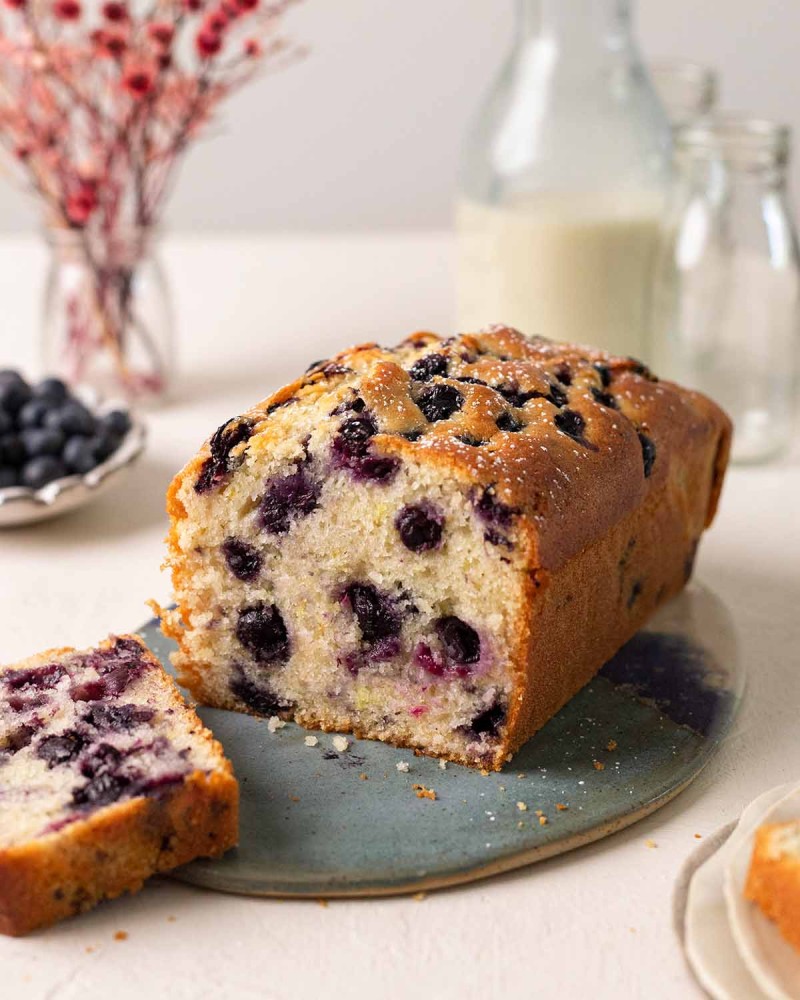
This blueberry bread (Rainbow Nourishments) is simple to make with a few ingredients. Quick breads are really cakes, as they contain no yeast. You can use frozen blueberries (you don’t need to defrost them for this recipe).
Keep away from pets, as crumbs may contain nutmeg. Before baking, read up on food safety for people and pets.
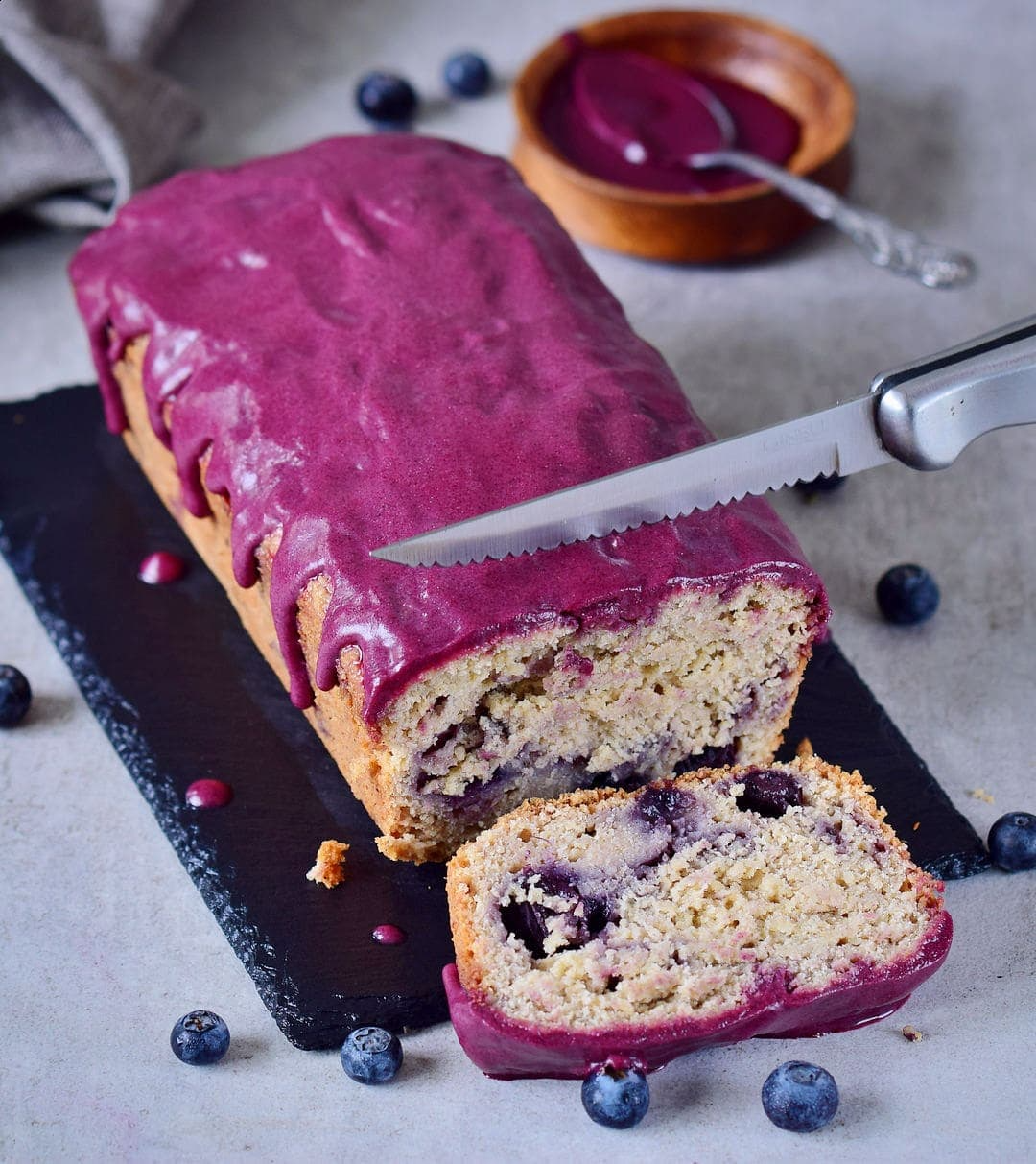
This blueberry banana bread (Ela Vegan) contains many fresh berries. The natural dye is from the blueberries, nothing artificial.
Homemade Vegan Carrot Cake Recipes

Carrot cake is one of England’s favourite cakes. It’s actually a quick bread (no yeast). But as carrots are one of nature’s sweetest vegetables, it tastes like dessert! Other quick breads you will know are banana bread and gingerbread.
This vegan carrot cake recipe (The Veg Space) is from a trained chef, but is super-easy to make with affordable everyday ingredients, and tastes just as good (if not better) than cakes made with dairy and eggs. Keep nutmeg away from pets.
Before baking, read up on food safety for people and pets.
The fresh grated carrots are combined with walnuts for a tasty cake batter made with soya milk (to replace the egg) and dairy-free cream cheese and vegan butters with no palm oil for the icing.
You can decorate the cake with chopped pistachios like the photos, or use more affordable walnuts or pecans if preferred.
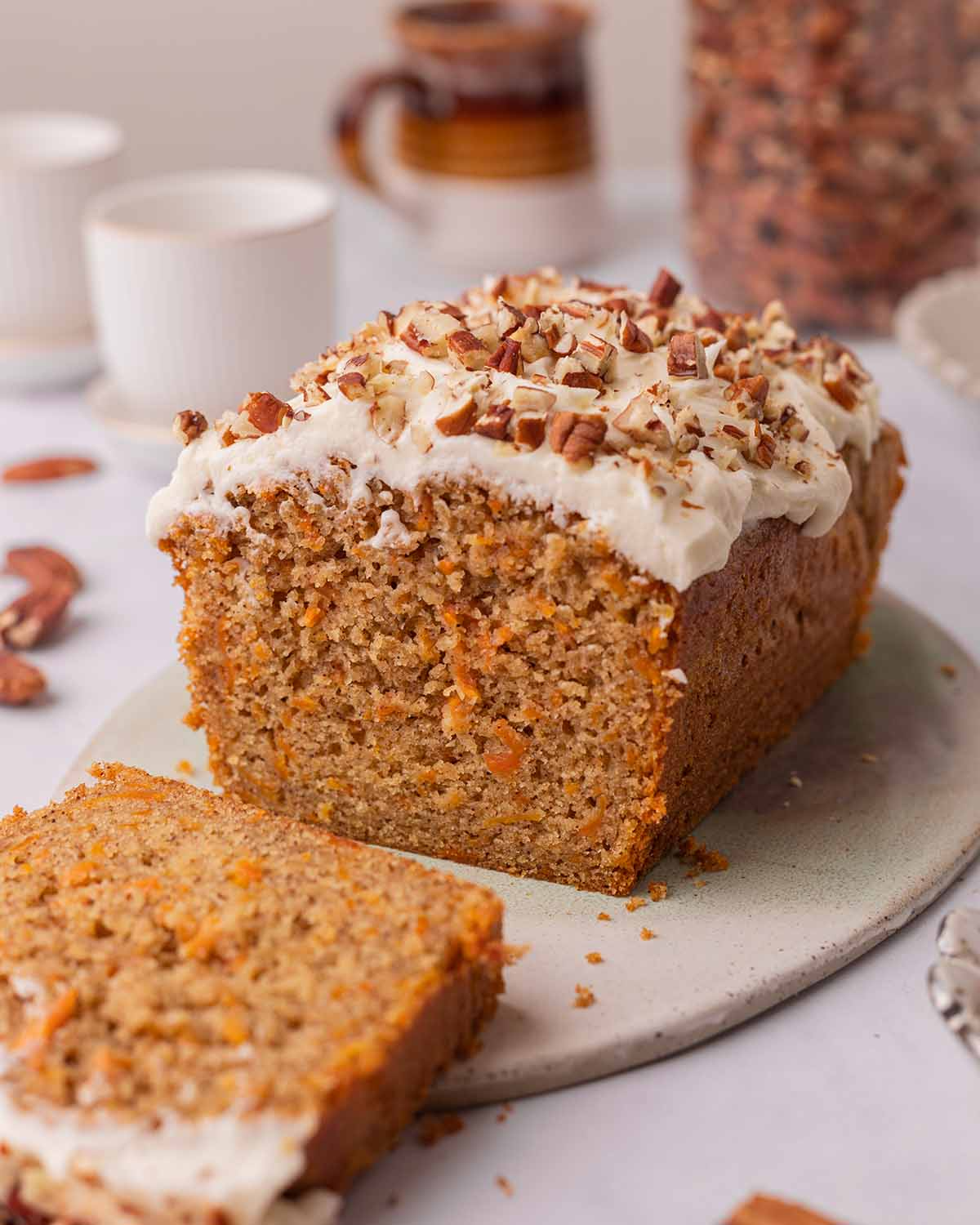
This homemade carrot cake (rainbow Nourishments) only needs a few ingredients.
Tips for Good Carrot Cake
- Never over-mix the batter, fold gently.
- Use an oven thermometer, for best results
- Measure baking soda carefully, to avoid bitter taste.
- A frosted cake will keep in a sealed container in the fridge for a few days. Bring slices to room temperature, before serving.
- Nice served with a drizzle of maple syrup, and a cup of tea!
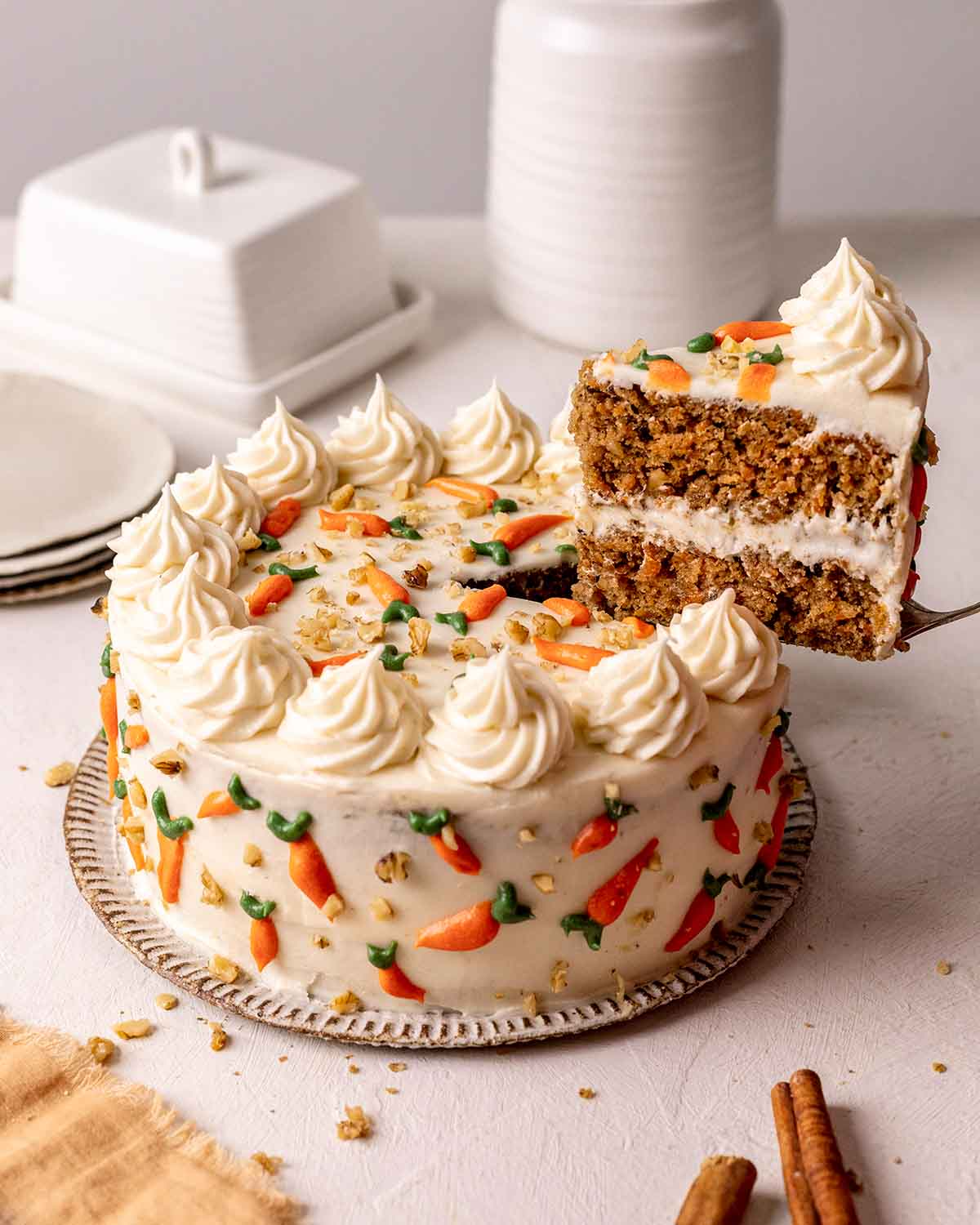
Rainbow Nourishments offers a nice vegan carrot cake recipe, alongside a carrot cake loaf.
Homemade Courgette Quickbreads

This homemade courgette bread (Rainbow Nourishments) is nice stuffed with vegan chocolate chips (Plamil is a good brand in paper packs, or sub with walnuts or pecans).
Related to squash, courgettes are used for ratatouille (if not harvested, they grow into marrows). Avoid ones that are wrinkled or have yellow skin or black spots.
Store in the fridge. Choose Choose organic to avoid cross-pollinated seed batches that carry a toxin (Tim Dowling writes how he poisoned himself with homegrown courgettes).

If you’re a choccy-holic, also try Anthea’s recipe for Chocolate Courgette Bread, which unlike the above recipe, has more chocolate than courgette!
Homemade Vegan Banana Bread Recipes
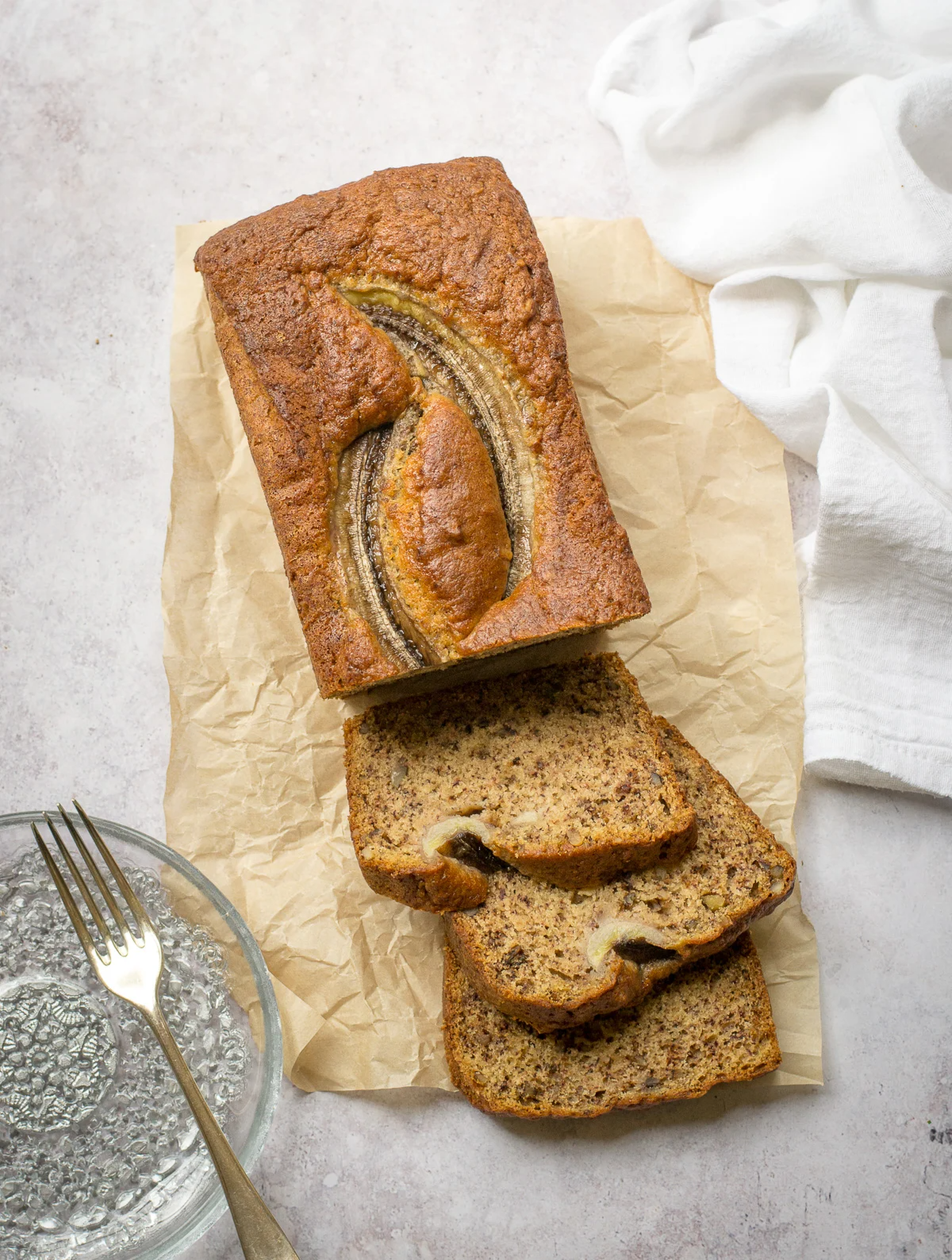
This banana cake recipe (The Veg Space) is really easy to make. A great way to use up over-ripe black spotted bananas.
Before baking, read up on food safety for people and pets.
Bananas (though not local) are one of England’s favourite fruits. Despite their opaque appearance, they are mostly water and also packed with potassium, so good for aching joints (that’s why tennis players eat them, during their breaks!)
Supermarkets usually sell fair trade bananas (not in plastic) and organic bananas (in plastic – they have to legally do this to avoid being contaminated by non-organic produce).
So the best bet is to visit a farm shop to find all-organic produce. Then you’ll find fair trade organic bananas sold loose – a win-win-win!
They are also more likely to be sea-freighted, than flown in by air. This is because farm shops and organic box schemes care about the planet, and how and where food comes from.
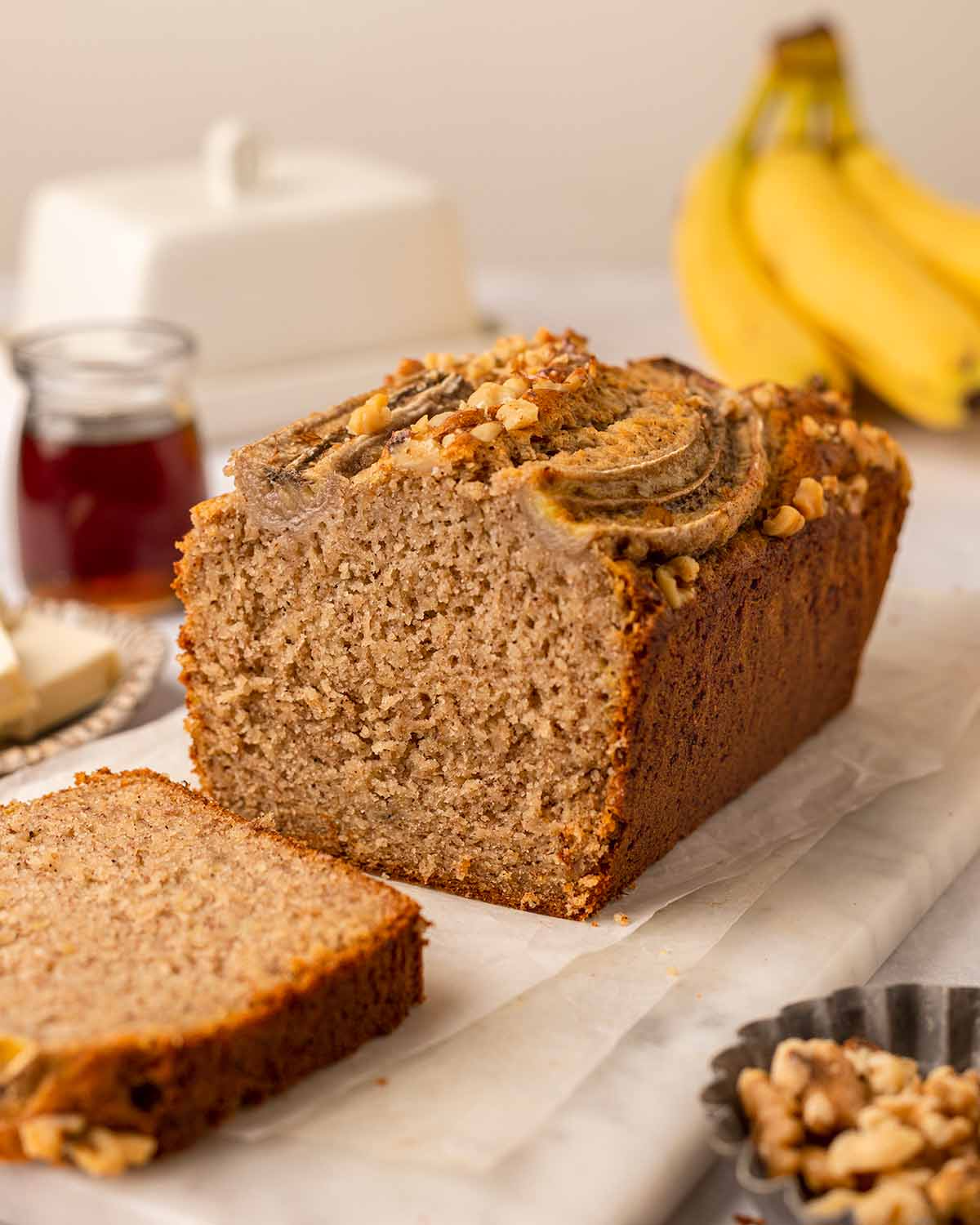
This 8 Ingredient Maple Banana Bread (Rainbow Nourishments) is a sweetened version of one of England’s most popular quick breads (made without yeast). This is a great recipe to use up bananas, the blacker ones have extra sweetness (and banana is a natural egg replacer).
Maple syrup is expensive, but just a splurge will give a beautiful brown sugary taste. Banana bread is easy to digest, but you could spelt flour for even better digestion (just add a splash more plant milk).
Easy Banana Cake with Cashew Frosting
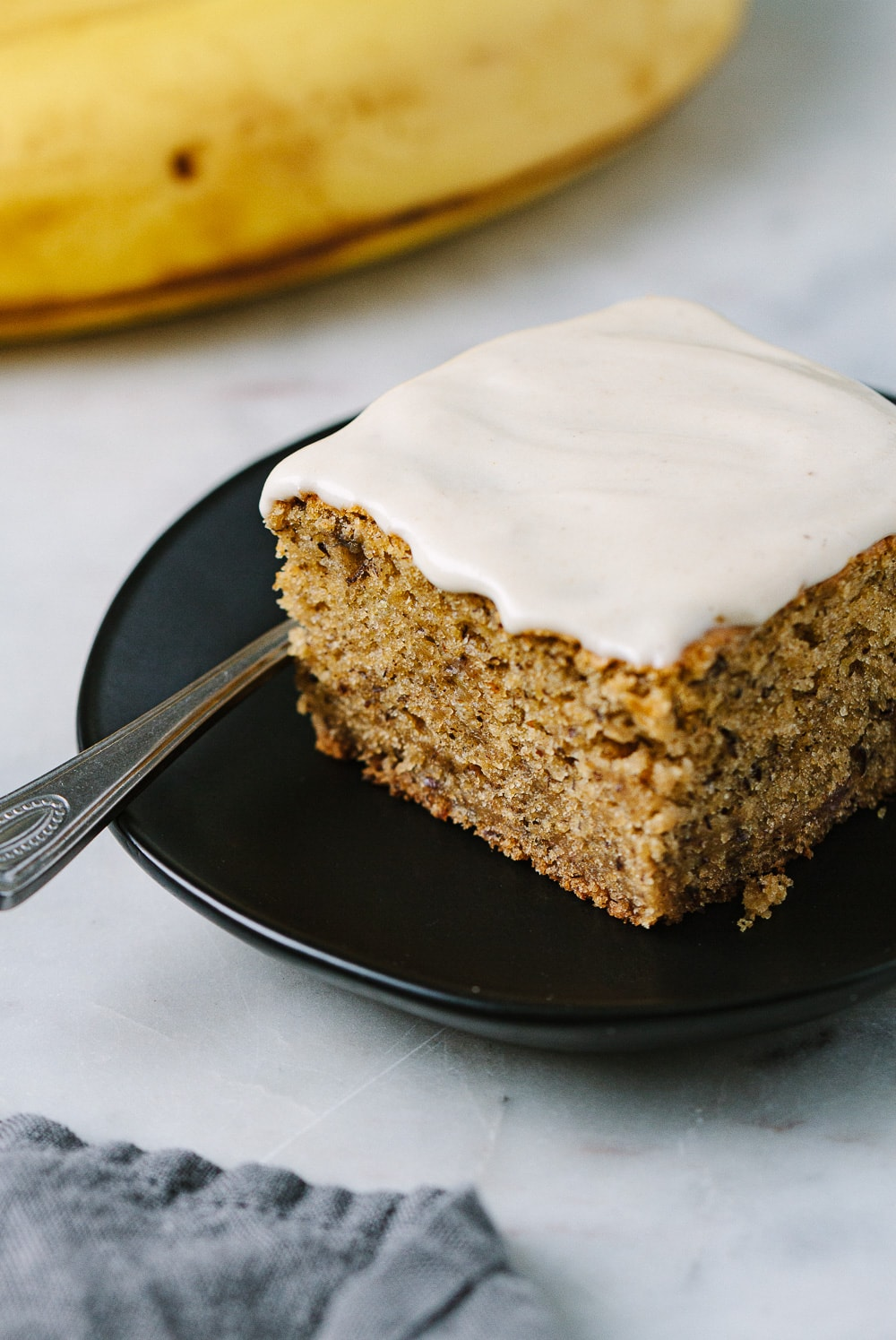
Also try this easy banana cake (The Simple Veganista).
The simple vegan quickbread formula
Here are the building blocks:
- Dry base (flour) gives structure.
- Liquid hydrates the flour and carries flavour.
- Fat keeps the crumb soft and slows drying.
- Sweetener adds flavour, helps browning, and can soften texture.
- Lift (baking powder, bicarbonate of soda) creates rise fast.
- Binder replaces eggs, helping slices hold together.
- Add-ins (fruit, nuts, herbs) add texture and interest.
A beginner-friendly base template (for a standard loaf tin) looks like this:
- About 250 g flour (roughly 2 cups)
- About 240 ml liquid (roughly 1 cup)
- 1 to 2 tsp baking powder, plus 1/2 tsp bicarbonate of soda if you’re using an acidic liquid or “buttermilk”
- 1/2 tsp salt
- 2 to 4 tbsp oil (or another fat)
- 80 to 150 g sugar (or less for savoury)
- 1 egg-free binder (choose one below)
- Add-ins to taste
That’s intentionally flexible. Different flours and add-ins soak up liquid at different speeds. Aim for a batter that’s thick but spoonable, like soft porridge. If it pours like pancake batter, it may bake up flat. If it sits in the bowl like dough, it can turn dry.
If your batter feels too thick, add liquid a tablespoon at a time. If it’s too loose, add flour one tablespoon at a time.
Choosing flour, liquid, and fat
Start with plain flour for the easiest rise and a light crumb. For a heartier loaf, swap up to half for wholemeal. Wholemeal drinks more liquid, so expect a thicker batter. Spelt flour bakes tender but can feel delicate, so don’t overmix. Oat flour (or blitzed oats) tastes great, but it’s heavier, so keep it to a third of the flour at first.
Liquids can be simple. Unsweetened plant milk is the all-rounder. Water works, but it can taste plain, so add spices or zest. For sweet loaves, orange juice or coffee can bring flavour quickly. Mashed fruit counts as “wet” too, so reduce liquid slightly when you use a lot of banana or applesauce.
For fat, neutral oil (rapeseed, sunflower) gives the softest crumb. Melted coconut oil adds richness, but it firms when cool, so the loaf can feel tighter straight from the fridge. Nut butter adds flavour and tenderness, but it can weigh the loaf down if you use too much.
Want a light “buttermilk” effect? Stir 1 tbsp lemon juice or vinegar into 240 ml plant milk, then leave it for 5 minutes. That gentle tang also helps lift when paired with bicarbonate of soda.
Egg-free binders that actually work
Eggs usually bind, trap air, and add moisture. Vegan quickbreads can do the same, but the best binder depends on the style of loaf.
- Flax egg (hearty, reliable): Mix 1 tbsp ground flaxseed with 3 tbsp water, rest 10 minutes. Great for nutty, wholemeal, or seeded loaves.
- Chia egg (similar, slightly firmer): Same method as flax. It holds moisture well, so don’t overdo wet add-ins.
- Mashed banana (sweet, flavourful): Use 1 medium ripe banana. It cuts the need for sugar, but it will taste of banana. Too much can turn the centre gummy.
- Applesauce (gentle sweetness): About 60 to 80 g can add moisture and binding with less flavour than banana.
- Yoghurt-style plant yoghurt (tender crumb): Great for a neutral, soft slice. It suits lemon, berry, and savoury loaves.
- Aquafaba (lighter texture): The liquid from a tin of chickpeas can help a loaf feel airier. Use it when you want less density, especially with plain flour.
Step-by-step method for vegan quickbread
- Heat the oven to 180°C (160°C fan). Grease and line a 900 g loaf tin (about 23 x 13 cm).
- Measure first, then mix. Quickbreads move fast once wet meets dry.
- Whisk dry ingredients in a large bowl (flour, raising agents, salt, spices).
- Stir wet ingredients in a jug (liquid, sugar, fat, binder, zest or vanilla).
- Combine gently. Pour wet into dry and fold until just combined.
- Fold in add-ins (berries, nuts, chocolate) with as few strokes as possible.
- Bake until risen and set, usually 45 to 60 minutes.
- Cool properly. Rest in the tin 10 minutes, then cool fully on a rack before slicing.
A few checks save a lot of disappointment. First, make sure your baking powder is fresh. If it’s been open for months, it may not lift well. Next, don’t open the oven door early. That sudden drop in heat can make the centre sink.