Vegan Shepherd’s Pie (a simple affordable recipe)
It’s a shame that lentils don’t receive the love they deserve in England. In Italy, everyone eats them, whether they are vegan/vegetarian or not. Native to the Middle East, lentils are cheap, tasty, nutritious and filling.
Throw them into your pasta sauce for a protein-rich dinner. Blend them in soups and stews, or add to fresh salads, for a filling lunch.
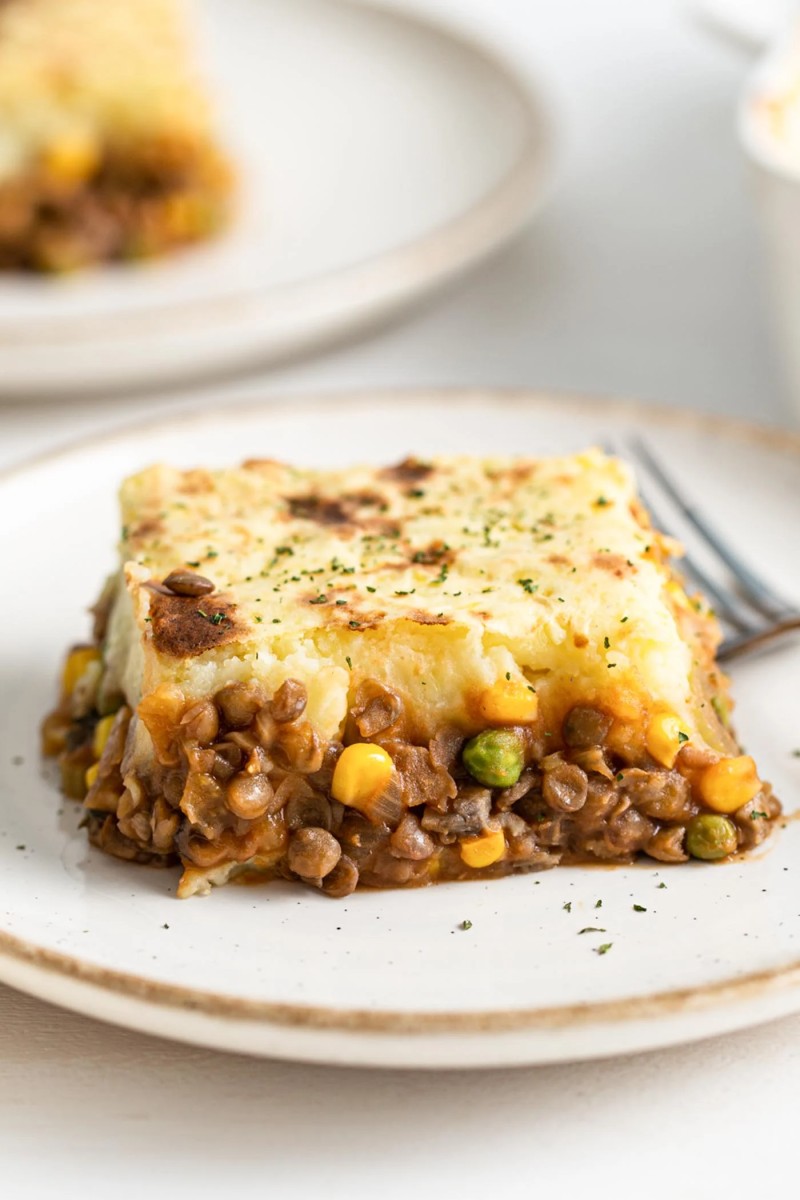
This lentil shepherd’s pie (Running on Real Food) subs the meat with lentils – more healthy and animal-kind!) You’ll never miss the meat with this hearty mushroom lentil filling, topped with creamy mashed spuds. It’s ready in 1 hour, and leftovers keep in the fridge (in a covered container) for a short time.
Read up on food safety for people and pets (onion, garlic and spices are unsafe near animal friends). Bin allium scraps (onion, garlic, leeks, shallots, chives) as acids may harm compost creatures (same with tomato/citrus/rhubarb scraps).
If using tinned lentils, fully remove lids (or pop ring-pulls back over holes) to avoid wildlife getting trapped.
There are three main types of lentils:
- Red lentils are the easiest to cook, but tend to be less likely found in tins. So if buying from stores in plastic bags, you can recycle the packaging at supermarket bag bins, if your kerbside does not recycle. They take around 20 minutes to cook in water. They go quite mushy, and are nice in all recipes.
- Green and brown lentils are more ‘earthy’ in flavour. These take longer to cook, but are the best choice to replace meat in dishes like vegan shepherd or cottage pie, and hold up better if making lentil burgers.
- Black lentils are not so easy to find, but again are more dense in flavour.
Why Choose Vegan Shepherd’s Pie?
Red meats are hard to digest and very high in saturated fat. Lamb is not a good food to eat for anyone with issues like heart disease or high cholesterol. And red meats are also linked to certain cancers.
The benefits of real lamb (protein and flavour) can easily be replicated both in recipes and artisan food products. Some say they are ‘not natural’. But neither is lamb before it’s been seasoned. So you may as well do the same with plants. Far kinder, healthier and no factory farms involved.
And in a country of 60 million people, we don’t have enough land for everyone to eat free-range. So even if you eat meat, most of the time it’s going to be factory-farmed, unless stated otherwise.
What About Cottage Pie?
Cottage pie is simply made with beef. So for vegan versions, you don’t have to interchange, just use lentils or vegan mince. Much simpler!
Good Recipes for Independent Pubs!
We all know how independent pubs are struggling right now, due to silly laws and high beer taxes. But it also has to be said that many people (younger people especially) don’t drink (nearly half of young adults are teetotal).
So as well as offering good no-alcohol drinks, it also pays to get your menu in order. Many pubs wrongly serve dishes with Parmesan as the vegetarian option (it’s not). And often offer veggie dishes that are not really as tasty and appealing as traditional pub grub.
As well as a vegan Ploughman’s, serving up veggie shepherd’s pie, is the kind of food that will get the punters in. When their friends are tucking into hotpots and roast dinners, they don’t always want a vegetable curry with naan bread, but something more traditional. Perfect this recipe, and watch your profits roll in!
Dishes That Were Created from Poverty
Learn to make these pies, and they will save a fortune on food bills. A big hearty helping of vegan shepherd’s pie with veggies, is far more affordable than a £15 Dominos pizza, and more filling and nutritious too!
Like many favourite dishes, these originated from poverty, when shepherds and crofters were using up scraps like leftover potatoes, to make hearty meals.
Potatoes were introduced (they are Native American) around the 1500s to both England and Ireland and became a cheap and staple food (of course Irish people suffered terribly during the potato famine). One million people died due to a mould that was destroying crops, when a third of the population relied on them.
Another 1 million people emigrated, which is why there are so many Irish emigrants worldwide.
The famine is now widely viewed as a manmade tragedy, due to the policies of the British government at the time. During the famine, a lot of the rest of Ireland’s food was exported to Britain, and the Gregory Clause forced small land tenants to surrender land, to qualify for aid. Another 500,000 people were evicted from their homes as they could not pay rent, thus dying from exposure.
It is widely believed that the famine (and the way that people were treated during the famine) was the catalyst for independence, which of course came years later.