Vegan Vitamin D3 Supplements (no lanolin)

Mostly animal foods, which is why vegans and vegetarians are often deficient. The main sources are oily fish (but there are concerns over over-fishing, by-catch and mercury), egg yolks (which are high in cholesterol) and red meat like liver (again cholesterol concerns).
The main plant sources of vitamin D are mushrooms (sun-dried only), and fortified foods like oat drink and breakfast cereals. It’s estimated that almost half of adults in the USA are deficient in vitamin D, which is likely the same in the UK. This could be as high as 82% of people with darker skins.
To get enough vitamin D from sunlight (it’s only really found in animal foods), you need to spend at least 20 minutes in direct midday sun, which of course we are often not advised to do these days due to skin cancer concerns. Plus many people have indoor jobs, so even in summer are not exposed to enough sun. Especially in winter months.
Read more on natural sun protection (wash skin before letting pets kiss you, as most sunscreens contain pet-toxic zinc oxide – the reason also to never human sunscreens on pets.
Others at risk are people who spend time in nursing homes or hospitals, or those that cover most of their skin year-round (like certain religions). Pregnant/breastfeeding women also benefit.
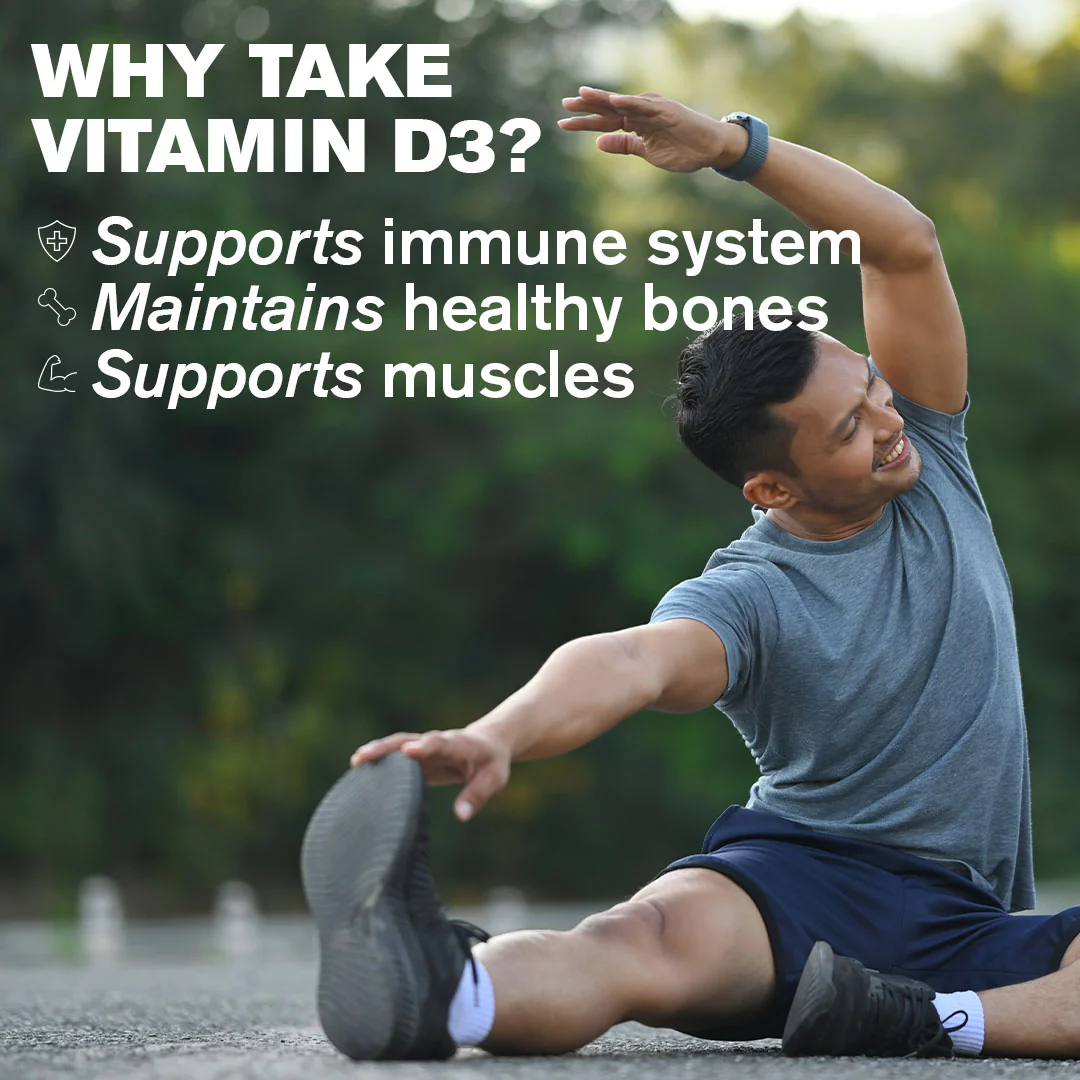
Vitamin D3 is a fat-soluble vitamin that is important for:
- Strong immunity
- Strong bones & muscles
- Healthy teeth
- Helping to absorb calcium
- Helps mood (the ‘sunshine’ vitamin)
- Helps to avoid ‘brain fog’
Dr.Vegan recommends that if you need vitamin D, a supplement of at least 10mcg (400IU) is recommended year-round.
Most multivitamins have low vitamin D, so it’s safe to extra if you need it. It’s important to overdose, as too much can cause vomiting and kidney stones. Check the labels before purchase. And take with fatty foods (nuts, seeds or oil), for better absorption.
Always check with your GP before taking supplements if on medication (also for women if pregnant or nursing). Keep them away from children and pets, and recycle unused supplements and medicines at pharmacies (never flush them down the loo).
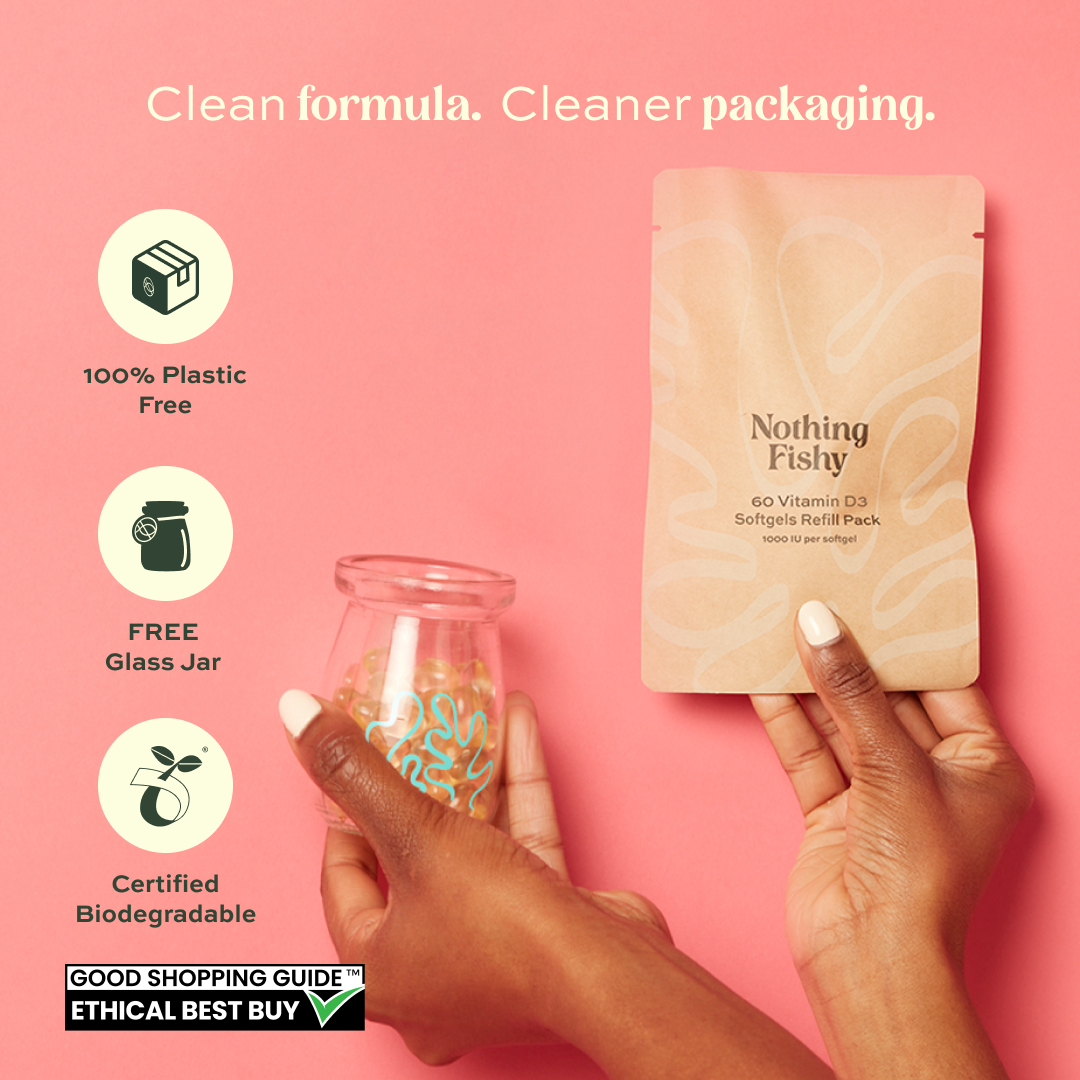
Nothing Fishy (use code ENGNF15 for 15% off first purchase) is a good brand of plant-based vitamin d3, sold in glass jars with compostable refills. This is absorbed better than vitamin D2, made from algae (not fish). Vitamin D is a fat-soluble vitamin, so it’s best taken alongside fatty foods (nuts or seeds).
For best results, take two soft gel capsules per day, and store at room temperature, away from direct sunlight. Subscribers receive a glass jar and eco-refills thereafter, with 25% off the normal price.
Dr.Vegan Vitamin D3 is a quality supplement, the first order is sold in a refillable metal tin, then you just order refills in eco-pouches thereafter. You can buy once, or get a free pill tin, then subscribe for bigger savings.
Designed to protect your bones and joints, this is ideal for people who are deficient in vitamin D due to not eating animal products, or don’t expose their skin to a little bit of sunshine each day (say for some religious beliefs or even people who spend most time in nursing homes). Ideal for winter, it’s sourced from algae (D3 is better absorbed than D2).
Take 1 capsule day, with or without food. Do not exceed the recommended dose (too much vitamin D can be harmful – take a test to see if you need it).
Join the transparent label campaign
The transparent label campaign is a worldwide petition to ask governments to mandate clear labels on supplements, to show if they contain animal ingredients. Many contain ‘hidden’ ingredients like gelatine (animal bones), fish, collagen, creatine and magnesium stearate, which collectively kills billions of creatures).
Why are most vitamin D supplements not vegan?
Lanolin is basically sheep wax (not fat), and ends up ‘hidden’ in many items found in grocery stores or chemists. So it’s really good to avoid, for better sheep welfare. This substance is secreted by sheep’s sebaceous glands to waterproof their wool, and taken to make products for dry skin, and also in vitamin D (for fortified cereals and supplements).
Learn how to overturn a rain-soaked or pregnant sheep upright, to save its life. It’s simple.
Lanolin makes up quite a percentage of a freshly sheared sheep’s wool, and then separate with water and force. Although sheep must be sheared to keep cool and see predators, many people (including vegans) are concerned that some sheep are sheared too early, and older sheep are killed to make mutton, so prefer to avoid sheep-by-products.
Because lanolin traps moisture and attracts moisture, it’s often used in popular face creams (like Astral, which also contains oil-derived petroleum). It’s also frequently used in lip balms and barrier creams for dry hands. Even for sore nipple creams for breastfeeding mothers and to lubricate machinery.
Choose breakfast cereals free from vitamin D2
Most cereal brands (including Kellogg’s) add vitamin D2, because it costs more to add better lichen-or-algae-derived vitamin D3 (see below). So most breakfast cereals (that are fortified for nutrition) choose to use the cheapest option. That’s why so many breakfast cereals don’t carry a vegan logo (they can’t, due to vitamin D from animals).