What Wisdom of Other Creatures Can Teach Us
Often if we can’t find solutions to problems, all we need do is to look at the animal kingdom: other creatures rest when tired, fast when sick, forgive when hurt and accept nature’s laws. Here are some lovely books to find out more, and be inspired.
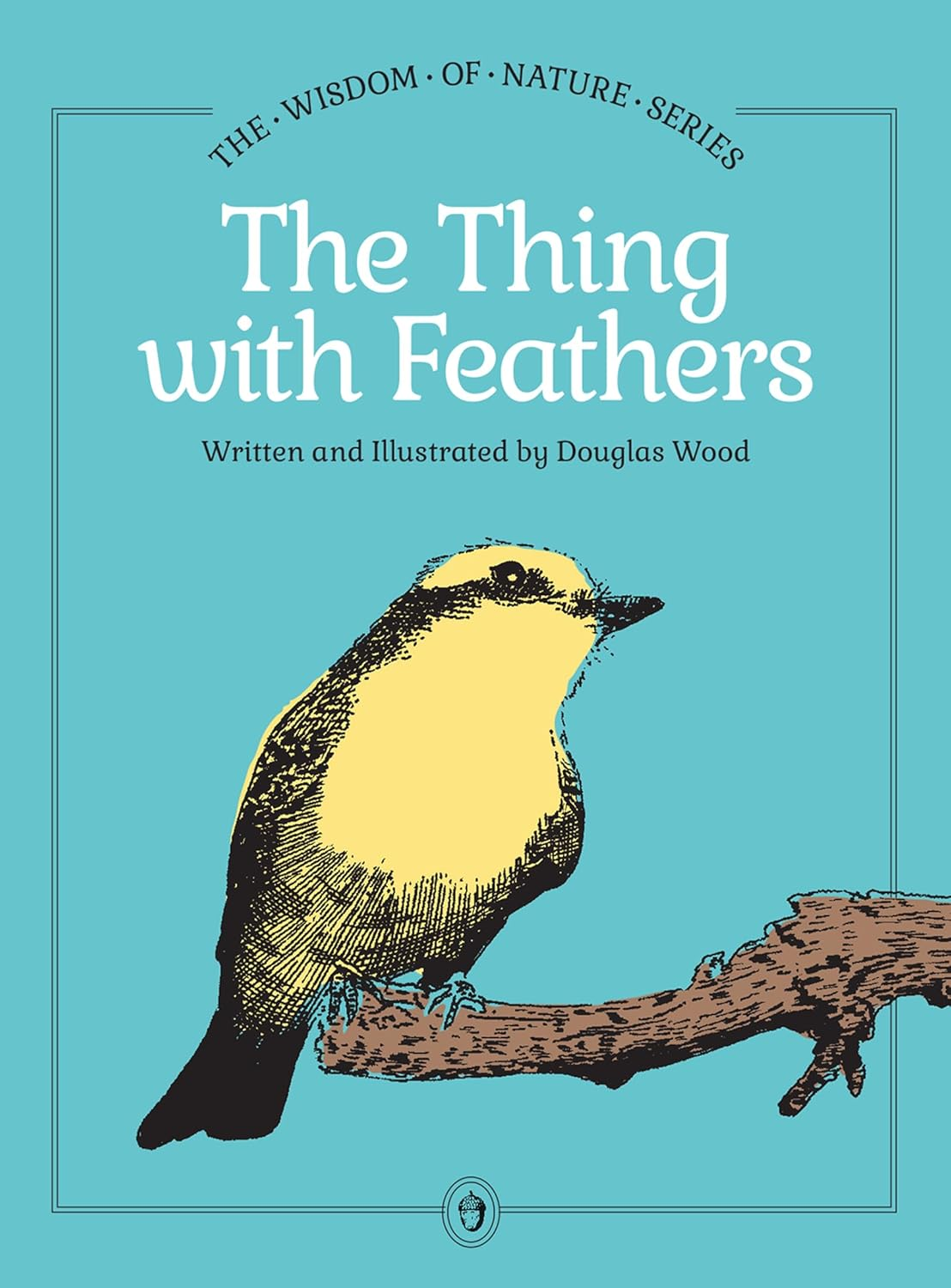
The Thing with Feathers is an illustrated ode to the wisdom to learn from our bird friends. They remind us that while life may be tethered to earth, it always holds the possibility of flight.
In this book, the author invites you to learn from our winged companions, from building nests and raising young to weathering storms and seeking distant horizons. Birds embody the bravery, resilience and spirit that guide our own paths.
The book draws inspiration from the poet Emily Dickinson’s line ‘hope is the thing with feathers’, and includes musings and simple drawings, each page an insight how nature (and birds in particular) can guide us through life’s challenges.
Read our posts on how to create safe havens for birds (feeding, nest-boxes, protecting from cats) and preventing bird strike. Don’t play birdsong near birds, it can confuse and attract predators.
Life Lessons and Wisdom from Birds

The Wisdom of Birds takes 60 amazing birds illustrated by Victorian artist and ornithologist John Audubon, then shares unique strengths of each one to help us build with care, and spread our wings.
Includes the proud belted kingfisher, the delicate red-throated loon and the elegant snowy egret and laidback double-crested cormorant.

Birds are social creatures, thriving in groups that range from small partnerships to massive congregations. The way they organise themselves offers insights into social cohesion.
Flocks. Birds flock mostly for safety. By staying together, they are at less risk of predator attacks, and watchful eyes of many detect danger early. When foraging, a group also can cover a wider area.
Nesting Communities. Again, communal living protects birds from predators, and conserves resources. For instance, seabirds nesting on cliffs share prime location for feeding and protection.

Communication. Birds rely on vocal sounds and body language to convey warnings, attract mates and declare territories. Posturing and plumage displays also maintain social order.
Friendship. Some birds benefit from relationships with other species. The classic example is oxpeckers, that feed on parasites of large mammals like buffalo or rhinos, which benefit from natural ‘pest control’.
The Hidden Wisdom of Animals

The Hidden Wisdom of Animals is a beautiful book for young readers to celebrate over 40 creatures worldwide, and in lyrical reflections, focus on one amazing quality or skill from each that we can learn.
Young readers age 9 and up will enjoy this book, which celebrates over 40 creatures from around the world, with lyrical 100 to 500 word reflections, that each focus on one amazing skill or quality that the animal embodies – and that we can learn from.
Author Alison Davies lives in Colorado (USA) where she writes books on National Parks, and environmental issues in the world’s wild and remote places.
Teaching Children ‘Aesop’s Fables’
Aesop’s Fables are a collection of ancient stories, each with a moral tale to tell. It would be wonderful if ‘they came back into fashion’. Many of the stories features creatures from the natural world, to both educate and inspire.
Wildlife TV presenter Hamza Yassin recently said he would love it, if children were able to name five trees, rather than five Kardashians.
Lessons from the Tortoise and the Hare Fable
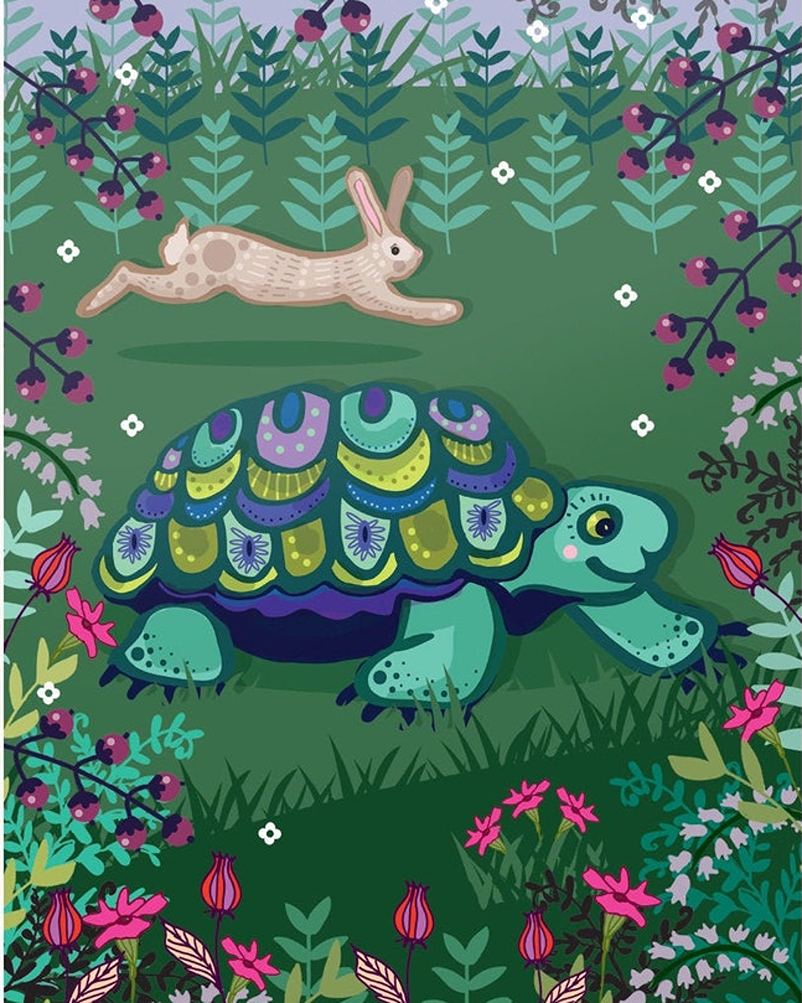
The Tortoise and the Hare was one of Aesop’s fables, a story with a moral compass. In this case, that you often get further, when you slow down. It’s a lesson that many of us could learn, in today’s fast-moving society.
A swift hare brags about his speed to other animals. But the slow tortoise challenges the hare to a race. Although the hare easily pulls ahead to victory, he decides to stop and take a nap. While the slow and steady tortoise makes it to the finish line first.
You may deride my awkward pace. But slow and steady wins the race. Tortoise
This fable is known worldwide, with different versions. In Native American culture, it’s a hummingbird and crane, that agree to race from ocean to another. Against, the tiny fast hummingbird stops at night to sleep, while the crane flies overnight and comes in first.
Other fables that you may be familiar with include:
- Mercury and the Woodman (honesty is the best policy)
- Milkmaid and her Pail (don’t count your chickens, before they are hatched)
- The Ant and the Grasshopper (be prepared for the days of necessity)
- The Wolf in Sheep’s Clothing (appearances can be deceptive)
- Father and His Daughters (you can’t please everyone)
More Lessons We Can Learn From Wildlife
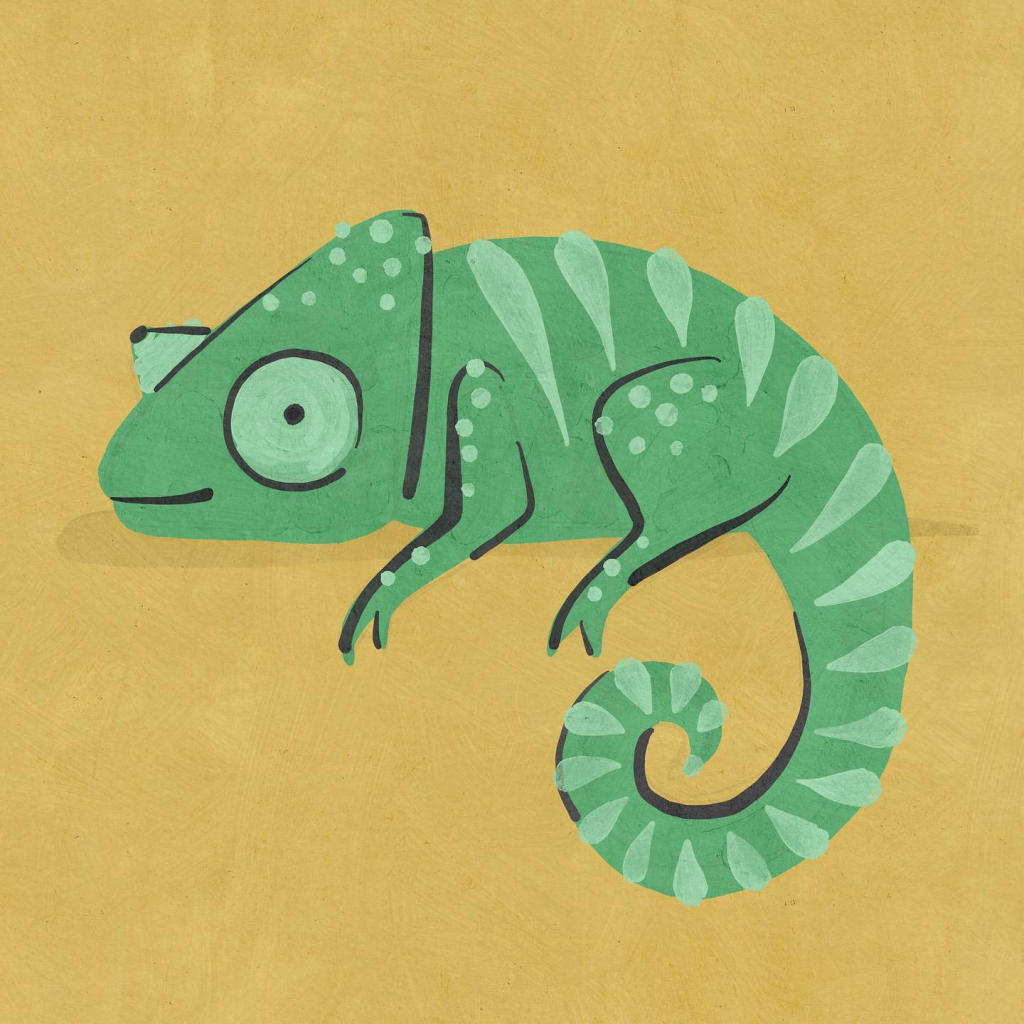
- Chameleons (flexibility). These creatures change colour to blend into their surroundings, not just for camouflage but also for communication and temperature regulation.
- Salmon (tenacity). They swim upstream against daunting currents to spawn, embarking on an incredible journey. They face predators (bears!) and waterfalls to fast-flowing streams. Yet driven by instinct, they reach their destination.
- Elephants (family). They support their close-knit herds through thick and thin. Calves are cared for by the entire herd, and seniors are respected for their wisdom. They mourn their dead, and revisit resting places of deceased herd members.
- Crows (creativity). They make tools and use sticks to reach food. There is a video of a crow, who wants to crack a nut. So he drops it into a busy road, waits for a car to run over it, then flies down to collect his dinner!
- Arctic Tern (stamina). Each year, this tiny bird travels from the Arctic to Antarctica, a journey of around 70,000km. This bird reminds us that with determination, even the longest journeys can be completed.
- Honey badgers (tenacity). Whether it’s breaking into beehives or facing snakes, the honey badger shows that being bold and persistent, is often the best way to confront obstacles. We can learn to face challenges, with the same attitude.