Who Was Thomas Hardy?
Thomas Hardy was born in 1840 in the village of Higher Bockhampton, near Dorchester. He grew up surrounded by the countryside that would later become such an important influence on his writing.
Hardy initially trained as an architect before eventually establishing himself as a novelist and poet. His novels often explore relationships between people and the landscapes in which they live.
Although Hardy created the fictional region of Wessex, it was heavily based on the real counties of south-west England.
What Is Tess Country?
“Tess Country” is a term used to describe the Dorset landscapes associated with Tess of the d’Urbervilles and the wider world created by Hardy.
The novel was published in 1891 and tells the story of Tess Durbeyfield, a young woman whose life is shaped by poverty, social expectations, family circumstances and relationships.
Although the locations in the novel often have fictional names, readers familiar with Dorset can recognise many of the landscapes behind them.
The Blackmore Vale
The Blackmore Vale is one of the landscapes most strongly associated with Hardy’s rural Wessex. The area stretches across parts of Dorset, Somerset and Wiltshire and is characterised by rolling countryside, farmland and small villages.
Hardy knew the region well, and its landscapes appear repeatedly throughout his writing. The rural character of the Blackmore Vale makes it easy to understand Hardy’s fascination with the countryside.
Traditional farms, winding lanes and distant hills create the kind of scenery that features throughout his novels. The landscape has changed since Hardy’s lifetime, but many aspects remain recognisable.
For walkers, the area offers opportunities to experience the countryside at a slower pace, much as Hardy would have done during his own life.
Hardy’s Wessex
Hardy’s fictional Wessex is one of the most famous literary landscapes in English literature. Rather than simply reproducing Dorset, Hardy created an imagined version of south-west England.
He borrowed real locations, changed names and sometimes combined different places. The result is a landscape that feels familiar but is also fictional.
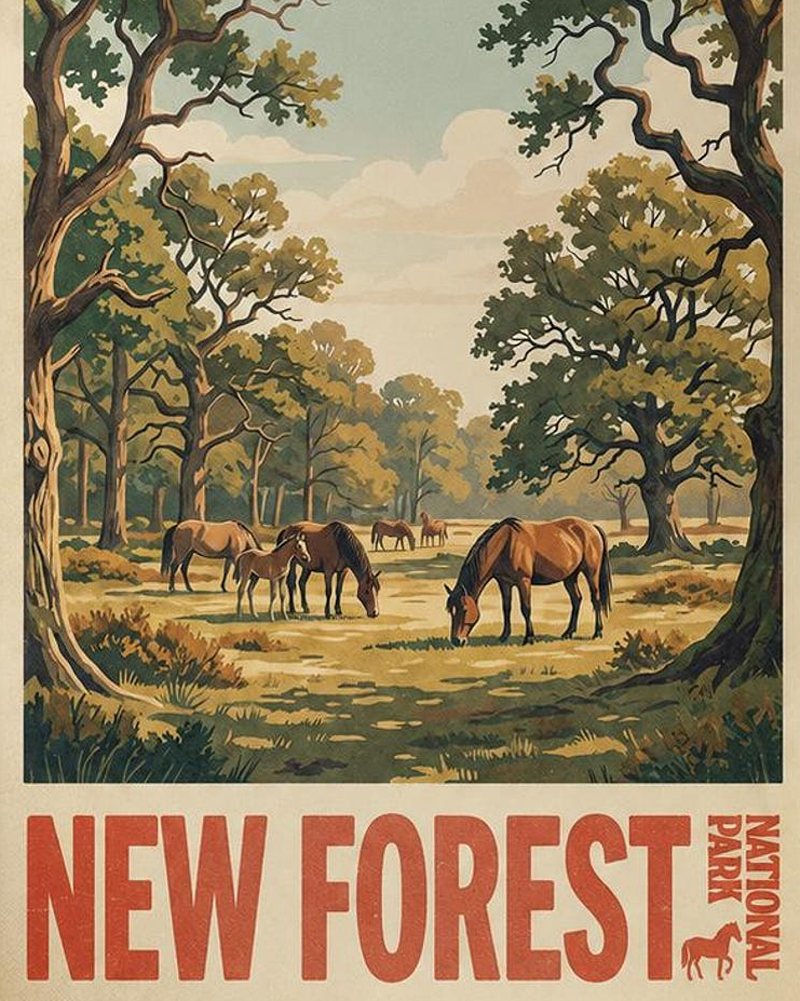
Looking after New Forest ponies (never disturb them)
Image
New Forest ponies are one of England’s most distinctive native ponies. Closely associated with the New Forest landscape in Hampshire/Dorset, they are known for their hardiness, intelligence, adaptability, and ability to thrive in challenging conditions.
The New Forest Ponies are cared for by commoners (who benefit from right to graze animals). The New Forest Verderers employ five Agisters who ensure commoners abide byelaws, and oversee grazing ponies, livestock, cattle, donkeys, pigs and sheep (but not deer or other wild animals).
Do not touch or feed semi-wild New Forest ponies. Don’t let dogs approach or chase ponies or any other animals. Never use flash photography (use a zoom lens if taking photos). Read more on happy healthy horses.
Sick and injured animals can be reported to the Verderer and Agisters website. This page includes numbers to call and details of penalties, for failing to report incidents.
Ponies wander onto lanes and streets, so drivers must slow down and pay attention. Local signs warn visitors to watch out for ponies, especially at dawn and dusk, when they often cross busy roads.
Road Traffic Accidents involving ponies, cattle, donkeys, pigs and sheep must always be reported immediately to the Police on 999.
The history of New Forest ponies
The exact origins of the New Forest pony are uncertain. Ponies have lived in the New Forest for many centuries, but there is no single known moment when the breed was created.
The New Forest itself has an exceptionally long history. Over generations, ponies living in this environment were influenced by natural selection as well as by human management. Ponies that could cope with rough grazing, variable weather, woodland, heathland, and long periods outdoors were more likely to thrive.
Ponies and commoners
One of the most important parts of New Forest pony history is the traditional system of commoning.
Commoners have historically held rights to use parts of the Forest for activities such as grazing livestock. Ponies became an important part of this traditional way of life.
Ponies could roam over large areas of the Forest, finding food and shelter according to the seasons. They were not simply ornamental animals. Living in a semi-natural environment also meant that the ponies developed many of the characteristics for which the breed is known today.
Life on the open forest
The Forest provides a mixture of grassland, heathland, woodland, scrub, and other habitats. Ponies have adapted to finding food across this varied landscape.
Their ability to cope with relatively sparse and coarse vegetation is one reason they are considered such a hardy native breed.
The ponies also contribute to the management of the landscape through grazing. Their feeding habits help influence vegetation and contribute to the distinctive character of the New Forest.
Protecting New Forest ponies from wildfires
Especially with higher temperatures, never drop cigarette butts or light barbecues or release fire lanterns (or even leave glass litter), as all could cause wildfires.
In 2026, the heatwaves caused wildfires in the New Forest that killed many smaller creatures and will take decades to recover. There were reports of seeing New Forest ponies running for their lives. As they are free-roaming, they were able to move to other areas.
One major heathland fire was caused by a vehicle catching fire, the blaze spreading to cover over 160 hectares. Firefighters had difficult conditions due to a combination of heat, wind and dry vegetation.
But Richard Tice MP’s response? We should ‘celebrate the warmer weather’, as it makes for good sparkling wine. Someone needs to give him a book on climate science.
Dorset by the sea: sunny seaside resorts to explore
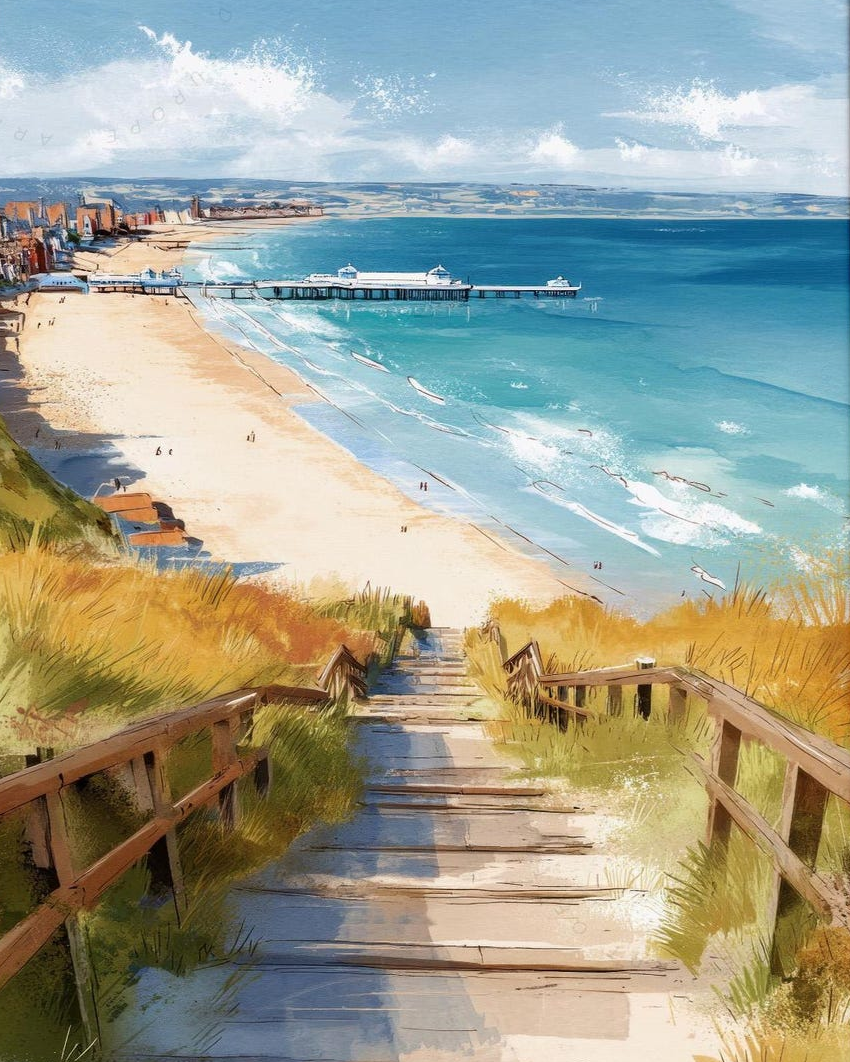
Bournemouth
Dorset is one of England’s most beautiful coastal counties, with a shoreline that combines sweeping sandy beaches, dramatic cliffs, traditional seaside towns, quiet harbours and some of the most spectacular scenery in the country.
Part of the famous Jurassic Coast, Dorset’s coastline is also a place where history and geology come together. Fossils can be discovered along the shore, ancient cliffs reveal millions of years of Earth’s history, and picturesque coastal towns have welcomed visitors for generations.
Bournemouth – the classic seaside resort
The town is famous for its long sandy beaches, attractive seafront and lively atmosphere. With miles of coastline, gardens, cafés, restaurants and traditional seaside attractions, Bournemouth offers everything you might expect from a classic English resort.
The golden sand is the main attraction, which reaches nearby Boscombe and provides space for swimming. The pier is another famous landmark, which provides amazing views.
Weymouth – a curved sandy beach and sheltered bay
Ava Lily
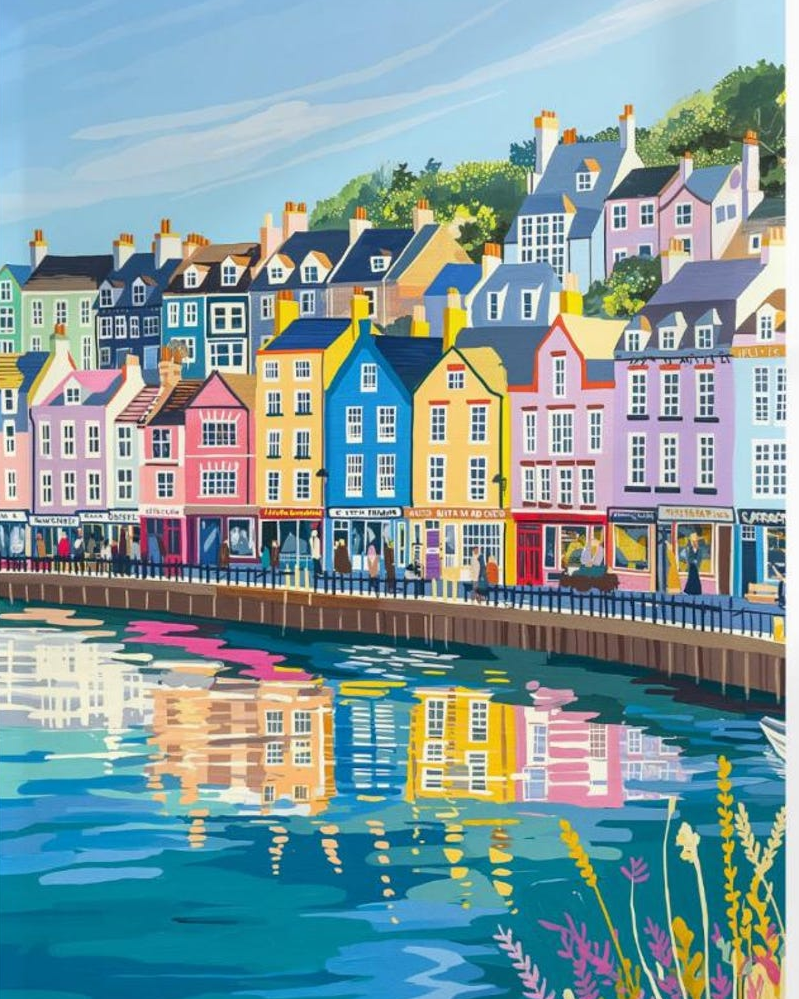
This has a seafront lined with Georgian buildings, hotels, cafés and restaurants, giving Weymouth a traditional holiday atmosphere. The beach is particularly popular with families. The gently shelving sand and sheltered bay provide ideal conditions for swimming when the weather is suitable.
Weymouth’s harbour is another major attraction. Colourful boats fill the water, while restaurants and pubs line the waterfront. This is also an excellent base for exploring the Jurassic Coast.
Swanage – Victorian charm and Purbeck coast
This town sits on the Isle of Purbeck and has a very different atmosphere from the larger resorts. The town grew as a seaside resort during the Victorian era and retains much of its traditional character.
Its sandy beach is the centre of the town, with the promenade providing easy access to the seafront. Swanage Pier is one of the town’s most recognisable landmarks. Originally opened in the nineteenth century, it extends into the bay and provides wonderful views of the coastline.
Lyme Regis – fossil and the Jurassic coast
Lyme Regis is one of the most famous coastal towns in Dorset. Situated on the Jurassic Coast, the town has a rich history and is internationally known for its fossils.
The town’s waterfront is dominated by the historic Cobb, a harbour wall that curves out into the sea. The Cobb is one of the most recognisable landmarks on the Dorset coast and has appeared in literature and film.
Bridport and West Bay – a coastal escape
West Bay is a small coastal settlement near Bridport that provides one of the most dramatic seaside landscapes in Dorset. The village is surrounded by towering golden cliffs, giving the coastline a spectacular appearance.
West Bay is particularly famous for its appearance in the television series Broadchurch, which brought the landscape to a huge audience. The harbour and beach create a traditional coastal setting.
Studland – beaches and wild coastal scenery
Studland is a wonderful choice for visitors looking for a more natural seaside experience. The area is famous for its long sandy beaches and beautiful coastal landscape.
Studland Bay is backed by heathland and dunes, creating an environment that feels quite different from the built-up resorts of Bournemouth and Weymouth. Walking routes lead through heathland and along the coast, providing views across the bay and towards Old Harry Rocks.
Portland – a dramatic coast and maritime heritage
The Isle of Portland is connected to the mainland by Chesil Beach and offers some of the most dramatic coastal scenery in Dorset.
Portland is famous for its distinctive limestone, which has been quarried here for centuries. Portland Stone was used in important buildings across Britain, including major landmarks in London. The island has a strong maritime history and is surrounded by rugged coastline.
Portland Bill, at the southern tip, is one of the most spectacular places to visit. The famous lighthouse stands above the rocky shoreline and provides an excellent viewpoint.
Exploring the Jurassic Coast
Several of Dorset’s seaside destinations sit along the Jurassic Coast, a World Heritage Site extending along the coast of Dorset and Devon. The coastline is internationally important because its rocks record around 185 million years of Earth’s history.
Walking along the coast can therefore feel like travelling through geological time. The cliffs reveal layers of rock formed during different prehistoric periods, while fossils provide evidence of creatures that lived millions of years ago.
The Jurassic Coast is also one of Britain’s finest walking destinations. The South West Coast Path provides access to many of its most spectacular sections, although walkers should be prepared for steep climbs and changing weather.
Sandbanks – some of England’s most expensive homes
Ava Lily
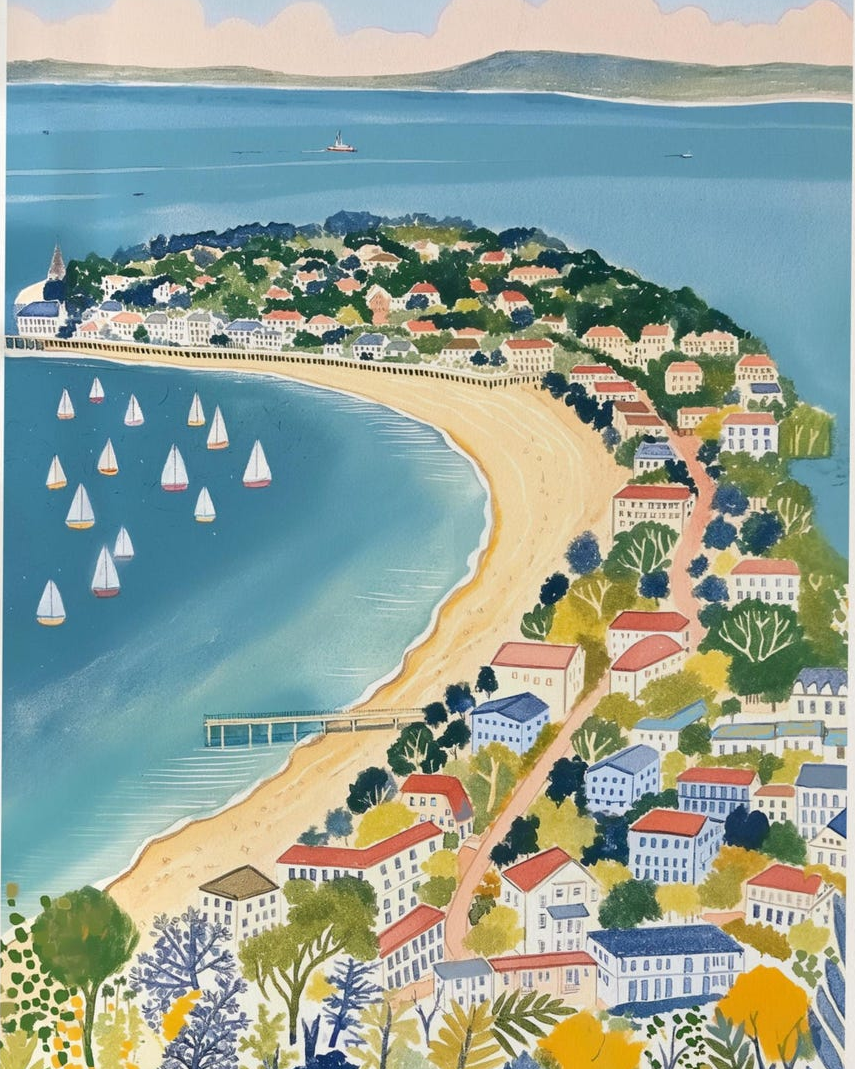
Just outside Bournemouth and Poole the peninsula at Sandbanks, home to some of England’s most expensive homes.
However, some people say the area is a little sterile, as it’s all new luxury mansions, rather than old interesting houses. The beach is nice, but again a lot of it is cordoned off for luxury property owners.