The History of England’s Funicular Railways
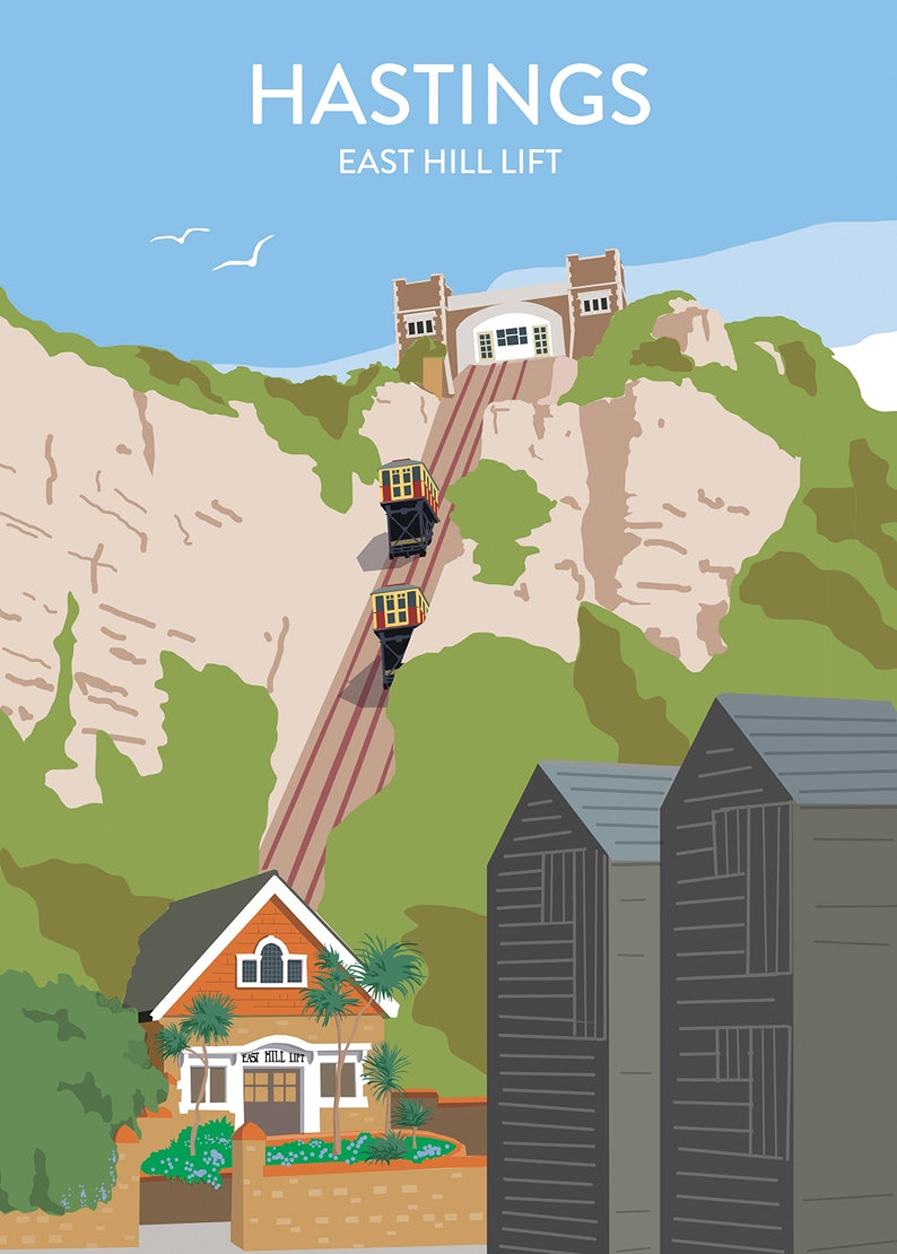
Funicular railways or ‘cliff lifts’ are only now in a few towns in England. But they are works of genius to get from low to high places.
Real engineering brilliance, these are cable-driven railways, designed to tackle steep slopes. Used since the early 19th century, they use a pulley system, where two carriages counterbalance each other, to glide up and down tracks.
Inclined planes are the more traditional type, where tracks are laid on the hill’s natural slope. Meanwhile, cable cars, a more recent variant, sometimes suspend the carriages below an overhead cable.
Hastings has two cliff lifts, for both East and West Hill. Other funicular railways in England are located at:
The Cleveland Way: Filey to Saltburn
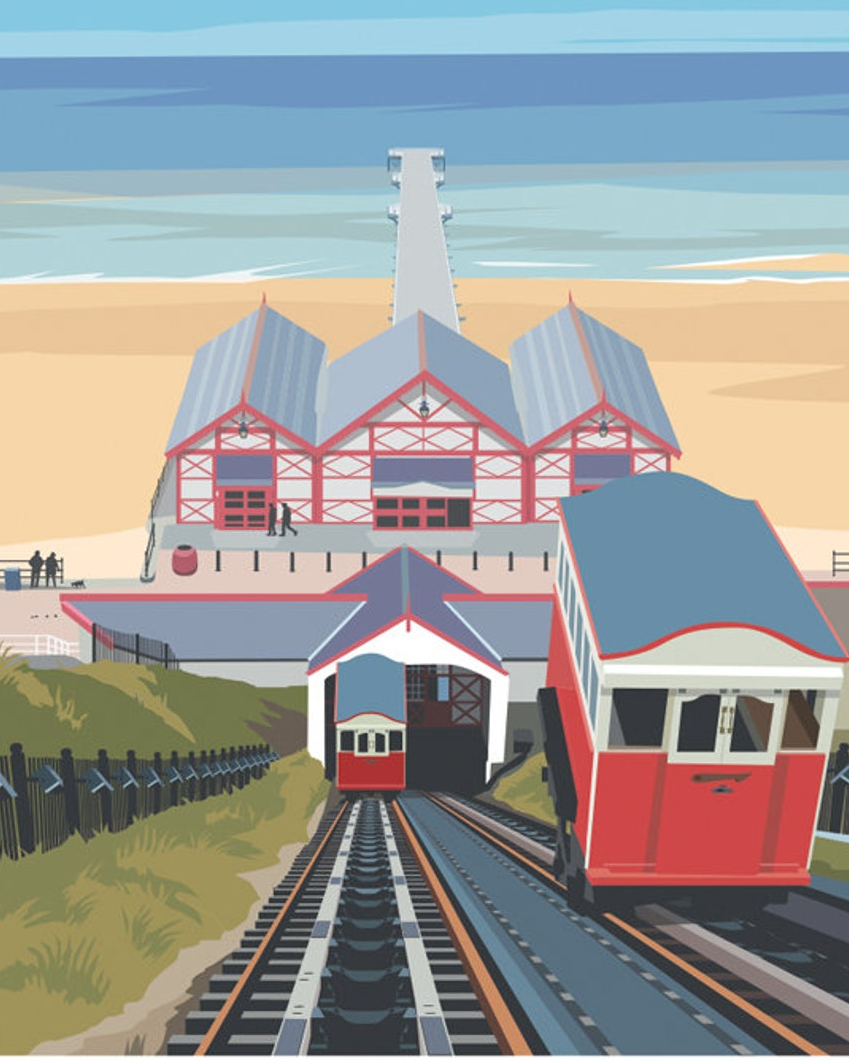
Saltburn-by-the-Sea, Julia’s Illustration
The Cleveland Way starts at Filey Brigg and soon reaches the clifftops where you get sweeping views over the North Sea. Medieval Whitby and its famous abbey greet you halfway, while Robin Hood’s Bay offers a labyrinth of steep lanes and old smugglers’ cottages.
The Cleveland Way mixes dramatic moorland with bold coastal scenery. Chalk cliffs, sandy bays and endless horizons keep the walking interesting, while tea rooms, historic inns and friendly B&Bs bring rest and warmth.
Check tide times and avoid walking in bad light/weather). Follow the Countryside Code (don’t walk on sand dunes), and keep numbers on hand to report concerns for farm animals, wildlife or marine creatures.
Check for dog beach bans (avoid walks for 2 hours after long drives) and keep dogs away from cliffs, seaweed, palm oil (white waxy lumps), jellyfish and uncapped mine shafts.
Also keep dogs away from seals, coastal birds and coastal flowers (many are toxic). Read how to keep dogs safe at the seaside (and info on dog safety and hiking with dogs).
Two Linked ‘Little Switzerland’ Devon Villages
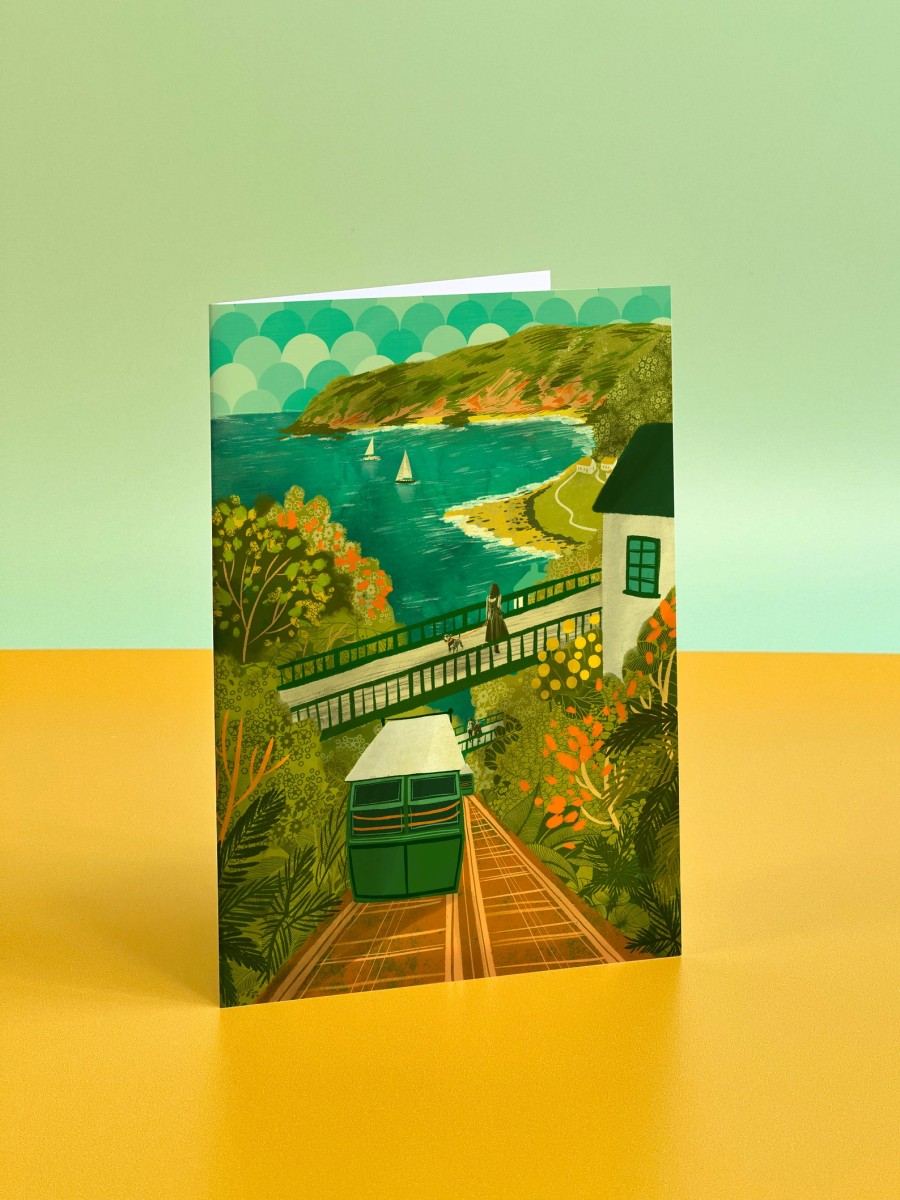
Tucked away on the rugged north coast of Devon, Lynton and Lynmouth are two linked villages that offer charm, stunning scenery, and a real sense of escape.
Known as “Little Switzerland,” the area mixes dramatic cliffs, wild moors, and the tumbling rivers of Exmoor National Park.
Be sure to ascend the 862 foot high cliff via the lovingly restored carriages of one of England’s remaining funicular railways, which runs on water power. Built in Victorian times, enjoy beautiful views of the harbour, Exmoor national park and the Bristol channel.
The trip only takes a few minutes, but you’ll remember the view for much longer.
Other funicular railways in England are at:
- Babbacombe (Devon)
- Bridgnorth (Shropshire)
- Scarborough (Yorkshire)
The Role of Gravity
Gravity, usually the foe of uphill climbs, turns into an ally here. By using the weight of the descending carriage to pull the ascending one, funiculars make gravity do the heavy lifting. This force-efficient system means less energy is needed to move people up steep inclines.
The hallmark of a funicular railway is its counterbalancing mechanism. As one carriage goes up, the other goes down, a bit like children on a seesaw. This clever balancing act ensures minimal energy input is needed, making funiculars an eco-friendly transport option.
Eco-Friendly Transportation
In an age where carbon footprints matter, funiculars shine as green heroes. Their energy-efficient design means they consume minimal power, often relying on renewable energy sources. With less pollution and reduced energy needs, they’re a transport method with a conscience.
In packed urban areas or the craggy terrain of mountain regions, space is a premium. Funiculars don’t need wide roads or sprawling tracks. They ascend steep landscapes with precision, leaving the surrounding environment largely untouched.
The Peak Tram, Hong Kong
Perhaps one of the most famous funiculars, the Peak Tram has been a Hong Kong icon since 1888. It zips passengers up Victoria Peak, offering stunning views of the city. Not just a transport option, it’s a piece of history still in operation today.