Don’t Make Money the Focus of Your Life

Although money covers our basic needs and comforts (and that’s good, as it leaves time to live a life to your values and not rely on others), chasing money to the end of everything else, can drain your mental health and spirit. And sometimes turn nice people into people who aren’t so nice.
Chasing ‘the dream’ can lead to missing out life. You spend your life on long commutes to earn money to pay a huge mortgage on a property that’s too big and in the wrong place. Then your relationships suffer. You never come off the treadmill. Then you retire and just before you die, realise that it’s not been worth it at all.
If I had my life to live over, I’d relax, I would be sillier than I have been this trip. I would take more chances. I would climb more mountains and swim rivers. Nadine Stair
Countries like Costa Rica have replaced GDP with The Happiness Index, which takes into account people’s quality of life, not just money. Until our government does the same, do it for yourself in daily life.
Think about:
- Your relationships
- Your environment
- Your home
- Your friendships
- Your job (
- Your free time
- Your spiritual home
Work-related stress sand depression now affects hundreds of thousands of workers each year. And many people have insomnia, racing thoughts, worry about debt and irritability, all due to the pursuit of money.
Proper health comes not from bank accounts, but from regular sleep, fresh organic food, natural movement (walking) and time in nature. Money can buy a good bed, but cannot switch off a frantic mind. And only you can build new habitats, and set kind boundaries with others, who put money before everything else.
When money is the reason, usually it ends in disaster. From marrying other people for money, to worries over over-spending, gambling and debt, the strongest relationships are based on honesty and love.
Find Joy in What Really Matters
A good life rests on purpose, people, and growth. None of these requires a huge salary. A retired nurse who volunteers at a community kitchen and says it keeps her spirit bright. A software engineer who coaches a girls’ football team on Saturdays and calls it the best hour of his week. A student who joins a local choir and discovers a new voice and new friends. A neighbour who volunteers to walk an elderly neighbour’s dog.
These choices build a rich inner life. You feel useful, connected, and alive. You remember that your worth is not your wage.
Set Goals That Nourish Your Soul
Good examples:
- Learn basic Spanish in 12 weeks, 15 minutes a day.
- Visit three coastal towns this spring, one each month.
- Read six novels this year, two from authors you have never tried.
- Train to run 5k by July, three runs a week.
Inspiration from a Moneyless man!
Mark Boyle is an Irish journalist who years ago, decided to give up money entirely for a year, and now lives in a little house that he bought with proceeds from a book he wrote: The Moneyless Manifesto. He does not suggest we all live without money, just inspire us to live with less. And realise that happiness comes from simpler living, not ‘more, more, more’.
Recently, Ben Fogle stayed with Mark for a week as part of his ‘New Lives in the Wild’ programme. Mark grows and buys food, and visits the pub to have a beer. But he has no mobile phone and no TV. When Ben told him that Harry and Meghan had left the Royal family and emigrated to the US, he not only had no idea – but only had a vague idea of who they were!
We think Mark is really inspiring, although he won’t be reading this post, because he has no Internet! But here are a few of his wise words:
If we grew our own food, we wouldn’t waste a third of it as we do today. If we made our own tables and chairs, we wouldn’t throw them out the moment we changed the interior decor. If we had to clean our own drinking water, we probably wouldn’t contaminate it.
The more we consume, the more we want. And the more we want, the more we have to work to pay for all these things and insure them. And then get stressed about them and protect them and get bigger houses. I think true freedom comes with letting go of them.
We’re convinced we need money to have friends and partners. But actually I’ve found the opposite to be true.
Embracing Joy in Life’s Simple Pleasures
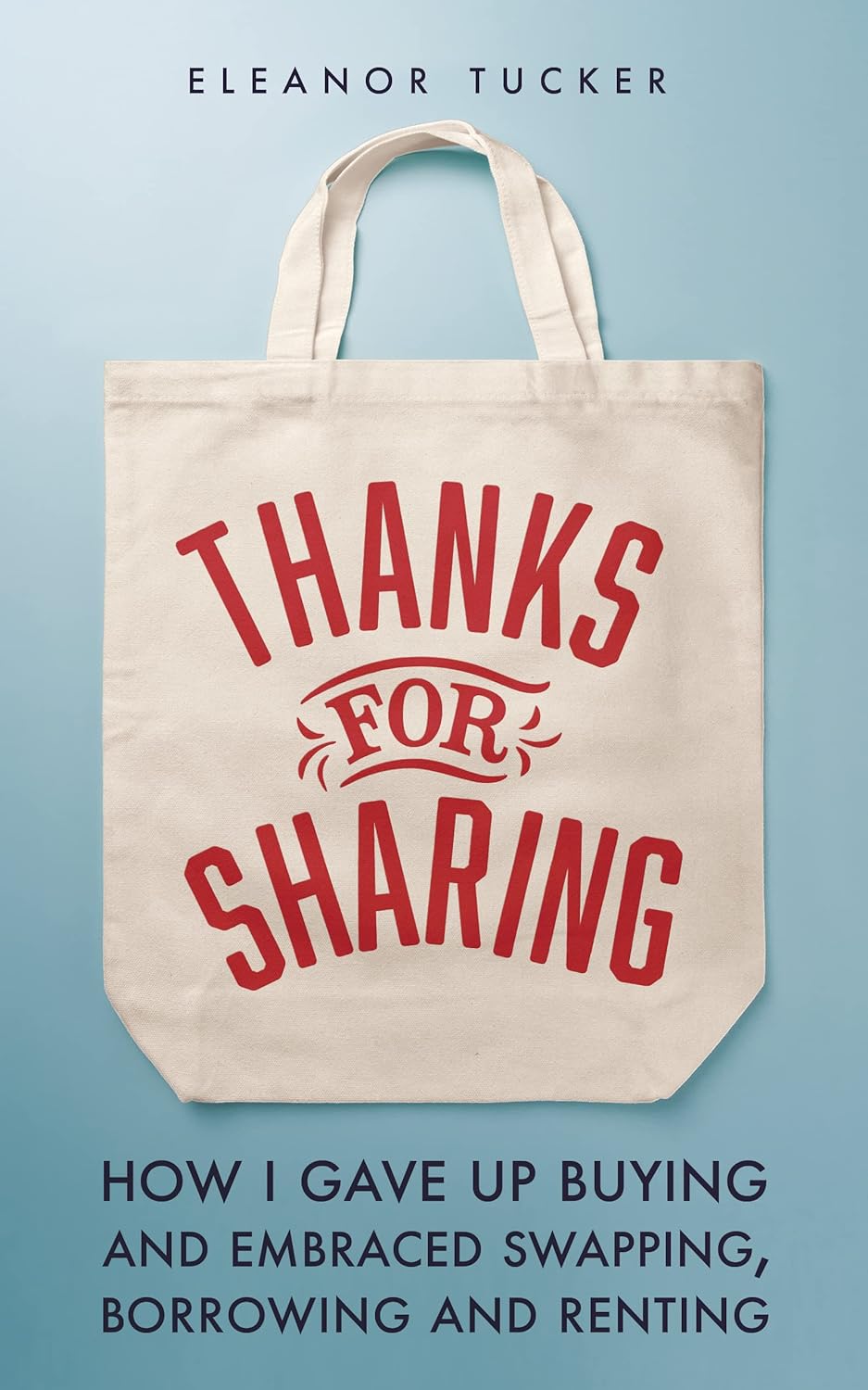
Thanks for Sharing is the inspiring story of one woman who decides to join the sharing economy, and give up buying stuff. She and her family pledge to share as much as they can over one year, and give up ‘owning things’, instead they lend, rent and swap in this tale of ‘collaborative consumption’.
In the garden, use no-dig gardening and create pet-safe gardens (use humane slug/snail deterrents). Avoid facing indoor foliage to gardens, to help stop bird strike.
Each chapter includes a different type of sharing (food, clothes, cars, furniture, the space around us) plus tips to help you share (including useful apps).
What makes this book different is that it’s a real funny read, and not at all preachy. Anyone from any walk of life is sure to be inspired.
She begins her experiment admittedly not really knowing much about her fridge’s ‘two salad drawers’ that were for food her grandmother would have said were ‘on the turn’. So begins and adventure where is learning as much as we will by the end of the book.
Eleanor is a one-woman guinea pig who dives straight into sharing everything from food to fashion to furniture. She makes it all incredibly accessible due to her engaging writing styles, and warts-and-all reportage. Tessa Clarke (co-founder OLIO sharing app)
Even with some hilarious misunderstandings and mishaps, I came away from reading this book, wanting to try sharing more regularly. Rebecca Heaps (founder of Tentshare)
Eleanor Tucker is a former creative and features writer for newspapers, who now writes on the sharing economy. Originally from Oxford, she now lives in Scotland.
The Story of One Family That Ditched Plastic
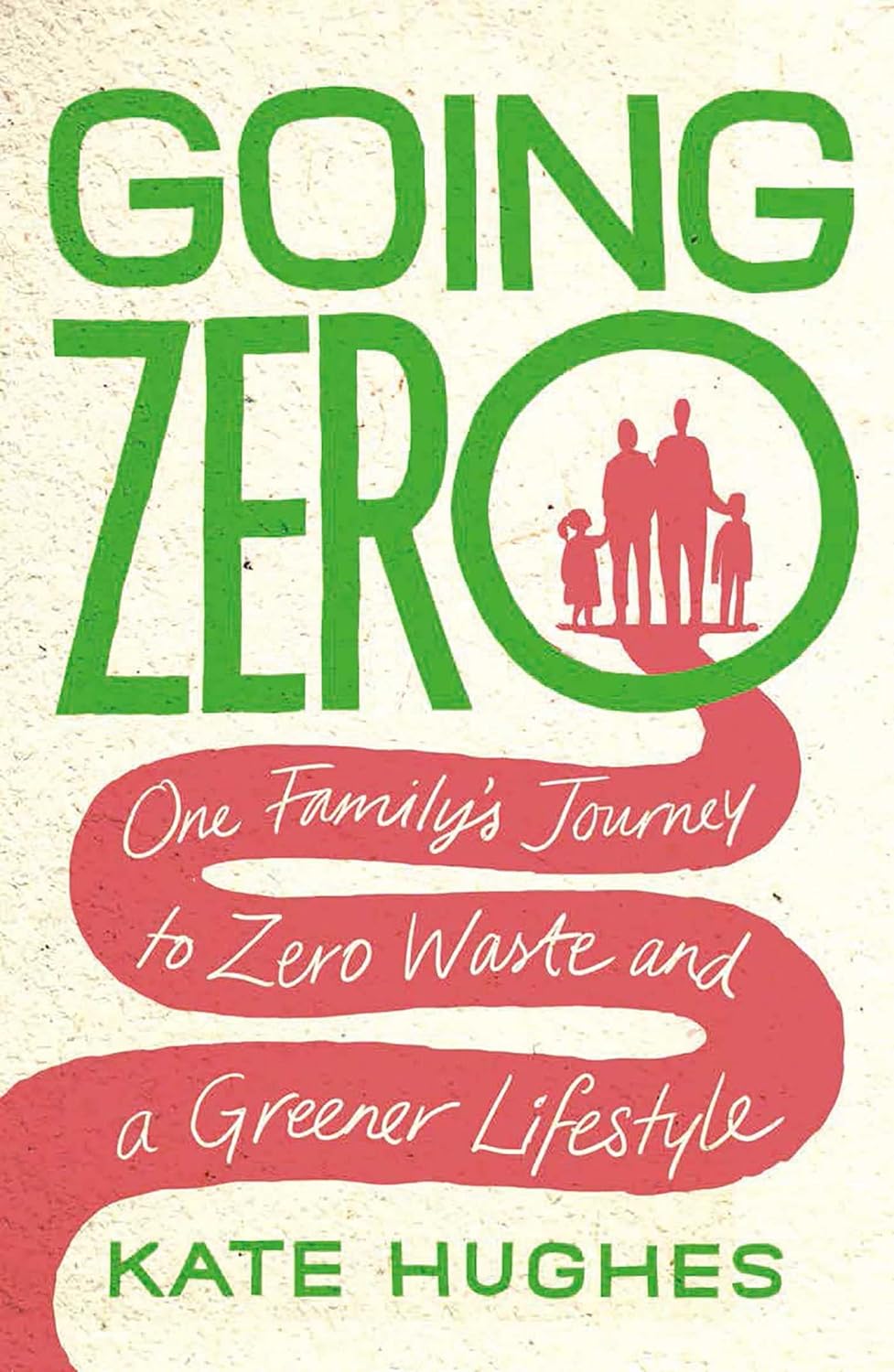
Going Zero is the interesting story of a family that decided to ditch plastic, after a bean bag burst in their garden, sending thousands of polystyrene beads everywhere. They shunned supermarkets (cooking all meals from scratch), bought second-hand clothes (polyester in new clothes is made from plastic) and make their own homemade cleaners.
Deciding to walk away from the ‘throwaway society’, today this family sends almost nothing to landfill, proving a well-lived life does not have to be ‘wrapped in plastic’.
If you ever pop round to ours and start randomly opening our kitchen cupboards, fridge or freezer, there’s food in there.
But it’s all in label-less jars, paper bags or sometimes even sacks for bulk items. At first visitors find the lack of familiar packaging quite unsettling.
How Satish Kumar Inspires Simple Living
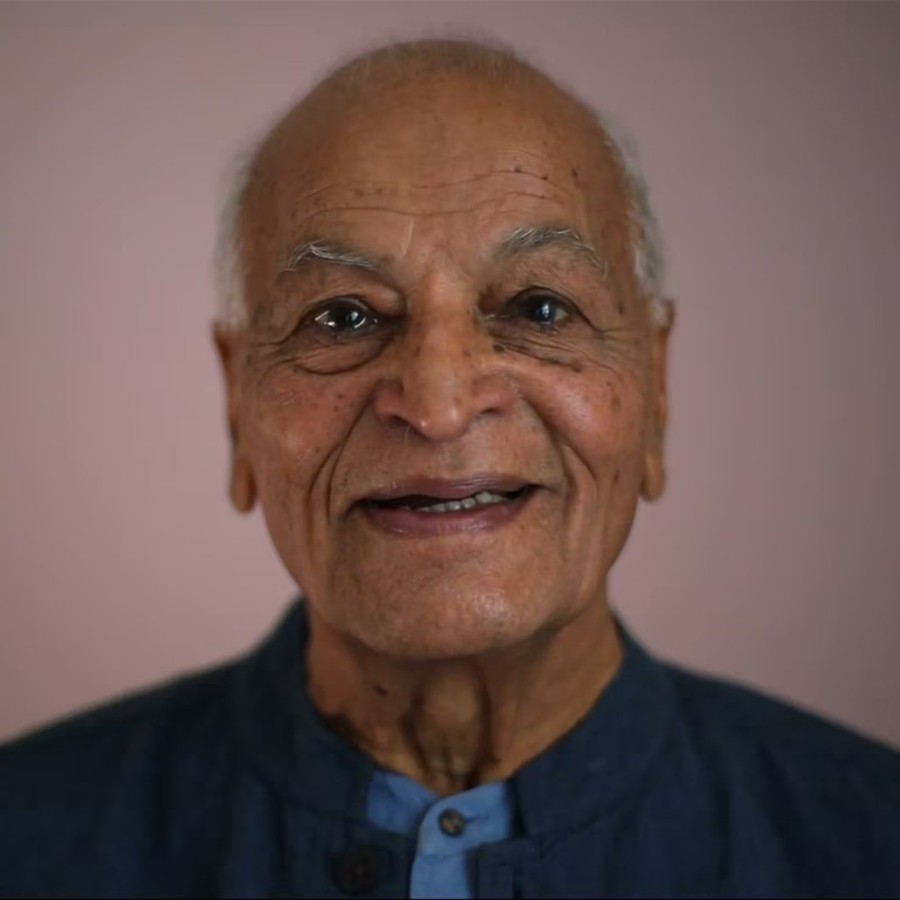
Satish Kumar (whose book Elegant Simplicity is a real favourite) is a true inspiration of a man. Born in India, he ran away to become a Jain monk in his late teens. Satish really did live simply at the monastery. He didn’t have a bath for 9 years, he fasted regularly, even his ‘thick black hair’ was plucked out twice a year.
But although this did drop away a lot of worldly desires, what he really wanted was to cook and grow his own food, kiss a beautiful woman on the lips and inspire others to live simple sustainable lives they enjoyed.
So he ran away to travel the world as a peace pilgrim, before meeting his wife and settling in Devon, where for over 40 years he has edited a celebrated environmental magazine from his kitchen table (he also founded a small school). His life went from zero waste to a ‘bit more complicated’ but all for the good that it’s done to him and others!
Rather than offering ‘zero waste tips’ like switching to wind turbines or not buying stuff, he says just learn to love nature, and live in harmony with it. He says getting angry and campaigning against everything that is not green and good is ‘like churning sand to make butter’.
Throwing statues covered in toxic paint into rivers, does not solve racism, as it’s the same mentality (anger and resentment) that created it. And it doesn’t help the innocent marine creatures in the rivers, who get poisoned through not fault of their own.
When I speak of simplicity, I don’t mean a life of deprivation, hair-shirt living or hardship. I believe in a good life, in beautiful things, in arts and crafts and in sufficiency. This is why I put the word ‘elegant’ before simplicity.
We all need and should have a comfortable and pleasant life. But at the moment our complicated lives are no longer comfortable. If we are blessed with wealth, we can use it for caring for the Earth and her people. Satish Kumar