Start a No-Dig Organic Vegetable Farm
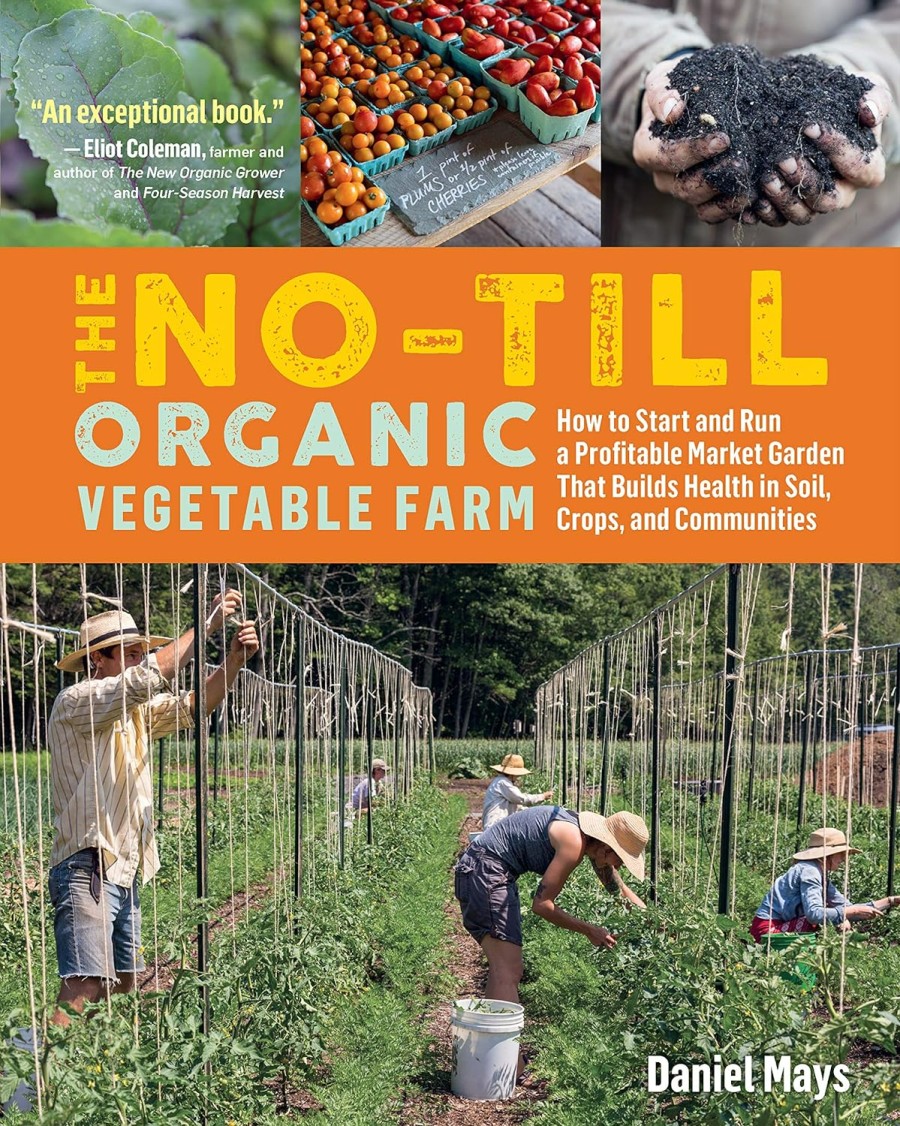
The No-Till Organic Vegetable Farm is an ideal read for farmers and community gardeners, to reduce weeds, use inter-planting to increase resilience, and create hedgerows and beneficial insect habitats, along with tips on finding customers to buy your produce.
Read more on no-dig gardening and humane slug/snail deterrents. If you live with animal friends, read up on pet-friendly gardens (some recommended flowers and fruit trees are not safe). Also avoid netting to protect food (just leave some for wildlife!)
Farmers need a government license to sell to the public (also buy liability insurance). Know food hygiene rules and read up on food safety for people and pets.
The book covers:
- Science & Soil Health
- Start-up Costs & Land Search
- Establishing Beds
- Crop Planning
- Water Resilience
- Preventing Weeds & Manual Weeding
- Harvesting & Marketing
- Attracting & Retaining Employees
- Planning & Recordkeeping
- Agriculture-Supported Communities
I began the farm with a loan of $180,000 and an interest rate of 3.8%. Four years later, the farm grossed over $250,000 in a season. Today, the farm sells about $300,000 of food each year from 2.5 acres of vegetables. All profits are reinvented in the farm.
If you want to farm for a living, I highly recommend reading this book. It is one of the best guides for serious growers that I know of. Ben Hartman
Also read Practical No-Till Farming, a guide to organic vegetable and flower growing.
Also read this book on how to build your own farm tools. Set up a workshop and make 15 tools including simple seedling benches, a mini barrel washer, a DIY germination chamber and a rolling pack table.
Plus learn how to design an effective drip irritation system. Daniel Mays (who has a degree in environmental engineering) runs a no-till farm in Maine (USA) that produces food for hundreds of local families on three acres of land.
More Help for Tiny Organic Farms
- Sustainable Market Farming is a guide to growing food organically, by someone who feeds a community of 100 people on just a few acres of land in Virginia, using disease-resistant varieties of crops and organised business skills.
- The Farm Carbon Calculator is a free toolkit that takes up to 2 hours, to help save carbon and therefore money. Developed by a Scilly organic farmer, it can be used for any scale or soil type.
- MudControl slabs turns muddy dangerous land into safe places to pass through, or eat hay. They are used with sand for easy installation.
- The Farmer’s Office is a book to help farms get more profits (which means better welfare for animals, to buy feed and good housing).
- Agritourism is money made from renting farm buildings to holidaymakers (don’t let dogs near livestock). WWOOF offers free board and food in return for volunteers who get knowledge and experience (this is active learning, not cheap labour).