Healthy Meals for Seniors (and Nursing Homes)
Around half a million people across the UK live in care (residential or nursing homes). This is mostly because unlike say in Greece (where nearly all elderly people live with a relative), there is a culture in England often of people being put into residential homes instead.
Obviously some people don’t have relatives. And many carers often have to place beloved relatives into care for their own safety (say for patients with advanced dementia who may be playing with fire or even trying to go down stairs or escape homes, while their carer are sleeping).
But any which way, it’s important that elderly patients in care homes, hospitals and at home alone, are provided with affordable and nutritious food, that is also ethically produced.
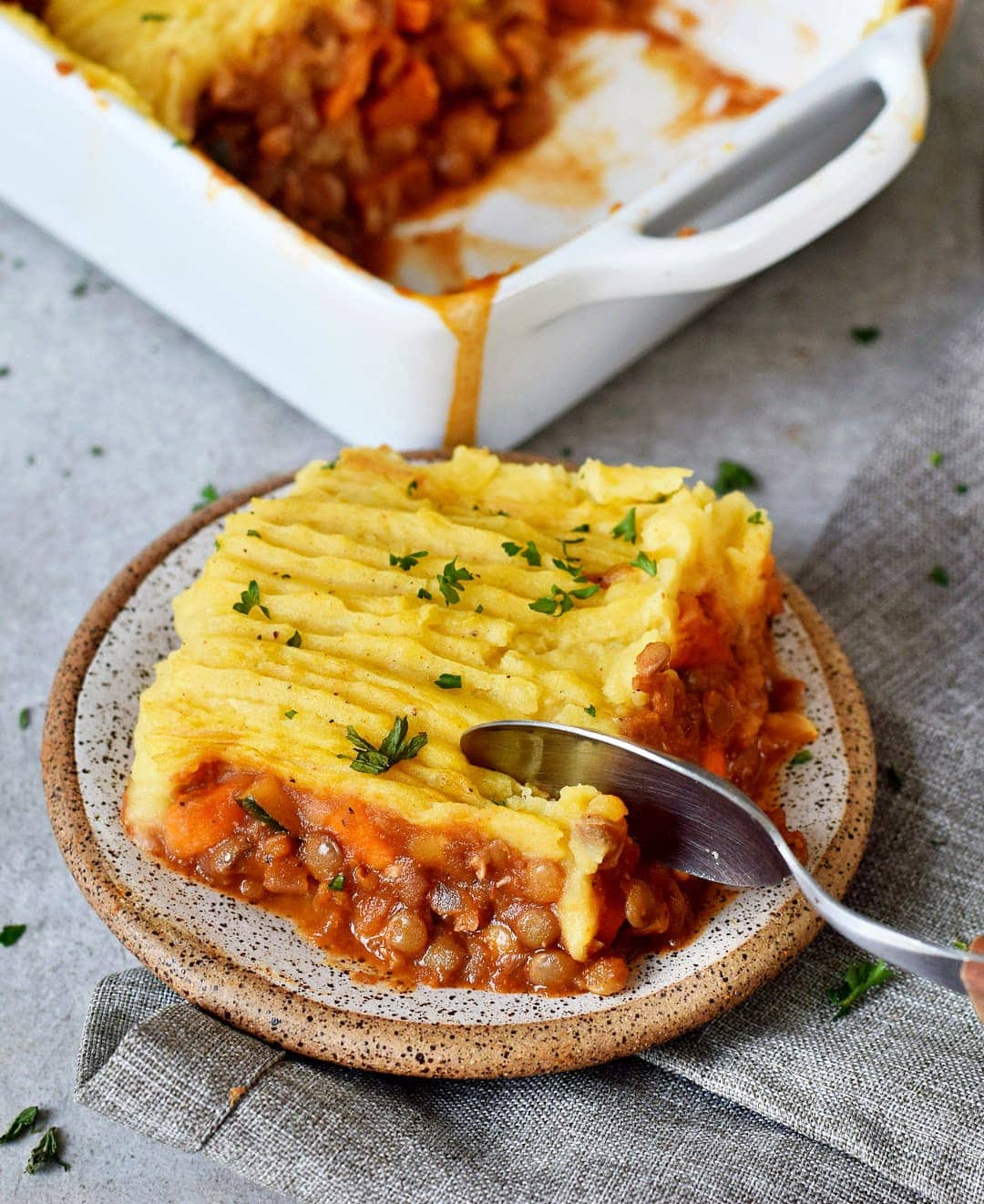
This lentil shepherd’s pie (Ela Vegan) is a great example of a good meal for an older person. It’s high in protein and calcium, not too many carbs, delicious and follows traditional ‘norms’ of what seniors like to eat.
Read up on food safety for people and pets (many foods are unsafe near animal friends). Bin allium scraps (onion, leeks, garlic, shallots, chives) and citrus/tomato/rhubarb scraps, as acids could harm compost creatures. It’s okay to put them in food waste bins (made into biogas).
For tinned ingredients, fully remove lids (put inside) or pop ring-pulls back over holes (and pinch tops closed) before recycling, to avoid wildlife getting trapped.
For delivered meals, recycle packaging at kerbside or supermarket bag bins. Or safely dispose or return cooler packs, for chilled and frozen meals.
It’s not realistic to suggest that all people in their 70s, 80s and 90s are going to start chugging down nutritious smoothies and eat plant-based meals. But there is an argument to go beyond the normal ‘home-delivered cheap ready-meals’ that are often marketed to people of a certain age.
Free meals on wheel options
Some councils (including Tower Hamlets) offer free meals-on-wheels to older people in financial difficulties. So it’s worth entering your postcode to see if you (or a relative) qualifies, it depends on where you live.
Interestingly, this council is not run by the main political parties, but a new one. Aspire has its controversies, but this policy is a good one (another is free universal school meals, something offered in Estonia, the country with Europe’s best education system).
Vegetarian for Life (budget meals plans for nursing homes)
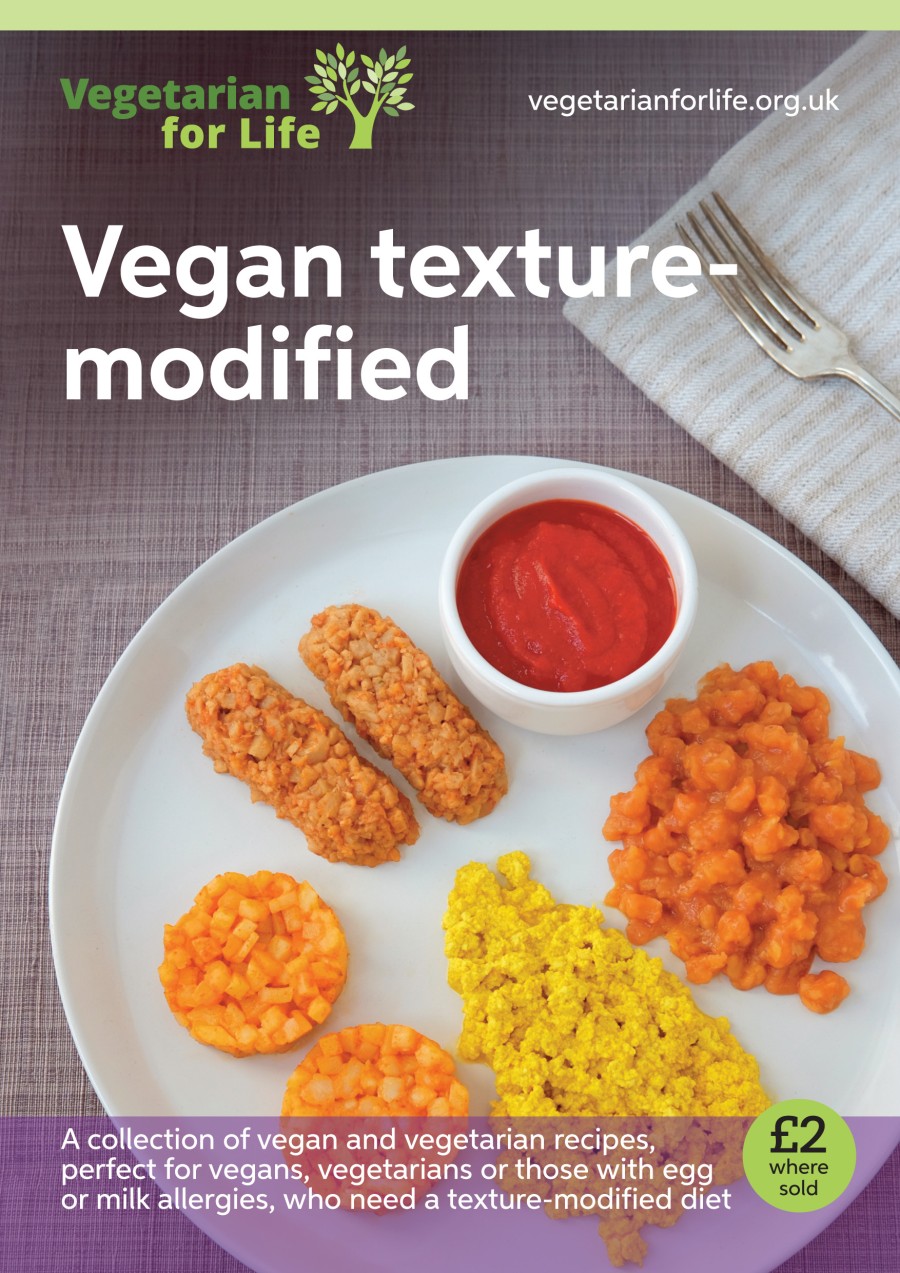
Vegetarian for Life is a charity specifically created to help serve vegans and vegetarians in care homes, hospitals or independent living facilities.
The Cinnamon Trust holds a list of pet-friendly care homes (and also can offer nationwide dog walking volunteers).
Often those preparing meals don’t know how to make veggie options, and it’s also obviously important to ensure that guests or patients receive the right nutrients.
The meal planners offer easy meals that most people will enjoy eating. Examples include:
- Baked potato, baked beans, date & orange salad, fresh fruit
- Lentil & spinach quiche, chips, mixed salad, stewed apple & raisins
- Tomato & basil soup, vegan lemon meringue pie
- Veggie roast, potatoes, jam sponge & custard
- Cottage pie, cabbage, yoghurt & mixed berries
- Chickpea croquettes, chips, salad, rice pudding
- Macaroni soup, bread, banana split
- Vegan ham & salad sandwiches, Victoria sponge
- Pasta bolognese, sweetcorn & beetroot salad, ginger cake
- Cauliflower cheeze, baked potato, peas, apricot blueberry crumble
- Vegan cheese & tomato sandwich, cherry cake
You can also download a free 32-page catering guide and a guide to textured foods, for vegans and vegetarians who are no longer able to eat solid food. Plus grants to help vegans live independently.
Advice from plant-based health professionals
Plant-Based Health Professionals has expert advice on meal planning, even if the menu is not all plant-based. But at least residents will be receiving lots of fresh produce, plant-based proteins, calcium, iron and essential fatty acids. All nutrients needed for good health in later years.
People over 65 now represent 20% of the UK population. And keeping them healthy is not just good for them, but also helps to reduce NHS costs. Combining this with regular exercise (like Move it or Lose It classes) is all for the good.
A summary of their expert advice:
Bear in mind that older people in particular like tradition. So don’t start feeding older residents miso salad, you can just incorporate this advice into meals like veggie shepherd’s pie and pear crumble with custard!
Life expectancy in the UK is now around the early to mid 80s, although in recent years the number has actually reduce by a few months for men and women. There is also a widening gap between good health among elders who are poor or rich (possibly because junk food is marketed more to people on budgets). Not every older person can afford to buy organic strawberries and sourdough bread in Waitrose.
And many older people live in ‘food deserts’ where the only ‘local shop’ may be a NISA store that sells not much more than frozen pizza and chips, bags of crisps and a few bananas if you’re lucky. And they often don’t have good public transport, no access to the car and sometimes no access to the Internet to order food online.
Eating well in later life can mean reduced risk of:
- Obesity
- High blood pressure
- Heart disease
- Cancer
- Type-2 diabetes
- Fatty liver disease
- Diverticular disease
- Even eye cataracts
One major concern in later years is sarcopenia. This means older adults can’t build up muscle as well, as is one of the main causes why seniors lose independence, and end up in homes. This is because often older people eat too little protein (which can be from plants) and instead choose carbs and fats as the main meals.
For instance, an elderly person living on their own on a budget, may well ‘fill up’ on potatoes and toast, rather than eating more plant-based proteins. Yet older people need more protein, in order to preserve muscle mass and strength. Protein is also needed to recover from illnesses, which older people tend to have more of.
Good plant-based protein sources that would suit older appetites include:
- Tempeh (unlike plain tofu which may not appeal, you can buy wonderful pre-flavoured tempeh from brands like Better Nature (sweet chilli etc). Just shallow-fry in a pan and with some vegetables, it makes a delicious high-protein meal.
- Smoothies are good. They are tasty and packed with fresh fruit and also good for people who have difficulty swallowing (though be sure to avoid fruits like raspberries that may get stuck in your teeth!) Adding some vegan protein powders is a wonderful and easy way to consume extra protein.
- All pulses are high in protein: think chickpeas, lentils and split peas, all easily made into soups (or buy ready-made).
Other nutritional needs of elders
- Iron is easily taken with dried organic apricots, a favourite food for elderly people.
- Calcium is also important, and one great source is figs, which are also good for digestion. Green leafy veggies are a great source (but check medications, due to interaction with vitamin K).
- Although vegans also have to ensure they get enough vitamin B12, older women are most at risk, due to digestive changes as we get older. So include fortified foods like cereals and plantmilks, or as part of a multi-supplement.
Always check with GP before taking supplements, if taking other supplements or medications.
- Vitamin D can be lacking due to lack of going out in the sun, especially during winter months. Again these are easily found in fortified foods, or as sustainable vegan supplements.
- Omega 3 fatty acids are good for joints, but you don’t need mercury from fish to get them (nor contribute to over-fishing and by-catch). There are plenty of plant-based omega 3 sources from nuts to seeds (if safe to eat) to algae-based supplements. These are good also for healthy vision and brain function.
Some good healthy meals recommended by the organisation are:
- Porridge with plantmilks
- Fresh fruits (for vitamin C which helps absorb iron)
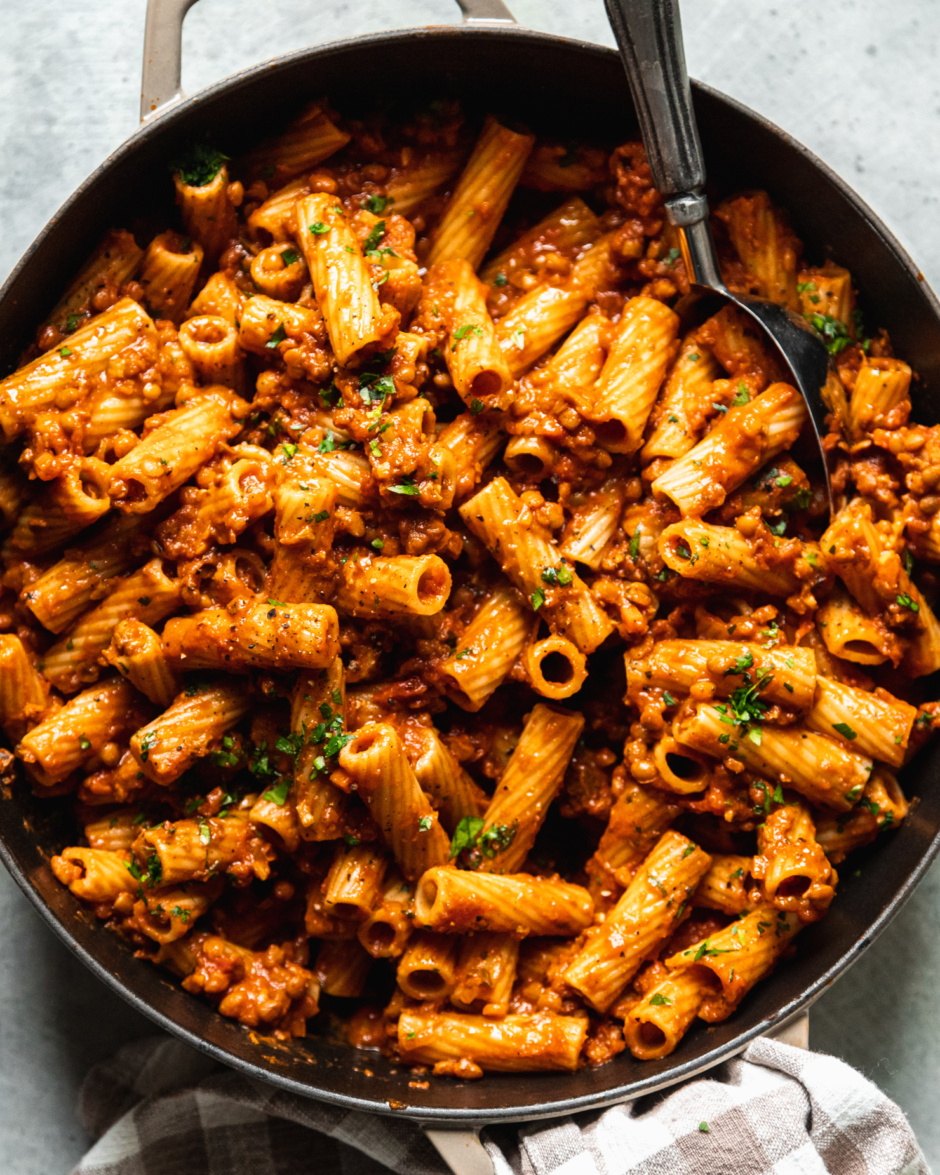
- Lentil bolognese (The First Mess)
- Wholemeal pitta bread with hummus
- Fortified plant-based yoghurts
- Wholemeal toast with hummus
- Homemade dried fruit cake (say apricot)
Healthy ready meals for seniors
Let’s respect our elders more than just serving up an expensive and nutritionally-not-very-good ready-meal for one at the supermarket. Often older people have smaller appetites. And we’ve found a wonderful alternative to the conventional brands, in the form of healthy plant-based meals for young families.
Because paradoxically, these tick all the boxes and would be good options for older people living alone who don’t like to, or find it difficult to cook.
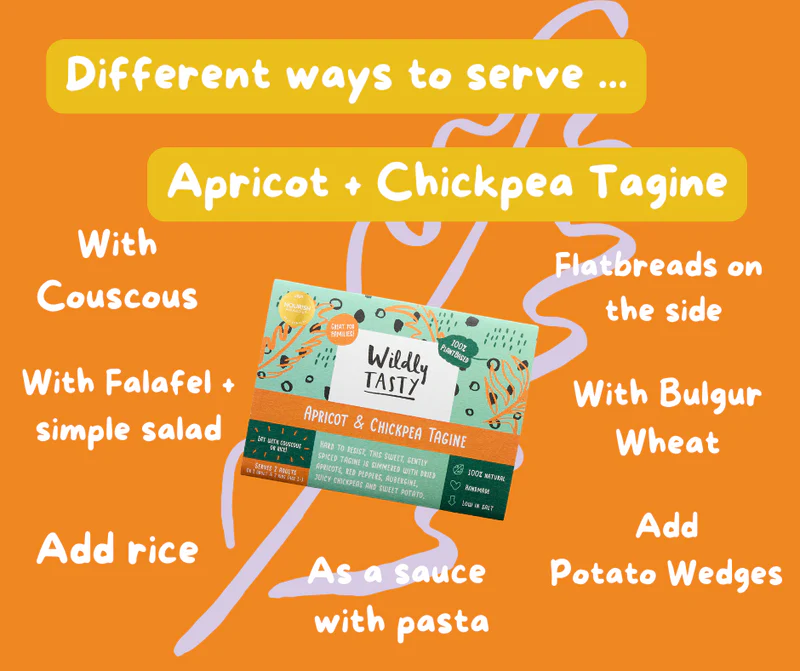
Wildly Tasty is a lovely company created by a professional chef, offering award-winning plant-based meals for anyone that taste yummy and are packed with nutrients (and also low in salt). And a portion of profits helping a Surrey wildlife rescue charity.
There are regular discounts on orders, and unique referral links to save money. The children’s meals are designed to serve two young children or one older child, so these likely would serve a picky older eater very well.
Just heat in the oven for a few minutes, or store in the freezer for up to a month (thaw overnight in the fridge then heat).
While the ingredients are all allergen-free, they are made within a kitchen that handles all major allergens.
Meals are delivered in recycled vegan insulated packaging and ice packs (keep dry ice away from children and pets). They can be stored in the freezer for 3 months. Recycle packaging at kerbside or supermarket bag bins.
Different ways to serve Wildly Tasty meals
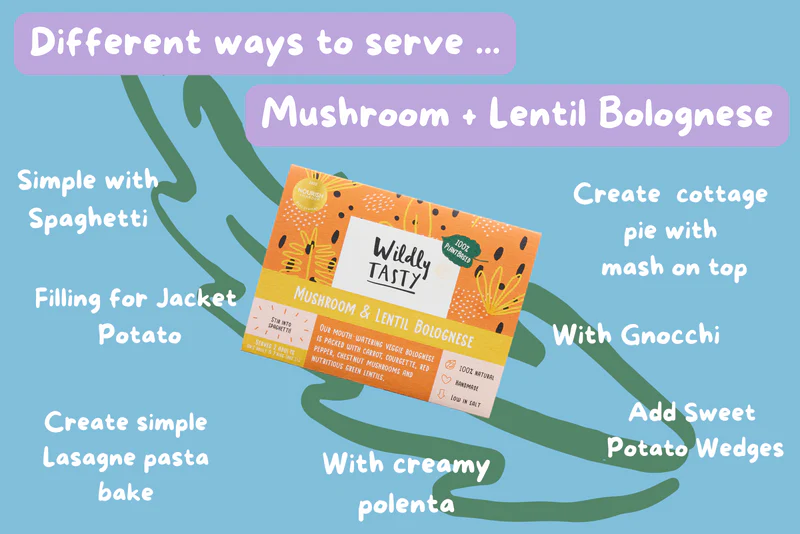
This post has plenty of suggestions on how to serve the meals to bulk them up for both filling up tummies and affordability: Examples are:
- With jacket potatoes and salad
- To fill up veggie burritos
- With rice or pasta
- As a jacket potato filling
- With sweet potato wedges
- With couscous or noodles
- Reduce with water, to make soup
The range includes:
- Mushroom and Lentil Bolognese
- Apricot & Chickpea Tagine
- Coconut and Sweet Potato Dahl
- Yellow Thai Veggie Curry
- Sweet Potato & Bean Chilli
- Super Tomato and Five Veg Sauce
Quality ingredients (veggies over carbs!)
One feature that is popular with parents is these meals are not ‘padded’ with carbs, so you can add your own carbs to meals, which gives eaters more nutrients and choice.
So as you can see from advice by nutritionists above, this also works well for older people, who need more protein and less carbs to keep independent, and avoid sarcopenia.
The ingredients are top quality too. Vegetables and fruits are sourced from New Covent Garden, tomatoes from Italian farms and coconut milk from Biona (not just organic but guaranteed free from monkey slave harvesting).
The meals also include natural proteins like beans, lentils and chickpeas, alongside naturally dried apricots (to avoid sulphites). Even the oats are grown and milled on a British farm. And rather than palm oil, the company uses extra-virgin olive oil and virgin raw coconut oil for fats.
Comparison with Wiltshire Farm Foods
So now you’ve learned what older people need for good health:
- Plenty of proteins (ideally plant-based)
- Fewer carbs and fats
- Fresh veggies to help absorb calcium
- Dried apricots and plant-based irons
- Fortified foods for vitamin B and D
You can see that with a few tasty meals based around lentils, split peas, veggies, fruits and fortified plant-based yoghurts and porridge (with dried fruit cake for a treat) there is a way to drastically improve senior nutrition.
So now you’re educated, what do Wiltshire Farm Foods (the nation’s best-selling senior ready-meal service) offer?
This company often advertises on TV, delivering a range of over 300 meals to (mostly older people) nationwide. It’s owned by the same company that delivers most of the NHS frozen foods to hospitals. It prides itself on a friendly service through local franchises, and offers a range of foods that are pureed or allergy-free to suit different needs.
A quick look at the website finds that all the main meals are based around animal proteins (there are a few veggie options but not many). You could possibly say this is due to profits, as older people are less likely to be veggie. So let’s look at the other issues:
For a start, it sells Halal meat for its ethnic range (from animals that are not stunned). Compassion in World Farming vets say that animals suffer terribly through this practice (it’s perfectly possible to be vegan/vegetarian within Muslim and Jewish faiths).
The veggie main options are good for a couple of meals (cottage pie and roast dinner) but the other offerings are almost laughable. It charges £4.25 for three types of cheese between two slices of white bread: horribly expensive, full of fats and on white carbs (see above on why this is the worst meal for a senior).
It charges almost a fiver for an omelette, some chips and beans (likely half the price even at a local NISA shop). And there is no mention of the eggs being free-range.
And over £3 for a slice of Bramley apple pie (ingredients including palm oil, mono-and-diglycerides of fatty acids whatever they are, and a measly 34% apples).
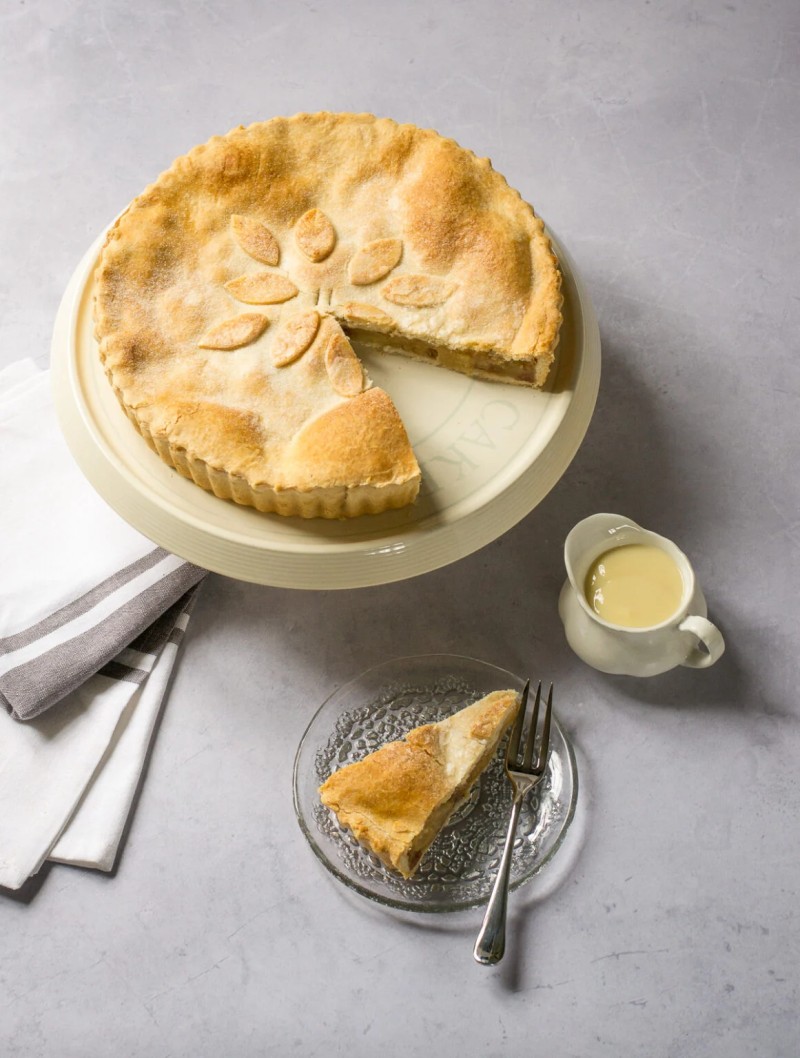
This homemade vegan apple pie (The Veg Space) is super-simple to make. And the ingredients would cost the same for an entire pie, not just one slice!