Vintage Organic Cotton Jeans (with vegan patch)
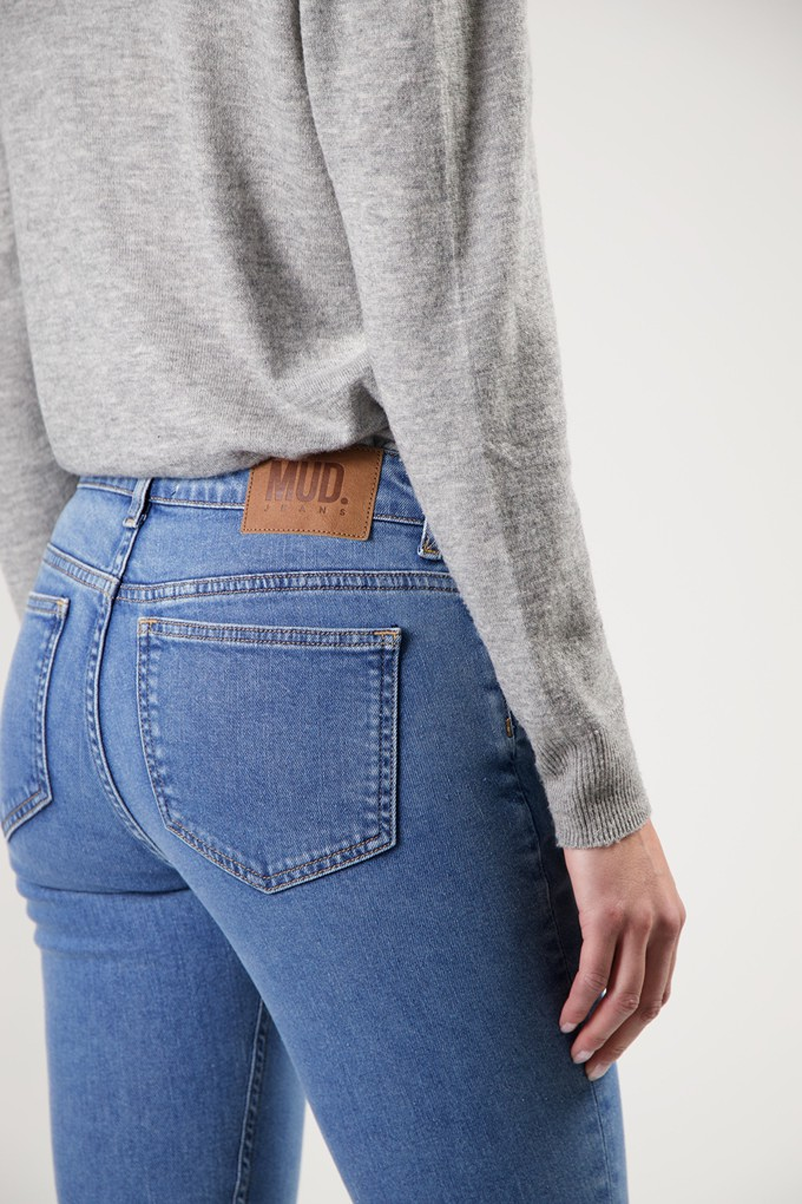
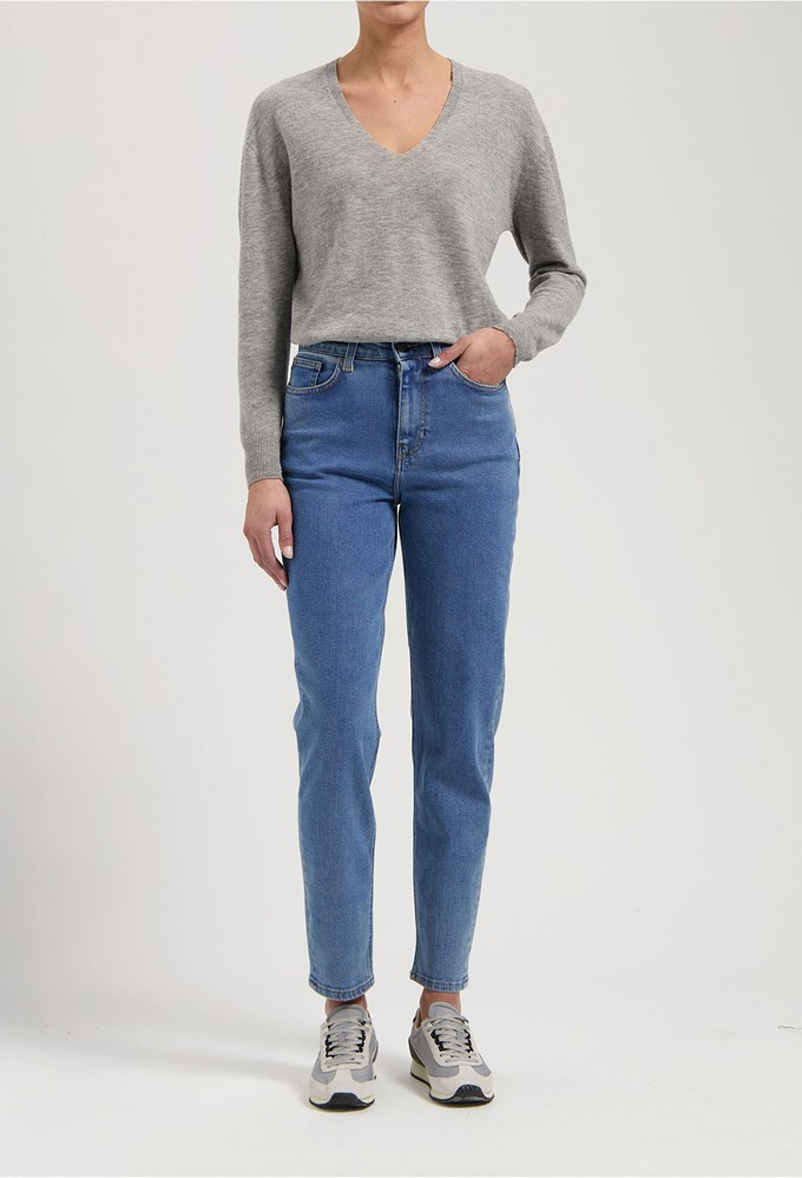
These stone vintage organic jeans offer a classic fit with slight stretch and tapered leg, ending at the ankle. Perfect to pair with a cosy sweater in winter, or a tank top in summer. Made from a blend of organic and recycled cotton, they also feature a vegan ‘patch’ on the back, to replace leather.
Also in skinny version for a sleek and slim silhouette to accentuate your figure.
Many of us live in jeans for a good part of the time, they are easy to put on, and go with most other items of clothing. But as one of the world’s favourite items of clothing, there are huge sustainability issues.
It’s recommended to launder these as infrequently as possible, although of course you can, but you’ll ended up with faded jeans very quickly! To preserve colour, wash them inside out in cold water with a mild detergent on a delicate cycle, and air-dry them.
The organic cotton is made in Turkey and they blend this with cotton that is recycled (in Spain) from jeans that they recycle. This is spun into new yarn, to ensure there is no waste. The jeans are dyed in Spain by a fair trade supplier, and the fabric made into jeans in Tunisia, by suppliers who take care of their workers (70% women) with a living wage and union representation.
This brand also has a take-back program, so at end of life you can send your old jeans off to be made into new ones!
Why choose organic cotton jeans?
- Some use real leather patches on the back patches, often made in countries with poor animal welfare laws. A few brands are now adding ‘Jacron’ (vegan paper patches that look like leather) instead.
- The blue chemical dyes run off into rivers, even changing the skin colour of street dogs, who have turned blue from drinking the polluted water.
- The jeans industry is very wasteful, with masses of chemically-dyed cotton jeans going to waste (cotton farming is responsible for a good portion of the world’s pesticides, which also harms farmers).
- Many brands are sold in plastic packaging, with plastic tags.
You can also buy jeans made from hemp, a naturally organic material that is another good choice.
Cost per wear: paying more saves money!
Although these blue jeans cost more, you have to balance this with cost per wear. A quality pair of jeans that are worn over 100 times, ends up costing less than a cheap pair that lose their shape and tear after a few months. Then you have to go and buy another pair.