Avoid Fireworks (for pets, wildlife and barnyard friends)

Fireworks may seem like fun, but they cause immense harm to birds, pets, horses and livestock (70% of people in the UK want them banned for anything other than official events).
Blue Cross has tips to keep animals safe if you use them, from ‘low-bang’ fireworks to preventing lost pets. Also read up on helping hedgehogs (many hibernate in bonfire piles).
If you have a fireworks display, keep them away from flammables (trees, farms, stables) and let everyone know beforehand, so pet parents can prepare.
Many birds die of fright, and sometimes crash to the ground in their thousands, during firework displays. They cause a huge amount of pollution too, including acid rain.
Around 2,000 people attend A&E with fireworks injuries in the UK each year, according to NHS and fire service messaging. Bonfire Night and New Year’s Eve are peak periods, and at-home displays are a growing share of the problem.
Keep Everyone Safe from Fireworks Dangers
Burns are the most common injury with fireworks (sparklers burn at around 2,000°C, hot enough to melt some metals). Eye trauma, corneal abrasions and ruptured eyeballs are other risks.
Dry grass make things worse, wildfires often started by fireworks and lanterns. Other risks are misjudging distances, not following instructions and cold weather (hands are numb, reactions slow).
Skipping home fireworks protects your family, just visit official gatherings, if you do (but never take pets, leave them with someone to look after them at home).
Shield Animals from Fireworks Terror
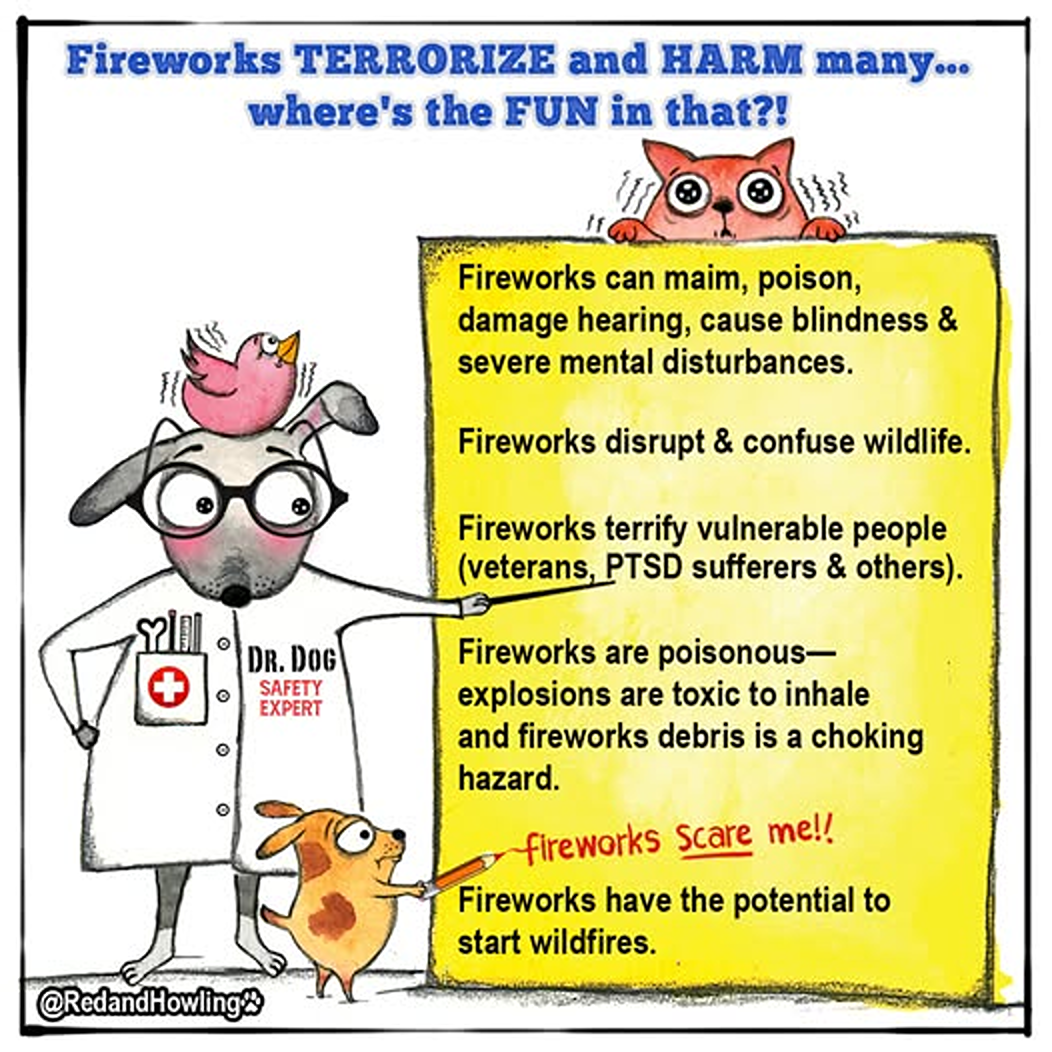
Pets don’t understand what fireworks are, so most are terrified when they hear them (some even bolt through doors and windows, and birds can abandon nests and fly into hazards.
Try to take dogs for a walk first, then create a calm space (with a place to shelter) and stay nearby, playing low music or put the TV on, and speak with a calming voice.
Make sure horses and livestock are secured. Blue Cross and RSPCA have good tips.
What Are the Laws on Fireworks?
There are strict laws for buying fireworks (not party poppers unfortunately). You must be over 18 and you are not allowed to use them from 11pm to 7am (except Bonfire Night to midnight and New Year, Diwali and Chinese New Celebrations to 1pm). Category 4 fireworks can only be used by professionals.
You also cannot set or throw fireworks (including sparklers) in the street or other public places. It’s widely believed that the awful fire recently in Switzerland was caused by sparklers setting fire to the roof.
Campaigns to Ban Fireworks
Many people would like to see fireworks banned, alas this is not realistic, considering the huge amounts of people who presently use them, and the government has no plans to ban them at present.
Despite the distress they cause to not just animals but humans (including veterans with post-traumatic-stress-disorder).
The Firework Campaign want instead a ban on public sales, and restrict fireworks to licensed and organised displays, including ‘silent’ or ‘low-bang’ fireworks, to reduce danger and noise. It also wants stricter regulations to protect pets, wildlife and farm animals from injury and distress (a campaign supported by Redwings Horse Sanctuary).
There is support, with petitions nationwide having gained over 100,000 signatures, triggering debates in the House of Commons.
You can report personal stories to RSPCA and British Horse Society, which helps to fight their case.
I would ban fireworks if it was in my gift. I might be accused of spoiling people’s fun. But it is not fun if you were in A & E when children are brought in with severe burns. Scottish Fire & Rescue Service Commander.
Fireworks can be particularly dangerous for horses and livestock, who can be spooked by loud bang and bright light, putting them at risk of injury. Some birds will flee their nests or whole colonies disappear, due to noise disturbance. RSPCA Animal Welfare Expert
Fireworks contain non-biodegradable plastics that following a firework being launched, are dispersed over large areas, before returning to the ground. This results in a wide scattering of plastic debris, polluting the environment and harming wildlife that mistake it for food.
It also goes down waterways into the sea, creating microplastics that are also mistaken as food by marine creatures. Litter Free Dorset
What About ‘Silent Fireworks?’
They don’t exist, although you can buy low-bang fireworks, though they are still polluting. To launch, a firework must have a ‘lifting charge’ and that will be at least 95 decibels, and the smell and lights still negatively affect animals.
Eco Alternatives to Fireworks?
There’s no point in saying ‘don’t have displays’, as this will never happen. Communities will also celebrate New Year with some form of display, so it pays to look at suitable alternatives. Especially considering there is now a ban on single-use plastic, so in theory fireworks should be now illegal.
And all of these would still cause light pollution for birds and wildlife, so should be limited in the same way (not to say they are great, but much better than fireworks, if you’re going to use them:
Drone light shows are labelled as a better option, creating colourful aerial displays. It’s true they pose no fire risks, nor leave chemical residue or physical debris. But although quieter, they still cause some noise, and RPSCA say they could still spook horses, livestock and birds. Whether as much as fireworks, is unclear.
Avoid Bonfires (or at least make them safer)
Bonfires (to burn garden waste) may smell nice, but they cause pollution and harm to sleeping wildlife, particularly hedgehogs and hibernating animals. They are not illegal, but not well looked upon, these days. Ideally, don’t light them them at all. Better to just use your green waste bin.
If you are going to light a bonfire, gently lift the base with broom handles, and shine a torch in, to check for hedgehogs. If it’s clear, light from one side only, so anything in the heap has a chance to escape.
It is an offence to cause excessive smoke or nuisance to neighbours (like stopping people enjoying their gardens or opening the windows). Councils can then serve an abatement notice.
You also are not allowed to burn household waste (plastic, rubber, paint, tyres) that causes pollution. It’s also illegal to light a fire and allow smoke to drift across a road, that endangers traffic.
Bonfires for Fireworks Night
Of course, these days the main bonfires are used for ‘celebration’ like Bonfire Night. The Sussex town of Lewes is known for a huge bonfire pile, on one of England’s biggest firework nights.
Run for over 300 years, the event commemorates 17 Protestant martyrs burned at the stake during the Marian Persecutions (when Queen Mary was trying to restore the Catholic religion, after her father Henry VIII replaced the Pope with himself as the head of the church in England).
She had over 280 Protestants burned, which earned her the name ‘Bloody Mary’, presumably where the name of the drink comes from. And her efforts were all for nothing, as Elizabeth I then made England protestant again anyway, which later became the Church of England.
The town has become famed for burning not just ‘guys’ but topical politicians and controversial figures. It all sounds good fun, but of course it’s likely that many wildlife are burned under the giant bonfire, as it’s too big to follow the normal advice of ‘move the entire pile just before lighting, and check for hogs with a torch first, leaving gaps at the side for escape.
And of course the fireworks cause havoc for local pets and wildlife, even affecting foxes, badgers and birds on the nearby South Downs. As does the 7am ‘morning salute’ and night-time displays.