Better digestion for sensitive tums (simple affordable swaps)

England is a country that seems to live on Tums and Rennies. Yet often better digestion is far simpler, and taking non-stop remedies over the counter can often do more harm than good.
The Gut is an interesting little book that sheds light on how gut health is linked to everything from arthritis to skin issues to depression and even dementia. Healthy gut, healthy rest of you!
Fermented foods are often good for your tummy. These include sourdough bread, sauerkraut and kimchi (both from cabbage), tempeh (an Indonesian food to replace meat) and miso (a tasty Japanese condiment).
Avoid unpasteurised foods for pregnancy/nursing, children and weak immunity.
What your poo says about you!
A good way to see how your tummy is, is to look at your poo! Obviously see a GP for anything serious (and don’t worry if poo turns a bit pink or black if you eat beetroot or liquorice). Here’s a lowdown from nutritionist Joy McCarthy:
- Sticky poo is due too much dairy/gluten.
- Smelly poo is too little fibre and too much acid (give up meat).
- Greasy poo is due to fast food (Joy writes that if you poo looks like ‘an oil spill in the toilet’, it’s your liver and gall bladder begging for love!) Alcohol can also cause havoc.
- Rabbit poo is usually caused by dehydration
- Race car poo (!) is caused by too much caffeine
If any of the above apply, drink more plain water, eat more plants and fibre, and slow down your lifestyle. You should notice positive changes within days.
Eat gut-friendly plant-based yoghurt
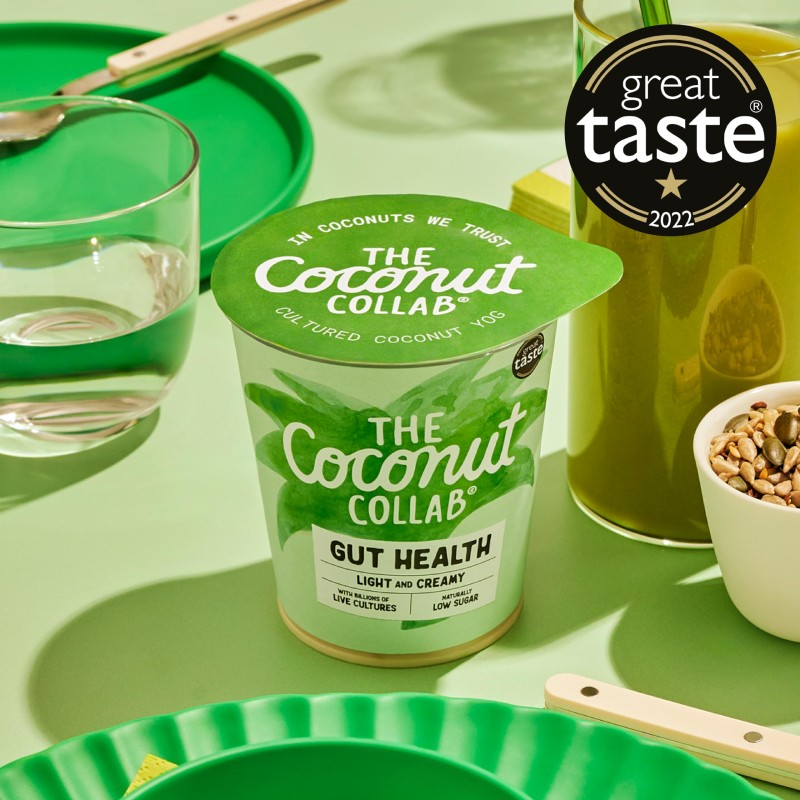
Yoghurt is full of good bacteria. Coconut Collab is a super brand of monkey-friendly coconut yoghurts, including a gut-friendly version for sensitive tummies. It also sells coconut-based Kefir drink.
Indie health stores also sell Sojade organic soya yoghurts, which include a thick Icelandic-version with no plastic lid. And nice unique flavours you won’t find in supermarkets like apricot.
Recycle packaging at supermarket bins, if kerbside does not recycle.
Take a natural biotic supplement
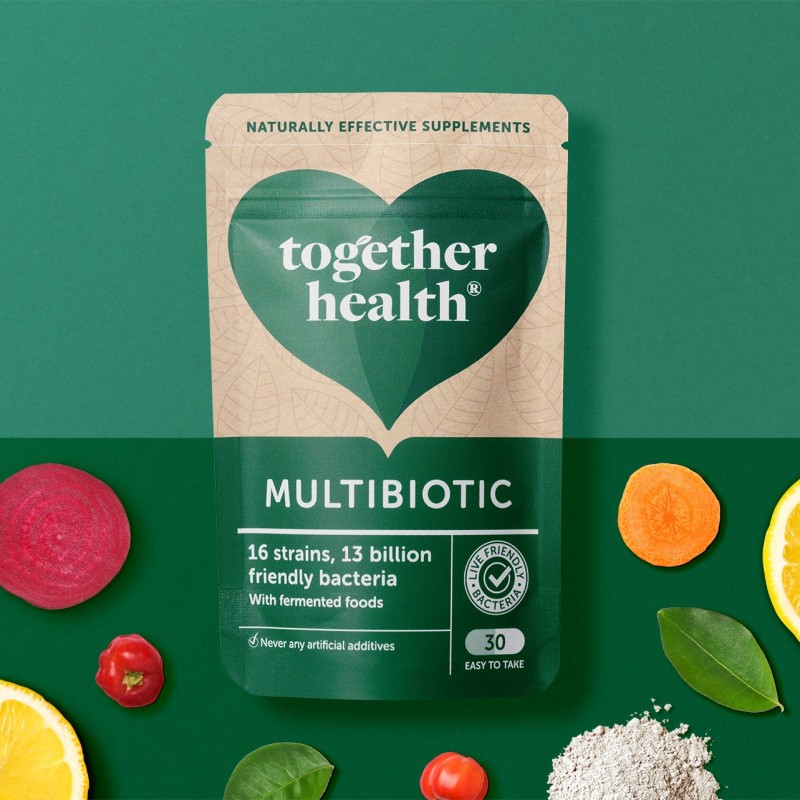
Together Health Multibiotic features 36 fermented fruits and veg (no pesticides or herbicides) and 16 fermentation and additional live bacteria strains. With acid-resistant strains to work in stubborn tummies, they boost good bacteria for people with bloating or tummy issues like IBS.
Check with GP if pregnancy/nursing or taking medication before taking supplements. Recycle unused supplements/medicines at pharmacists.
The capsules are made from plant cellulose from the Pinus Elliottii tree, and can be separated and the contents mixed with food or drink if preferred.
The supplements are sold in easy to recycle pouches that are plastic-free and contain a protective film made from wood pulp. All layers are home compostible.
Subscribe online for big savings, and get double rewards cash on orders, you can pause or cancel anytime.
This supplement contains acid-resistant strains to survive the stomach’s harsh conditions, to reach your gut alive! Ideal for optimal digestive health and wellbeing.
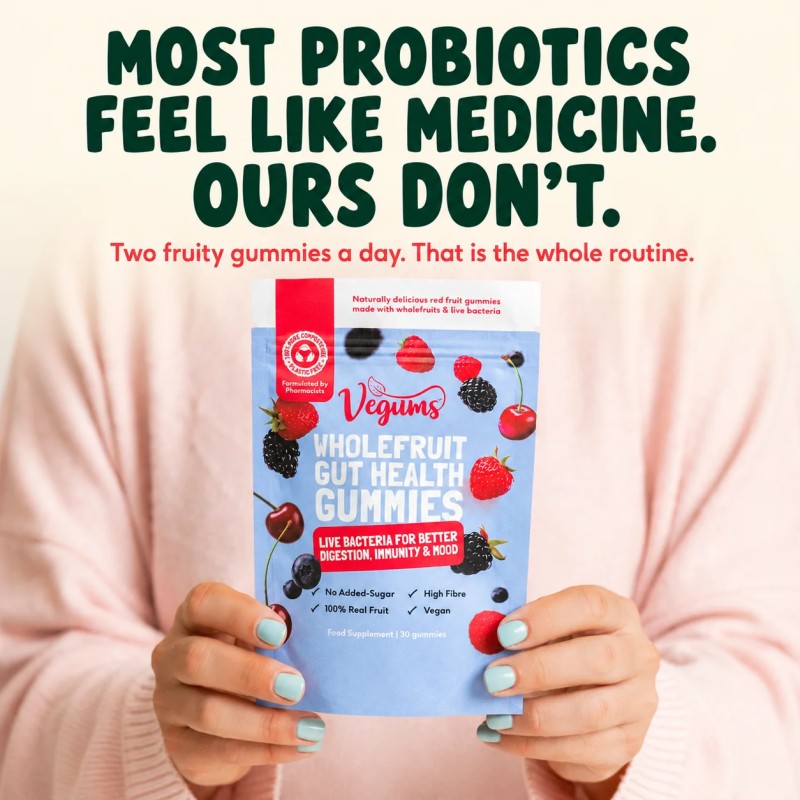
Vegums whole fruit gut health gummies are by a brand founded by two pharmacists, and sold as easy-to-chew flavoured gummy sweets, to get your nutrition. Also in a child’s version (for age 3 to 11 – after 12 take the adult version). They are sold in tins with compostable refill pouches.
Keep away from young children and pets, as they look/taste like sweets.
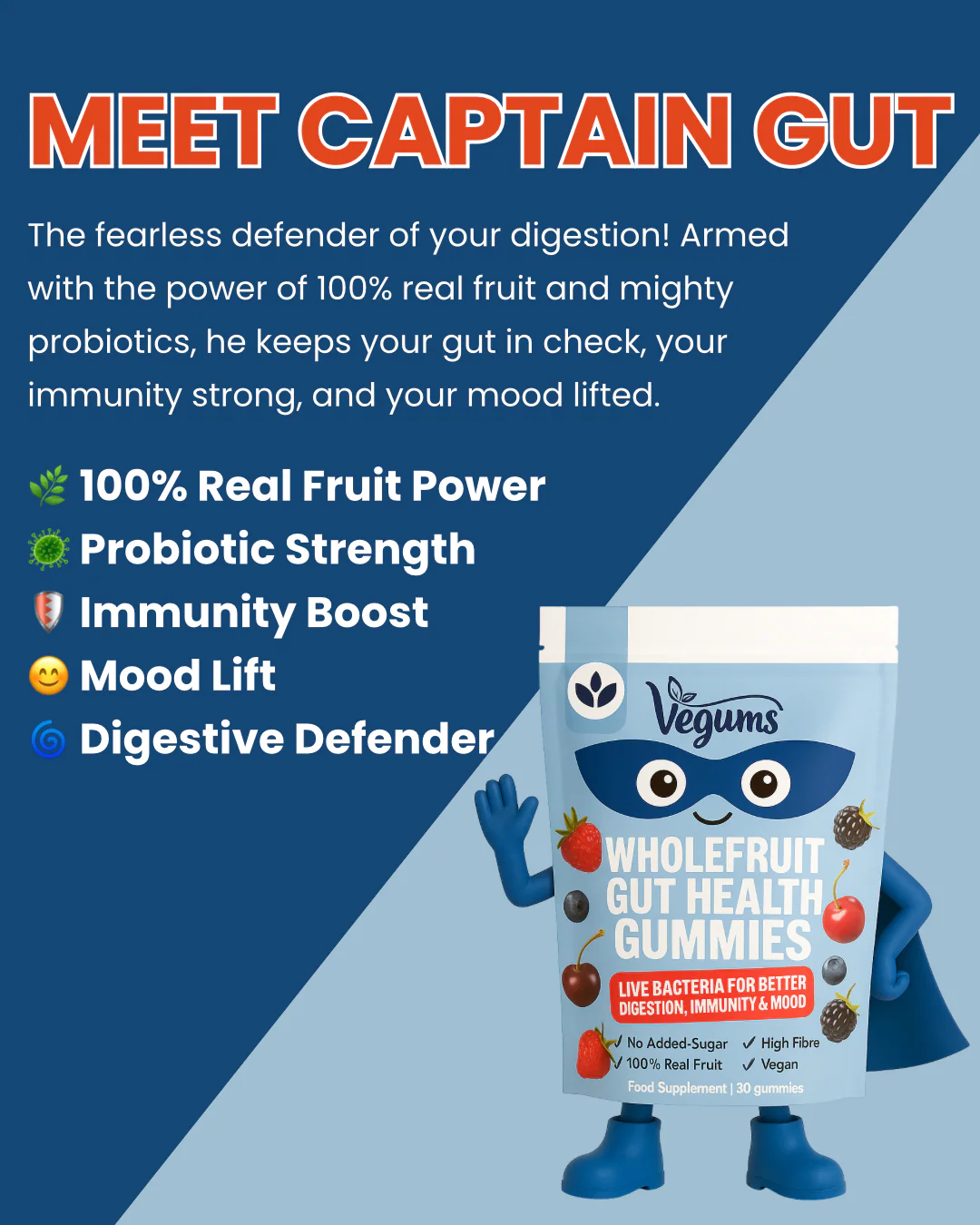
These contain 2 billion live CFU bacteria (or 1 billion for the child version) per serving, made from over 96% real fruit. Formulated by pharmacists, they are flavoured with blackberry, raspberry, strawberry and cherry. Most people find relief within a few weeks.
ONE Living (digestive kombucha drinks)
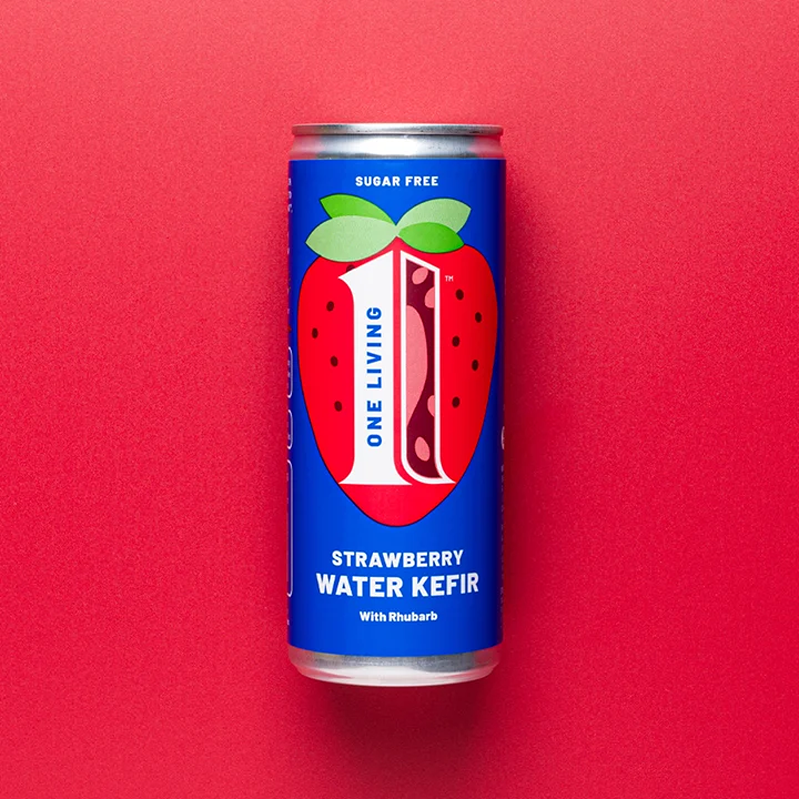
ONE Living is a brand of kombucha drinks (raspberry or ginger flavour) and water kefirs, both good for digestion. These are packed with good bacteria. The brand was founded by rugby star Jonny Wilkinson who discovered how gut health is linked to mental health (when suffering with depression).
These are unpasteurised, so avoid for pregnancy/nursing, children and weak immunity. Talk to your GP for medical conditions (diabetes, IBS, leaky gut, low-salt diets, histamine intolerance and awaiting transplants). And introduce them gradually, if safe to consume.
In glass (rinse and recycle). Or cans (rinse and pop ring-pulls over holes, then step on upper cans to pinch rims together, to stop wildlife getting trapped at recycling plants).