Pride Without Prejudice: Compassionate Patriotism
Another England is a refreshing, uplifting and important book by England’s first Green MP (now resigned) Caroline Lucas, as a compassionate and alternative response to the hard-right taking over our country.
She writes that when politics becomes too soft on crime, lack of housing and immigration (all linked to our national problems), this gives a vacuum for bigoted politics to rear its ugly head, by those who lazily seek to blame all of society’s problems on others, rather than a lack of vision on the new compassionate society that’s possible, for all.
It’s interesting that Reform UK markets itself as ‘the party of patriotism’. But for what? A beautiful England is one of clean litter-free streets, local independent shops, local economies that protect homeless people, protecting native wildlife.
Yet its policies include zero-hour contracts (which leads to more homelessness, as there are no contracts to support rental or mortgage payments), stopping rewilding (which would lead to extinction of endangered creatures like hedgehogs and dormice – they are also ‘native to England’ – and have been around a lot longer than all of us).
Local independent shops are not deemed as important as sucking up to Trump. And the party accepts million pound donations from funders who don’t live here (nor pay tax to fund the NHS).
Just like Hamza Yassin recently wrote that he wished all children could name five trees (rather than five Kardashians), one wonders how many of the Reform MPs and would-be MPs could name our endangered species, coastal flowers, and have the scientific argument on why they believe climate change is not manmade (it is, ask any climate scientist that is not funded by the oil industry).
The Reform Party’s only interest does appear to be making the country as rich as quickly as possible. Reading the manifesto has made me believe they actually see the environment as an inconvenient obstacle one has to live with, and can profit from. Elizabeth Parry
How to solve the boats crisis
It’s often attributed to Albert Einstein (but apparently someone made up the phrase before). But it’s said that ‘stupidity is doing the same thing over and over again’.
This would be a good way to describe the present ‘boat crisis’, with illegal immigrants coming in their thousands in small boats (and on lorries) into England, which has led to a huge surge in support for Reform UK.
Of course, we all know that safe legal migration is fine (you’ve likely had a relative cared for by one). But to stick our heads in the sand and not address this issue, will likely mean that Reform UK gain power (which won’t stop illegal migration anyway, see below).
And due to other policies (like climate science denial), will lead to more wildfires, floods and heatwaves, and likely send our endangered native species (like hedgehogs and dormice) extinct.
Greens want ‘open borders’ in an ideal world, but of course saying this is not very clever, because as night follows day, this will not go down well with most people, and right-wing parties will gain power.
It’s good to be compassionate, but it’s also important to be honest about the issue that there are some who ‘milk the system’, so something needs to done.
But having a ‘them and us’ mentality (you love or hate immigrants) is not the answer, as it has turned a previously tolerant nation into one that is not.
We Came By Sea is the untold story of the small boats crisis, from a writer whose first book won the Somerset Maugham Award. He has also written a book on endangered curlew birds.
Solutions are already known
If you listen to right-wing MPs, you’d think that solutions to the boat crisis were not known, other than ‘turn them back’ (you can’t, because under international law, they need to stay here to wait for asylum processing.
You can’t literally turn back people arriving on boats to France, because if they die, we would be responsible for their murder – some may not care, but most of us do.
So here are the real solutions (not soundbites from politicians trying to win votes). These are all researched (and linked to) experts who know what they are talking about, and know how to stop the illegal immigrants who are not genuine refugees, while welcoming genuine asylum seekers.
Those fleeing from oppressive regimes have no idea about England’s benefits system, and often no access to the media. They also in many cases do not choose which country to go to, it’s the ‘gangs’ that decide.
In 2021, over 27 people died in frozen waters, when French and British authorities refused to help due the people being ‘in the wrong waters’ so no-one came to help until a French fisherman raised the alarm. Some MPs have even criticised lifeboat crews, for trying to help.
Create world peace. This is the obvious one. The more wars that Trump et al start, the more people try to escape from violent regimes. If you and your family were living on animal feed (and dragging children whose limbs had blown off), you would try to escape too, wouldn’t you?
Refugee Settlement. Ordered airlift programs (like Operation Pitting which helped Afghanistan refugees) takes them to pre-destined safe places (not Rwanda, which has human rights abuse issues).
Register claims in France. At present asylum seekers register their claims in the UK on arrival. But as officials already have a base in France, this could be done before arrival to determine genuine asylum seekers, with no gangs to exploit refugees. The lack of an official legal route is a big issue.
Make UK employment laws stricter. France has very strict employment laws (there are no nail bars or supermarket car washes exploiting immigrants with poor pay and conditions). That’s one big reason why some people try to reach England.
Most refugees are 100% genuine
Refugee Council says around 20% of people crossing the channel are children, with 60% classed a genuine refugees. 40% come from just 5 countries (Iran, Syria, Eritrea, Sudan and Afghanistan). The last 3 have an asylum ranking of 98%, meaning nearly all are fleeing for their lives.
I think people in this country are fundamentally decent and compassionate, they just want a migration system that is fair. We absolutely need to stop the boats.
But let’s stop the boats by offering safe and legal routes to asylum, and not having people clinging on to dinghies for dear life. Zack Polanski (Green Party leader)
What would Reform UK do to ‘stop the boats?’
We all know that the number 1 political policy (and likely why it’s so popular in the polls) is to ‘smash the gangs and stop the boats’. But what is its policy exactly, and would it work better than the above?
The system proposed is to detain (likely in disused RAF bases) and then deport anyone with no legal right to claim asylum. It would also offer £2500 voluntary returns, to encourage people to leave. The aim would be deport hundreds of thousands of people back to Afghanistan and Eritrea, two of the most common countries that illegal immigrants arrive from.
Critics say this would not work for several reasons:
You can’t simply remove people from boats, and send them back to France. As they are making a journey that can drown them (including children) and this is illegal, under maritime law.
Such a scheme depends on international agreements with France (who would be accepting the returned refugees across the channel) and countries of origin (Reform UK would have to deal with the Taliban), enough capacity to detain people and potential legal challenges.
In other words, it may sound like a good idea in theory, but there is no guarantee that it will work, as it won’t just be Reform UK involved, by other countries who would have to get on board.
Nigel Farage’s big claim is that illegal immigration is Britain’s big problem. But my problem with Nigel Farage is that the moment he opens his mouth on this subject, he literally talks nonsense.
Migrants do the jobs that people in the UK don’t want to do. They are the cleaners, the janitors, the security guards, the care workers, the people who literally care for the dying.
They provide many of the people who work on our transport system, because of the anti-social hours that other people don’t want. Migrants are more likely to work, than people born in the UK. Richard Murphy, Tax Research
The mass media is not helping
Research by Byline Times (a citizen-funded newspaper) found that TV channel GB News aired claims of an immigrant ‘invasion’ at an average one a day over four months during 2025, with regular complaints to Ofcom not being investigated.
Good Law Project also reports that the channel’s relentless focus on illegal immigrants, is not covering the truth that most people who arrive as immigrants do so legally, and between 60 to 70% of people applying for asylum already live in the UK.
Recently one Lib Dem MP was appalled to view an episode where it was suggested that most defendants charged with sex offences had ‘non-British names’. Tell that to Michael Portillo, one of the channel’s regular presenters.
Turning up to court and counting people with names that don’t sound British to you, is no way to engage with the complex and sensitive topic of immigration. Anna Sabine, Lib Dem MP
The Serious (hopeful) Message Behind Count Binface
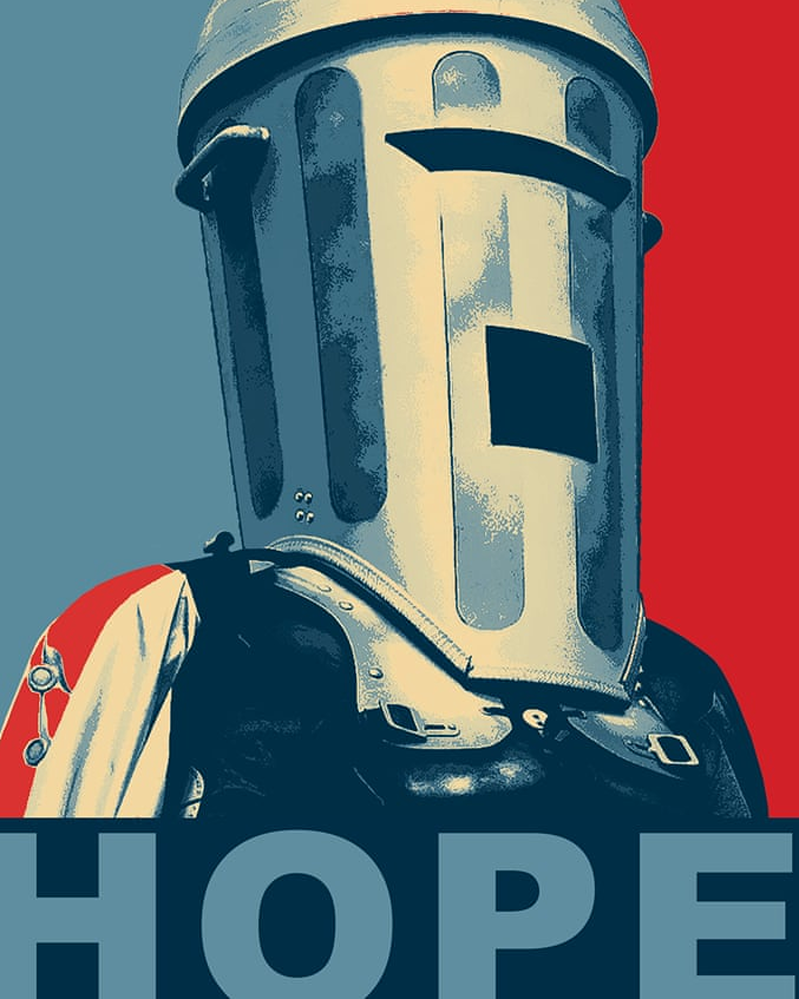
England has a rich history of fielding ‘joke candidates’ at political elections. We’ve all heard of the Monster Raving Loony Party, and now of course the world and his wife are aware of Count Binface, an intergalactic space warrior who is standing in a hugely relevant by-election in Clacton-on-Sea.
Next door (in the same constituency) is Jaywick, England’s most deprived area. This video is very interesting, looking at how this proud community has been forgotten by society (and in 2 years, its MP has appeared to do nothing to help move the mattresses and other trash that literally lines its seafront).
What is the council doing?
It’s unlikely that Count Binface will win. But his popularity has shown that compassion is winning every time, and if the election was national, he would win. One of his policies would be to make executives who are polluting our rivers to swim in them, to make them take action!
This hilarious video from a USA YouTuber trying to make sense of how a bin can stand for parliament is worth watching. He is trying to understand how it all works, finding it unfathomable why other parties aren’t standing.
The comments section is also funny, as Americans don’t get it either, yet are warming for the ‘bin to win!’
On a serious note, Count Binface is in real life an Oxford classics scholar and comedian, who is kind, intelligent, compassionate and funny. And seems to have reverted our imagination back to the days when people in England were still nice! If he does that alone, it’s something.
The excellent political commentator Maximilian Robespierre also posts that when Reform UK are criticising a man with a bin on his head as ‘the establishment’, we know we are hopefully gradually moving towards a more compassionate political age!
I’ll cut your taxes, and raise everyone else’s. Count Binface
Why is Count Binface so popular?
Nobody is denying that England has serious political issues. But we don’t want to turn into the USA where (as Andy Burnham said) people who vote for different political parties, don’t speak to each other in the street. A country so polarised that recently a senator was shot dead in her home, along with her husband and dog (Gilbert became the first dog to ever lie in state).
Of course now with the awful murders of Ann Widdicombe, Sir David Amess and Jo Cox, this issue is being debated in England too.
A quick online search finds that before their murders (all in the last 10 years), the last politicans murdered were Sir Anthony Berry (in Brighton in 1984) and Ian Gow back in 1990 (both by the IRA). And before that all other MPs murdered were during the Northern Ireland ‘troubles’, before the Good Friday peace agreement. Innocent horses were also killed in Hyde Park, London.
So one has to ask what has changed that we now have had three political murders in fairly quick succession? The political temperature of hate and division has massively gone up during this time.
And now with most MPs receiving death threats on a regular basis, it doesn’t take a genius to work out why a candidate of compassion (even from another planet) is bringing hope to our nation.
What we can learn from Mexico’s inclusive culture

You may think of Mexico as the place where your enchiladas and margaritas come from. But in fact, this ancient culture has a lot to teach certain politicians and media pundits in England, about how to get along.
Mexico has one of the world’s best ‘inclusive cultures’. In other words, no matter what the political problems, you’ll never find the kind of the nasty politics of ‘blaming immigrants for lazy governments’ culture that we are now getting here.
There is absolutely nothing wrong with being a patriot. This is good!
Our political landscape is shifting to somewhere scary. Calling people ‘illegals’ or ‘aliens’ doesn’t help and dehumanising people like this, is not addressing the real issues.
The hooligans who set an asylum hotel on fire in Southport after the tragic murder of three young girls, did not care about those girls – their parents begged them to stop, and let them grieve in peace. They just wanted to make trouble.
Right-wing marchers in London who throw beer cans at police horses don’t care about England. That’s not what England is about.
It is true that governments not addressing the issues, is what has led to people getting fed up, and ending up voting for Reform UK. It’s likely that they don’t actually ‘support Reform UK’, it’s more than they feel nobody is listening to genuine concerns.
You go a long way in England to find a proper true racist, but now we are getting to that kind of culture, and it’s very scary.
In a recent interview, Green leader Zach Polanski said he was ‘as much of a patriot’ as Nigel Farage. Likely more so. After he won the leadership contest, the first thing he did was to visit Clacton-on-Sea (the Reform leader’s consistuency).
Residents were shocked to hear that Reform UK policy is to return to zero hour contracts, which means local people won’t be able to get rental contracts or mortgages, so be prone to ‘slum landlords’ or homelessness. One asked Zach ‘But I thought Nigel was champion of the common man?’
Why London should be proud of its inclusivity
A really worrying state recently is the marches by far-right activists, seeking to blame government failures on people of different races. You go a long way in England to find a proper true racist, but now we are getting to that kind of culture, and it’s very scary.
It’s true that we have issues in England. But these can be solved. Muslims (and Jews) are allowed in their faith to be vegan/vegetarian, so we could ban Halal (and Kosher) meat whilst still respecting faith issues.
The marches in London are said to be a stand against ‘the corrupt media’. In that case, read non-corrupt media like Byline Times, rather than throw beer cans at innocent police horses on London streets. That’s not what England is about.
What are these ‘right-wing marches in London about?
The marches are basically to protest against immigration, centred around the English Defence League, a movement founded in 2009 in Luton (its co-founder was Tommy Robinson, who has since left the organisation).
More a street movement than a political party, Tommy is a huge fan of Elon Musk, the world’s richest man who is wanting to donate to our right-wing parties, deciding instead of us how we should be governed. He once said that ‘civil war was inevitable’ in Liverpool due to conflicting cultures. He’s obviously never visited Birmingham or Wolverhampton, where rastas and white people have lived side-by-side in harmony for decades.
Recently, Reform convert Richard Jenrick visited Birmingham and lamented that in some places there were ‘no visible white faces’. After comparing one area to a ‘slum’, a local elderly (white) woman said ‘The community’s really good. It sticks up for each other. If anyone’s in danger, the community will come out and help’.
Joseph Mulhall from Hope Not Hate, says he thinks Elon Musk should be called into parliament, not just ‘try to rule the world’ from X. As ‘he’s having a disastrous effect on our streets and in our communities’.
Paddington Bear (the polite illegal immigrant bear!)
With a battered red hat, bright blue duffle coat, and spectacles perched on his nose, Paddington Bear walked out of ‘deepest, darkest Peru’ and into English hearts. For decades, this friendly bear has charmed children and adults with his polite manner, honesty, and unquenchable curiosity.
From his arrival at Paddington Station to sharing marmalade sandwiches with friends, Paddington has taken on the role of London’s gentlest ambassador!
Paddington’s back story starts thousands of miles from London, in the jungles of Peru. In Michael Bond’s stories, Paddington is sent to England by his Aunt Lucy, who cannot care for him anymore.
Bond’s inspiration also drew from the sadness of children at London train stations during World War II. Many were labelled and sent off to live with strangers for safety, a sight that shaped Paddington’s heart-warming arrival.
Obviously in real life you would not take a wild bear home with you (they belong in the wild). But in this story, the Browns take Paddington home, naming him after the station where they met. He soon becomes part of their family, but London life proves full of misunderstandings, new experiences, and plenty of messes.
Paddington’s polite ways stand out. He greets everyone with ‘Mr’ or ‘Mrs’, always remembers his please and thank you, and tries very hard to do the right thing (even if accidents happen). His favourite snack? Marmalade sandwiches – he keeps one under his hat for emergencies!
Michael also wrote storybooks on guinea pigs, however these did not become as well-known. He lived next door to Paddington Station, in Little Venice, an affluent area of north west London. It’s so-called as this is where the Grand Union and Regent’s canals meet, with charming waterside walks and colourful narrowboats to see.
Michael’s wish of being buried in Paddington Old Cemetery (he died at 91) was honoured. Along with the epitaph ‘Please look after this bear. Thank you’.
Paddington’s Serious Message
Paddington Bear‘s kindness is even more important a message in these turbulent times. Many have wondered over the years why the bear came from ‘deepest, darkest Peru’.
In fact, Michael Bond was inspired to write the books, when his own family housed refugee children during World War II.
Michael remembered seeing the children all with labels with their names and addresses, carrying a tiny bag or parcel with favourite items (the inspiration for the jar of marmalade).
He personally knew the hazards of war. In 1943, he was working on the roof of a building in Reading (installing a radio transmitter), which collapsed under him due to an air raid, killing 41 people around him, and injuring many more.
The photo above is of the one-year commemoration of those who died.
Reading Museum has an interview with Michael Bond, on how the event affected him. Unfortunately you can only watch it on YouTube, if you create a Google Account, to ‘prove you’re not a bot’ (something most older people likely can’t do, and most of us don’t want to do). Sign of the times, it’s disgraceful.
Paddington Bear was the original illegal immigrant! Of course we do have serious issues with immigration, that need to be addressed. But the knee-jerk reaction of the media and some politicians, is what creates a climate where asylum seekers are being attacked, both verbally and sometimes physically.
Mrs Brown says that in London everyone is different. And that means anyone can fit in. I think she must be right. Because although I don’t look like anyone else, I really do feel at home. Paddington Bear