Denmark: Inside the World’s Happiest Country
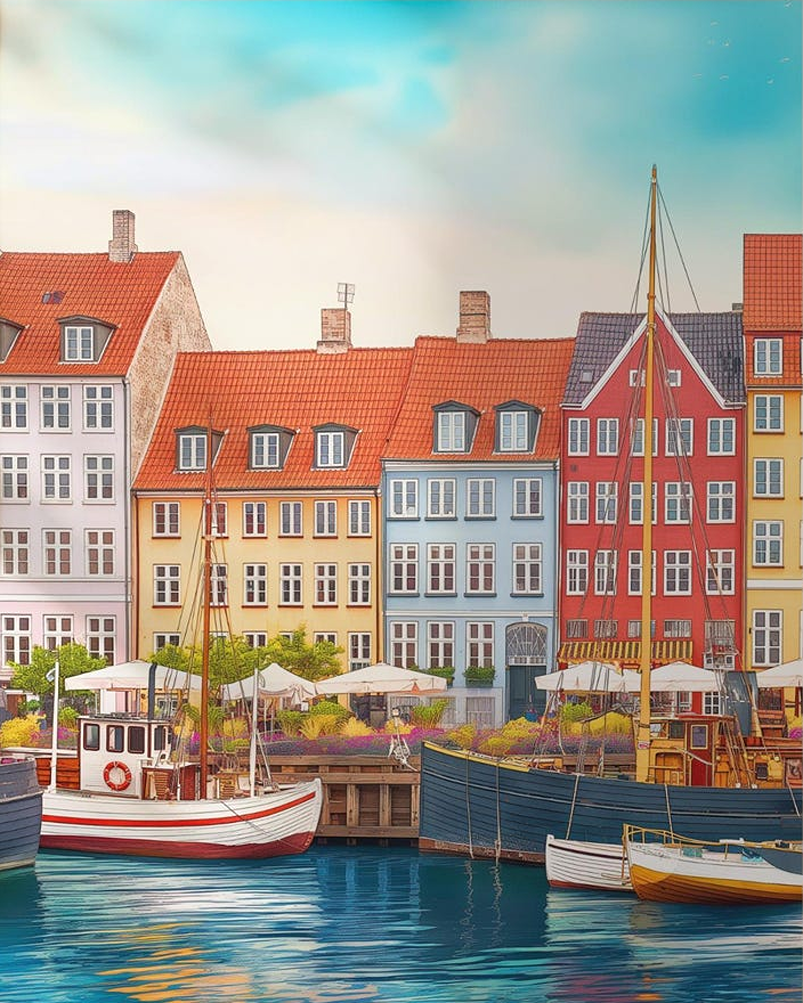
Denmark (along with Finland) is the world’s happiest country, despite it being freezing cold and dark most of the year. It’s flat (so popular for walking and cycling) and many people indulge in ‘hygge’ where rather than binge-watch TV, winter is all outdoor walks or firetime snuggles!
‘Danish bacon’ is only popular in the UK, due to huge demand for cheap meat. Instead, look in stores for La Vie vegan bacon (made in France!)
There is lots to like about Denmark:
The government is trusted and people are looked after financially from cradle to crave. There is little homelessness and no celebrity culture, so people just take care of themselves, easier when you can pay your bills due to good benefits. And not live in a cold damp bedsit, dreaming of winning the lottery.
Copenhagen is the world’s most walkable city, made over from a city that was gridlocked with traffic. By architect Jan Gehl, who made the main street car-free then added more car-free lanes, bicycle rentals and heated street lamps. Walkable cities also make it safer for people, pets and wildlife.
Read Walkable City Rules, with 101 simple changes town planners could make – from making places more comfortable and interesting, to escaping car obsession.
Like England, Denmark has lots of beach huts. The doors face sideways (not the sea) and are ‘little castles’ with flowery curtains, chipped crockery and tiny rooms. This is where people go, when the sun finally comes out!
People in Denmark are polite, formal and punctual. There’s a story on how Danish people behave. You tell neighbours you’ve moved next door and invite them for dinner in 6 weeks, when you’ve sorted yourself out.
Weeks will go by and your new neighbours don’t talk. So you forget about it, thinking they don’t like you. Then 6 weeks to the dot, they will ring the bell and arrive, expecting their dinner! That’s how Danes operate. They will give you space, but are direct and will keep to their word.
Studies show that being kind to ourselves makes us nicer to the people around us. This has a ripple effect out into the wider community. Helen Russell
Why Dutch children are the happiest
Dutch children are the happiest on earth. It’s rare for them to have tantrums, and they have better education records, yet don’t do homework before age 10.
Did you know tulips (like all bulbs) are unsafe near pets?
Dutch parents value independence from the start, teaching children how to be safe, but not ‘mollycuddling’ like many other countries. As a result, Dutch children are stable, happy and balanced.
In The Netherlands, there is a word called niksen. It basically means ‘doing nothing on purpose’. Dutch families build in time for doing nothing, to remain calm. This could be a slow afternoon reading books, a quiet walk by the canal, or a lazy Sunday breakfast.
Children are also (as in Montessori schools) trained to share chores. There are no ‘make-believe plastic kitchens to play with’. Instead, children do ‘real safe tasks’ like peeling bananas if mum is making a banana loaf.
They help to set the table, fold laundry, feed pets and walk dogs. Dutch children make their own beds. They don’t spend their life on phones, share feelings and eat home-cooked meals.