Protecting Our Waters: Keeping England’s Rivers Clean
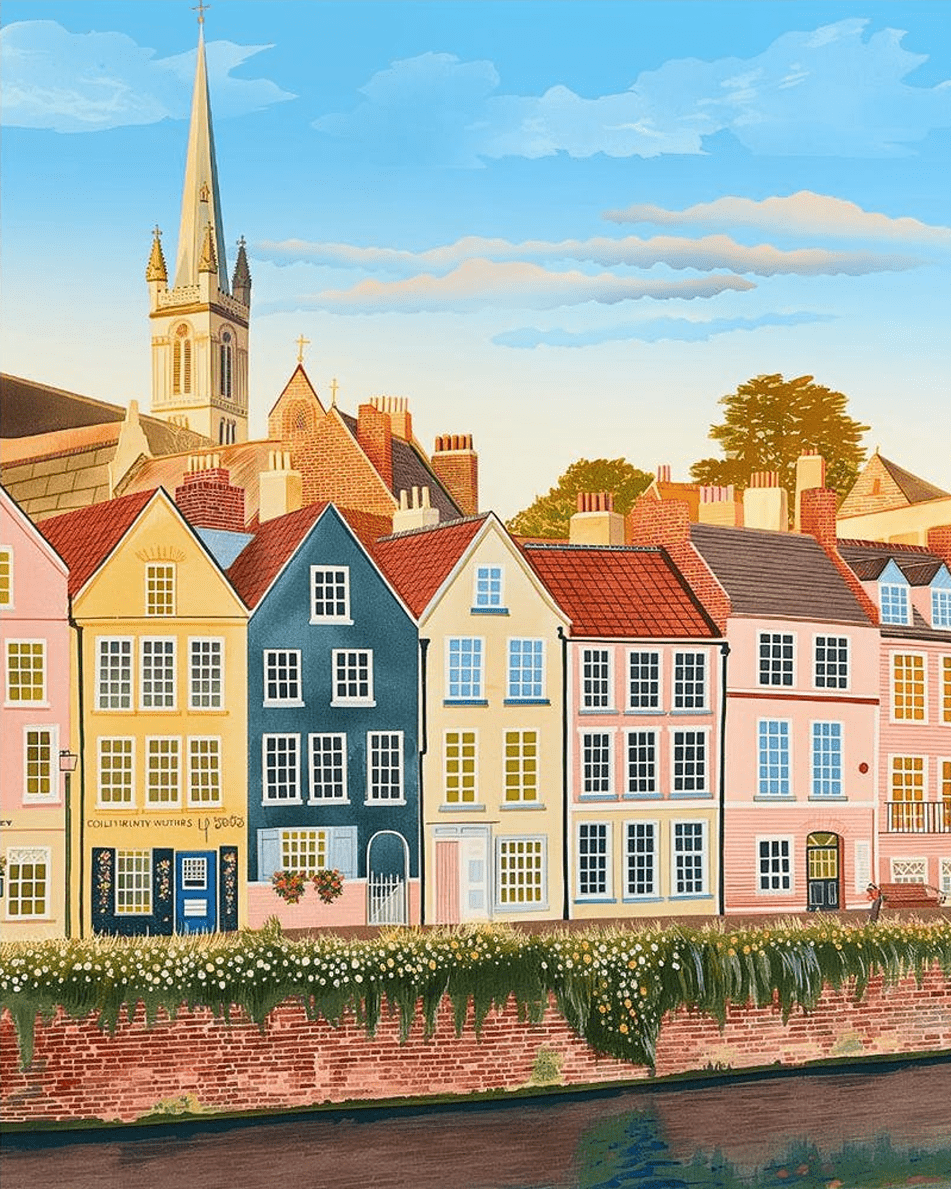
Norwich, Ava Lily
The main hazards to wildlife (swans, otters, kingfishers and endangered water voles) are lack of habitat, litter, pollution and raw sewage.
Although it’s true that some issues are due to invasive creatures, it’s important to note that this was not their fault. Mink escaped from being imported for the fur industry. And American signal crayfish were imported for restaurants.
Rivers provide us with fresh drinking water (through natural filters of ‘chalk streams’ for people and farmers). Chalk streams are quite rare (around 200 mostly in England, and a few in France).
Everyone can help keep rivers clean and safe:
- Take litter home with you: Don’t leave rubbish on walks or picnics.
- Use microfibre filters: Fit these to your washing machine.
- Use organic gardening and farming: Avoid pesticides and harsh chemicals that can wash into rivers.
Choose biodegradable beauty, cleaning and laundry brands. If you use essential oils, only use a tiny amount (in reputable brands) and avoid scented products for pregnancy/nursing and if cleaning/laundering near babies or pets.
Volunteer to Clean Up Rivers
You can become a volunteer with The Rivers Trust to help keep our rivers free from litter and pollution. Not just removing plastic and litter, but also removing ‘fish barriers’ to let them swim freely in rivers, and water quality testing.
Improve Septic Tanks
Around half a million homes in the UK don’t connect to water company sewage networks. So it’s their responsibility to treat their own sewage. Septic tanks are not on the public register, so it’s vital they don’t pollute rural areas.
Boycott Forever Chemicals
These are found in everything from rainwear to pizza boxes to firefighting foams. You can’t boycott all the items containing them, but you can for some. Read our post on reasons to boycott forever chemicals.
Take Your Fishing Waste With You
Whether you agree with it or not, millions of people in England go fishing. If you’re an angler, use a mono-master (buy online here) which is a nifty little device to safely keep fishing tackle on your person, until you deposit it in a fishing line recycling bin.
Also respect the voluntary ban on lead shot (not yet compulsory), which harms hundreds of thousands of wildfowl each year.
Fix Drain Misconnections
Modern homes have two sewers (one for surface water, and one for wastewater). But an estimated 150,000 to 500,000 households have (illegal) drain misconnections, which leads to untreated wastewater going into our rivers.
It’s the property owner’s responsibility to fix drain misconnections. This is not covered by insurance, so you’ll have to find a good affordable plumber.
Neptune’s Army of Rubbish Cleaners!
Neptune’s Army of Rubbish Cleaners is a wonderful organisation that started in Wales, and now has volunteers nationwide. Basically, it uses trained divers to go underwater and retrieve lots of rubbish for disposal and recycling, leaving the seas and rivers cleaner for fish and marine creatures (and nice for us too!)
At the end of each trip, volunteers are rewarded with a free leisure dive.
One great thing is that sometimes these volunteers come across trapped underwater wildlife, so are able to free the creatures to go on their way. The home page has a video of one volunteeer doing just that (from fishing waste). So far the charity has carried out over 1000 clean-up dives. Would you like to help?
Obviously if you are a diver, you can get involved. But you could also volunteer to get involved in collecting, sorting and recycling the rubbish that is found, if you prefer your feet on terra firma! Or in the words of NARC ‘if you don’t fancy jumping deep into the water with weights attached!’
The organisation also welcomes anyone who can loan them boats, so they can carry out more volunteer dive clean-ups.
How to become a volunteer diver
If you fancy getting involved as a diving volunteer, you must be qualified to the level of BSAC Sports Diver, PADI Rescue Diver of SSA equivalent and have completed a minimum of 40 dives in the UK. You must provide evidence of your qualifications and insurance, for safety. Air is supplied for your dives (sometimes food too!)
Here are just a few things that divers found in recent dives:
- Lobster pots (often with live lobsters in them, which were released).
- Crabs (also released from lobster pots)
- Cat sharks and tadpole fish and rocklings (related to cod and haddock)
- Spark plugs
- 500m of rope
- A torch battery
- Fishing rods
- Fishing hooks and spinners
- Angling line
- Tin cans
- A wellington boot
- 2 metre strip of aluminium
- Plastic bottles
- Disposable vapes
- An umbrella
- A pair of sunglasses
What are England’s bodies of water?
In summary, rivers and streams are moving water in a channel. While lakes are mostly still water in a basin. And estuaries are where rivers meet the sea.
Freshwater contains little dissolved salt (rainfall, springs, streams, rivers and many lakes fall into this group). Saltwater comes from the sea, and holds much more salt (seawater is 35 parts per thousand). An estuary sits between the two, so the water becomes brackish (part fresh and part salty).
Some lakes worldwide are very salty including the Dead Sea (this sea is literally dying, which is why people say not to use dead sea salts). In South America, beautiful flamingos live on salty lakes.
Estuaries (where rivers meet the sea)
Estuaries are similar to wetlands, and often teem with wildlife. Endangered curlews adore wetlands and surrounding mudflats, as do marsh harriers. England has many estuaries, including the Seven Estuary, which migrating birds adore.
Rivers (moving bodies of water)
Rivers are fresh water bodies that flow from high ground into the seas, lakes and other rivers. Streams are simply smaller rivers, which as they connect and grow larger, become rivers.
They are home to many creatures including salmon and trout, and loved by kingfishers, otters and many other native species.
Fens (manmade marshy bogs)
Fens are manmade water bodies located in the East of England, which contain natural peat bogs and reeds/grasses that provides land so fertile, it grows most of our organic food.
But we’ve lost 99% of our Fens, which also supports many species from dragonflies to endangered water voles to rare plants. The Fens are also home to many birds including migrating whooping swans, herons, cranes and barn owls.
Lakes (water enclosed by land)
Lakes are usually fed by rivers. England’s largest lakes are in Cumbria (the Lake District, which is our largest National Park). These are much deeper lakes than say in the Norfolk Broads (shallow by comparison).
The Lake District also has many tarns. From the old Norse word for ‘pool’, this is simply a mountain lake, formed in a hollow area by glaciers.
Home to lots of wildlife and birds (including fish-eating ospreys in Cumbria), the deepest lakes in the UK by far are in Scotland (all the lochs).
Reedbeds (adored by water voles)
Reedbeds are mostly found on East of England’s coast, when reeds grow alongside low-lying river banks or coastal estuaries.
They are loved by many creatures including otters, water shrews, harvest mice and many native birds, fish and insects. The River Tay reedbed was planted by monks, back in the 16th century.
Scrapes (shallow ponds)
These are very shallow ponds with sloping edges, usually found on agricultural land, alongside open channel ditches that run along field boundaries.
They are home to many insects including dragonflies and water beetles, and also loved by amphibians and again wading birds.
Rias (salty southwest water)
Rias are mostly found in Devon and have high salt levels, and little freshwater.
Ponds (built by beavers or humans!)
Ponds used to be mostly natural in England. But as we’ve lost most of them, this is why many people choose to build garden ponds for wildlife (with sloping sides, to ensure easy exit and entry). Natural ponds include beaver ponds (formed by ‘nature’s architect‘ to help prevent flooding).
The Thames – one of Europe’s cleanest rivers
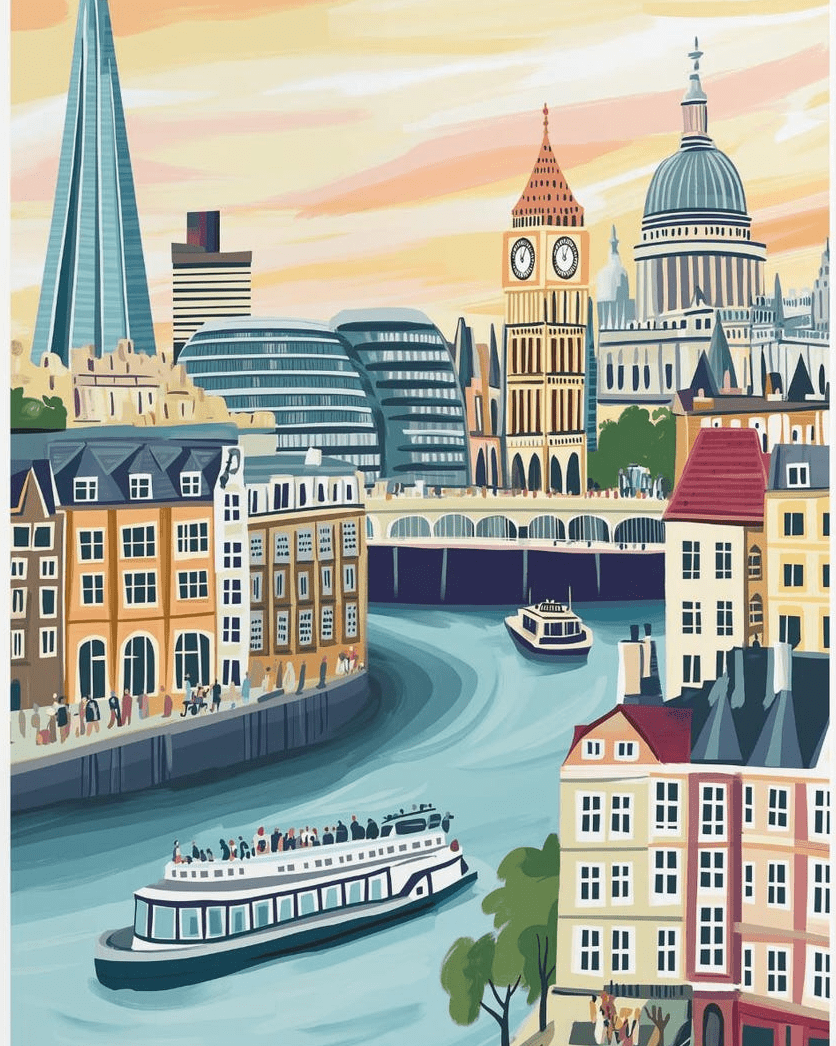
Many people think that the Thames is England’s longest river (it’s not, that would be the Severn). It is the second longest river however, and is also known as one of the world’s cleanest city rivers in the world. A high achievement, considering that parliament used to have to close down years ago, due to the stench of pollution.
Opened in 1984, the Thames Barrier is one of the world’s largest movable flood defences. It sits downstream of central London and protects the city from storm surges. The barrier can be raised in less than two hours, when high tides and storms threaten the capital.
The Thames Path is a 184-mile (294-kilometre) walking trail following the river from its source to the sea. You can join it in city or countryside. The path takes in urban parks, rolling fields, and bustling towns.
It’s also home to many birds and wildlife and marine mammals, who no doubt appreciate the huge efforts that have gone into making this river a safe place for living and swimming. And it also has many nice walks too.
Out walking? Follow the Countryside Code to keep all creatures safe. Keep dogs away from steep banks, mushrooms (and other toxic plants/trees) and on leads during nesting season.
Back in the 1950s, the Thames River was declared ‘biologically dead’. But today it has over 125 species of fish, including eels and endangered seahorses. Two-thirds of London’s drinking water is from here (and in blind taste tests, it beat the expensive bottled waters!)
There are over 200 bridges and 24 tunnels, so river enthusiasts will never get bored learning about all this river’s twists and turns. There are also 180 islands, including large ones and tiny islets.
The Thames is not just in London!
The River Thames is often thought of as a ‘London river’. But England’s second-longest river (after the Severn), actually begins in the Cotswolds and flows through Oxford out to the North Sea. The Thames used to be so polluted, that Parliament would have to regularly close down due to the stench. Today it’s much cleaner.
At over 200 miles long, it starts as a small trickle in the Cotswolds of Gloucestershire, then goes through Oxford, Buckinghamshire and London, to the North Sea on the east coasts, it’s not just in London!
The river has big associations with the book The Wind in the Willows. Kenneth Grahame’s home was in Pangbourne. And just downriver from here is Mapledurham House, believed to be the inspiration for Toad Hall.
Read From Source to Sea. This is the tale of travel writer Tom Chesshyre, who walks the entire 200 plus miles of the river, along the way strolling past meadows, churches, palaces, country estates, council estates, factories and dockyards.
Tower Bridge (not the same as London bridge!)
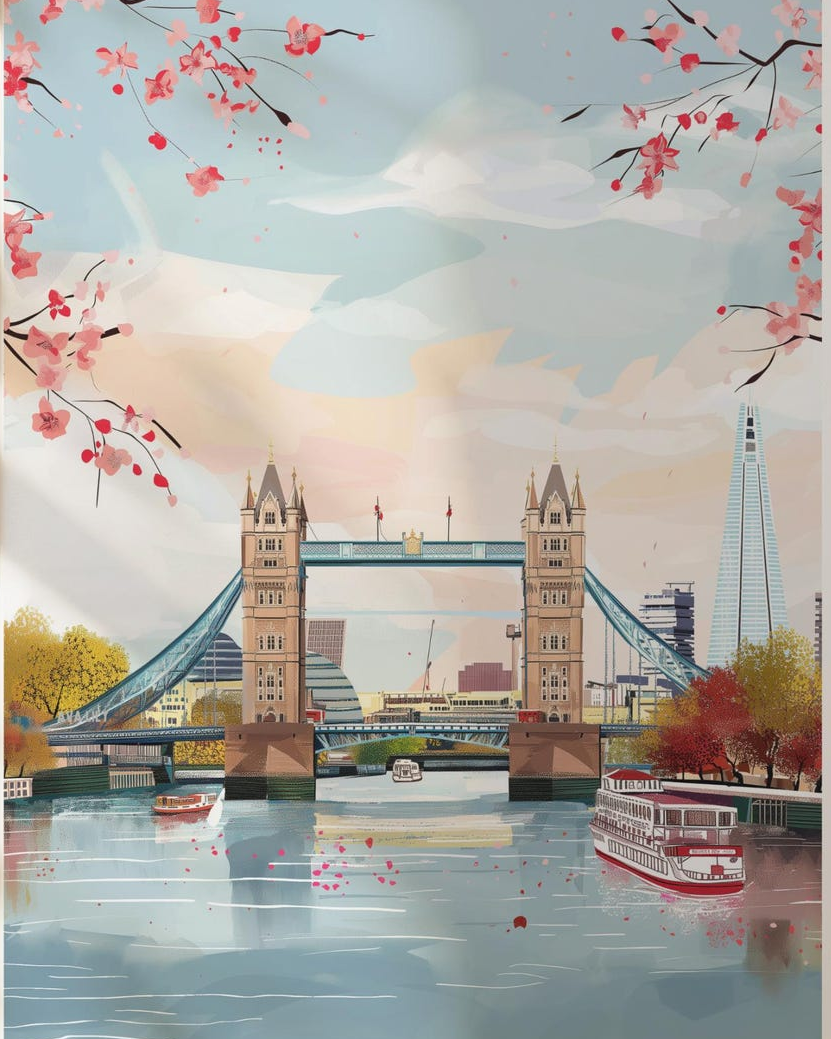
Tower Bridge was built in the late 1800s, to give people better access to the East End. Often confused with London Bridge (half a mile away), the urban (denied) legend is that an American (who wished to move the bridge to Arizona) bought the wrong one!
The bridge opens for ships to pass. In 1952, a double-decker bus began to slide as the bridge accidentally opened. Driver Albert Gunter made a split-second decision to accelerate to clear the gap (like the film Speed, when the road wasn’t built). There were no serious injuries. So he was awarded the princely sum of £10!
Life on the Thames (thriving with wildlife)
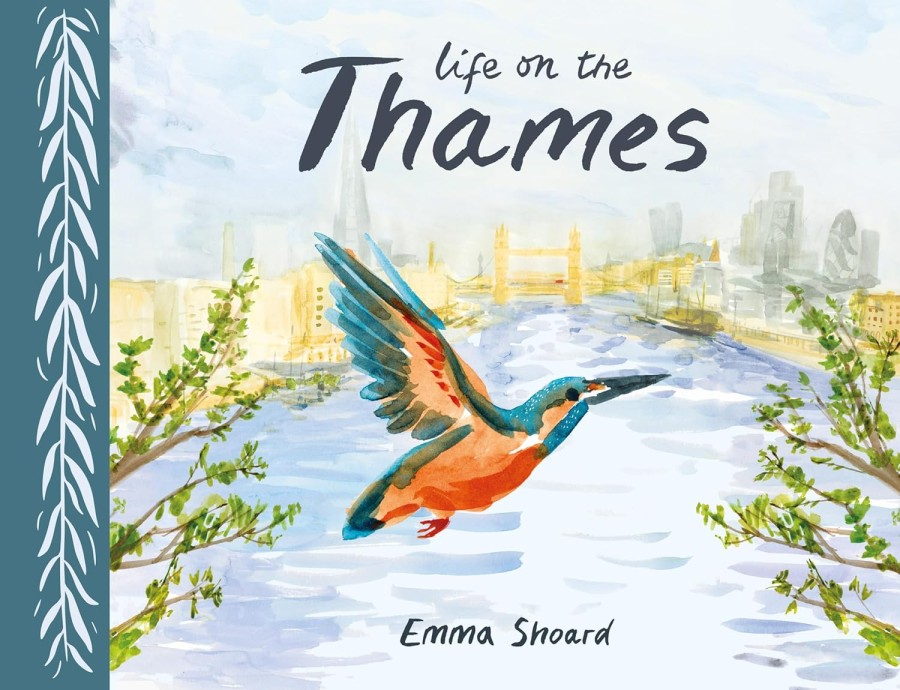
Life on the Thames is an illustrated journey along a river that sustains a staggering number of birds and mammals. Swans, geese, herons, and cormorants are regular sights, as are 120 species of fish. Otters have made a comeback upstream, as water quality has improved.
Walking the Wharfe – a beautiful river winding through Yorkshire
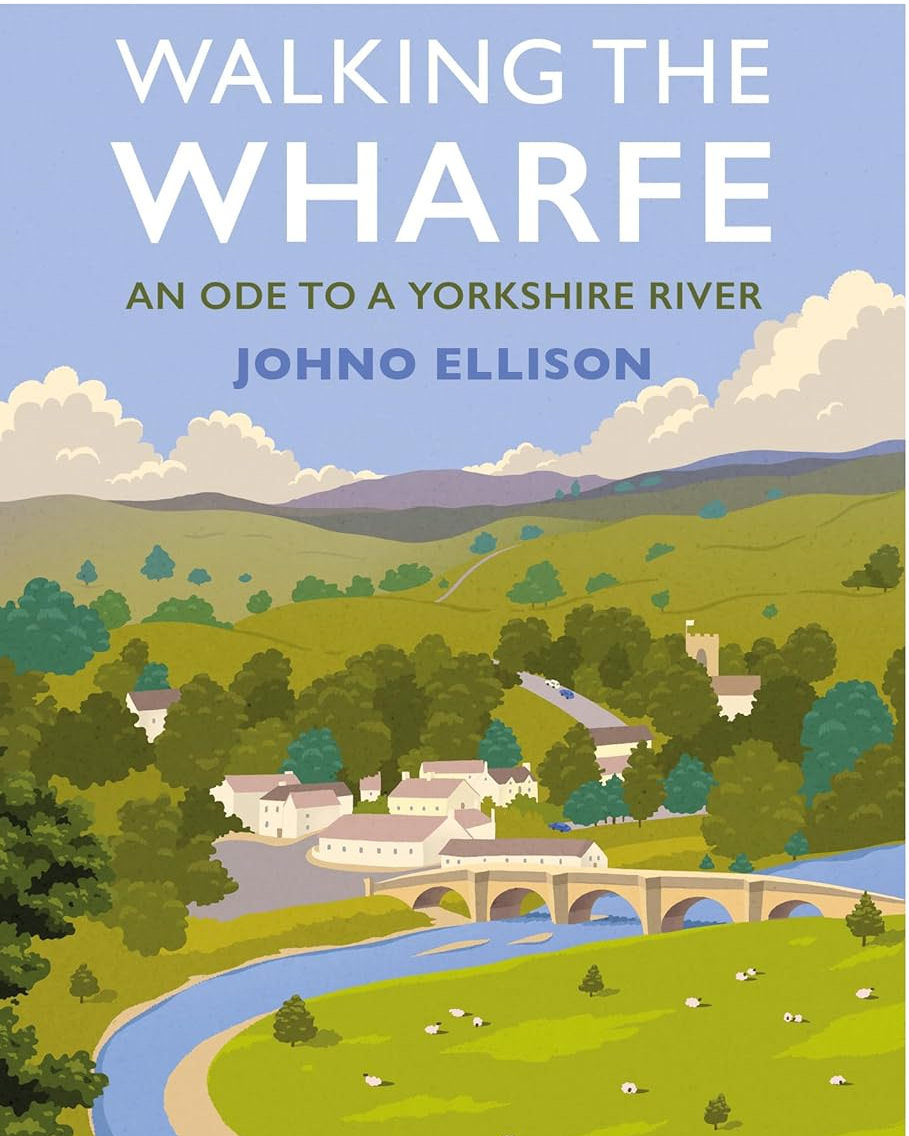
River Wharfe winds for 65 miles through the heart of Yorkshire. It begins in the village of Buckden, then flows through beautiful countryside, before joining the River Ouse. The river is home to otters, kingfishers and herons, looking for fish. Rare wildflowers and mosses thrive on this river’s limestone edges.
Walking the Wharfe is by local boy Johno Ellison, who returns from living abroad to walk the entire length of the waterway where he grew up. Retracing the steps of Victorian writer Edmund Bogg, he begins in the Vale of York, walking upstream to find Victorian spa towns and rare red kites that have returned, thanks to conservation initiatives.
He is seduced into wild swimming a chilly river (not the section notorious for reportedly drowning everyone who has ever tumbled into it). And seeks refuge in a candlelit pub, during a power blackout.
Stay away from The Strid, a dangerous gorge where the river is forced through a gap of 12 feet. With underwater caverns, it has 100% mortality rate, for anyone who falls in. The water can rise 5 feet in minutes, and never increases in temperature, even in summer.
When out walking, always follow the Countryside Code to keep all creatures safe. Keep dogs away from steep banks, mushrooms (and toxic plants/trees) and on leads near birds, barnyard friends and wild ponies.
If you see a sheep on its back (due to pregnancy or rain-soaked wool), grab a handful of wool on the sheep’s side and gently roll it away from you (to right it back up (simple video). Then stay with it, until the sheep recovers and rain has drained off the wool. Sheep stomachs will ferment grass even when upside down, and this puts pressure on the lungs and heart, so they will die if nobody helps them get back upright.
The Flow (a journey along Cumbria’s River Rawthey)
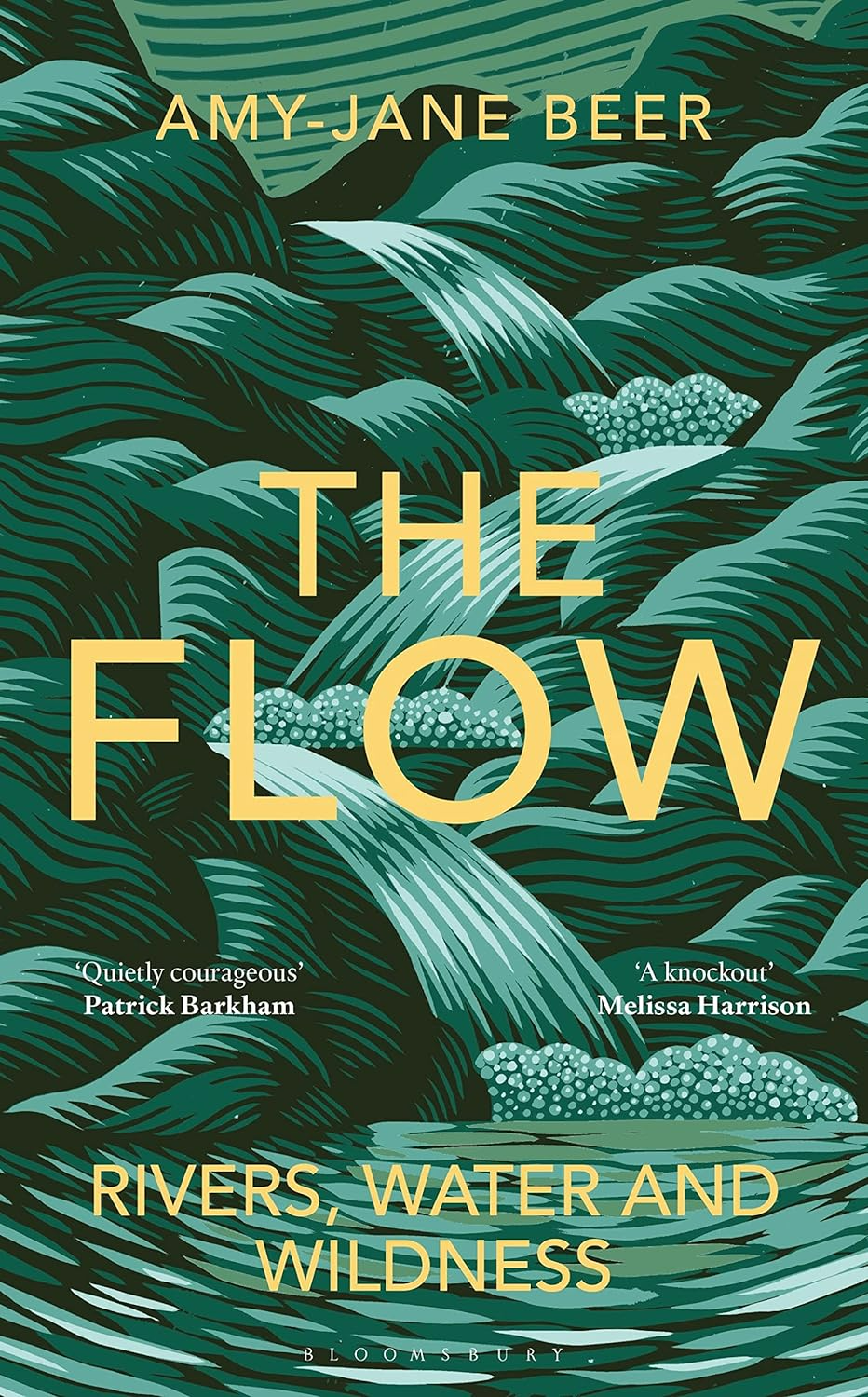
The Flow is a a writer’s journey along the rivers of England, taken after her beloved friend Kate set out with others to kayak the River Rawthey (Cumbria). But she never returned, and her death left her family and friends unmoored.
From West Country torrents to Levels and Fens, from rocky Welsh canyons to the salmon highways of Scotland – through to the chalk rivers of the Yorkshire Wolds, Amy-Jane follows springs, streams and rivers to explore tributary themes of wildness and wonder, loss and healing, mythology and history.
The River Rawthey is a scenic river in Cumbria, which flows through the Howgill Fells and Yorkshire Dales National Park. It originates near Baugh Fell, and turns towards Sedburgh, where it joins the River Dee.
The river is fed by several streams and flows through a broad, U-shaped valley. It flows near England’s highest waterfall above ground (Cautley Spout). And also passes near the 400-year Cross Keys Temperance Inn, managed by National Trust.
Still Waters and Wild Waves (50 original illustrations)

Still Waters and Wild Waves is a beautiful book to capture the waves that move us. It features over 50 original illustrations of dramatic seascapes and reflective rivers, alongside photography of stunning places that inspired the author’s artwork.
A blue-green sketchbook sits at the edge of my studio desk. It is covered in decorative paper, and is now frayed and tattered. These marks are evidence of its travels – as far north as Shetland and as far south as Isles of Scilly.
It has sat beside me on beaches and cliff tops, on small island planes and huge ferries, on trains and bicycles.
Some of the pages are stained with Scottish rain and spilt coffees. This sketchbook holds scribbles and memories that tell the tales of still waters and wild waves.
Angela Harding lives in England’s smallest county of Rutland, working from a studio at the bottom of her garden in a small village.