Make a Bowl of Warming Homemade Soup

Vegan parsnip soup brings together sweet earthy flavours and creamy comfort in a single bowl. It’s a perfect meal for chilly days, easy to make, and good for you too. This guide walks you through each step, from gathering your ingredients to serving up a warm spoonful of goodness. Every tip is here to help you cook confident, tasty soup every time.
Check medication before consuming leafy greens. Avoid seaweed for thyroid issues and miso (unpasteurised) for pregnancy/nursing and weak immune systems.
Keep parsnip soup ingredients (onion, garlic, nutmeg) away from pets. Read more on food safety for people and pets.
Just bin garlic/onion/allium scraps (plus citrus and rhubarb) as the acids can harm compost creatures.
Start with the freshest parsnips you can find. You’ll need onions, garlic, carrots, celery, and potatoes for depth. Vegetable stock is the base. For creaminess, use oat cream or coconut milk. Add herbs like thyme, bay leaves, and a touch of nutmeg for warmth. Don’t forget salt, black pepper, and olive oil.
Peel the parsnips, potatoes, carrots, and onion. Slice the parsnips into even chunks to cook at the same speed. Dice onions, carrots, celery, and potatoes into small pieces. Crush or finely chop the garlic so it blends throughout the soup.
Heat rapeseed or olive oil in a deep soup pan over medium heat. Add the onions first, stirring until soft and golden. Pop in the garlic, celery, and carrots. Let them cook until fragrant and tender.
Add your parsnips and potatoes to the pan. Stir well to coat them in the oil and cooked vegetables. Let them cook for a few minutes to start softening and to draw out the sweet flavours. If they start to stick, add a splash more oil or a spoonful of stock.
Pour in the vegetable stock until it just covers the veg. Add your bay leaf, thyme, and a pinch of nutmeg. Turn the heat up until the soup starts to boil, then reduce to a gentle simmer. Cover and cook for about 20–25 minutes, or until the parsnips and potatoes are soft.
Take out the bay leaf and thyme. Use a hand blender to blend the soup right in the pot. If you prefer, let it cool slightly and use a blender in batches. Blend until the soup is silky and smooth. If it’s too thick, stir in more hot stock to reach the texture you like.
Stir in oat cream or coconut milk at this stage. This brings a lovely creamy texture and a gentle sweetness. Taste the soup. Add more salt or pepper if needed. Let the soup warm through for a few minutes until everything is well mixed.
Ladle the soup into warm bowls. Top with chopped fresh parsley, a swirl of extra cream or a sprinkle of toasted seeds. Serve with crusty bread or a simple salad for a filling lunch or supper.
Let any leftover soup cool to room temperature. Store in a sealed container in the fridge for up to three days. To freeze, let it cool completely then use a freezer-safe container. Thaw in the fridge overnight. Then reheat gently in a pan, stirring often to keep the creamy texture.
Try adding a dash of curry powder or roasted garlic for a deeper flavour. Swap oat cream for almond or soya if you like. Roast some of the parsnip pieces first for a smoky twist. You can even add a handful of spinach right at the end for a green boost.
Make Your Own Vegan Cup-a-Soups
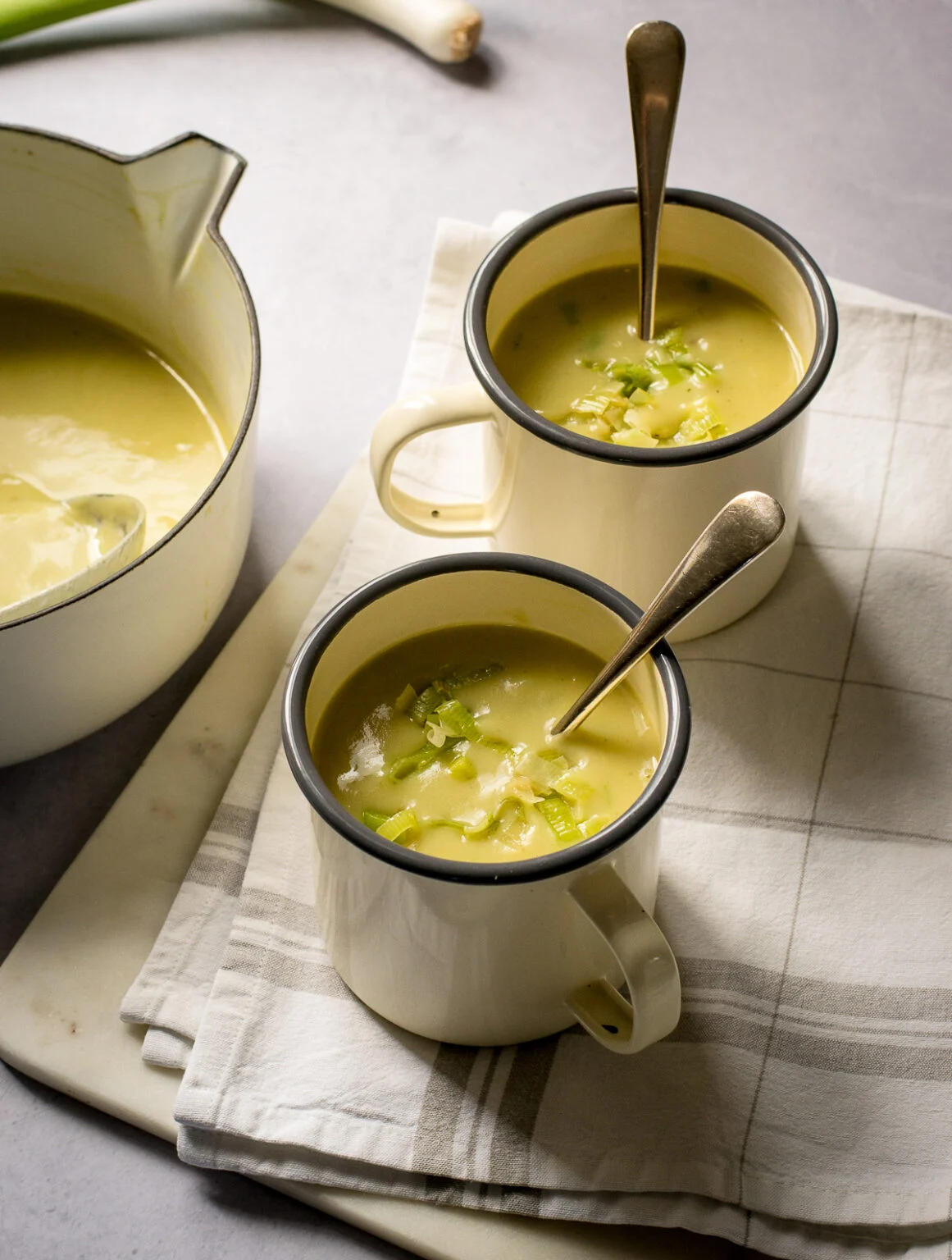
This vegan leek potato cup-a-soup (The Veg Space) is the ideal alternative to those palm-oil laden packs in stores. Cup a soup is nice and warming for winter days, and better for you than endless cups of coffee! This recipe uses whole potatoes and stewed leeks, with good veggie stock and vegan cream, for a yummy drink treat in cold weather.
Start with a sturdy, heatproof jar or mug with a tight lid. Glass jars like Mason jars work well because they handle boiling water, and are easy to clean. Make sure your chosen container holds at least 400ml and seals well to stop leaks if you’re packing your soup for work or school.
Wash the container before you use it, then let it dry fully.
Silicone Souper Cubes (sold in Lakeland)
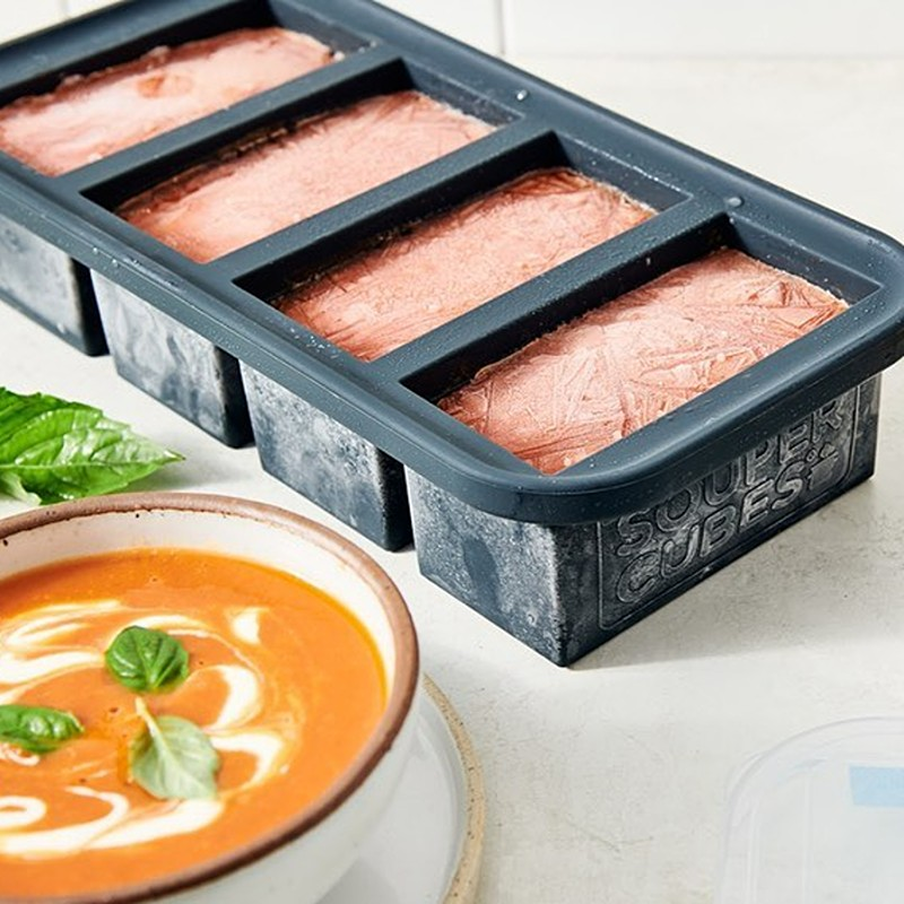
Souper Cubes are an American invention, a great invention. At present we don’t appear to have anything similar in England. They are sold in Lakeland (so get these while you can, as the trade tariff fiasco is affecting imports).
In short, these are made from silicone (made with sand, a kind of eco-alternative to plastic that is food-safe, lasts for years and is easy to recycle). Looking like giant ice-cube trays, you basically make a batch of soup (or bread or anything else), then pour leftovers into the trays.
Then when you want some soup, you just pop out a cube to thaw in the fridge, or heat up (to the correct temperature and don’t re-freeze, for food safety). They are great to avoid food waste.
If you live alone or as a couple, you can then make normal soup recipes (that often serve 4 to 6), and have your own homemade soup on tap, which will save you money, and give more variety than tinned soups.
The sturdy lids prevent spills and frost, and the flexible containers push out cubes easily (no more banging plastic containers on the counter, to get your soup or sauce out. You can also use them for homemade pasta sauce, curry, vegan pesto or broth. Silicone also resists stains and odours.
Then all you need are some good batch-cook recipes!
Souper Cubes are also easy to stack and dishwasher-safe. They were created ‘in her head’ by a busy mother, then designed by her husband, who thankfully is an engineer!
If you like making soup, invest in a stick blender, it’s a lot less faff than using blenders that you constantly have to wash out. It’s UK law that stores selling electronic goods have to recycle the old ones for you. So take along that dusty old blender in the kitchen cupboard, and swap it for a sleek modern hand-blender, to use with your Souper Cubes.
Recipe Ideas to Use Leftover Parsnips
Parsnips are often a favourite (root) vegetable for many. Naturally sweet, they are delicious roasted with a veggie Sunday dinner, make wonderful soup and also good in cakes!
Parsnips are high in vitamin K, so check medication. Keep alliums and nutmeg (often used in parsnip recipes) away from pets.
As acids in excess could harm compost creatures, just bin alliums (onion family) if using in these recipes. Parsnip flowers look similar to water hemlock (England’s most toxic plant to many creatures).
Related to carrots and parsley, their sweetness (they used to be used instead of sugar for cakes and desserts) is due to a long growing season, when starch turns to sugar after the first frost. They are high in fibre, vitamins and potassium.
Native to Eurasia, parsnips were the staple food in the USA, before being replaced by potatoes in the 1800s. Let’s look at delicious ways to use up these wonderful vegetables, if you have a glut leftover from the farm shop or farmers’ market:
How to Choose and Store Parsnips
Choose small to medium parsnips that are firm to the touch. Once bought, you can store them in the fridge for a couple of weeks, in an airtight container. Remove the green tops (leaving an inch of the stem) to help them last longer.
Just before use, scrub parsnips with a vegetable brush under cold running water. Use immediately, to avoid them going brown.
No-Recipe Ideas to Use Leftover Parsnips
Here are a few easy ways to use up leftover parsnips, without having to use a recipe:
- Roast them in rapeseed oil, sea salt and herbs (thyme or rosemary) until tender and the sugar has caramelised. If wished, drizzle over a little maple syrup, near the end of cooking time.
- Add to mixed root veggie stews or soups.
- Boil until soft, then mash with vegan butter and cream (or veggie stock) for a creamy side dish.
- Slice into thin chunks, then bake or air-fry to make parsnip chips.
- Use a mandoline (with a finger guard) to slice parsnips, then layer them with sliced potatoes, vegan cream and cheese, then bake for a gratin.
- Sub vegan carrot cake recipes with parsnips instead.
Simple Vegan Parsnip Recipes

Curried Parsnip Soup (The Veg Space) is made with roasted garlic for extra flavour, and you can add as few or many spices as you like, depending on your preference.