The Benefits of Being an Introverted Book Nerd!
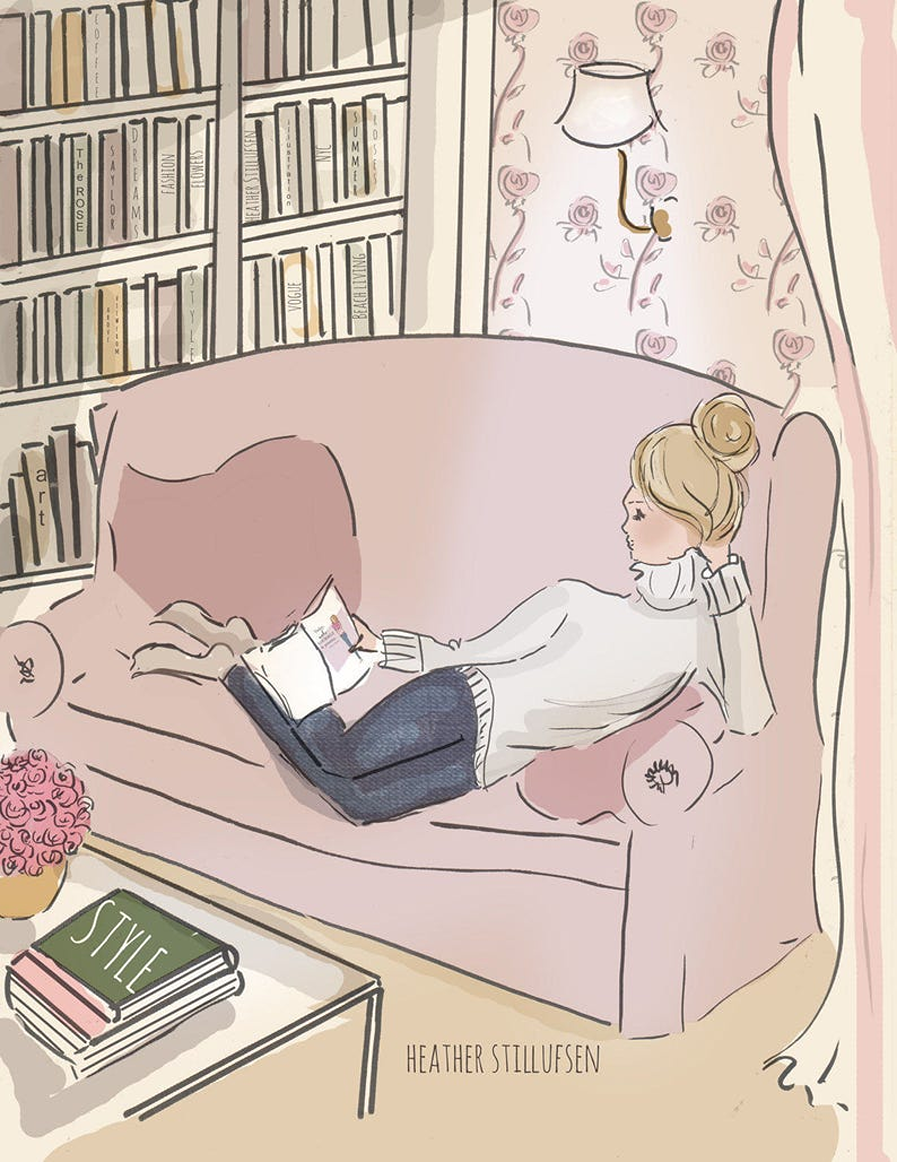
Introverts often do their best thinking when the volume drops. Add books to that calm space and you get something powerful, steady learning without the pressure to perform. Reading is like a private gym for your brain, it builds stamina, range, and control, one page at a time.
Quiet time helps your attention settle. Because you’re not splitting energy across constant chatter, it’s easier to finish what you start. Reading also trains you to hold details in your head, then link them together later.
That can look simple but useful. You might remember a colleague’s name after one meeting because you noticed it properly. You might follow a recipe without re-checking the ingredients five times. If you’re studying, you may recall key points better because you stayed with the chapter until it made sense.
Small habits make this easier:
- Keep reading sessions short and regular, 15 minutes a day counts.
- Put your phone in another room, even briefly, so your mind doesn’t keep reaching for it.
- Stop mid-page if you’re tired, then start again fresh, instead of forcing it.
A little quiet, used well, can beat hours of scattered effort.
A bigger vocabulary, even if you’re not chatty!
Reading feeds you words in context, not in a list. Over time, spelling improves, sentences feel more natural, and you get better at choosing the right tone. That matters even if you aren’t the loudest person in the room.
Clear writing is a social skill too. It helps you send emails that don’t get misunderstood. It makes your texts warmer and more precise. It also supports you in meetings because you can summarise your thoughts without rambling.
If you want a simple boost, try this: write down three new words a week, then use each one once. Put one in a message, one in a note to yourself, and one in conversation if it fits. You don’t need to sound fancy, you just need words that say what you mean.
The emotional benefits, books calm your mind
Social time can be lovely, but it can also be tiring. Many introverts feel “full” faster, especially after loud spaces, group plans, or long days of being “on”. Reading gives you a safe off-switch, a way to come back to yourself without spiralling into your thoughts.
Books can also offer a kind of steady company. They don’t demand anything from you, yet they still give you something back, comfort, perspective, and a gentle sense of progress.
Recharging alone is normal. It doesn’t mean you dislike people, it means you recover energy differently. Reading works well because it’s absorbing without being chaotic. You can pick the pace, the mood, and the stopping point.
Reading on the bus turns dead time into calm time. A chapter after school or work can act like a mental shower, rinsing off the day. Twenty minutes before bed often settles your body better than scrolling.
Boundaries help too, especially if friends or family don’t “get” your need for quiet. A kind script can save you:
“I’d love to come for an hour, then I need a quiet night.”
That’s not rude, it’s honest. It also helps you show up more fully when you do socialise.
Stories build empathy and handle real life
Fiction, memoir, and even good journalism can put feelings into words. When you see a character deal with fear, shame, grief, or joy, you get a mirror and a map at the same time. You may recognise your own emotions sooner, then handle them with less panic.
Different genres offer different lessons. A novel that includes loss can help you sit with sadness without needing to “fix” it. A fantasy with a brave lead can remind you that courage often looks like shaking hands and trying anyway. A school story about friendship can show how small acts, checking in, apologising, sharing, change everything.
Find your people without small talk
Books give you ready-made connection points. When you talk about a story, you don’t have to invent topics. You can start with, “Have you read…?” and let the conversation do its job.
Low-pressure ways to connect include swapping a book with a friend, going to a library event, joining a small book club, or doing an online reading challenge where you can comment when you feel like it. Even one shared author can be enough to build a bridge.
It also helps to remember this: one good friend can be enough. Plenty of introverted bookworms prefer depth over a wide circle, and that’s a solid choice.
A richer imagination support creativity
Reading trains you to picture scenes, track motives, and explore “what if”. That imagination doesn’t stay on the page. It turns up when you’re solving problems, planning, or making something new.
If you write, you’ll notice stronger voice and structure. If you make art, stories can influence colour, mood, and themes. Even practical hobbies benefit, cooking improves when you experiment, coding improves when you think in systems, and trip planning improves when you can imagine the day from start to finish.
Good Tuesday’s Eco-Friendly Book Journal
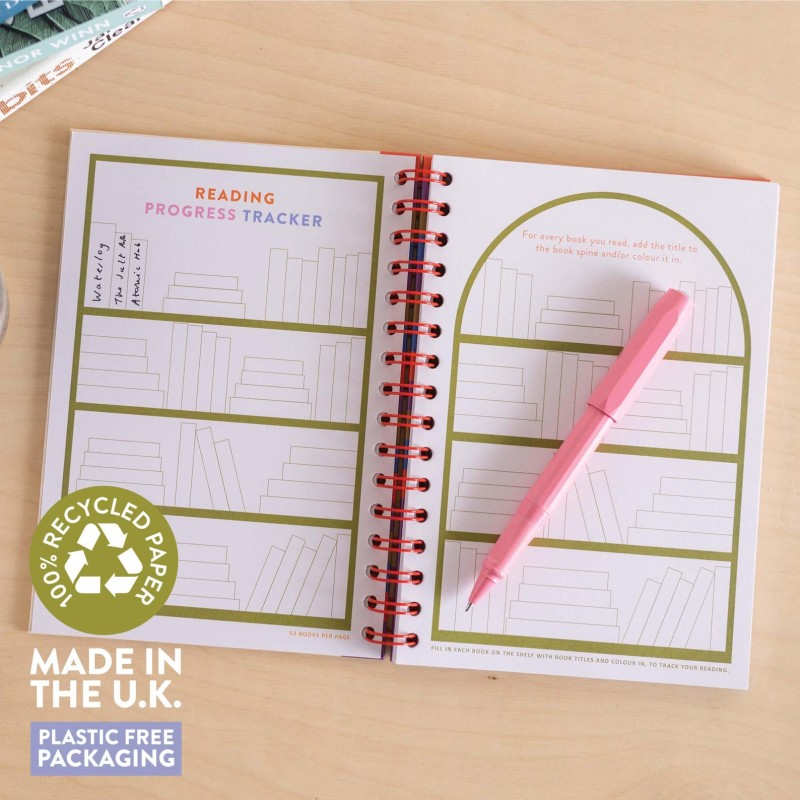
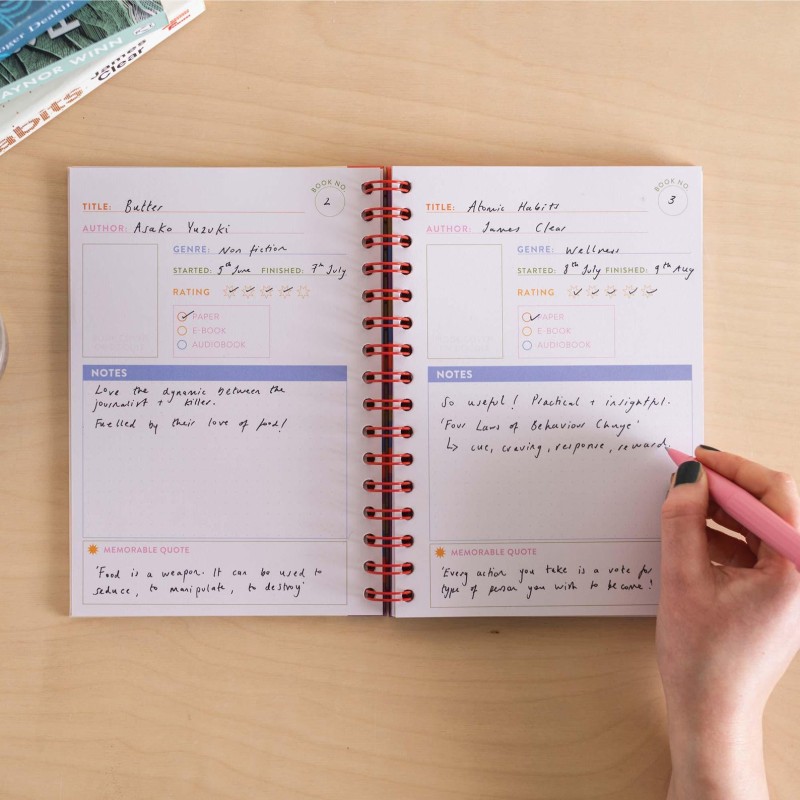
This A5 book review journal is ideal for happy introverted bookworms. Jot down the plots, look back at books you’ve read and track your favourite books in this spiral-bound journal.
Each book gets a single page to note down thoughts, and you can also use the journal to note things discussed at book clubs, or books to recommend to family and friends.
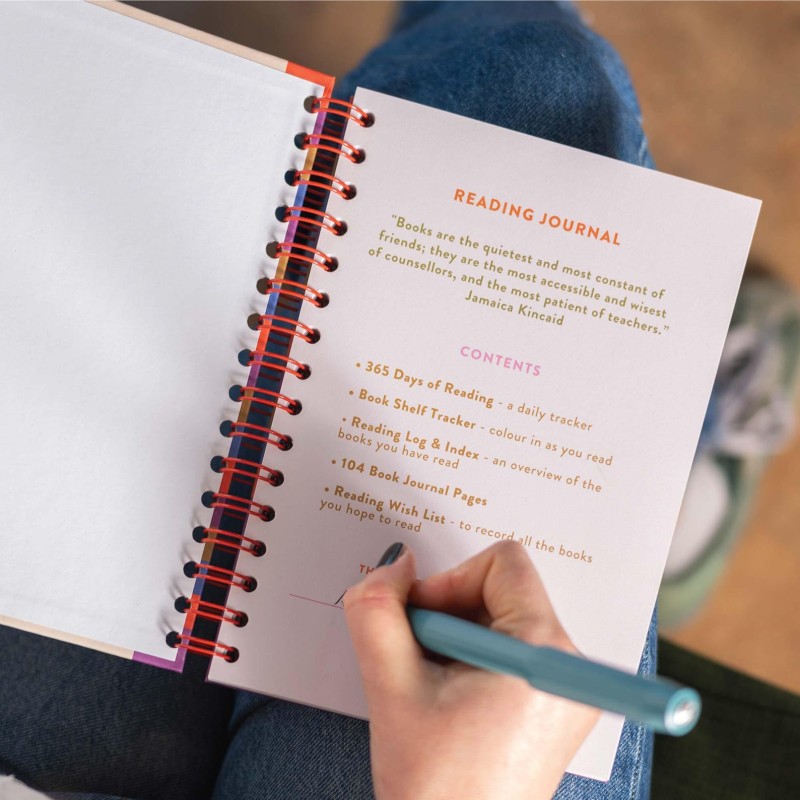
You’ll find a daily reading tracker with yearly overview, a book shelf tracker , a reading log and index and 104 pages, plus a reading wish list.
Everything at Good Tuesday is printed on recycled paper, sent in plastic-free packaging, made in the UK and beautifully designed.
Choosing recycled paper is better than FSC-certified paper, as that still requires fast-growing trees with pesticides (instead these products ‘close the loop’ and use up unwanted waste that would otherwise end up at landfill, emitting methane gas).
If you only read the books that everyone else is reading, you can only think what everyone else is thinking. Haruki Murakami