KAPI (a system of eldercare in sunny Greece)
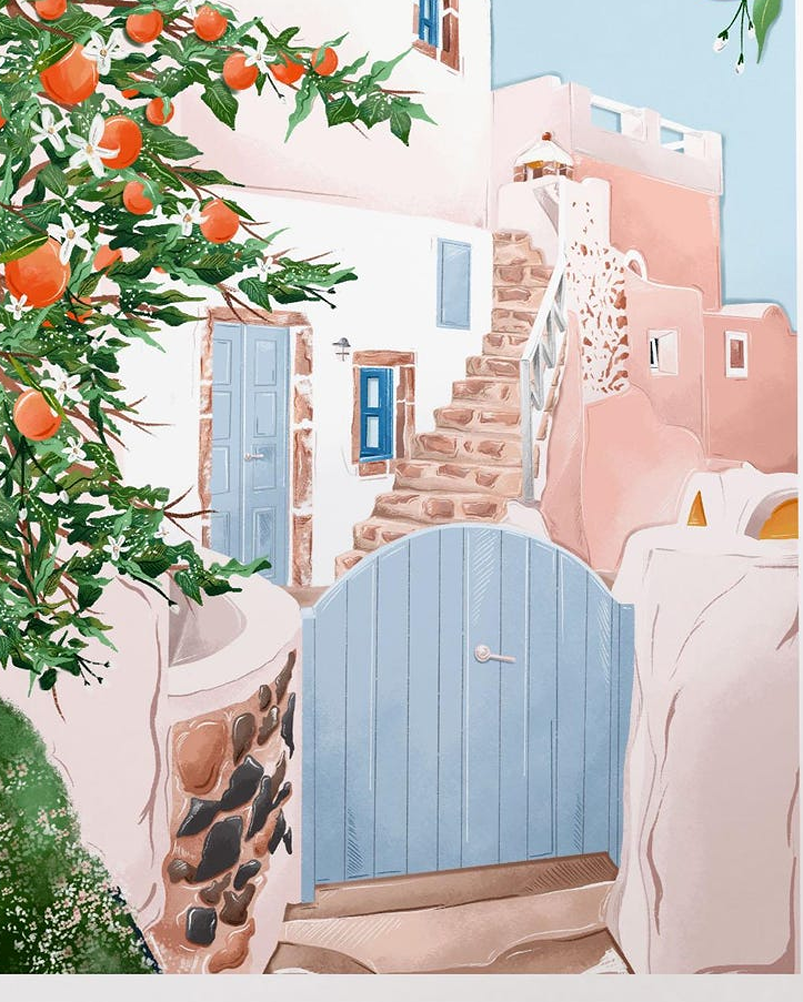
In Greece, there are far less residential and nursing homes (they do exist, but as a rule, families look after ageing or disabled relatives rather than the state). And Greece’s recent economic woes, means that there is not enough funding to build, staff or pay for such homes in many areas.
Obviously the lifestyle is quite different. In Greece, nearly everyone lives on natural food (fresh fruits and vegetables) and as one of the world’s sunniest countries (and home to 6000 islands), many people enjoy fresh countryside or seaside air, until their dying days.
The strong family units means that most older people don’t feel lonely or abandoned, and it’s a source of pride in Greece, to be chosen as the relative to care for a parent (or parents) in later life.
The Eastern Orthodox church is also very popular here, and again a deep focus on faith in daily lifestyle, means commitments to older relatives are taken seriously, with far more importance than say a focus on one’s own freedom and ambitions.
As in many southern European countries, if older relatives don’t live with their younger relatives, many still live next door in the same apartment block, sharing meals, shopping errands and looking out for each other.
Around 40% of older people in Greece live with their family, a share higher than most other European countries.
As a result, there are less cases of loneliness (and sometimes dementia if it’s caused by isolation), due to companionship, conversation, and purpose. Older people in Greece are respected as wide elders, loving grandparents and sources of history and ancestry.
KAPI (Open Protection Centres of the Elderly) is a service provided by the state, for all older people (not based on income). These centres offer medical check-ups, health education and recreational activities, along with extra help if needed like home care or specialised care. These centres can also be used for respite, to give exhausted carers a break.
Due to the much lower ratio of care homes (families still take on most caring responsibilities), this culture frees up money in order to provide these services to the general public, at low cost.
Anyone over 60 in the community can benefit from daily prevention (blood pressure checks) to occupational therapy and physiotherapy, which helps to prevent minor conditions becoming more serious, which obviously then cost the state more money in medical costs.
If we compare this with England, mostly it’s just a case of GPs doling out medicines, and older people only ending up in the care of the NHS once they get seriously ill, or when entering a residential or nursing home.