Unplug and Observe: Why You Should Start a Nature Journal
Keeping a nature journal is much more than recording what you see outdoors; it is a gateway to mindfulness, scientific discovery, creative expression, and a deeper connection to the living world around you. In an age dominated by screen time and fast-paced schedules, stepping outside with a notebook and pen offers a grounding antidote to digital fatigue.
Whether you are observing a potted plant on a windowsill, tracking birds in a local park, or sketching native wildlife on a hiking trail, nature journaling opens up a richer way of experiencing the environment.
Here are the primary reasons why starting and maintaining a nature journal can transform your relationship with the natural world.
If inspired to draw in nature, know that mushrooms and bluebells are toxic to pets. Read more on pet-friendly gardens. Use your nature journal with eco-friendly pencils or nontoxic watercolour paints.
Secrets from a Devon Wood: An Inspired Nature Journal
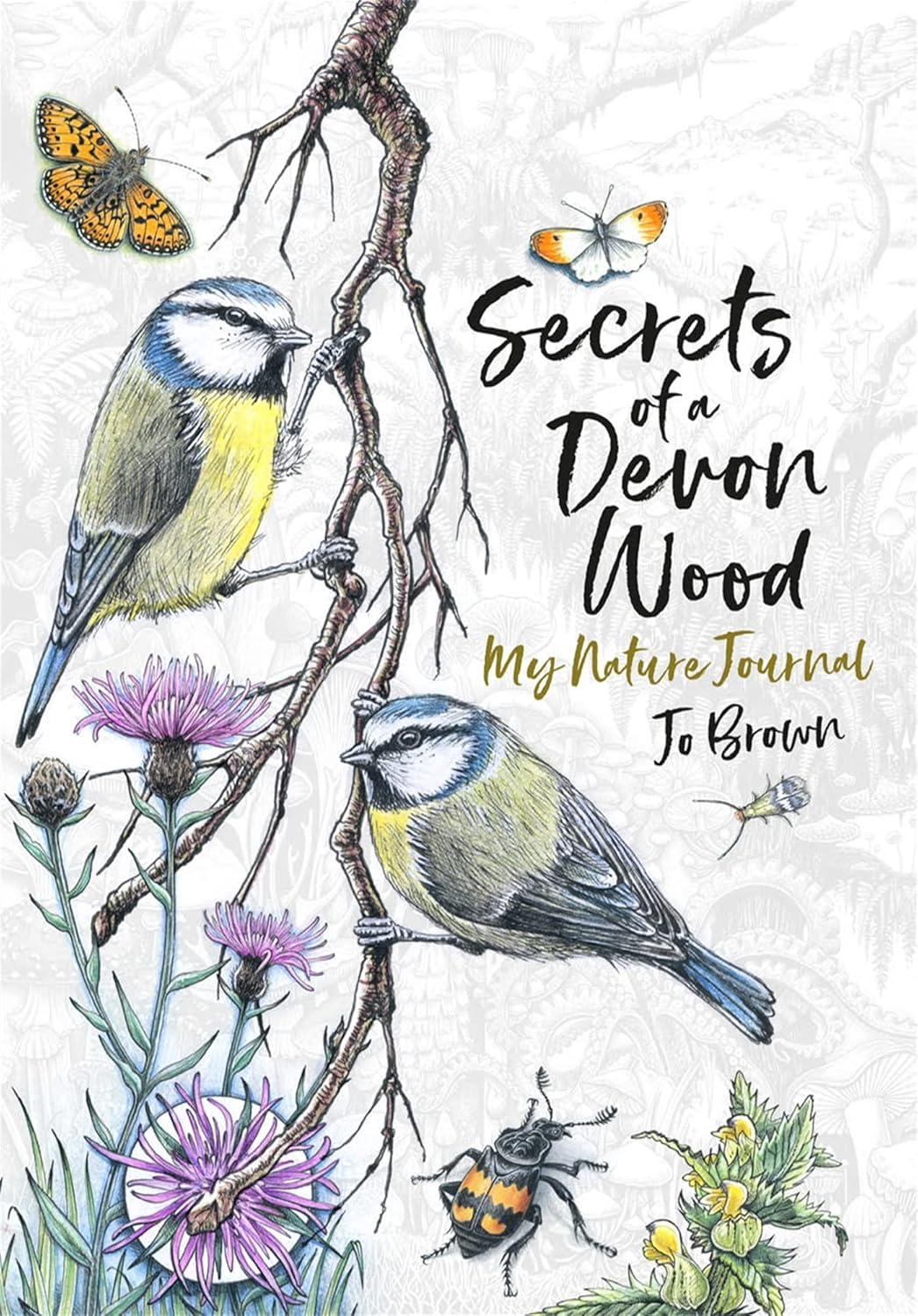
Secrets of a Devon Wood is a treat for the senses, with exact replicas of illustrations that the artist makes of discoveries she finds in the wood behind her Devon home.
Jo Brown began keeping her nature diary because ‘thing of such magnitude deserve respect and understanding, and deserve to be remembered’.
What’s in this nature journal?
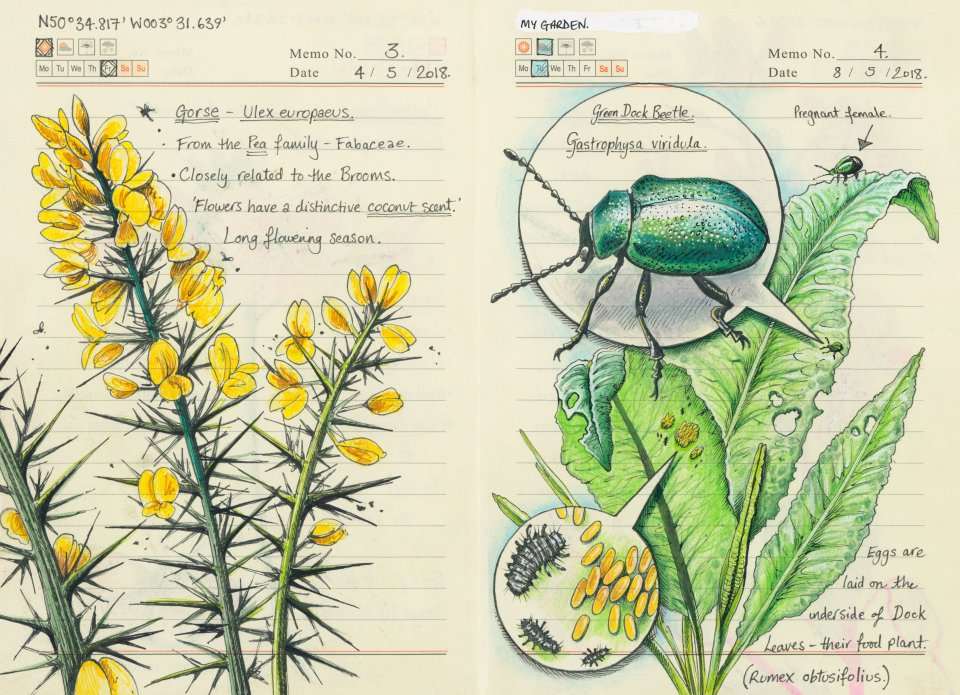
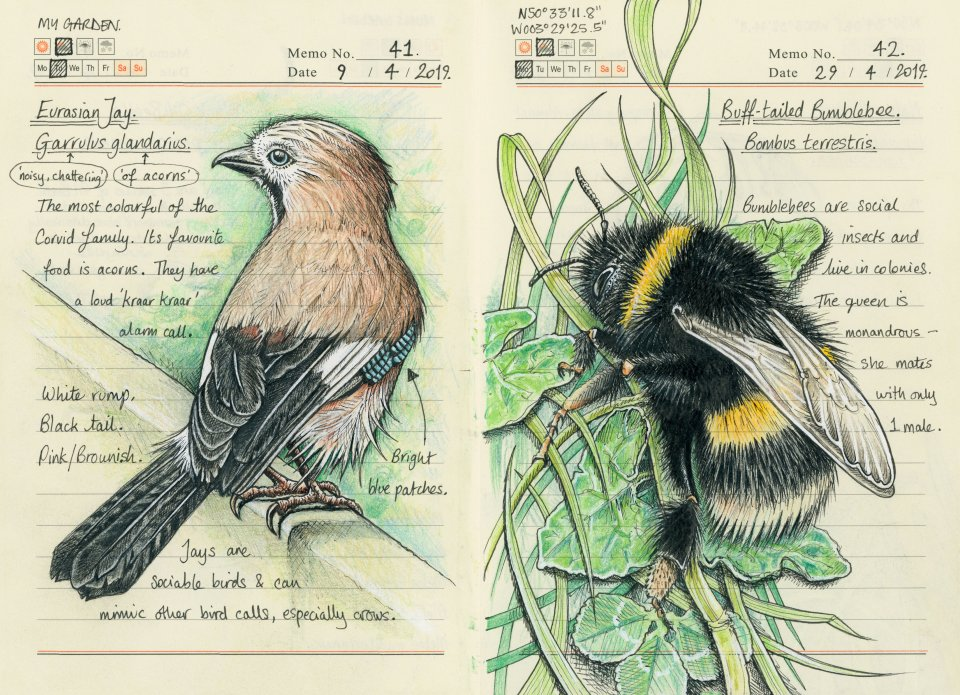
Enchanting art in minute detail. As the artist/author zooms in on a bog beacon mushroom, a buff-tailed bumblebee or a native bluebell. Plus you’ll find note facts on life history and physiology.
It’s a hymn to the beauty of the natural world! And a quiet call to arms, for all of us to acknowledge and preserve it. This bill with stay with you.
It’s not just a book of polished essays. But more beautifully illustrated notes with real-time records to capture the first-hand wonder that the author feels when spotting wildlife in her own patch of woodland.
From beetles to a simple leaf, and from a fox to an owl. The idea is to inspire you to slow down. And look at the ground beneath your feet, to discover nature on your doorstep.
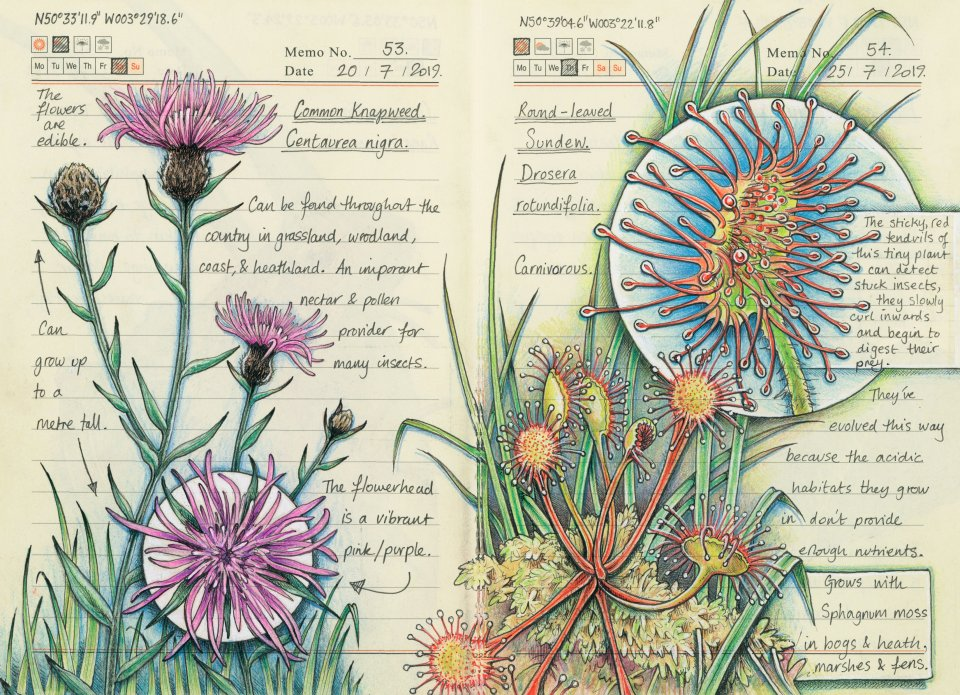
Who wrote and illustrated this book?
Jo Brown is a professional illustrator and a blogging sensation. She graduated from Falmouth College of Arts in 2000 with a BA Honours in Illustration. She works from her home studio in Teignmouth. This is her first book.
Nature Journals Sharpen Observation
We often look at nature without truly seeing it. A nature journal forces you to slow down and notice the subtle details that would otherwise pass you by. When you sit down to draw a leaf or describe the texture of tree bark, you begin asking questions you never considered before:
What pattern do the veins follow? How does the light hit the underside of the stem? What shade of green is this, really?
This practice trains your brain to focus on micro-details. Over time, you will find yourself becoming much more observant in your daily life, picking up on fine textures, faint sounds, and delicate colour variations.
Nature Journals Enhance Learning
Writing and drawing by hand engage multiple regions of the brain, creating stronger neural pathways for memory retention. When you record a natural phenomenon—combining visual sketches, written notes, measurements, and sensory descriptions—you solidify that information far better.
Nature journaling turns you into an active participant in your own learning. Instead of passively reading about botany or ornithology in a textbook, you are actively documenting ecological interactions firsthand.
Leaf, Crowd, Crow: A Weekly Backyard Journal
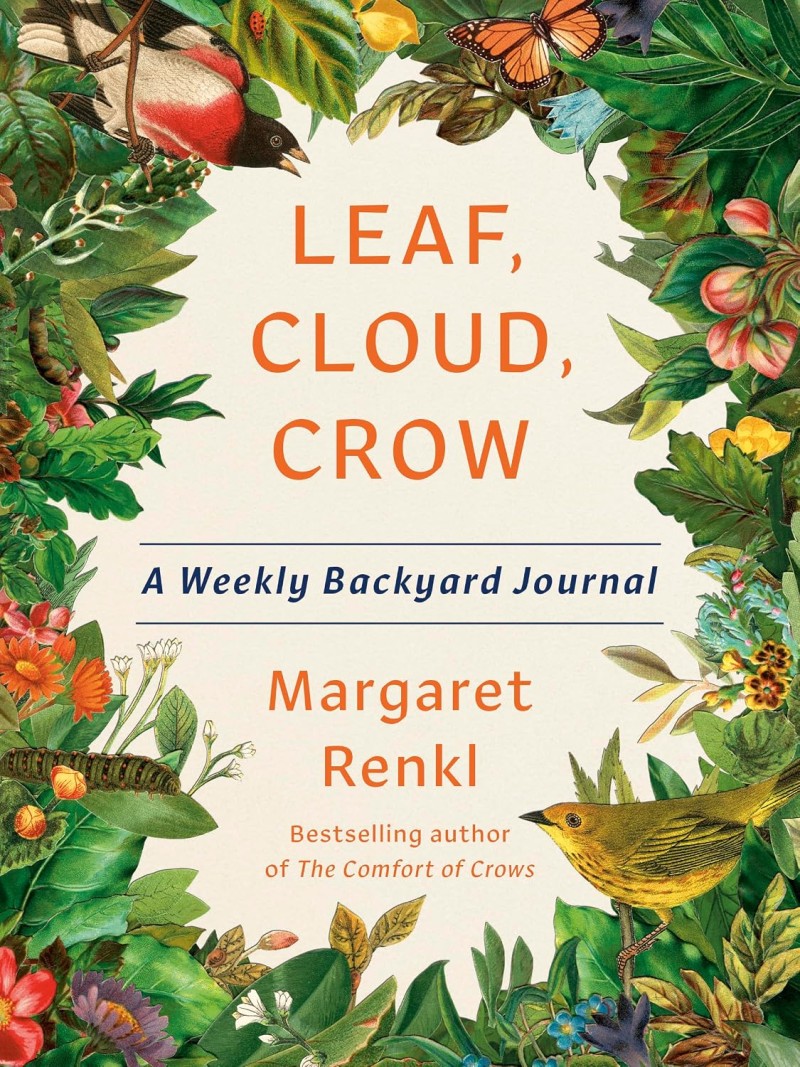
Leaf, Cloud, Crow is an illustrated journal to guide observations of nature in gardens and yards, city parks and vacant lots, or even the sky, enhanced by inspiring prompts from the author.
What do the bare branches of winter allow you to see? How does summer’s abundance provide for different wild animals, and can you find abundance in your own life? What changes have you noticed in natural habitats near you – not just from month to month, but from year to year?
Grow more attuned to all the ‘radiant things bursting forth in the darkest places, in the smallest nooks and deepest cracks of the hidden world’.
A howling love letter to the world, the story of what we’ve lost and what we can save and the abundance of wonder in our own backyard.
Who wrote this nature journal?
Margaret Renkl is an opinion editor for The New York Times, where her essays appear weekly. She is also founding editor of Chapter 16 (a daily literary publication in Tennessee) and a graduate of Auburn University and University of South Carolina. She lives in Nashville, USA.
Time in Nature is Therapeutic
Nature journaling requires present-moment awareness. When you are focused on capturing the silhouette of a red-tailed hawk or sketching the delicate petals of a wildflower, your mind stops spinning about school, work, or social media.
This state of immersive focus acts as a form of meditation. Breathing fresh air while engaged in a calm, creative activity lowers cortisol levels, reduces anxiety, and helps restore mental energy. It gives you a dedicated space where there are no deadlines, notification pings, or pressure to perform.
Creates a Unique Record of Seasonal Shifts
Phenology is the study of cyclic and seasonal natural phenomena—such as when flowers bloom, when leaves change color, or when migratory birds arrive. By keeping a nature journal over months or years, you create a personalized historical record of your local ecosystem.
Flipping back through past entries allows you to track patterns over time:
When did the first robins appear last spring?
How long did the oak tree take to drop all its leaves in the autumn?
What was the temperature when the first monarch butterfly arrived?
A Perpetual Nature Journal Practice
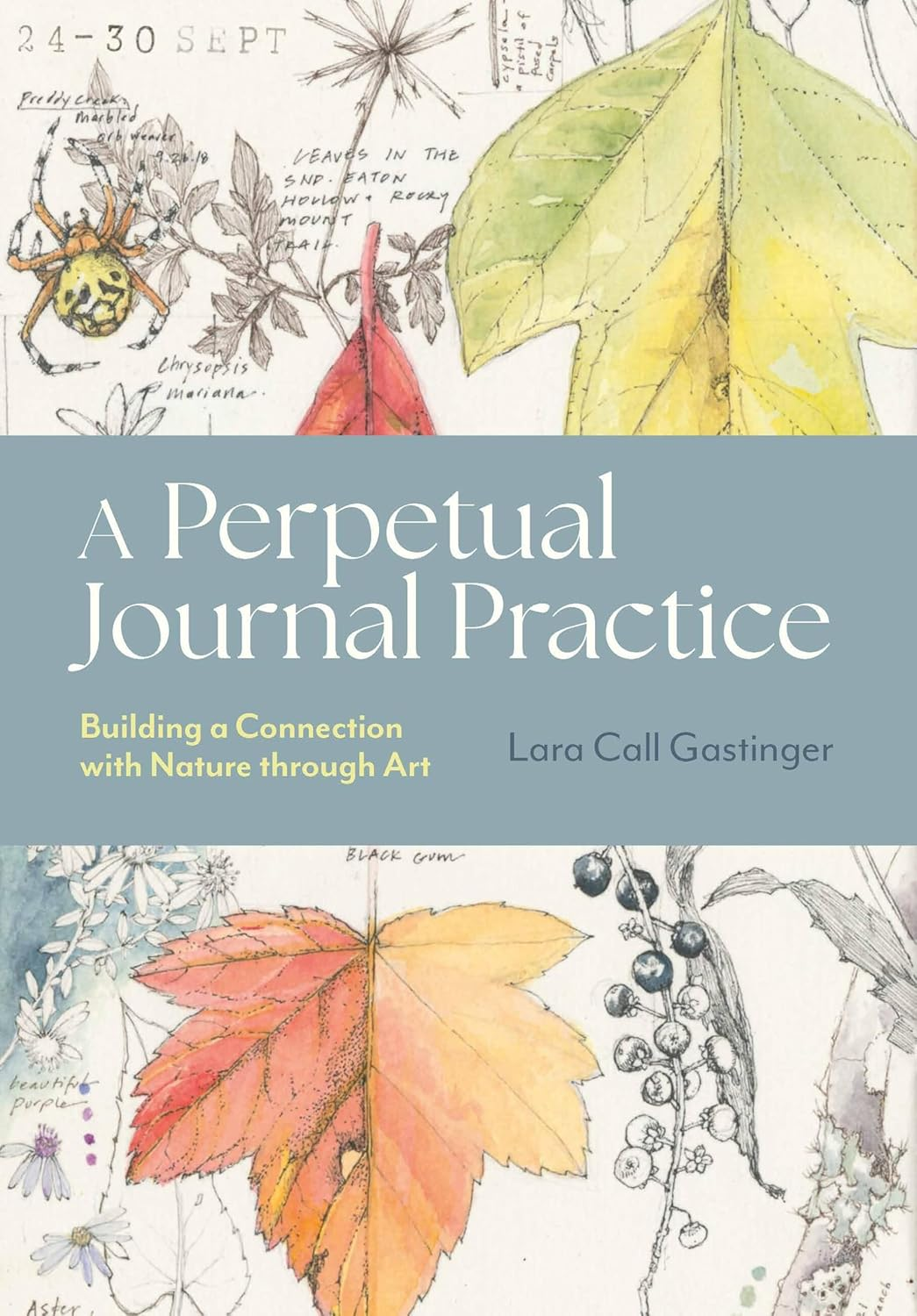
A Perpetual Journal Practice is a lovely book that asks you to accept an invitation to connect with nature, with botanical artist Lara Call Gastinger. She teaches artists on how to develop a rich mindful practice.
From how to number each page spread in a fresh blank journal, to tips on bringing those blank pages to life through art, this is a powerful book for naturalists who seed a deep and personal understand of nature.
Who wrote this book?
Lara Call Castinger is an artist and botanical illustrator from Virginia (USA) and was chief illustrator of the Flora of Virginia, a botanical reference.
She has an undergraduate degree in Biology from Unviersity of Virginia, and a master’s degree in plant ecology. She also has been awarded two gold medals at London’s Royal Horticultural Society Botanical Art shows.
She also teaches about plant identification and drawing at University of Virginia’s Department of Landscape Architecture.
Nature Journals Bridge Art & Science
Many people feel intimidated by both scientific research and artistic drawing, believing they need to be an expert in either field to begin. A nature journal provides a safe, judgment-free middle ground. In nature journaling, accuracy of observation matters far more than artistic perfection.
Your journal is a private workspace, not an art gallery exhibit. A rough, labeled diagram with notes like “bright yellow center, 5 petals, sweet smell” is just as valuable as a finished watercolor painting. Over time, as you draw more frequently, your drawing skills will naturally improve alongside your scientific understanding, boosting your confidence in both areas.
A good nature journal entry usually generates more questions than answers. When you observe an insect interacting with a plant, you naturally start asking: Why is it doing that? What species is this? Is it feeding or laying eggs?
Nature Journals Preserve Memories
While taking a photo with a phone takes a fraction of a second and is often forgotten in a massive camera roll, spending fifteen minutes journaling about a specific moment embeds that experience deeply into your personal history.
Years down the road, looking at a page in your nature journal will instantly transport you back to that exact day. You won’t just remember what the landscape looked like; you will remember the crisp feeling of the morning air, the sound of the wind through the pines, and the sense of peace you felt.
Nature Journals Make You Care!
It is difficult to care about protecting something you do not know or understand. As you build a nature journal, you form a personal relationship with the plants, animals, trees, and landscapes around you.
You stop seeing “just a bird” or “just a tree” and start recognizing specific species, understanding their roles in the local ecosystem.
In a world dominated by constant connectivity, endless scrolling, and screen fatigue, nature journaling offers an accessible, tactile escape. All you need is a simple notebook, a pencil, and an open mind.
Green Sketching (with a climate scientist)
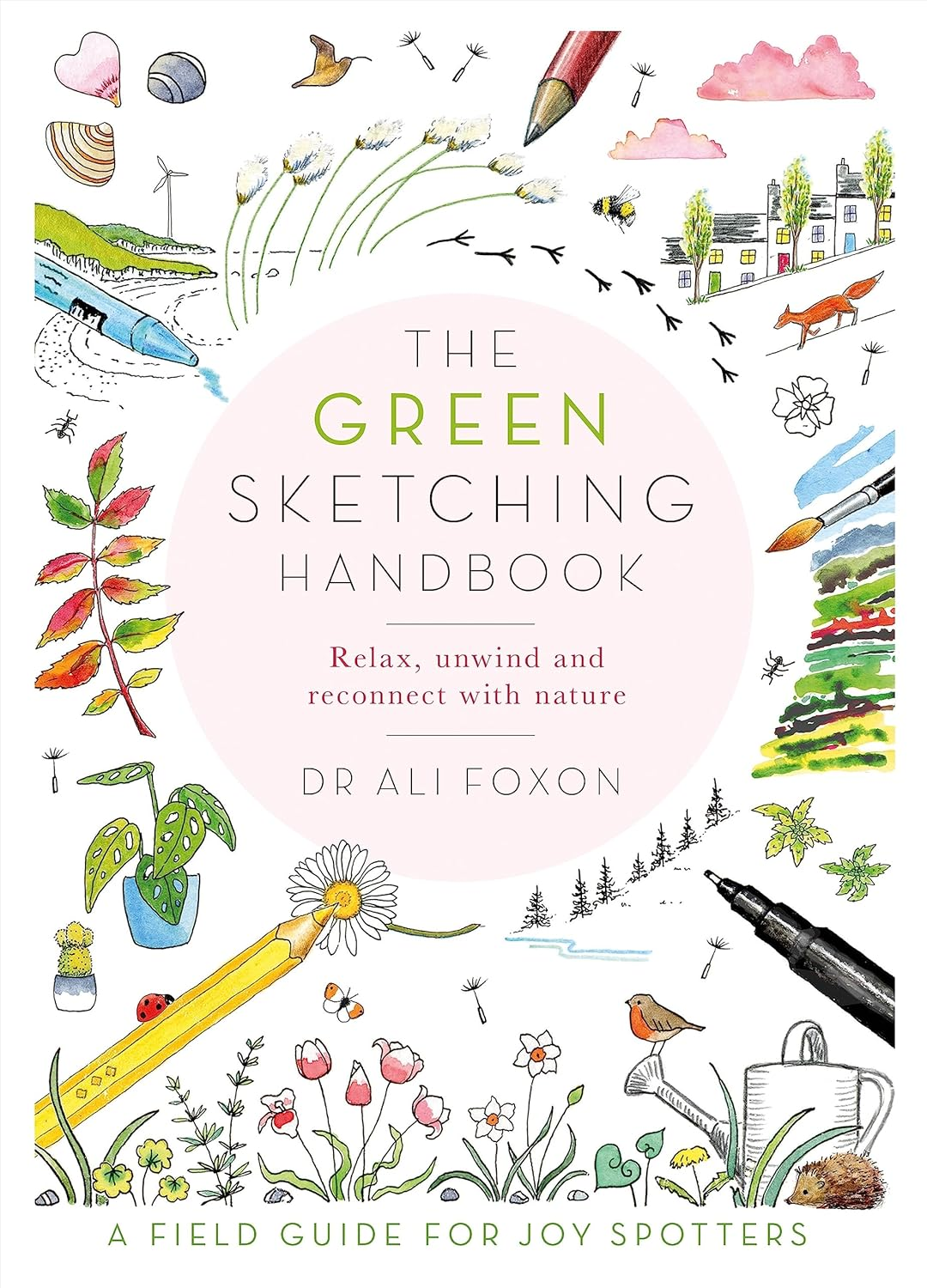
The Green Sketching Handbook offers inspiration from not just an artist, but a climate scientist, asking you to let go of worries, and lose yourself in nature.
Combining quick and easy exercise and research on the benefits of nature, Dr Ali will show you how to embrace your wobbly lines, and learn about your relationship with the natural world, to bring comfort and joy.
Who wrote this book?
Dr Ali Foxon is a climate change researcher and science editor, who gave up her career to become a nature artist instead. She lives on the edge of the beautiful Peak District, where she runs Green Sketching workshops.
Anyone Can Start Anywhere
Perhaps the greatest aspect of nature journaling is its accessibility. You do not need expensive gear, specialized scientific training, or innate artistic talent.
Furthermore, you do not need to travel to a national park or remote wilderness area to do it. Nature is everywhere, waiting to be observed, documented, and appreciated.