Lessons from Prague (the world’s most beautiful city)
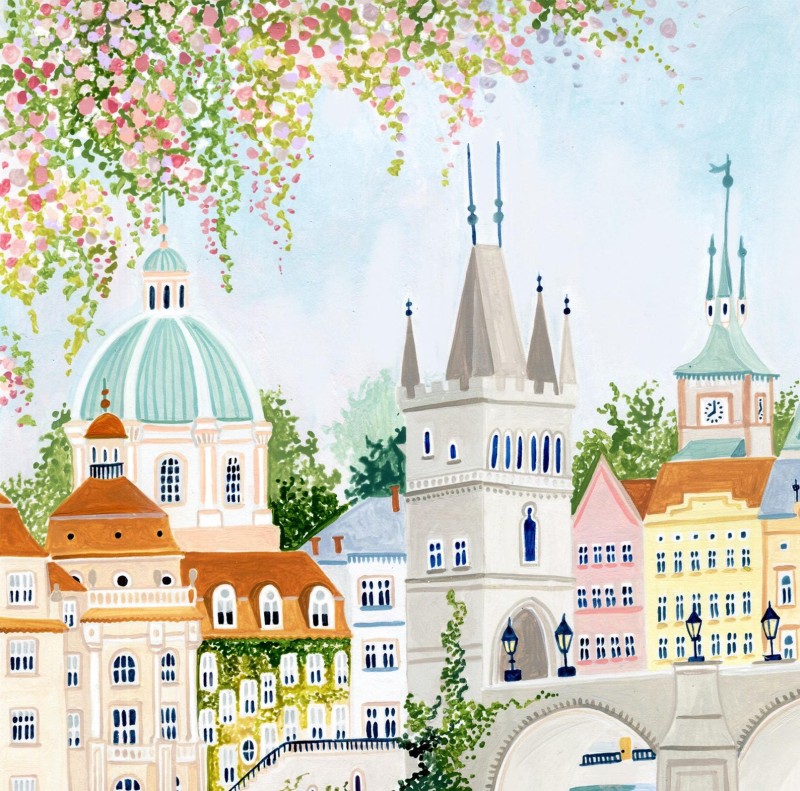
Prague (the capital city of the Czech Republic) is often called ‘the world’s most beautiful city’. And with good reason. Unlike England (where many ancient beautiful buildings have been bulldozed to make way for ugly monstrosities), in Prague all historic buildings (including churches) are preserved with care.
Apart from one. The only ‘blog on the landscape’ is Zizkov Tower (a tall grey building, which some say looks like an electric toothbrush!)
Prague even has its own ‘mini Eiffel Tower’, inspired by the original, built in 1889 for the Paris World Fair. It’s a fifth of its height, but looks very similar.
Prague’s old town features one of the biggest castles on earth (that looks down on the city from a hill), splendid Baroque and Gothic buildings, and curvy buildings, inspired by Art Deco architecture.
By contrast, developers in England have bulldozed Birmingham Central Library (a magnificent Victorian building), Euston Railway Station entrance (a, architecture relic) and the art-deco Olympic pool where Johnny Weissmuller (who played Tarzan) used to swim.
Recently, England’s second-oldest pear tree was been demolished to make way for the disastrous HS2 project (which will do nothing to stop climate change, and kill around 22,000 wildlife yearly once built).
Ten Percent of Prague is Green Space
Prague has beautiful parks and urban woodland, just a short tram journey outside of the city. The train system is also good, so you can easily reach Prague from anywhere else.
Stromovka (the main park) has 257 acres of green space with ponds and bridges and paths. Many parks have kiosks, where you can buy a beer, and relax while enjoying the views.
Riegrovy Sady is another park modelled after a 19th century English garden, situated in the affluent district of Vinohrady, with pastel-coloured art deco buildings, people-watching cafes and outdoor markets.
A City of over 500 Churches
Whether you are religious or not, this has got to be a good thing. Prague preserves its heritage buildings, and most churches are open all the time including overnight (not locked as in England, to stop people praying, at difficult times).
Value History in Everyday Life
Prague’s streets and buildings hold centuries of stories. Locals treat old landmarks as parts of their daily lives, not just as tourist spots.
Seeing people live alongside history makes you realise how special it is to keep your own stories close and pass them on. You don’t need to live in a museum to treasure your roots.
Resilience Gets You Far
Prague has survived fires, floods, war, and political change. Its buildings bear the scars, yet still stand proud. The city’s spirit shows that setbacks can add to your story. Strength grows when you persist during hard times, keeping your spirit alive.