Protecting Paradise: Keeping England’s Islands Litter-Free
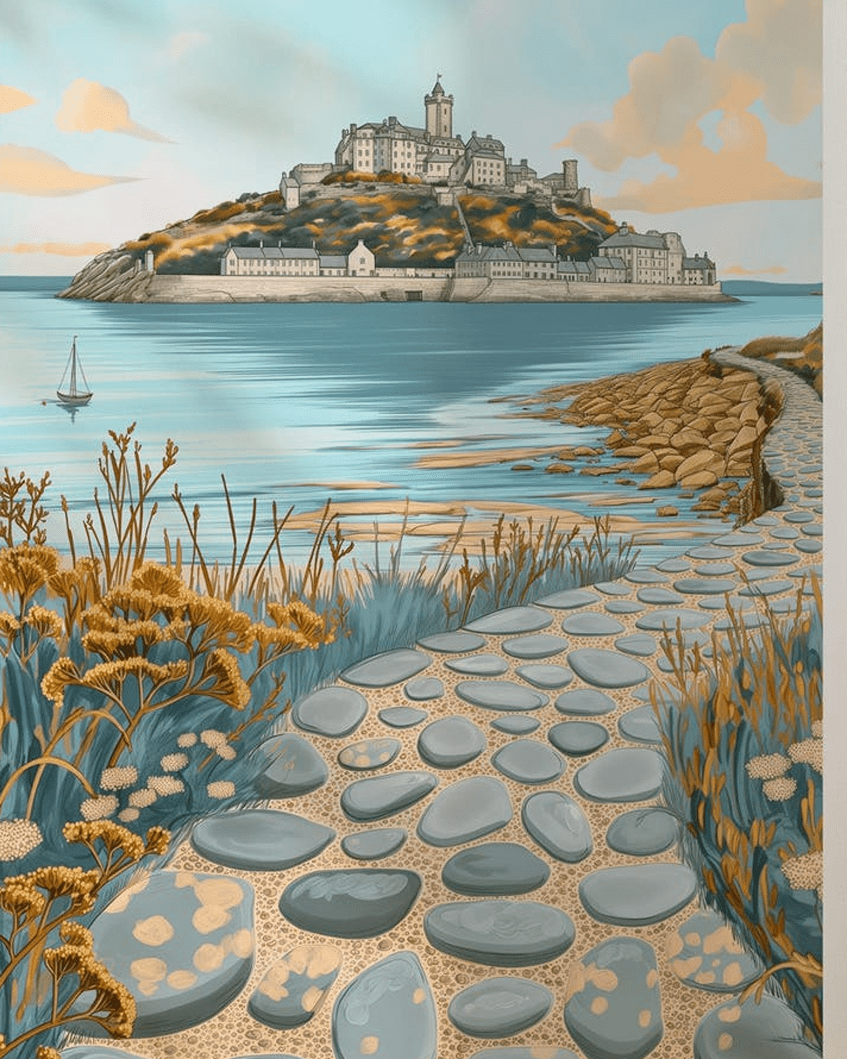
St Michael’s Mount is the most well-known of Cornwall’s many islands, as you can walk to it at low tide from nearby Marazion. And it’s topped by a medieval castle and church, showing up in many paintings.
Owned by a private family (the landowner’s wife used to be a social worker in Plymouth), the island has a community of around 30 residents (mostly in the hospitality industry to serve the many tourists that visit each year). There is no hospital, so residents are trained in emergency services.
This island is on a tidal causeway, which means the walkway disappears at high tide. So always check tide times before arriving.
The walkway is not very wheelchair-friendly. In emergencies, call the police or coastguard, and ensure phone is charged, before travel.
Due to lack of shady places, no dogs are allowed on the island in warmer weather and some dog beach restrictions apply here and in Marazion (and dogs are not allowed in the castle or gardens). So take them to a nice Cornish beach instead (read more on keeping dogs safe by the seaside).
The myths and legends of St Michael’s Mount
- The giant Cormoran lived here, his heart (a stone) is still in the castle
- Fishermen claimed to have seen an apparition of St Michael on the rocks, and even today it’s a major pilgrimage site. With a chapel that still holds regular services.
- The island was once surrounded by forests, before the sea levels rose.
- Others say there is a sunken village that once connected the island to the mainland. Some say that you can see petrified trees visible at low tide. This means fossilised trees (they are not frightened!)
The history of St Michael’s Mount
Back in the day, St Michael’s Mount was a thriving community. As late as the 1800s, it had over 300 local permanent residents, three pubs and a school.
The island has been owned by the St Aubyn family since 1659, and they still live there, co-managing the site alongside the National Trust.
In 1755, an earthquake in Lisbon (Portugal) caused a tsunami on the island. The sea rose six feet in 10 minutes, rising and falling for five hours. Leading to loss of life and property.
A sister island in France
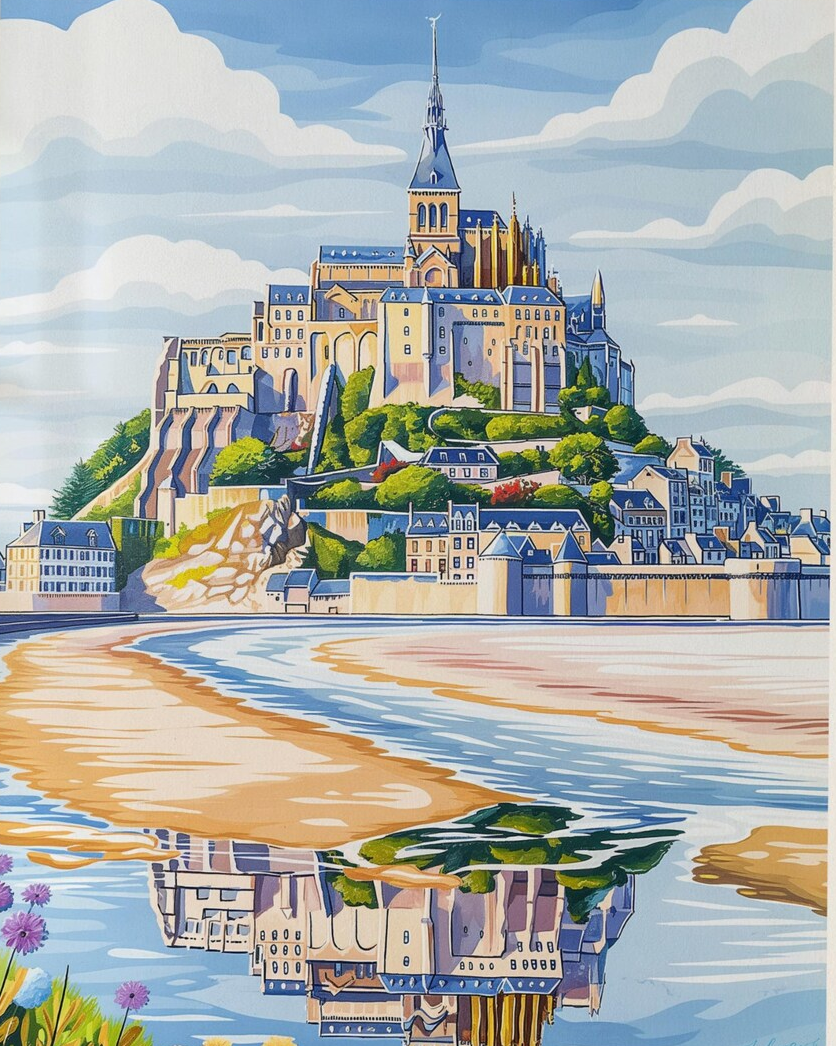
Strangely, in Normandy (France), Mont Saint Michel is another island with a medieval castle, and around 30 people (mostly nuns and monks) living there. It has a similar history, and even looks the same!
Nearby Marazion (the oldest town in Cornwall)
You reach St Michael’s Mount from Marazion, which is a market town dating back to 1257. Historically a thriving hub for religious pilgrims and tin traders, despite the name it apparently has no Jewish connection, it’s thought the word is Cornish for small market (Marghas Byghan) or Thursday market (Marghas Yow).
One religious visitor here was George Fox who founded the Quaker Society of Friends. He lodged at an inn in 1656, and today the local meeting house sits on top of Beacon Head (the oldest public building in the town).
The same year George was imprisoned in nearby Launceston Castle, for having long hair. When found not guilty, he was then fined for not taking his hat off in court, and sent back to prison. He later wrote it was ‘nasty stinking place where the excrement of prisoners had not been carried out for many years’.
George and his wife Margaret rarely saw each other during their long marriage, as one or the other of them was always in prison. He was often kicked with sticks (and even a brass-bound Bible) and thrown down steps. Once he was even beaten unconscious in his home town of Ulverston in Cumbria, all for preaching that Christianity should be about peace and love!
Isle of Wight (England’s largest island)
Isle of Wight is England’s largest island, and smallest county (apparently depending on whether the tide is in or out – it swaps places with Rutland). Known for its beautiful beaches, Isle of Wight Coastal Path (circles the entire island) runs for 70 miles, circling the entire island.
Home to popular seaside resorts like Ryde (which you can reach by hovercraft), Sandown and Shanklin, it’s also home to The Needles rocks (one of England’s official natural wonders!)
Out walking? Follow the Countryside Code to keep all creatures safe. Keep dogs away from steep banks, mushrooms (and other toxic plants/trees) and on leads during nesting season (and near barnyard friends and wild ponies).
At the coast, keep away from nesting birds and never walk on sand dunes. Learn how to keep dogs safe by the seaside (check beach bans before travel).
Situated on the Solent
The Solent is a 7000-year old stretch of water, formed when sea levels rose during the last Ice Age, to flood the River Frome estuary, causing the Isle of Wight to separate from the mainland.
This narrow stretch of sea is a very important haven for seagrass meadows (home to endangered sea turtles and sea horses) and rare chalk reefs.
Never use jet skis, they harm many creatures, and cause noise pollution and accidents, and drive baby gulls and seals away from their parents. Report any wildlife crime to Crimestoppers (anonymous).
The hovercraft from Portsmouth to Ryde is fast and fun, although it can feel bumpy in windy weather.There are car ferries from Southampton to East Cowes and Lymington to Yarmouth.
If you get seasick, sit mid-ship when you can, keep your eyes on the horizon, and sip water!
The Farne Island (England’s wildlife haven)

The Farne Islands are home to many of England’s marine wildlife, including over 40,000 pairs of puffins during breeding season, large breeding colonies of Atlantic grey seals, and over 200,000 breeding pairs of other birds (Arctic terns, guillemots, razorbills, and eider ducks).
Dogs (including assistance dogs) are not allowed on the Farne Islands, due to wildlife. A few ferry owners may let dogs stay with them (or enjoy local dog-friendly beaches (check seasonal restrictions).
There are three lighthouses on the Farne Islands. Longstone Lighthouse is linked to the rescue by Grace Darling and her father Robert in 1838 (rowing out to save shipwreck survivors, in rough seas).
Less well-known is nearby Staple Island, a small rocky skerry on Outer Farne, also an important wildlife haven (not visited by humans, due to Gun Reef – a dangerous ridge of rocks).
Coquet Island, is a haven for rare birds like roseate terns, sandwich terns, puffins and eiders. Again this is a nature reserve to keep birds safe, so no humans are allowed to visit.
The Holy Island of Lindisfarne (with saints!)
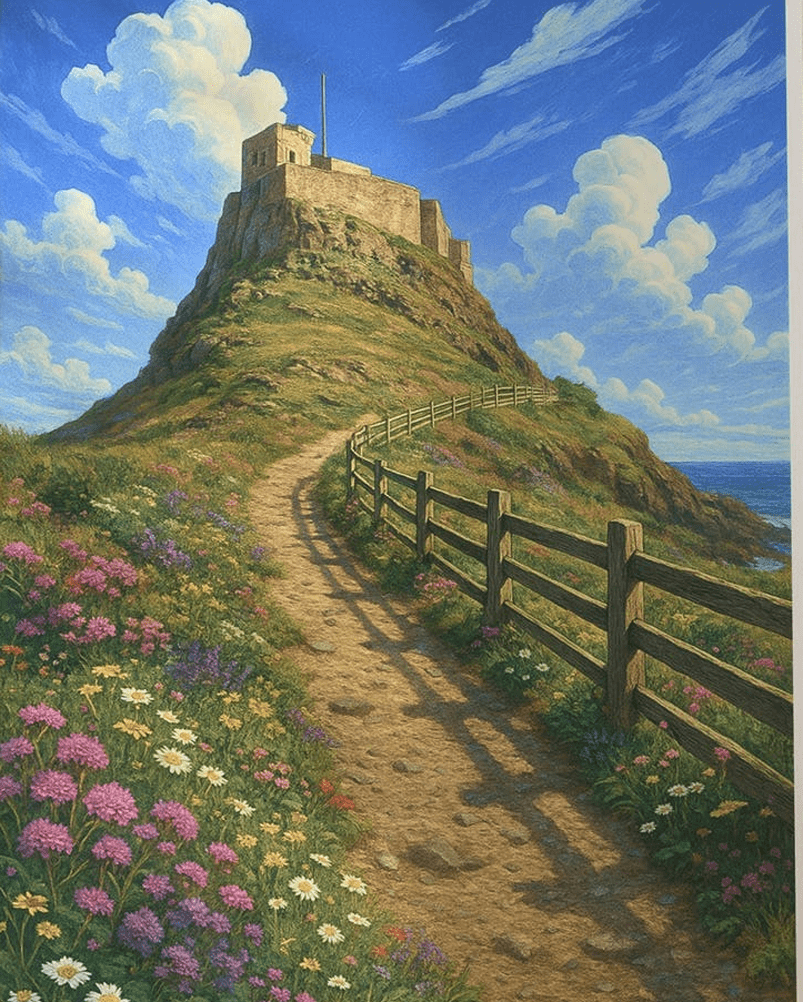
Lindisfarne is a small island ( 3 by 1.5 miles) off Northumberland’s coast, with just 200 residents, but 650,000 yearly tourists. The island is surrounded by a nature reserve, home to birds and native seals.
It’s known for being the home of hermit saints in the past including St. Cuthbert (who campaigned for eider ducks, and otters would dry his fur after a swim in the chilly North Sea!) And St. Aidan.
You can take an ancient pilgrimage on the Northern Saints Trails. These six routes cover County Durham and Northumberland (including the island of Lindisfarne). England used to be a Roman Catholic country until the Reformation when Henry VIII banned it, so he could divorce. Many monks and nuns were killed.
Always check the tide times, as it cuts off twice a day by the North Sea, and many people don’t look at warning signs, and have to be rescued. Avoid poor weather/dusk (most people use the bus!)
How Lindisfarne became a holy place
In 635, King Oswald of Northumbria invited the Irish monk Aidan to found a monastery. Oswald spent time on Iona (a Scottish island) and Lindisfarne gave them a base close to his kingdom.
The island then grew into a centre of faith, with monks using it to pray, teach, write and travel to nearby communities. Back then Northumbria was a powerful place (castles and kings!) so the ideas spread wide and far.
Without the backing of King Oswald of Northumbria, it’s likely that the monastery would not have grown to the importance it had, and still has today. It’s said that due to Aidan not knowing the local language, the king translated for the monk when he first preached. It says a lot – king and monk working side by side.
In 793, Vikings attacked Lindisfarne. The raid shocked the Christian world in Britain and beyond. Monasteries had seemed holy and protected. The same would happen hundreds of years later, when Henry VIII came to power, in a bid to dismantle the Catholic church, so he could divorce and marry again, to gain a male heir.
But you don’t get rid of monks that easily! They carried on and eventually the power returned, albeit less so. The priory ruins remain today (rather than St Aidan’s first monastery). You can also visit St Mary’s Church and St Cuthbert’s Isle (almost bare, ideal for those seeking silence).
Mersea Island, Essex (looks like the Caribbean!)
An island that looks like the Caribbean, is not the first thing that comes to mind, when you think of Essex. But it does exist, it’s not just a wild dream! Essex has England’s second-longest coastline so has lots of island. And Mersea Island is one of the most beautiful.
Just five miles long and two miles wide, it’s connected to the mainland by Strood, a tidal causeway that floods at high tide (so check tide times, to avoid getting stranded). The name comes from old English for ‘sea island’.
The Farne Island (England’s wildlife haven)
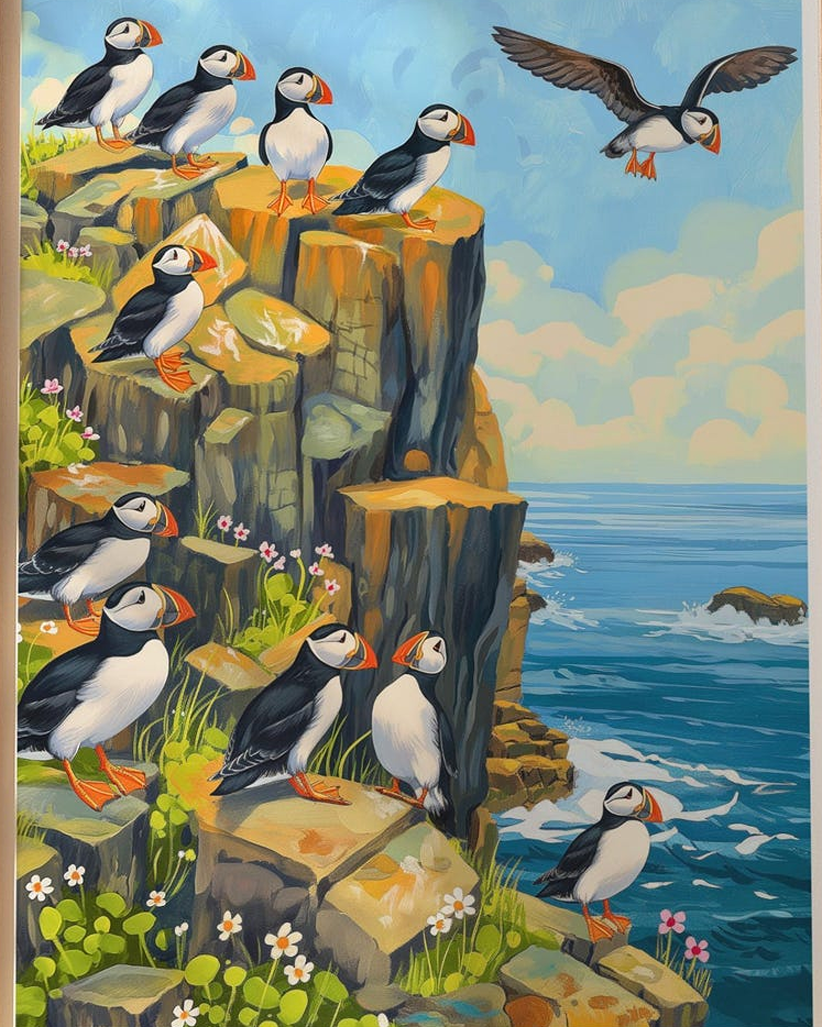
The Farne Islands are a set of 28 islands a few miles off the Northumberland coast, home to much of England’s bird and marine wildlife. Each year around 40,000 puffins breed here (raising pufflings in little burrows), and it’s one of the best breeding sites for Atlantic grey seals.
Other birds here are razorbills, guillemots, eider ducks and kittiwakes (three-toed gulls). And migrating Arctic terns also breed here, raising their chicks in ground nests.
So you can imagine, there are very strict rules for visiting:
Bring binoculars, to view creatures from afar (to avoid disturbance).
- Great care is taken to avoid Avian flu on the island.
- No dogs (not even assistance dogs) are allowed on the islands.
- All bags and rucksacks must be close and sealed (to prevent rodents hitching a ride).
- Pot plants and compost are not allowed.
- Hard hats are not allowed (Arctic terns may divebomb to protect their chicks, and hard hats could damage their beaks).
- You must follow strict rules on where to walk, to avoid disturbing nests.
There are two types of tours: you can visit one of the islands (which also lets you visit St Cuthbert’s Chapel (home to the 7th century hermit saint). Or just take a boat trip, to observe seals and cliff-nesting birds from the water.
The boat tours operate daily from late March to October. However these are sometimes cancelled due to bad weather. Decisions are made by 9am each morning, depending on weather forecasts.
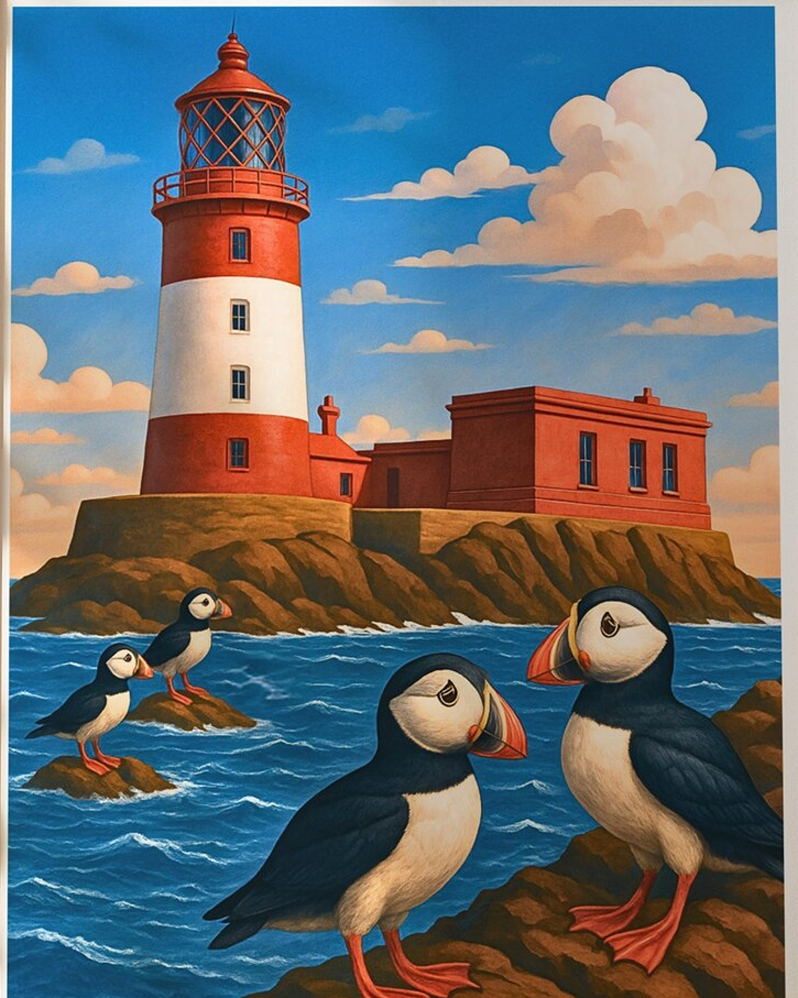
There are three lighthouses on the Farne Islands. Longstone Lighthouse is linked to the rescue by Grace Darling and her father Robert in 1838 (who rowed out in rough seas, to save shipwreck survivors).
Visitors can view Grace’s bedroom, where she saw nine survivors clinging to rocks, and where she cared for them for two days, until the storm passed.
How to reach Seahouses by public transport
Seahouses is an ancient village, from where boats visit the Farne Islands. The nearest major train stations are Alnmouth or Berwick-upon-Tweed, from where you can catch buses.
Staple Island (another wildlife haven)
Less well-known is nearby Staple Island, a small rocky skerry on Outer Farne, also an important wildlife haven (not visited by humans, due to Gun Reef – a dangerous ridge of rocks). It’s home to over 20,000 pairs of puffins, and grey seal colonies.
Coquet Island (a haven for rare birds)
Coquet Island, is a haven for rare birds like roseate terns (90% of the UK population and 40,000 other seabirds including pudffins, sandwich terns, puffins and eiders. Again this is a nature reserve to keep birds safe, so no humans are allowed to visit. There is another lighthouse here (built in 1841) and the ruins of a medieval monastic cell.
Sandeel fishing now banned to help puffins
The government recently passed a law to ban sandeel fishing, to protect puffins and other seabirds. Sandeels are those silvery fish you often see in photos of puffins, a whole bunch in their beaks.
The EU is up in arms about it. But we now have numbers of puffins and other seabirds restoring, both in Northumberland and Dogger Bank (a sandbank off the coast of Yorkshire, in the North Sea).