The Lunar Clock: How Wildlife Follows the Moon
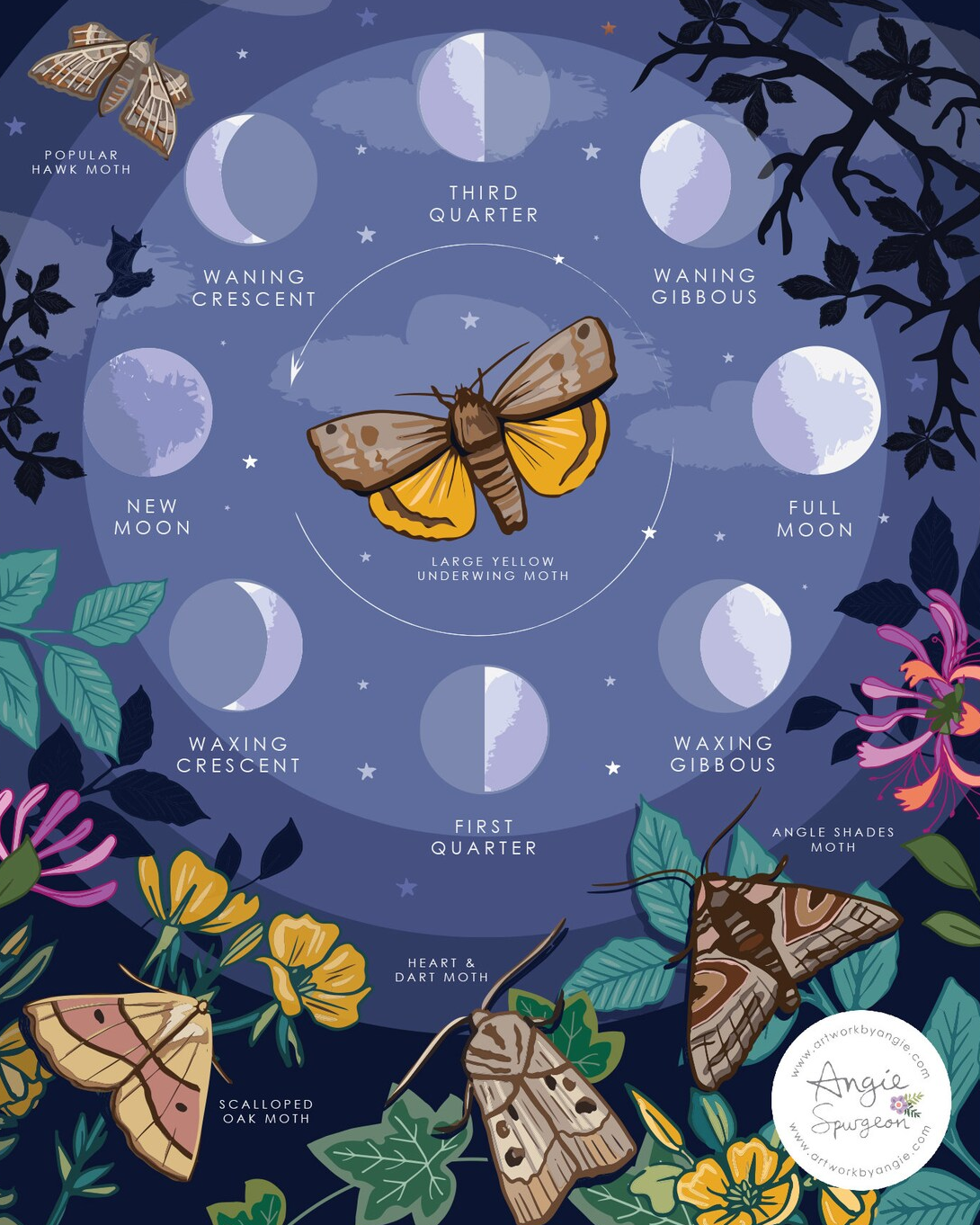
Learn why moths matter!
We’ve all heard how the moon creates tides (it does, but so does the sun) and how wolves howl at the moon (actually they are howling at each other!) But it is true that the moon has a profound influence on our planet’s light, time and tide – and also on behaviours of other creatures, from migration to mating.
Turn off unused lights to help stop birds flying into windows. Report white or on-all-night lights to Fix My Street (these reports are sent to councils). Read more on how to stop light pollution.
- The largest mass spawning event on earth is at Australa’s Great Barrier Reef, when (triggered by the full moon to ensure fertilisation), over 100 species of coral release their eggs and sperm at the same time.
- Endangered female loggerhead sea turtles time their nesting to coincide with new or full moons. The high spring tides help push heavy creatures higher up the beach, so they can lay their eggs in safer areas, above the waterline.
- Many fish coordinate their spawning with the full moon. Tideal shifts help them to disperse fertilised eggs farther into the open ocean.
- European nightjars are just one species of birds dthat use the night light of the moon to forage for food.
- In Africa, wildebeests travel further on migrations during bright full moons, which helps them to spot predators, avoid terrain obstacles and find water sources.
- Sandhoppers and fiddler crabs (both crustaceans) use a sun compass in their brains during the day, but use the moon at night to safely forage during low tides.
- Paradoxically, many nocturnal creatures (like bats and mice) decrease activity during full moon, preferrign to stay invisible to predators.
What exactly is the moon?
The moon was formed billions of years ago by a massive collision, and is slowly drifting away from Earth at around 3.8cm each year. It’s our planet’s only natural satellite, and with extreme temperatures and no atmosphere, the 12 people who have walked on it, have left footprints that will last for millions of years.
Because the moon rotates at the same rate as it orbits earth, we only ever see one side of it. It’s more egg-shaped than round. And just like earth, it gets ‘moonquakes’ that can last for up to 10 minutes. Although it looks the same size as the sun, it’s actually around 400 times smaller, because the sun is 400 times further away.
Sound waves can’t travel on the moon. Not all good – that means you would never hear the rustle of trees, or the purr of a cat.
People have been studying the moon for years. It’s believed that Stonehenge had something to do with it (the Royal Crescent and Circus streets in Bath are said to be based on the design, in a ‘sun and moon’ crescent shape’).
The moon plays a huge part in navigation for many creatures. From knowing where to lay eggs, to navigation to knowing when to go to bed and wake up. Light pollution from (including from 24-hour supermarkets) leads to all kinds of issues:
- Birds wake up at midnight to start their morning song (this affects breeding and chick survival rates).
- Turtles have been known to visit multi-storey car parks to try to lay eggs, thinking the light is the moon.
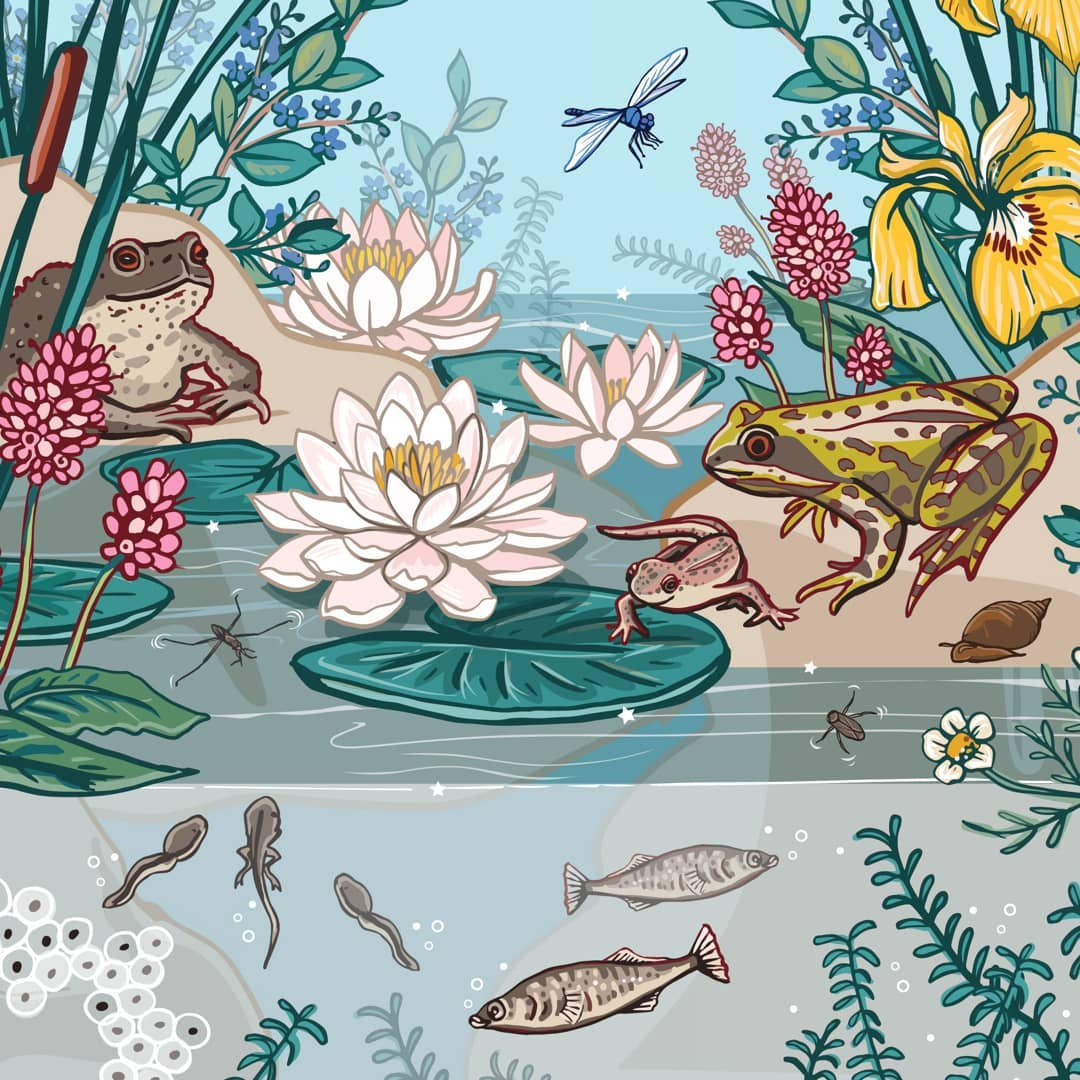
- Many amphibians time their mating choruses to moon phases, to avoid nocturnal predators. So artificial light can suppress calling behaviour, causing them to miss their narrow breeding windows.
- Blue lights around lamp posts attract the insects that birds would eat.
How does the moon affect the tides?
The tide goes out twice a day due to the moon’s gravity that pulls ocean water toward it. On the opposite side of the planet, gravitational pull is weaker, and this causes water to bulge and create a second high tide.
As the earth rotates once a day, most coastal locations pass through both of these bulges, causing two high tides and two low tides every 24 hours. That’s why it’s important to check tide times, as some places in England means at high tide, the beach disappears completely.
In England, low tides are when the moon faces Earth at a right angle. Twice a month, you get neap or spring tides that are higher or lower than average.
Read how to keep dogs safe by the seaside (and check beach bans before travel).
Does the moon affect garden crops?
Biodynamic gardening is when people plant above-ground crops during a waxing moon, and root crops during a waning moon. This is because it’s believed that increasing light pulls moisture into the soil for leafy greens, and decreasing light moves energy down into troots, better for carrots, potatoes, onions or beetroot.
No-dig organic gardener Charles Dowding (who grows all his own food in Somerset) has conducted experiments, comparing growth and harvest weights. He sowed seeds two days before a full moon (waxing) and the other half two days after a full moon (waning). With mixed results!
- Read more about pet-friendly gardens. Also don’t leave windfalls on the ground, as fruit seeds and pips are toxic to pets. Also know trees to avoid near horses (including yew, oak and sycamore).
- If planting trees, avoid netting. There are fruit tree protectors instead that still stop nibblers but don’t trap birds and wildlife (remove during pollination for insects, or you’ll get no fruit). Read more on wildlife-friendly gardening.
Does the moon affect our moods?
It was thought so for a long time (the word ‘lunacy’ is linked to the moon). People were even given reduced sentences for committing crimes during a full moon. But now it’s believed that the moon has no bearing on our moods. Only that a bright moon may mean it takes longer to fall asleep!