Meet the Beans: Varieties, Benefits, and Recipes
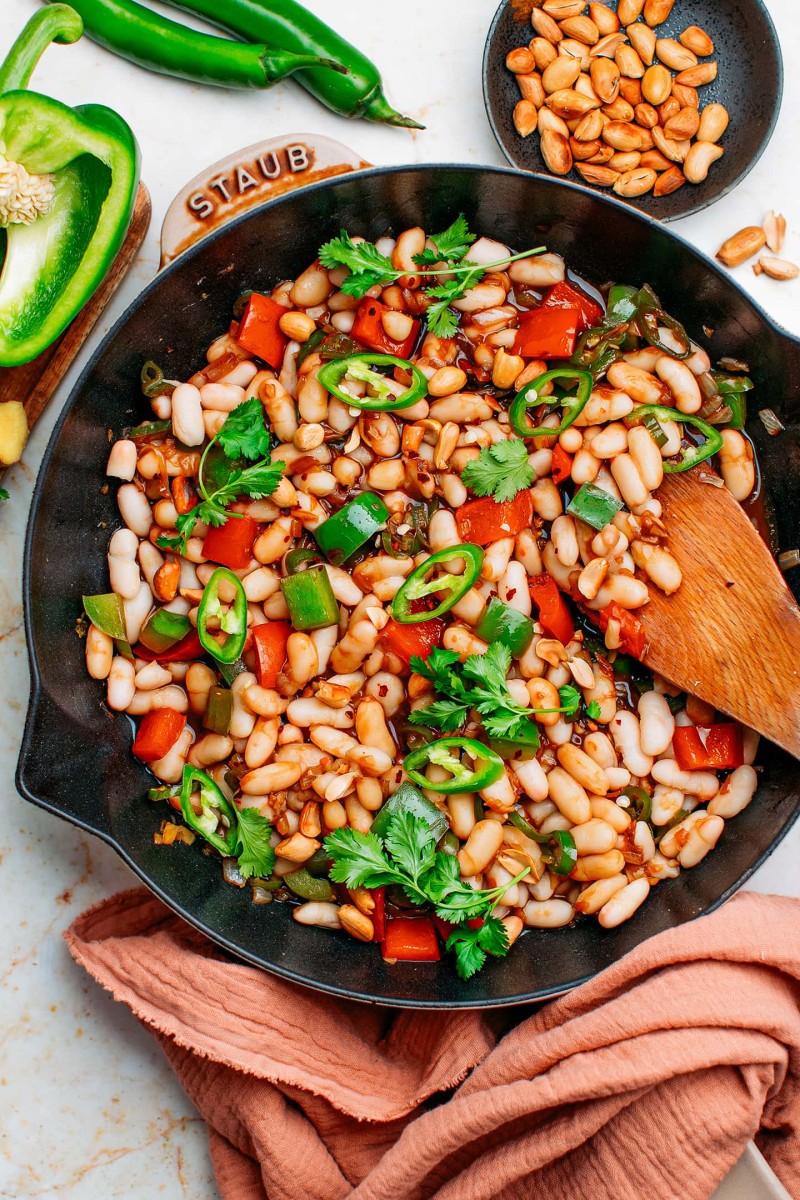
White Bean Kung Pao skillet (Full of Plants)
Beans are cheap and nutritious, filling and tasty. Here are different types so you know how to use them!
Unless you have a food waste bin (made into biogas), it’s best to just bin allium scraps and peppers, as acids could harm compost creatures.
If using tinned ingredients, rinse/remove lids (or pop ring-pulls over holes) then step on the can to pinch the inner rims together, to avoid wildlife getting trapped at recycling points.
Study earthy beans (best to hold shape)
- Black beans have a dense meaty texture. A Latin American staple, they are good for tacos, burrito bowls and soup.
- Red kidney beans are firm and slightly earthy. They are good for long-simmering chillies and stews.
- Garbanzo beans (chickpeas) are nutty and dense, and of course are the main ingredient in homemade hummus. The leftover brine water can be made into aquafaba.
Creamy tender beans (melting into dishes)
- Cannellini beans are mild, smooth and nutty. They are good for Mediterranean pasta dishes and hearty stews.
- Butter (lima) beans are large and flat, with a buttery texture. They are good for slow-cooked casseroles.
- Pinto beans are creamy and earthy, these are good for mashing, and the main bean used for Mexican refried beans.
Small quick-cooking beans
- Navy beans (haricot) are small and white (not navy!) They are combined with tomato sauce to make baked beans on toast.
- Mung beans are tiny and good for soups and dahls, and sometimes sprouted for salads and stir-fries.
- Aduki beans are small reddish-brown beans from Asia with a white ridge. They are sweet and nutty, and easy to digest.