The Nut-Free Lunch Box Book
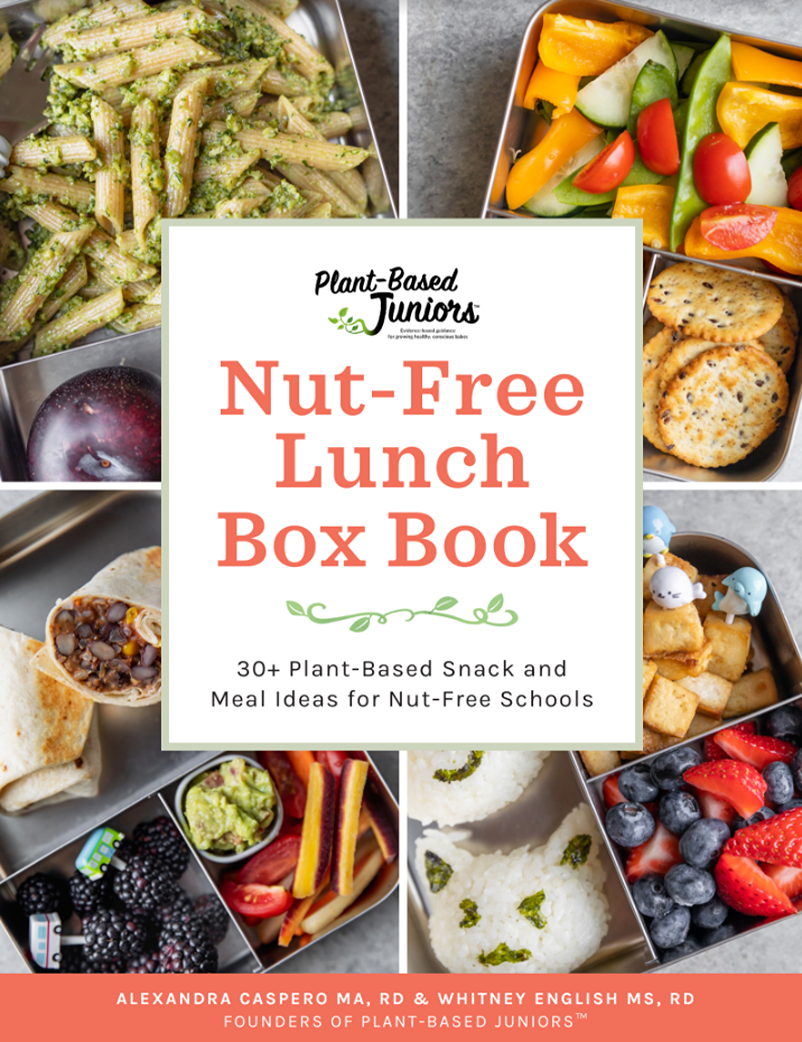
The Nut-Free Lunch Box Book is written by two American plant-based dietitians (both mothers to plant-based children), which not only has 30 easy recipes, but information for navigating nut-free schools and playgrounds.
This is an e-book for instant download.
Some parents vegan children (and those with allergies or religious beliefs) want NHS Healthy Start Vouchers (for low incomes) to offer dairy-free milk and vegan vitamin D supplements (as well as fresh produce), especially as many African-American children are lactose-intolerant.
Read info by dietitians on food allergens (they say the top 8 allergens of milk, eggs, soy, shellfish, fish, peanuts, tree nuts and wheat account for around 90% of all allergens, the others being mustard or sesame seeds).
Read up on food safety for people and pets. Bin allium scraps (onion, leeks, garlic, shallots, chives) and tomato/citrus/rhubarb scraps (acids may harm compost creatures).
Fully remove tinned lids (or pop ring-pulls back over holes) before recycling, to avoid wildlife getting trapped.
Choking Hazards for Children
Choking hazards should be avoided for children and people with swallowing difficulties (and allergies). Also keep small toys off the kitchen floor where toddlers and pets could find them.
Learn how to help someone who is choking. Foods to avoid include:
- Nuts, Seeds & Nut/Seed Butters (avoid for under 5)
- Chia seeds (soak in liquid first, if used)
- Dry Bread, Crackers & Croutons
- Crumbly Foods (pies & biscuits)
- Peas, Grapes, Cherry Tomatoes, Cherries (even sliced)
- Carrot Sticks
- Sausages (slice lengthwise & again, for older children)
- Foods with Seeds (raspberries etc)
- Boiled Sweets
- Sticky Foods (some cheese, marshmallow, mochi)
- Tough Foods (steak, bacon, skin/bone/gristle)
- Stringy Foods ((beans, rhubarb)
- Floppy Foods (lettuce, cucumber, spinach)
- Chia seeds (mix with water first, if using for others)
Does Plant-Based School Food Harm Farmers?
It’s the law for schools to offer plant-based meals to those who ask. Some MPs have complained that offering plant-based meals harms farmer incomes. But most animal-based school food is from big factory-farming brands.
Across the pond, California’s MUSE Global School serves plant-based food to children, often grown in raised beds, via a Seed to Table program. If growing your own school gardens:
Read more on no-dig gardening and humane slug/snail deterrents. If you live with animal friends, read up on pet-friendly gardens (some recommended flowers and fruit trees are not safe). Also avoid netting to protect food (just leave some for wildlife!)
Do Children Know Where Food Comes From?
A worrying survey by British Nutrition Foundation found the following disturbing answers amid primary school pupils:
- A third thought cheese was made from plants
- 25% thought fish fingers were from chicken or pigs
- A third of young children thought pasta & bread came from meat
- Almost 20% of younger children did not know potatoes grew underground. 10% thought they grew on trees!
Yet nearly all children know that we’re supposed to eat at least ‘five-a-day’ showing that information does get through, if campaigns are run well. But (wrongly), 20% of children thought canned versions don’t count (they do – a can of peas is fine if you can’t find fresh).
Years ago, all schools offered cookery classes. Yet just like first aid and swimming, learning to cook (and budget) are essential skills that should be up there with maths and English.
Learning how to make a meal with fresh ingredients (and knowing how to balance a tiny income) is far more important, than using a protractor to estimate the angle that a triangle goes up against a wall!