How to cut your water bills in half (simple swaps)

At present, water companies are privately-owned monopolies in England, so there’s nothing you can do apart from standing charges. So the best idea is to make a few simple swaps to use less water (especially if your’re on a meter.
If you feel you have been billed unfairly, you can make an official complaint to Ofwat.
Install a water meter
If not already on one, a water meter is a good idea. As if you use less water, you will pay less money in bills. A water meter is usually free to install, just ask your local water board.
Fill in your details at the Consumer Council for Water, and it will calculate whether you will be better off using a meter. If you are a large family (or disabled and/or with carers), you should qualify for WaterSure, which enables you to use more water without higher bills.
Ask your water board when you install the meter, as many offer lower rates for single occupancy or for people on low incomes (social tariffs).
Everyday simple swaps to save water
- Turn off taps, when brushing your teeth.
- Fill a bowl of hot water when washing up, rather than use running water.
- Run washing machines and dishwashers on full.
Fix any water leaks
- These can drip out lots of water over time, and lead to higher bills. To check if you have a leak, take a reading before going to bed, and then check the next morning when no water has been used.
- To check for toilet leaks, wipe the back of your pan dry with bathroom tissue (30 minutes after you last flushed). Then place a dry sheet of paper across the back of the pan, leave for 3 hours. If the paper is wet, your loo leaks!
- If you have a leak, a small fix by a trusty plumber will cost less than paying for leaks long-term.
Use water-saving showerheads?
Older showers may benefit from a water-saving showerheads (which mixes air with water) To check if you need one, place a 2-litre container on the shower floor. If it takes less than 12 seconds to fill when shower is running on full, you likely would benefit.
Your water board may offer free water-saving showerheads so check before you buy. And check as some are not for certain showers or gravity-fed systems. Always use a qualified electrician to fit one.
If your showerhead is clogged with limescale, Mira has a post on how to fix a showerhead clogged with limescale using cleaning vinegar (instructions are different for fixed showerheads). Also learn how to fix a dripping showerhead.
Repair leaky pipes
Kibosh is a quick way to repair leaky pipes, invented by a qualified plumber. Just fit the clamp around a leaking or burst pipe, and clamp shut. It can be kept in place until a proper repair is arranged.
Hero Labs App uses HD ultrasonic technology to check your home for leaks, half a million times each day (a burst pipe can release half a ton of water an hour, and damage photos and computer hard drives). The smart shut-off valve then isolates incoming water in seconds, containing the problem.
Update appliances (if you can)
When time comes to replace, go for new appliances (dishwashers and washing machines). They tend to save more wwater.
Centre for Alternative Technology has good info on greywater recycling (treated water from sinks, baths and washing machines). Only use unscented biodegradable soaps and laundry powder, to avoid algal blooms from runoff into ponds and rivers.
Hippo the watersaver!

Hippo the Watersaver is a simple polyrethene bag to save water bills in older toilets, like an advanced method of putting a brick in your cistern (not recommended). This little device can save up to 70% of water in bathrooms (toilet flushing makes up around 30% of household bills).
Each time you flush with this installed, you save up to 3 litres of water. If all older toilets in the UK used them, it would save a collective 600 million litres of water a day.
It’s sold in two versions, depending on the size of your cistern. If not sure which one to buy, just flush your cistern and then count the seconds it takes to empty.
It’s easy to fit and position, and designed with a small hole to flush fresh water, to avoid it going stale. Some councils provide these free to residents. They pay for themselves anyway in 8 to 12 weeks, and can save a lot for big buildings (around £3000 savings for a company with 1000 employees).
Use a child/pet-safe water butt
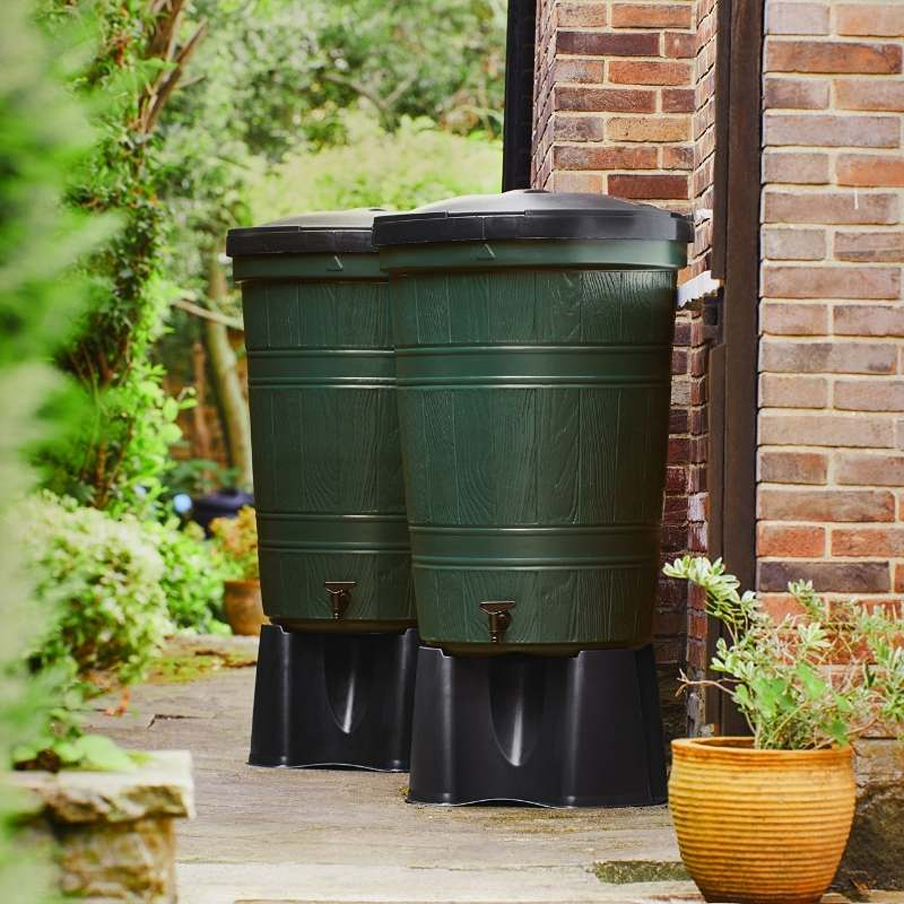
Use a watering can over a hose (empty after use and store safely, to avoid wildlife getting trapped inside). Avoid open water barrels near children/pets (drowning hazards & stagnant water can attract mosquitoes).
If you live with animals, read up on pet-friendly gardens to know plants to avoid. And avoid facing indoor foliage to outdoor gardens, to help help stop birds flying into windows.
EvenGreener water butts are made from quality recycled materials, with locks to keep all the family safe. You may need help connecting them using the Universal Rain Trap (this fits most downpipes – not suitable for cast iron downpipes – place on a flat even surface, not soil or grass).
Should England’s water be publicly-owned?
Wales has a non-profit water board, but in England the water companies are privately owned for shareholder profits, so there are debates on whether to bring them back into public ownership. Especially as investment has not been made for better sewage treatment (which has killed lots of wildlife).
Undertones singer Feargal Sharkey (who campaigns for clean rivers) says that Ofwat is already able to issue enforcement orders over sewage releases, or can fine them 10 percent of annual turnover, but they don’t.
What happens in mainland Europe?
Many cities in France (along with The Netherlands and Switzerland) have locally-owned water boards, which has cleaned up drinking water, and reduced bills at the same time.