Say No to Palm Oil (vegan butter, junk food & bar soaps)

Palm oil pops up in many products we use every day, from snacks and ice cream to soap and shampoo. But behind the low price tag of palm oil, there’s a high cost to our planet, our health, and local communities.
More shoppers are now hunting for palm oil free options that better match their values. Here’s why making this switch matters.
Protects Rainforests and Wildlife
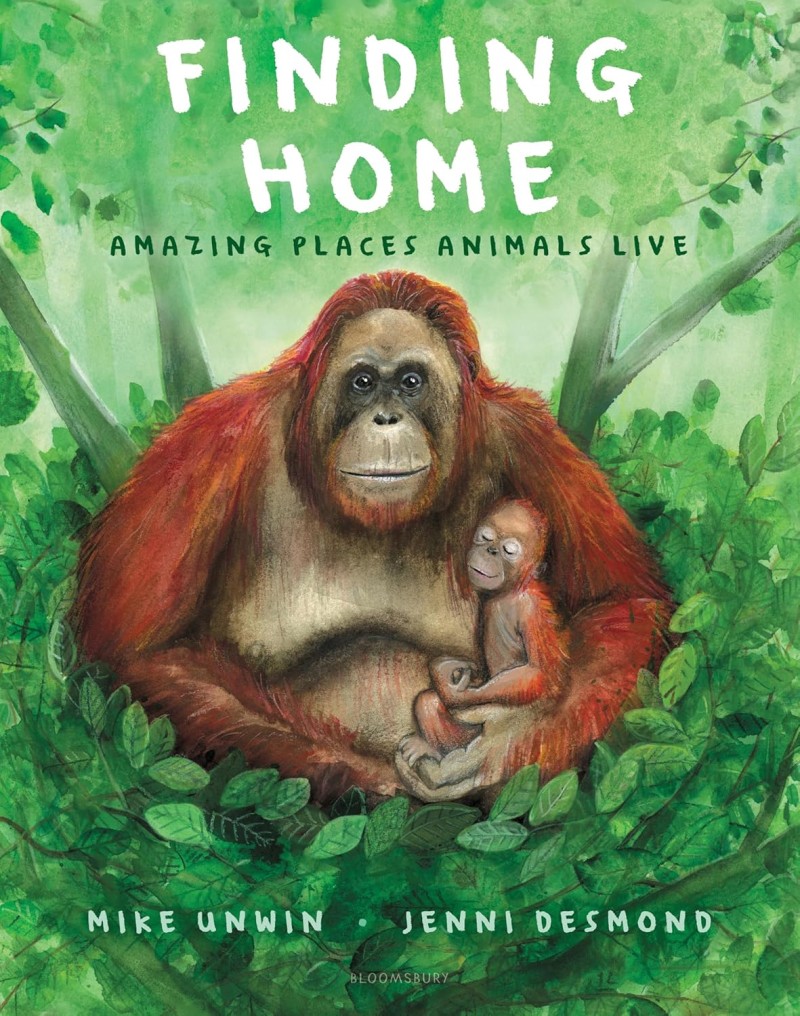
Palm oil farming is one of the main reasons for wiping out rainforests, especially in Southeast Asia. Growers burn and bulldoze massive areas of trees to clear land for palm oil plantations.
Without their forest homes, rare animals like orangutans, tigers, and elephants are pushed closer to extinction. By choosing palm oil free products, you help slow the destruction and protect wildlife habitats.
Supports Indigenous Peoples and Local Communities
The growth of palm oil plantations often edges out people who depend on the land for food, work, and culture. Many indigenous groups lose their homes or find their water and soil polluted by chemicals used on the plantations.
When you buy palm oil free goods, you support companies that try to do the right thing for these communities.
Reduces Greenhouse Gas Emissions
Palm oil farms make global warming worse. Draining peatlands and clearing forests for new plantations releases huge amounts of carbon dioxide into the air. This greenhouse gas traps heat and changes our climate.
By selecting products without palm oil, you help lower the demand for new plantations and keep more carbon locked up in the ground where it belongs. Palm oil is not local, so is flown to England from thousands of miles away.
Avoids Harmful Chemical Residues
Farms that grow palm oil often use strong pesticides and chemicals to boost growth and cut down on pests. Traces of these chemicals can linger in food, soaps, and skin care products.
Choosing palm oil free items, especially organic ones, helps you avoid extra chemical exposure that can affect your skin or health.
Improves Food Quality and Nutrition
Palm oil is a cheap fat used in cookies, chips, breakfast bars, and lots of processed foods. It’s high in saturated fat, which isn’t great for your heart when eaten in large amounts.
Many palm oil free alternatives use healthier oils like sunflower, olive, or canola, which contain more of the good fats your body needs.
Encourages Transparent Sourcing and Cleaner Labels
Brands without palm oil often tell you exactly where they get their ingredients. This clear labelling makes it easier to see what you’re eating or applying to your body.
It sets a higher bar for other brands to follow, too, pushing the whole industry toward better honesty and sourcing.
Builds a Market for Responsible Brands
Every sale is a vote. When you pick palm oil free products, you send a message to big companies that shoppers care about ethical and sustainable choices.
This helps responsible brands grow, makes palm oil free options easier to find, and pressures the rest of the market to clean up its act.
Read Planet Palm so you know what palm oil is, what the problems are and why ‘sustainable palm oil’ does not cut the mustard.
No Such Thing as ‘Sustainable Palm Oil’
The term ‘sustainable palm oil’ was coined by the Round Table on Sustainable Palm Oil. But Greenpeace says the phrase is as ‘useful as a chocolate teapot’, as it has no legal backing, and some ‘sustainable brands’ have found to be supporting loggers who have literally burned some orangutans to death.
The only ‘certified’ palm oil is that which is certified organic. But we don’t have enough land worldwide to supply the huge appetite for palm oil.
Hope the orangutan was shot 74 times and her baby killed. She is now blind, and being cared for by volunteers. All because she was defending her baby and forest from the palm oil industry.
Sustainable Alternatives to Palm Oil
Read posts on sustainable palm-oil-free alternatives to the main items sold in England:
- Vegan butters with no palm oil
- Vegan crackers with no palm oil
- Vegan biscuits with no palm oil
- Peanut butters with no palm oil
You could also use rapeseed oil (locally-grown) as an alternative to butter. It’s healthier at high cooking temperatures than olive oil (which is best health-wise used cold in salads). Or learn to cook and bake without oil. Learn of the healthiest cooking oils to choose.
Choose Bar Soaps (with no palm oil)

The other main consumer product sold with palm oil is bar soap. Years ago, most soaps were made with sodium tallowate (beef fat). Today, this has changed, but now most bars are made with palm oil (sodium palmate). Again, the term ‘sustainable palm oil’ on the packs, means nothing in law. Find palm-oil-free bars of handmade soap.
Friends of the Earth is asking big soap companies not to buy oil from conflict palm oil suppliers.
Use White Vinegar (instead of fabric softener)
Fabric conditioner often contains palm oil, but it reduces absorbency and can increase flammability of some clothing items. Instead, just add 1/2 cup of white vinegar to the washing machine at the beginning of the rinse cycle (or fill into fabric softener dispensers, before each load).
Look for the Palm Oil Free Logo

Instead of looking for brands with ‘sustainable palm oil’ (oddly promoted by some vegan organisations), either make your own meals (no palm oil needed if you use fresh ingredients). Or look on ready-made foods (and soaps) for the Palm-Oil-Free Logo.
Vegan butters are now very popular, due to many people following a plant-based lifestyle – whether this is for animal welfare, environmental or health reasons (or a combination). If you use dairy butter, then choose organic free-range versions, for better animal welfare.
Avoid giving leftover buttered sandwiches to garden birds and wildfowl (due to salt and fat that smears on feathers, affecting waterproofing and insulation).
The issue with vegan butters, is that many are made from palm oil. Greenpeace says there is no such thing as ‘sustainable palm oil’, as deforestation of forests in Indonesia still occurs, even for brands certified by the Round Table for Sustainable Palm Oil.
This term is simply a self-policed phrase by industry, and has no legal meaning (some forests under this term have been burned to the ground, with orangutans, their babies and other creatures within them).
Palm oil is also an unhealthy saturated fat that needs to be shipped from thousands of miles away. It’s only used by industry (in food, pet food and bar soaps – listed as sodium palmate’) because it’s cheap.
The easiest way to avoid palm oil is to cook your own meals with natural ingredients (like rapeseed oil, which can also be used in baking – or even use oil-free alternatives like applesauce in cakes).
But for general cooking and baking (and spreading on toast or baked potatoes), choose vegan butters that are free from palm oil).
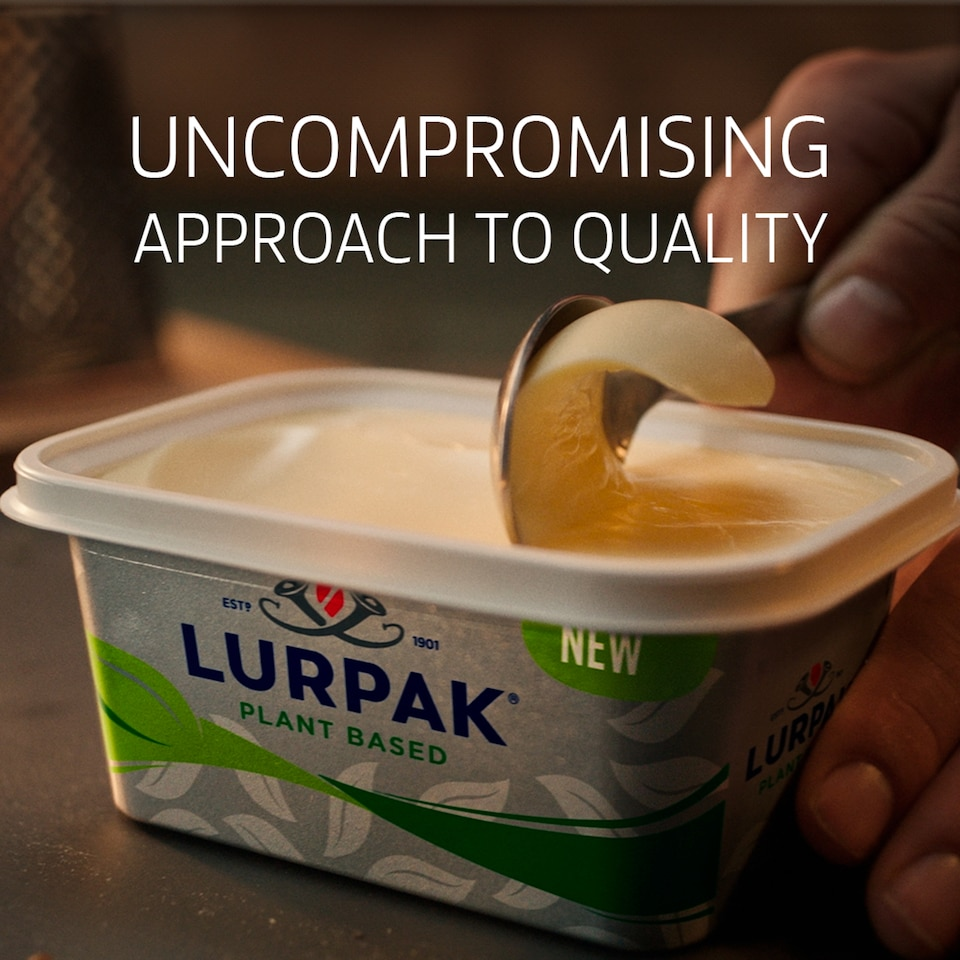
Lurpak (plant-based real butter)
Lurpak now offers a plant-based butter (not a margarine), so this is excellent for cooking, frying and baking. It’s made with rapeseed, coconut and shea, flavoured with salt and coloured with carrot. Contains oats.
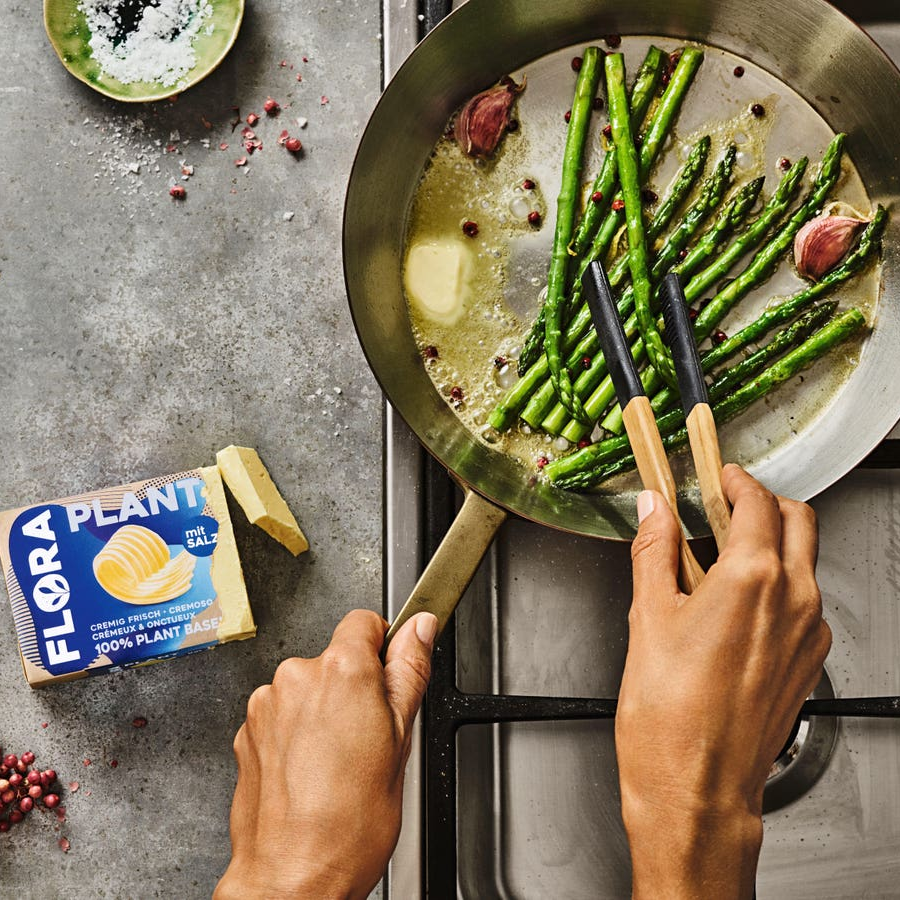
Flora Vegan Butters (including baking block)
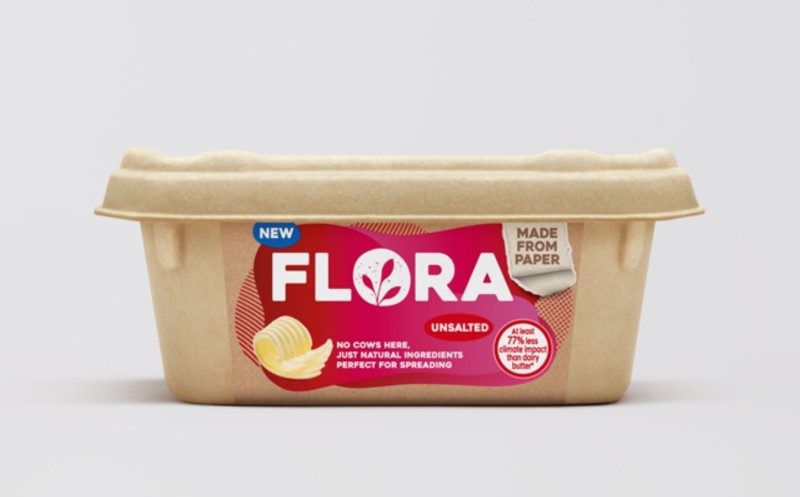
Flora used to be a dairy margarine with palm oil, and has really given itself a makeover. It now offers plant-based vegan butters (including salted, unsalted and garlic) along with block butter, ideal for baking and making pastry.
Made with sunflower seeds, rapeseed and coconut, it’s endorsed by Gordon Ramsay. One of its butters is even sold in an oil/grease-proof paper pack, to avoid plastic.
Inspiration from Abroad: Oat Milk Butter
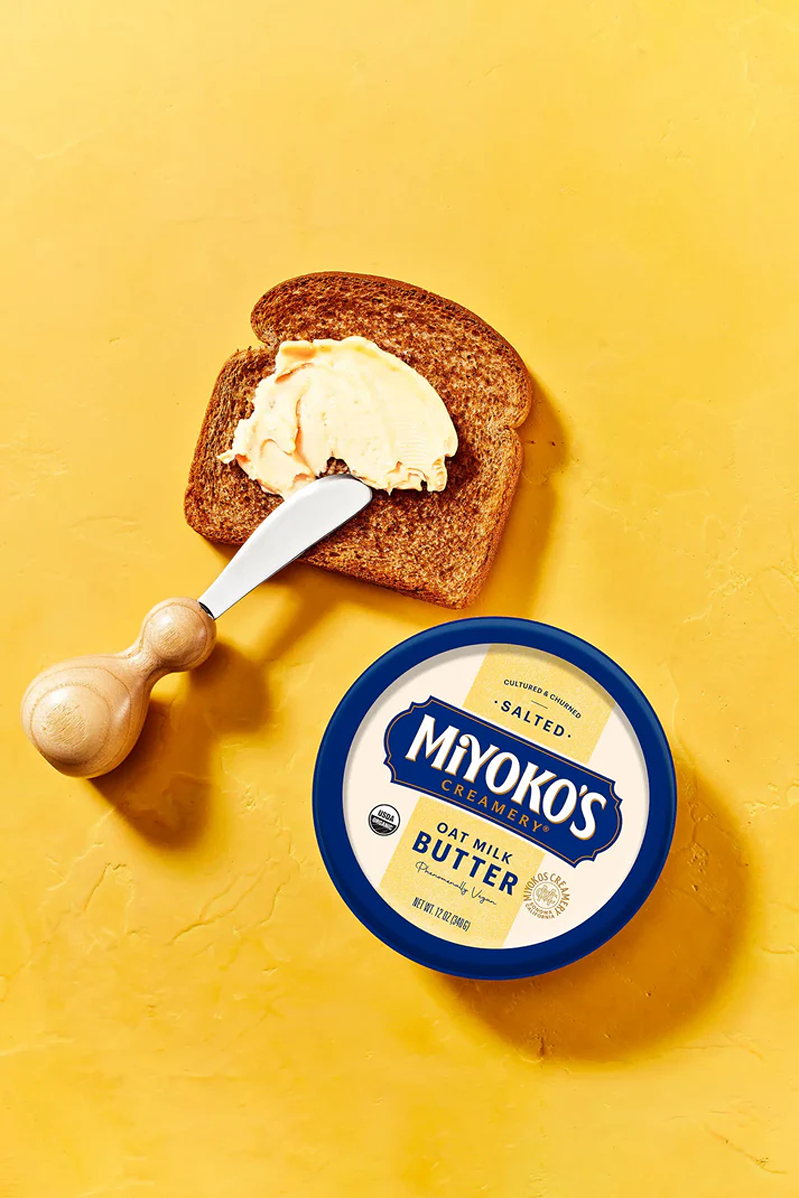
Miyoko’s Creamery (USA) is a good inspiration for us, as it’s made with oats (which could be locally-grown in England to make butter, and provide good income for farmers. It would also have the lowest food miles of any vegan butter.
This butter (also in a flavoured cinnamon version) is made with whole grain oat milk, along with organic sunflower and coconut oil, sea salt, lecithin, mushroom extract and coloured with organic vegetable and fruit juices.
How to Make Your Own Vegan Butter
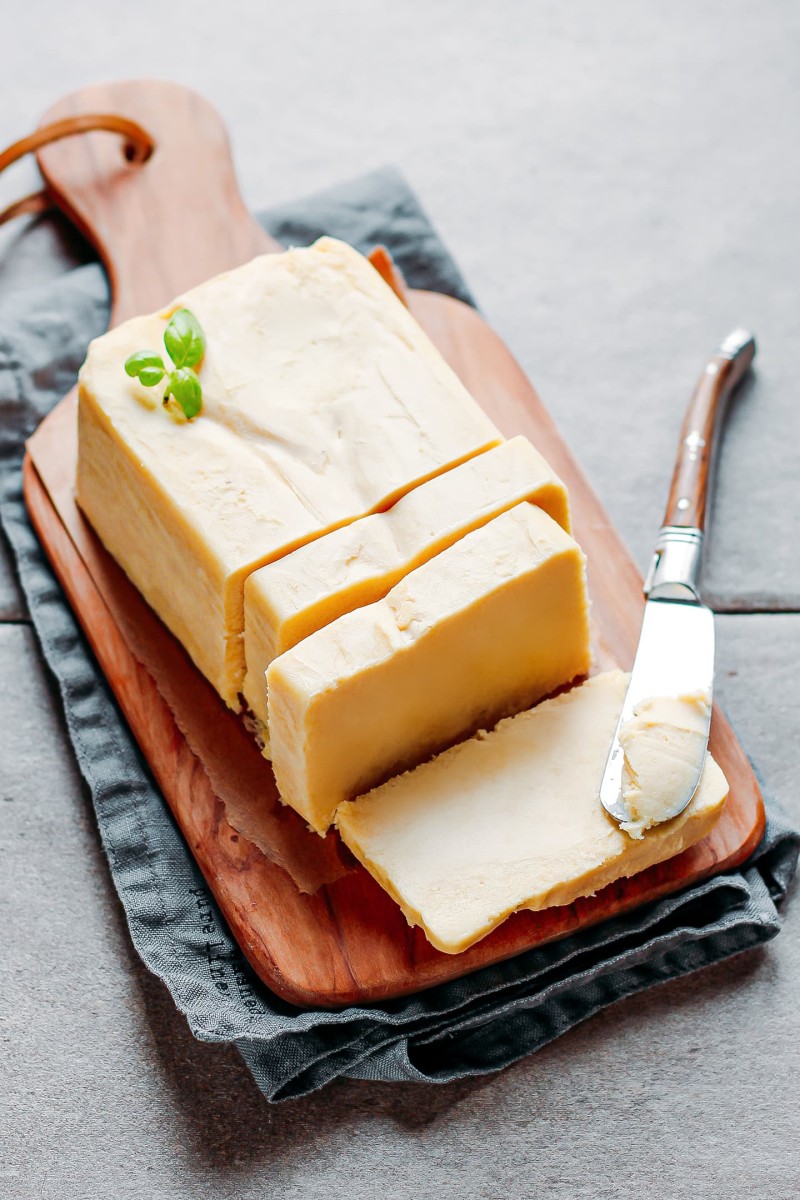
Most of us are not going to bother. But if you do make your own vegan butter, it’s possible but you will need a few unusual ingredients.
This cultured vegan butter (Full of Plants) is from a French chef (and we all know that people in France know their butters!) This is very fancy, made with homemade cashew milk, sunflower lecithin and probiotics. One for chefs!

Meridian organic peanut butters are widely found in farm shops and health stores, and are not just organic, but free from palm oil (and mostly sold in glass jars). There are also other nut and seed butters.
Just like nuts and seeds, avoid feeding nut and seed butters to young children, and people with swallowing difficulties.
Due to no palm oil (which helps to protect orangutans and other endangered creatures in Indonesia, you just stir to replace emulsifier – a small price to pay, to save our orange cousins!
These peanut butters (in smooth or crunchy versions) are crammed with 100% peanuts, and a great source of healthy fats and protein.
The peanuts are roasted in their natural skins, then ground to make them almost (not completely) smooth. Not just for toast, you can also spread them on crumpets, or add to shakes, cakes and bakes.
Meridian also makes natural sweeteners (like molasses and barley malt extract) and yeast extract (a home-grown alternative to Marmite!)

Nutella is one of England’s favourite foods (apparently it’s now more popular than Marmite, jam and marmalade). Of course it’s not healthy, as it’s made mostly from palm oil, dairy, refined sugar (and a few nuts with chocolate).
This vegan nutella (Ela Vegan) is made with just a few simple ingredients.
Keep nuts away from children (and chocolate/nuts away from pets).
Why Make Your Own Vegan Nutella?
But there are a few issues, not to be a party pooper. Palm oil use is harming the habitats of endangered orangutans (there is no such thing as ‘sustainable palm oil’), and spreading refined sugar on your toast is not good either. The main brand is not actually that rich in nuts.
There are a few good alternative brands on the market (see below). But far easier and cheaper, is simply to learn how to make your own vegan Nutella. It’s simple really, as it’s just a straightforward flavour combination of chocolate and hazelnuts. And if you make your own, it will also be higher in protein, due to having more nuts!
Where to Buy Good Vegan Nutella
Meridian Chocca Spread is not just vegan and free from palm, but this charity jar donates a portion of proceeds from each sale to orange welfare charities. It contains hazelnuts with peanuts and hazelnuts, along with cocoa.
Mr Organic Dairy-Free Chocolate Hazelnut Spread has a deep flavour blended rich cocoa and toasted hazelnuts from Italy for a sweet nutty spread. No palm oil – so you know what you have to do – stir the jar! That’s the reason main brands import palm oil. Grab your spoon and save orangutans!
Vegan Ferrero Rocher Recipe

Again, the main brand is not that posh, it’s made with inferior ingredients and massively over-packaged in plastic. The brand also owns Kinder Eggs (banned to import into the USA, due to the toys inside, seen as a choking hazard).
The flavour is the same: chocolate and hazelnut. So learn to make your own: This recipe for homemade Ferrero Rocher (Ela Vegan) is super-simple.
Michaela used to enjoy the dairy versions as her favourite treat before she went vegan, so has expertly recreated the flavour and texture with plant-based ingredients.
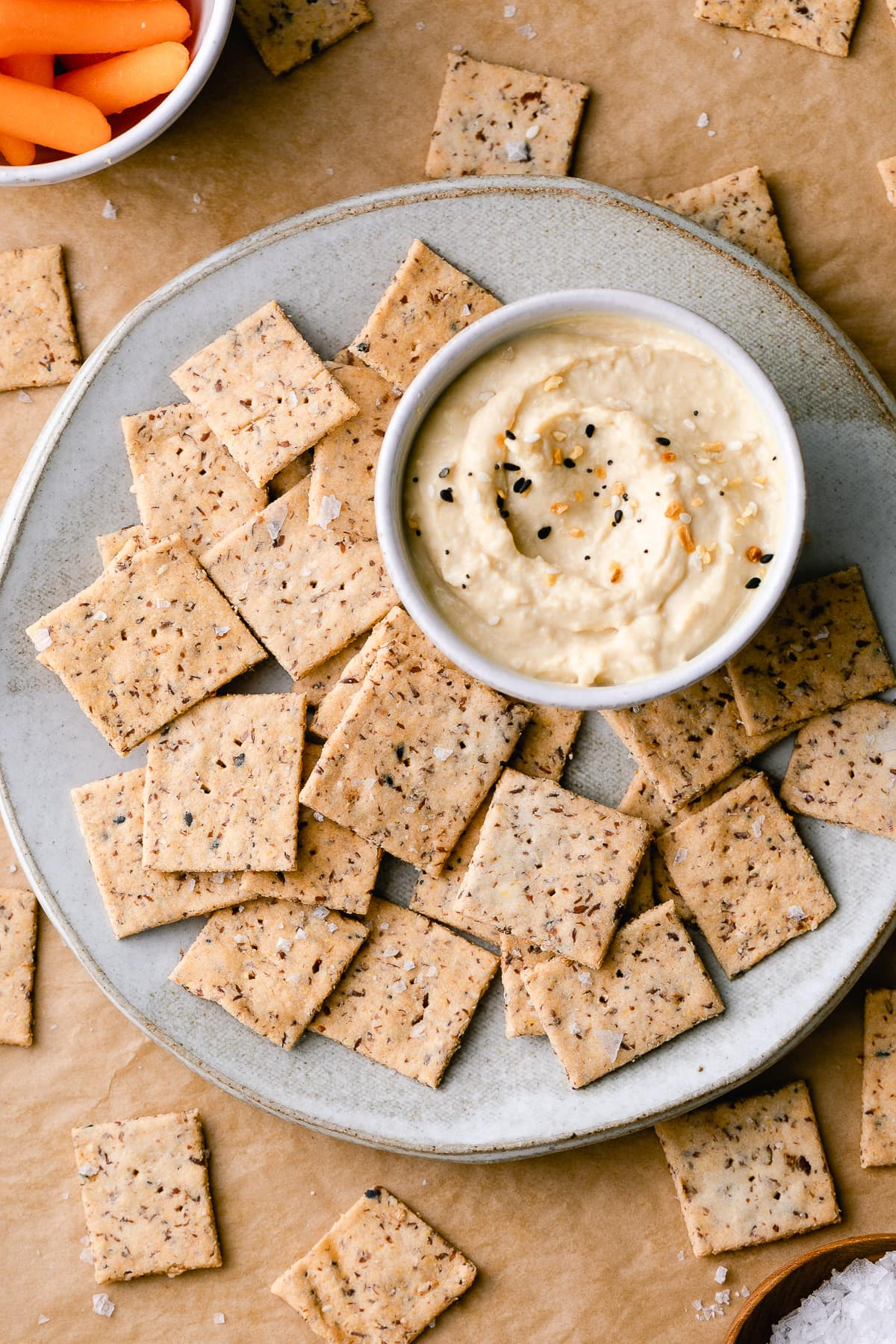
These 4-ingredient crackers (The Simple Veganista) are ideal to replace packs of crackers in plastic packaging, made with animal ingredients or palm oil. All you need is water, salt, flaxseed meal and almond flour. Serve with Flora vegan butter and artisan vegan cheese.
Avoid crackers (especially with seeds) for young children and choking risk (also avoid spreading blue cheese (dairy or not) if pregnant/nursing or for weak immune systems). Read more on food safety for people and pets (keep away from pets due to garlic, onion, salt etc).
Don’t feed leftover crackers (or any crusty bread) to garden birds or wildlife due to choking hazards (most also contain salt and fat that smears on feathers, affecting weatherproofing & insulation).
Other Good Vegan Cracker Recipes
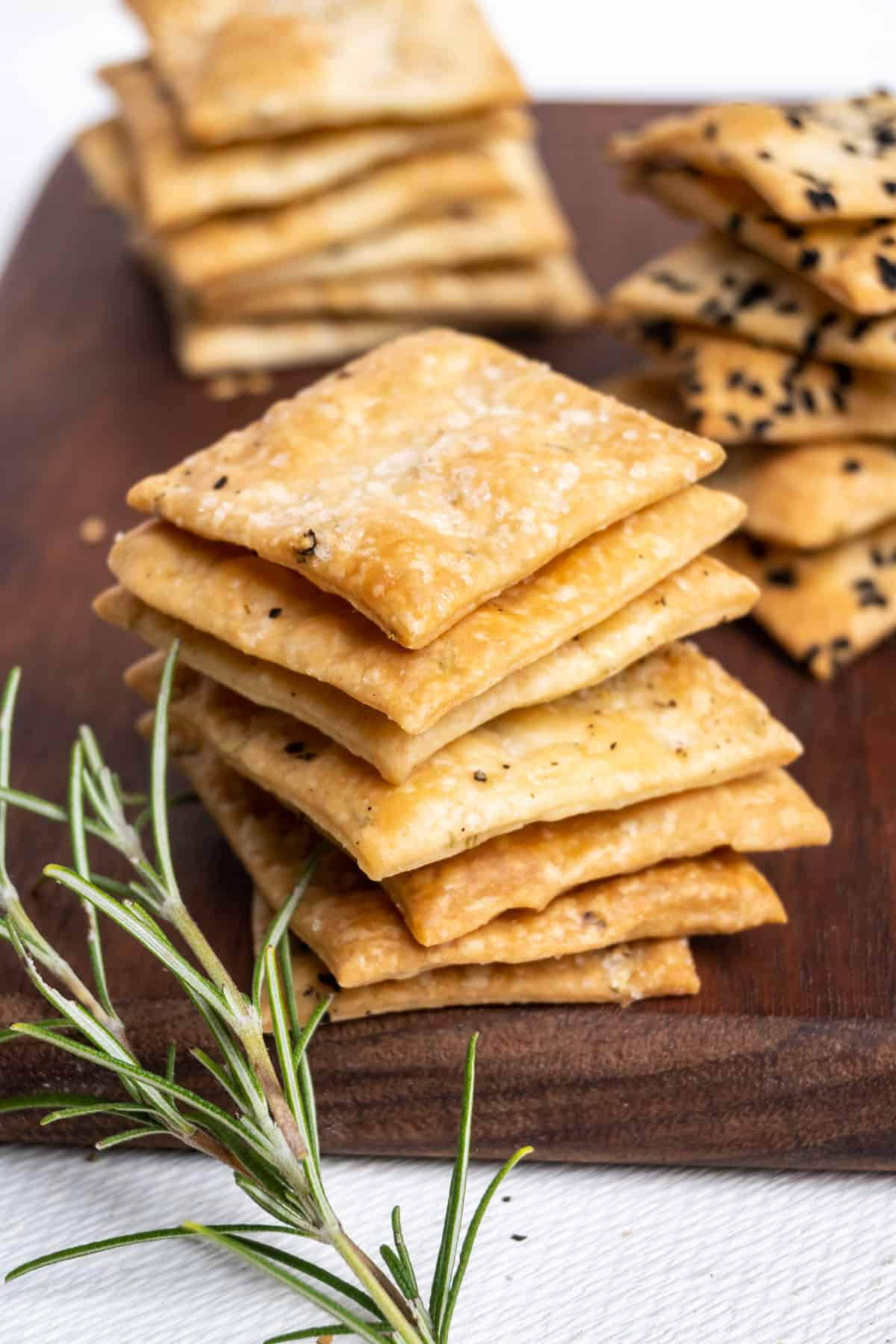
These Easy Crackers (Vegan on Board) are made with olive oil. Quick to make, the authors say the only problem is that they disappear even faster, so you’ll soon have to make another batch!
Easy Vegan Crispy Crackers (It Doesn’t Taste Like Chicken) are very versatile. You can leave them as they are, or flavour with fresh or dried herbs. They’ll keep in an airtight container, for a good few days (if they last that long!)
Cradoc’s Vegan Crackers from Wales (no palm oil)
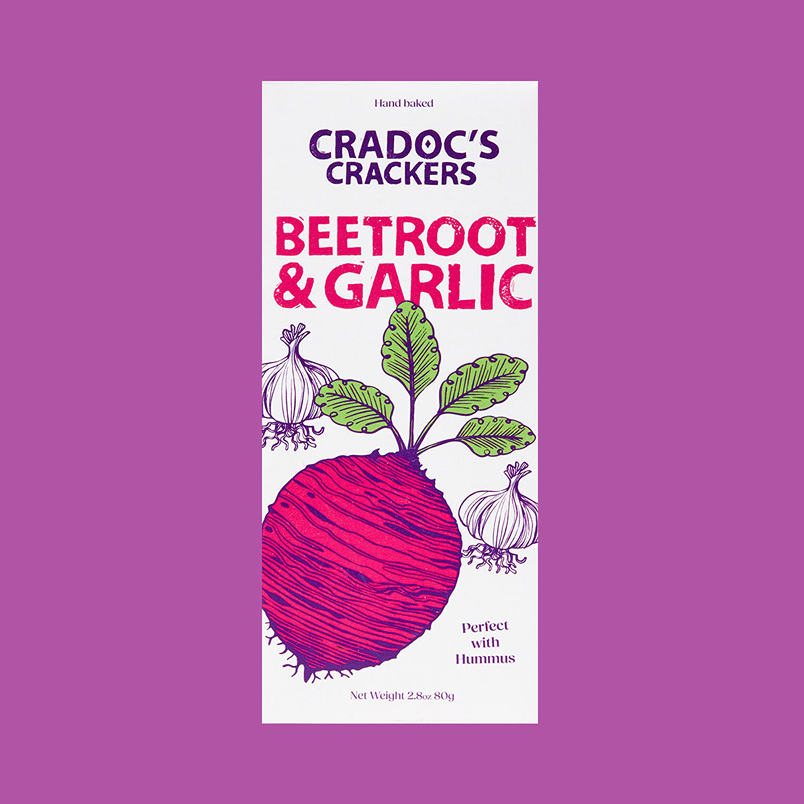
Cradoc’s Beetroot and Garlic Crackers
Cradoc’s Savoury Crackers (Wales) are made in the Brecon Brecons, using flours from a local co-operatives and spices from a community store. Owned by a local baker-lady (and chief Cracker Muncher!).
Recycle packaging at supermarket bag bins, if your kerbside does not recycle.
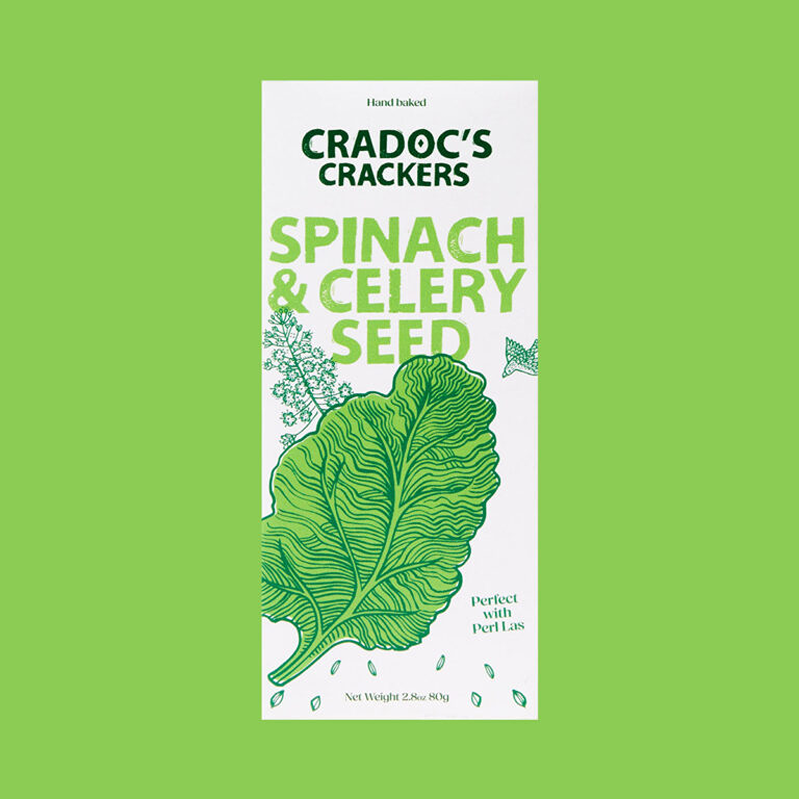
Cradoc’s Spinach and Celery Seed Crackers
We are always being told about ‘local food miles’. Well, palm oil is not local at all. It’s grown in Indonesia, and then shipped (by air) thousands of miles, creating a huge carbon footprint. For an ingredient only used, because it gives more profits to big food brands.
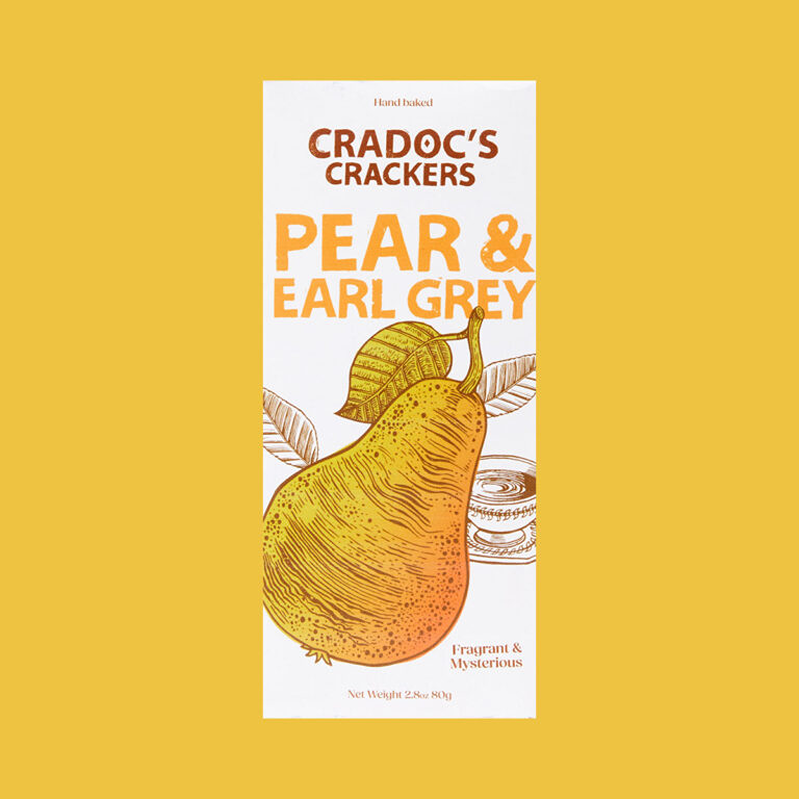
The vegan range includes:
- Salted Sourdough (made with Pembrokeshire rapeseed oil)
- Sea Salted
- Simple Oats
- Pear and Earl Grey (with bergamot oil)
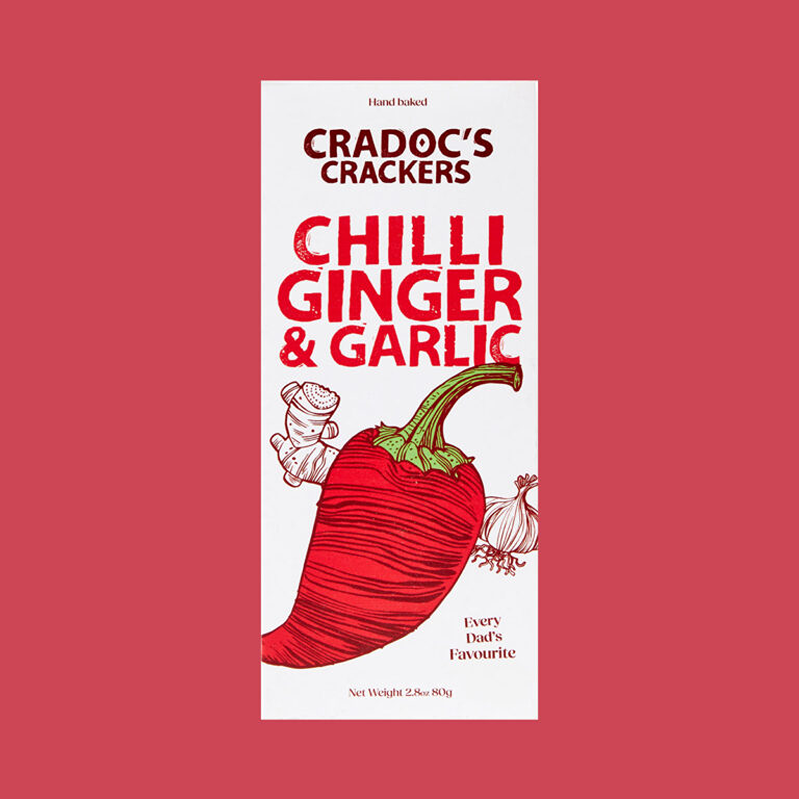
- Chilli Ginger Garlic (every dad’s favourite!)
- Wholemeal Wheat, Flax & Chia Seed (for omega 3s)
- Mexican Chilli Bean
- Chilli Ginger Garlic (every dad’s favourite!)
Break Free from Palm Oil (to save orangutans)
There is a lot of nonsense talked about palm oil. Greenpeace says the term’ sustainable palm oil’ is as useful as a chocolate teapot. It’s just a self-policed term used by industry, to greenwash the public. The only term to trust would be ‘certified organic’. But there is not enough land on earth to provide this, with the amount of palm oil used by food brands.
Some plantations carrying the ‘Round Table on Responsible Palm Oil’ logo’ have been found to have burned forests to the ground, with orangutans and their babies inside them (some orangutan mothers have even been shot and burned, while trying to protect their babies).

Alter/native by Suma Soap Bars are made with natural ingredients, then packed in recycled paper. Containing olive and coconut oils, with shea butter and essential oils.
Many liquid and bar soaps strip skin of natural oils or cause irritation. Alter/native by SUMA soaps gently cleanse and leave a soft, comfortable feeling. The rich blend of coconut oil, olive oil and shea butter helps soothe dryness and works well for most skin types, even if you’re sensitive.
Choose unscented soaps for pregnancy/nursing and babies. Avoid shea butter for latex allergies. Don’t use ‘human’ soap on pets (due to different PH and ingredients – read more on giving dogs baths.
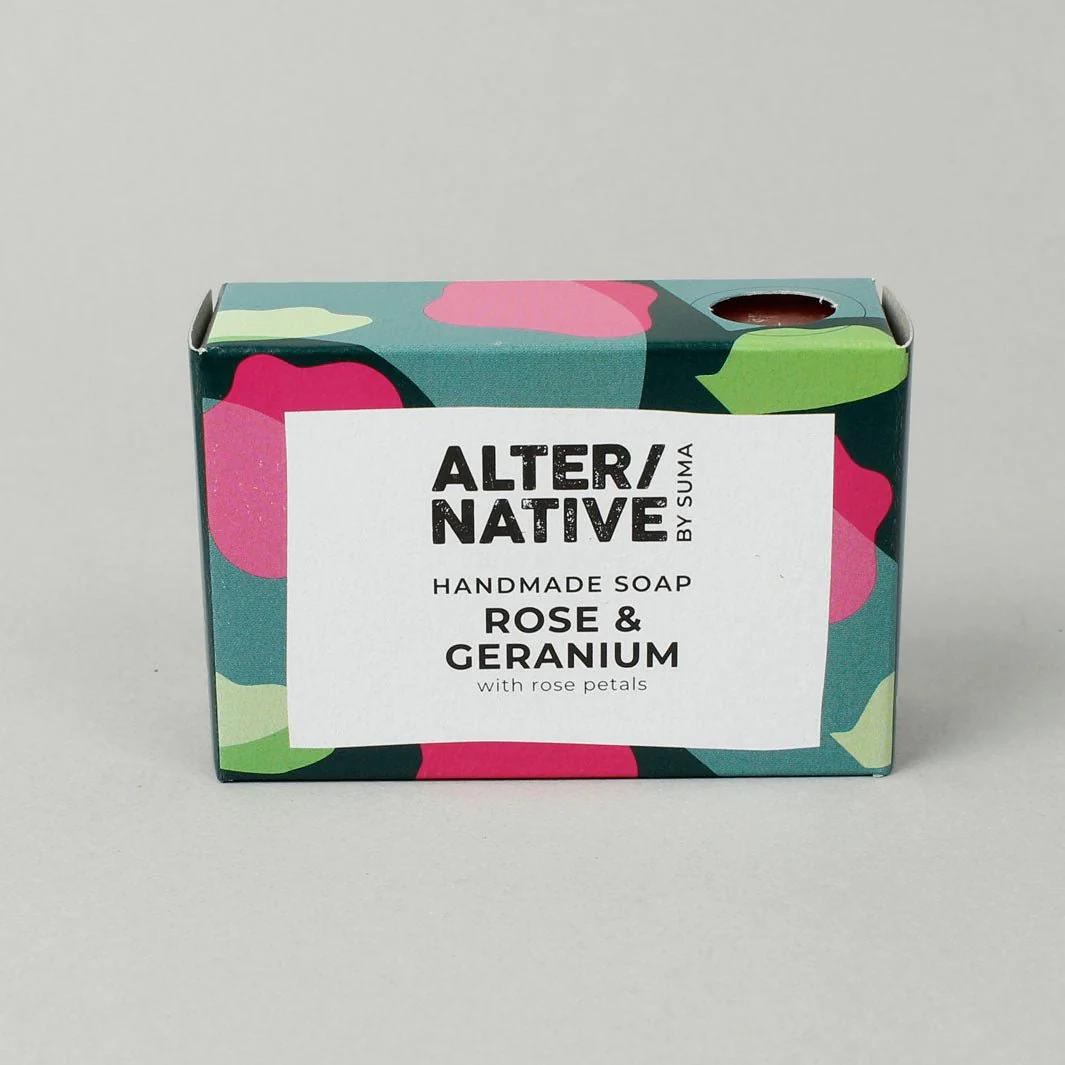
SUMA is run by its workers as a co-operative. That means your money supports fair pay, strong working conditions and a business owned by its staff.
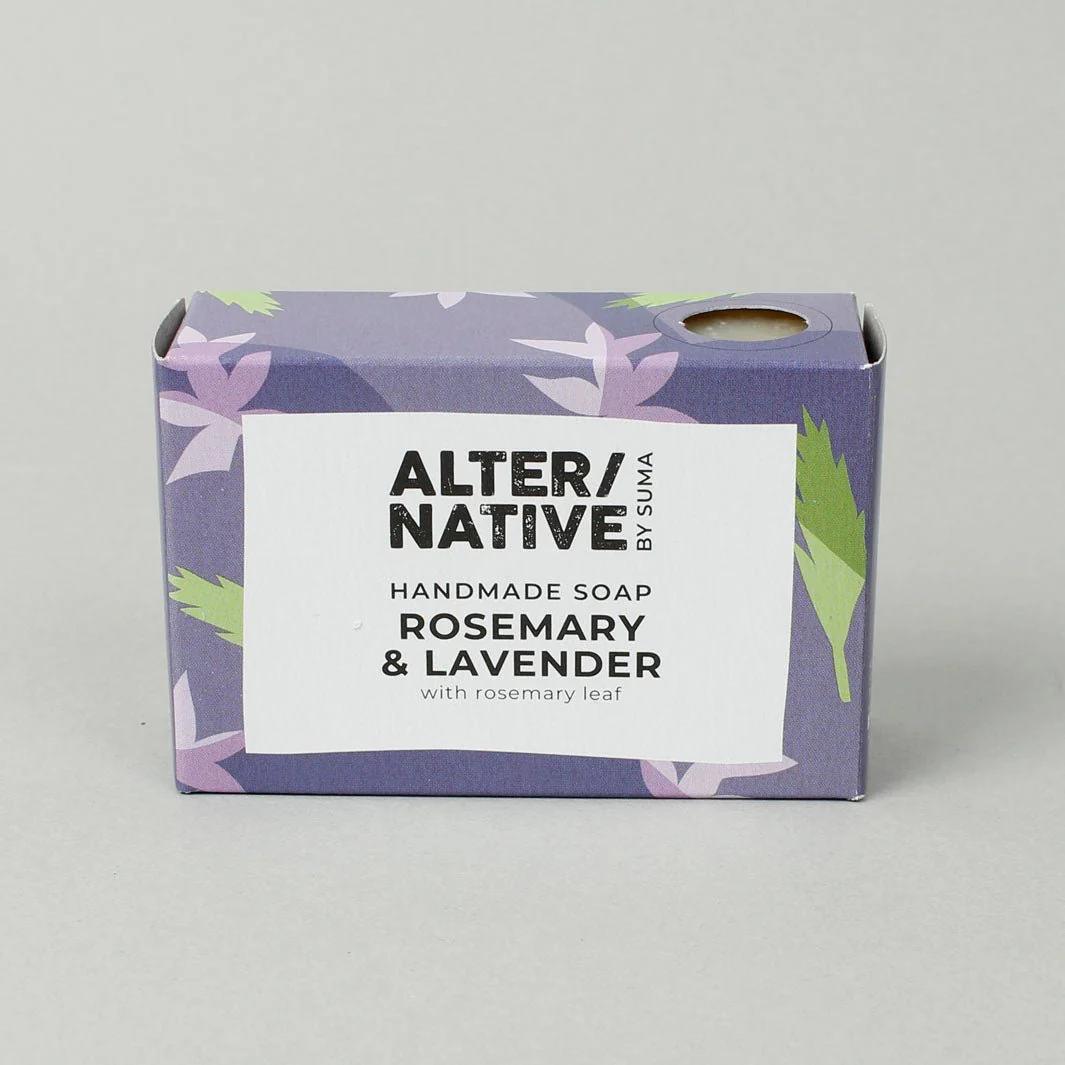
Why Choose Handmade Soaps?
Most soaps in shops are no longer made with animal tallow (sodium tallowate). But sodium palmate (palm oil) so no better, as its use is killing orangutans. Greenpeace says there is no such thing as ‘sustainable palm oil’ (a self-policed term from industry).
Real handmade soap (which retains glycerine, instead of selling it to industry) won’t dry your skin. Try using it and nothing else for a month, and see what happens!
Due to being more moisturising, store handmade soaps on a dry facecloth or slatted soap dish, to let water drain away, and help soaps last longer.
Storing Handmade Soap (to avoid going mushy!)
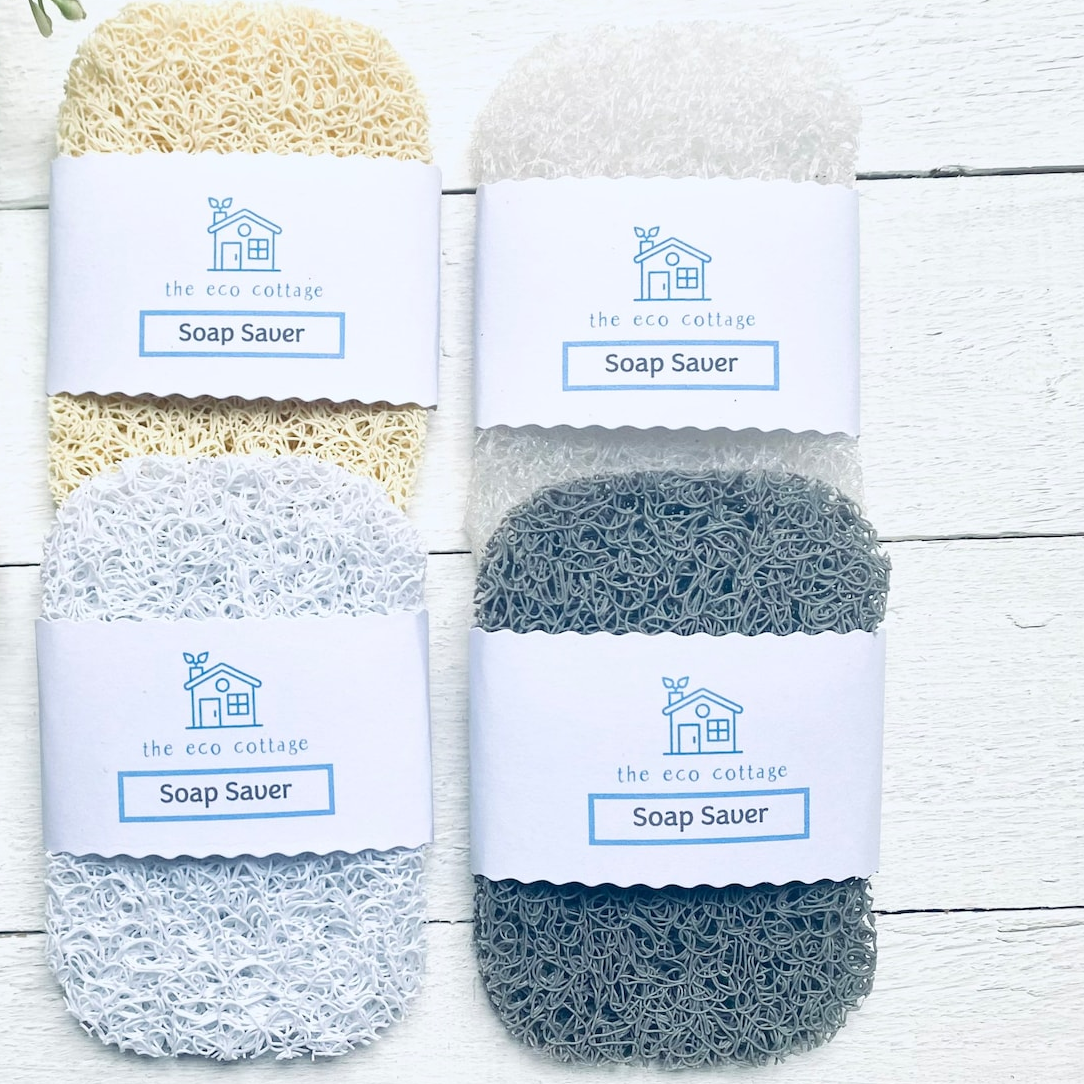
Due to being more moisturising, store handmade soaps on a dry facecloth or one of these options. to let water drain away, and help soaps last longer.
This soap saver pad only costs a few pounds. In four colours, they can be cut to size. They let air circulate, and if they get clogged with soap, you can just give them a wash (even pop them in the dishwasher) to use again.

Or use a slatted soap dish to drain water away, so your soap lasts longer.

This upcycled coconut husk soap rest is also good to store handmade soap. The large rest can store two bars side-by-side. Due to natural fibres, some minor shedding may occur when you first use them.

Suma’s travel soap tin is ideal for when you’re on the go.
Coraline Soaps (for very dry and sensitive skin)
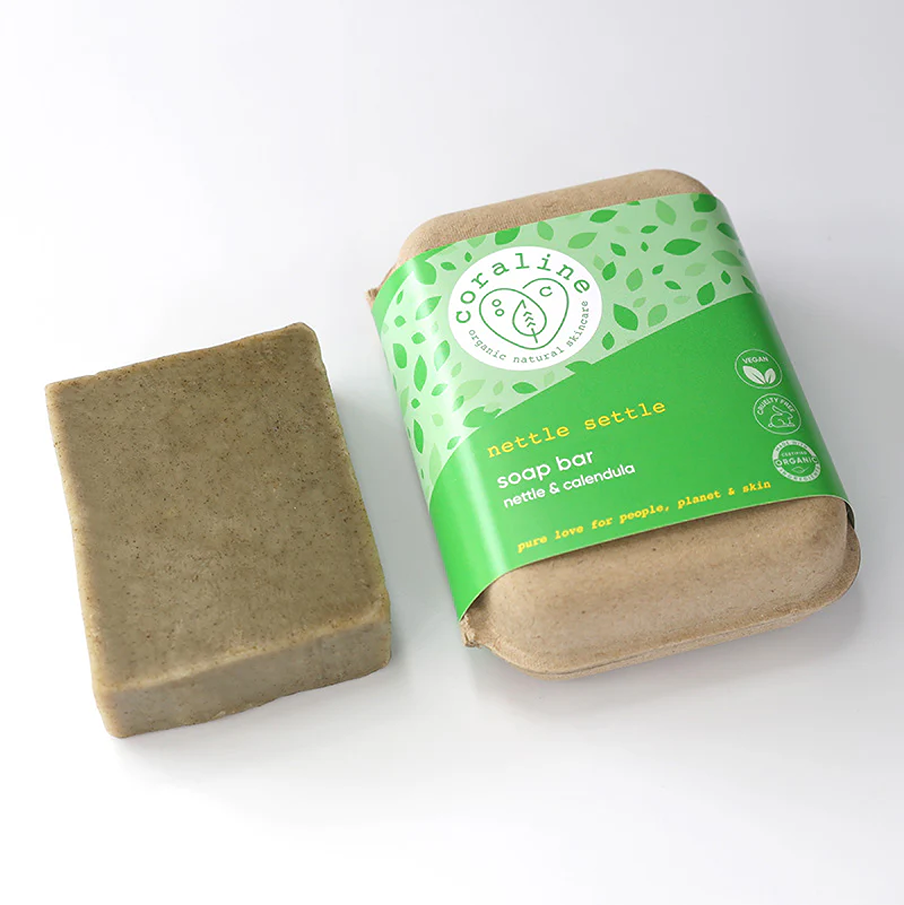
Coraline Soaps (also sold at Blomma Beauty (use code englandnaturally for 10% discount) was created by the parents of a baby with Down Syndrome, who could not tolerate ‘sensitive skin’ soaps. The chamomile soap has anti-inflammatory ingredients to relieve dry itchy skin.
For 3 months and up only. Check for nut allergies.
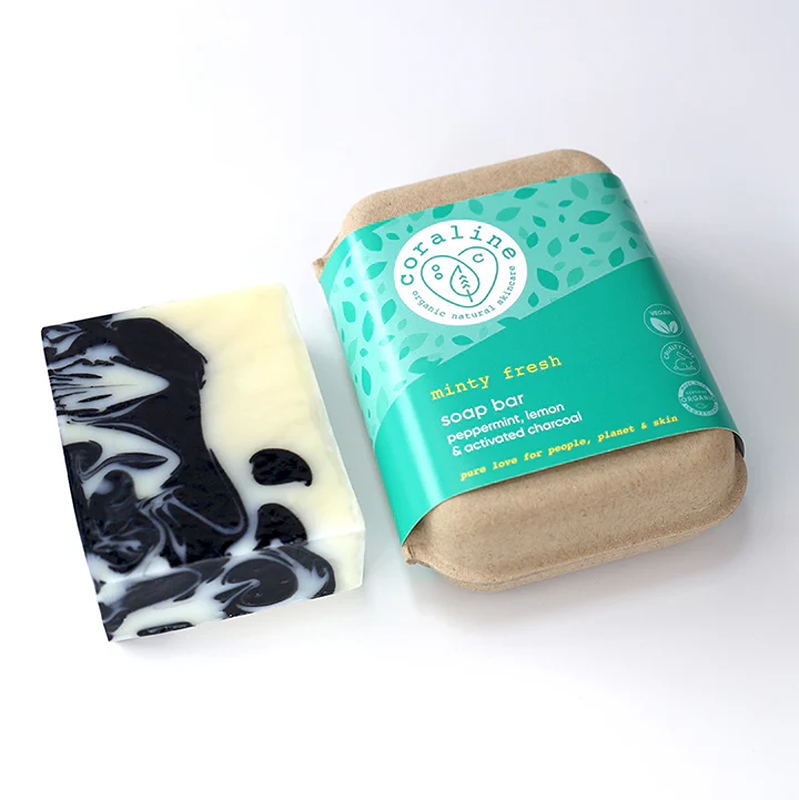
Skin experts often recommend Coraline Soaps for people with sensitive skin. Their formulas are tested to make sure they’re safe and kind.
Coraline Soaps don’t just clean, they hydrate too. The blend of nourishing oils leaves skin feeling soft and never stripped. For people who get tight, dry skin after washing, this extra moisture can make daily washing feel soothing and gentle.
Coraline Skincare has a page on how to help people with eczema and similar skin conditions.


Helleo Olive Oil Soaps (great for sensitive skin)

This handmade strawberry mint soap is made with hand-picked strawberries and freshly-harvested peppermint.
Olive oil soap is famous for being soft on sensitive skin. The natural fats in olive oil keep moisture in and harsh additives out. This means fewer worries about rashes or irritation. Paper packaging also keeps extra chemicals away, so you get a pure bar each time.
Olive oil is good for sensitive skin. One woman went to a dermatologist for her ‘incurable itchy skin’ even though she was using the brand leading soap.
After he couldn’t help, she popped to Holland & Barratt and bought a cheap plain bar of Oliva soap (just olive oil, salt and water). And her skin began to heal in an hour.
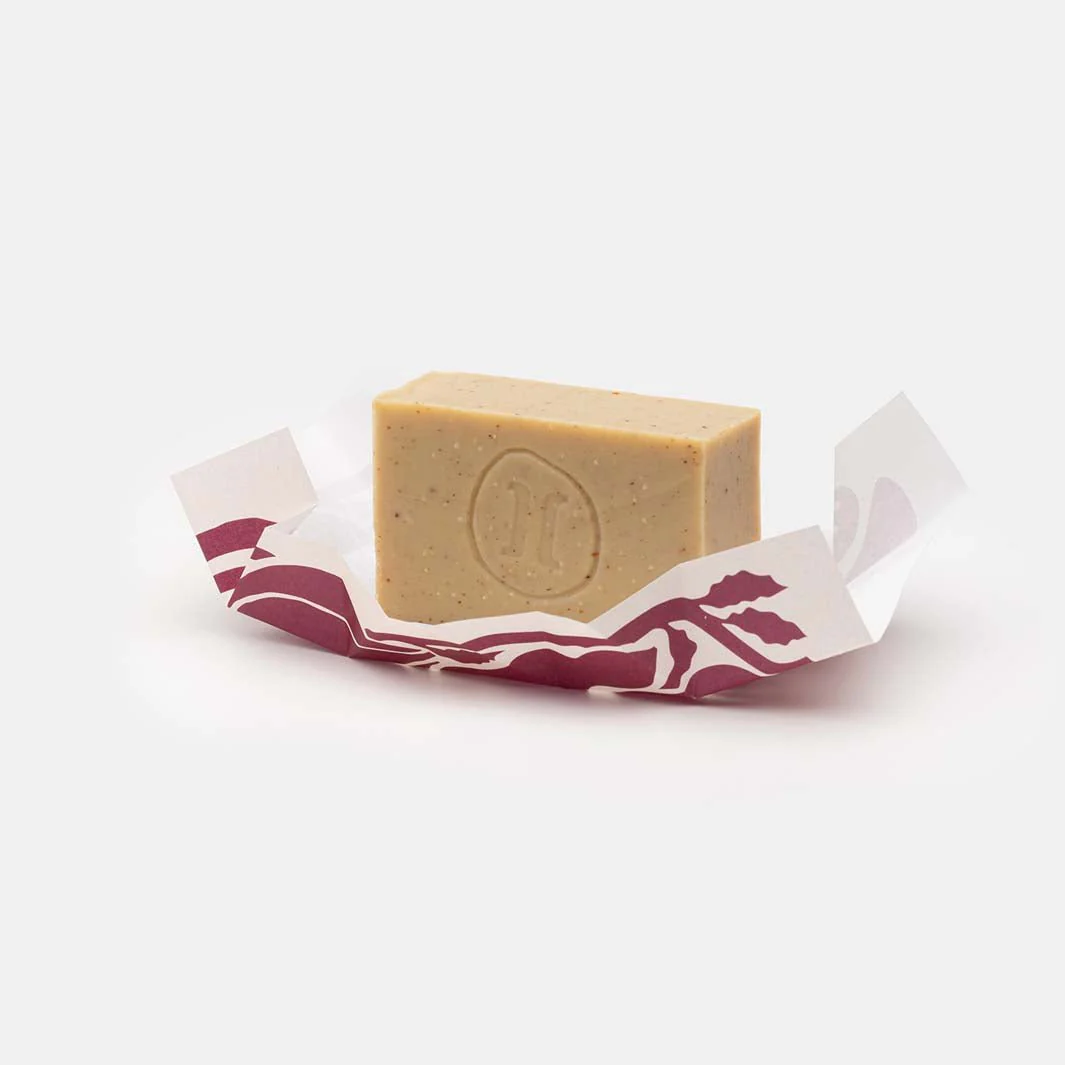
The carob fig soap is made with fig juice and carob syrup. Many olive oil soaps in paper come from small family businesses or independent makers. Buying these bars often means supporting traditional skills and local jobs. You get a quality product and help communities grow.
Friendly Soaps (no palm oil, made in Northumberland)
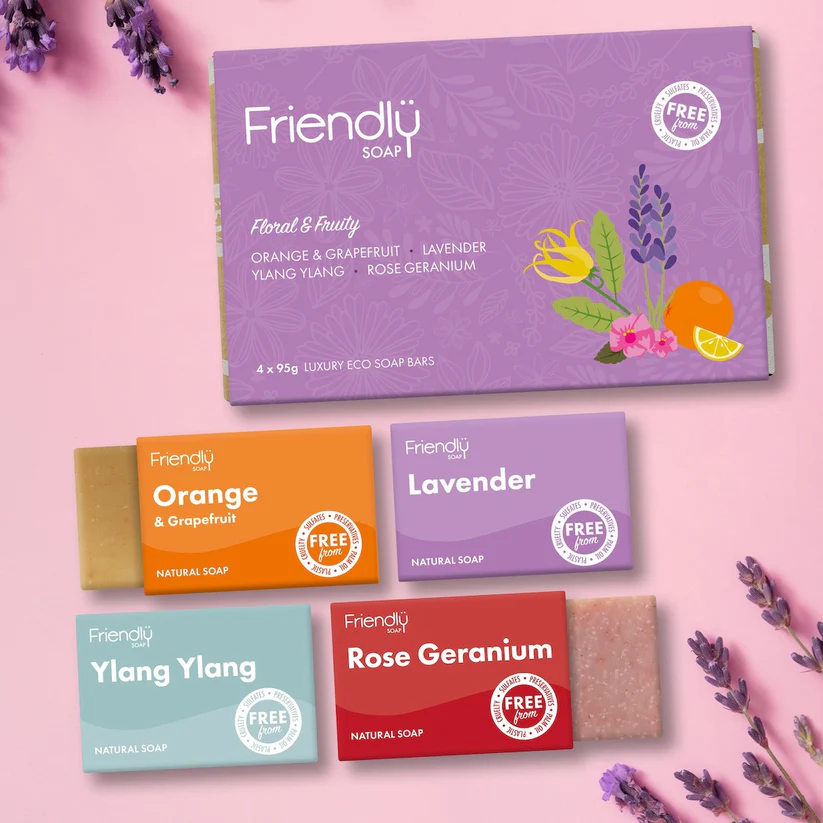
Friendly Soaps (made in Northumberland) are all vegan and free from palm oil (so orangutan-friendly to protect their forest habits) and sold in zero waste paper packaging. They can be found widely at markets and in a farm shop and independent health stores. Or you can buy online (including in packs of 12).
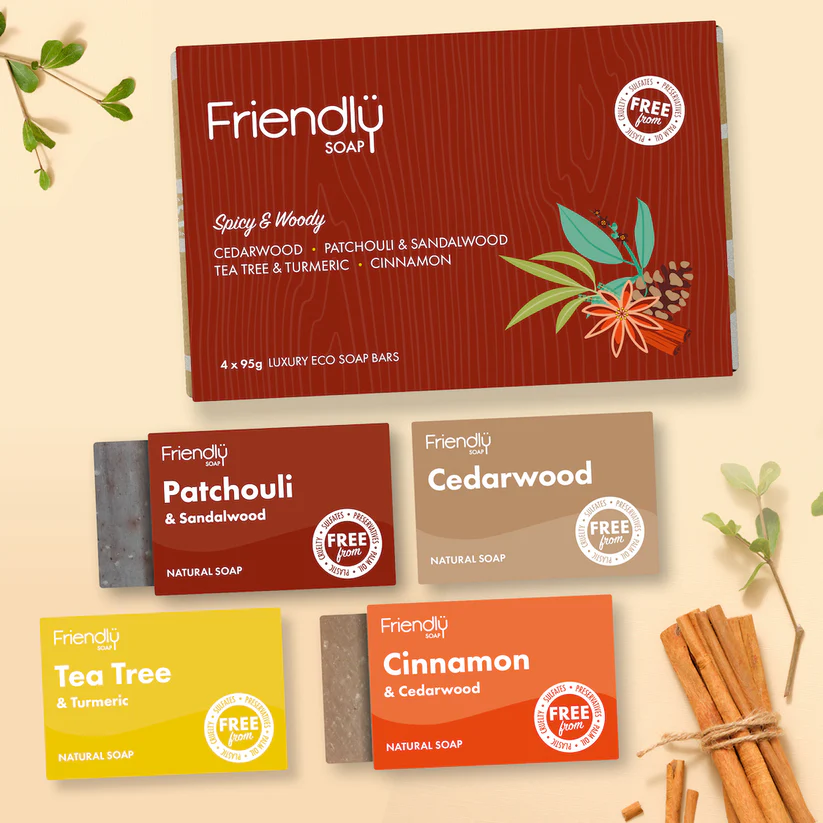
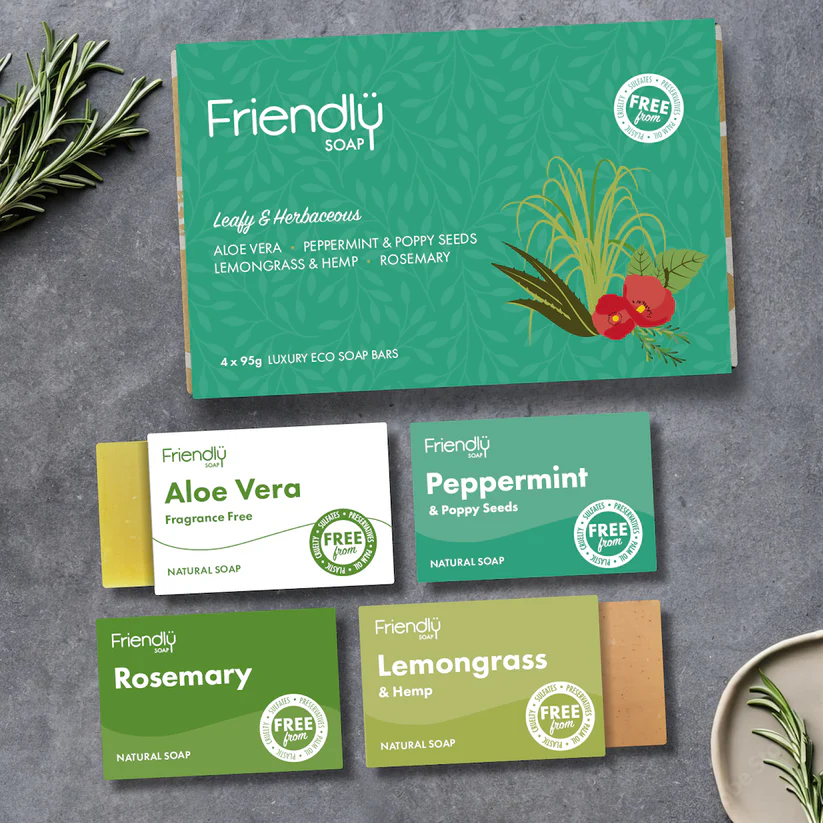
Choose from the follow scents (you can also buy mixed packs, if preferred):
- Aloe vera (unscented, for sensitive skin and children)
- Fragrance-free cleansing Bar (coconut/rapeseed oil and shea butter)
- Lavender (relaxing)
- Ylang Ylang (floral)
- Rose geranium (feminine – good for grandma!)
- Cinnamon (warming)
- Lemongrass (a good antibacterial hand soap)
- Cedarwood or patchouli sandalwood (good for men)
- Rosemary (herbal and refreshing)
- Peppermint and poppy seeds (exfoliating)
- Tea tree and turmeric (deep-cleansing)
- A travel bar (a soap, shampoo and body wash with lavender, lemongrass, tea tree and peppermint).
This brand also makes specialist soaps for:
- Shaving bar (with kaolin clay and soy wax)
- Smelly feet!
- Mucky mechanics!
- Soaps on ropes (for showers, no soap dish needed)
- Mini Bars (guest-size soaps for bathrooms or hotels/guesthouses
- Hotels (guest-size soaps)
Discounted Bags of Soapy Scraps!
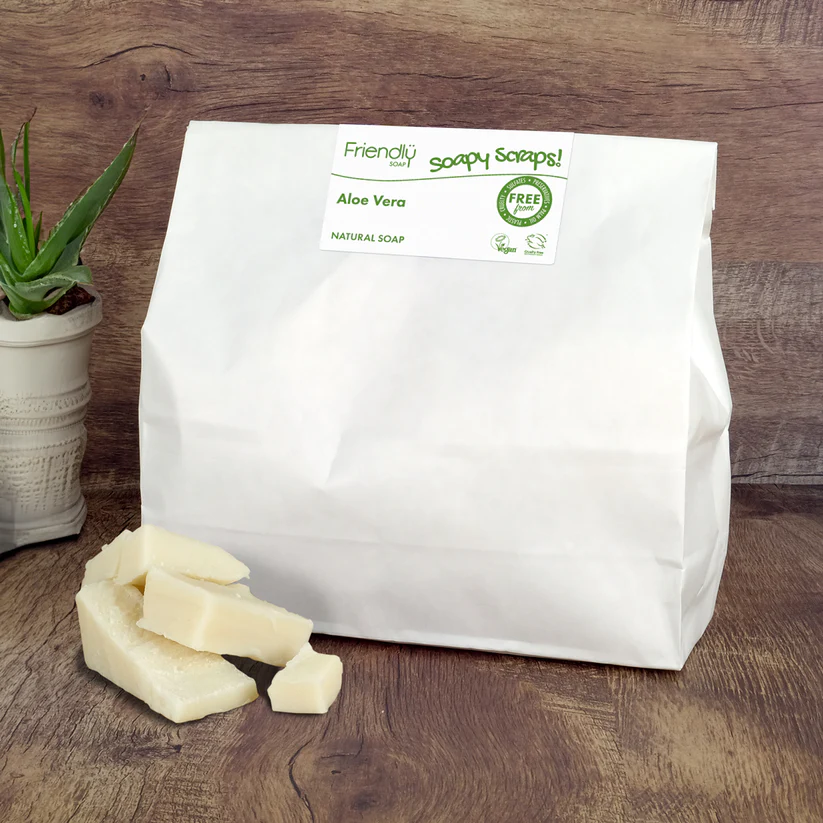
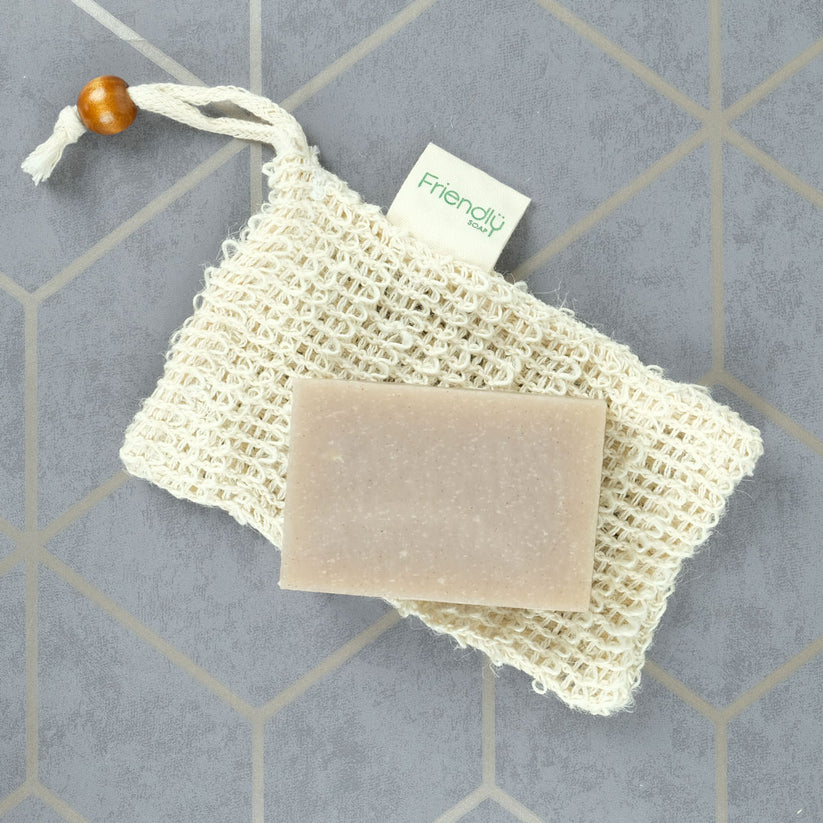
Friendly Soapy Scraps are discounted bags of their offcuts, all different shapes and blobs, if you want something more affordable, and to stop soap waste! Just put them into the soap saver made with sisal, to wash and naturally exfoliate skin at the same time. Hang up to dry, after each use.
A Friendly Soap Bar for Organic Gardeners!
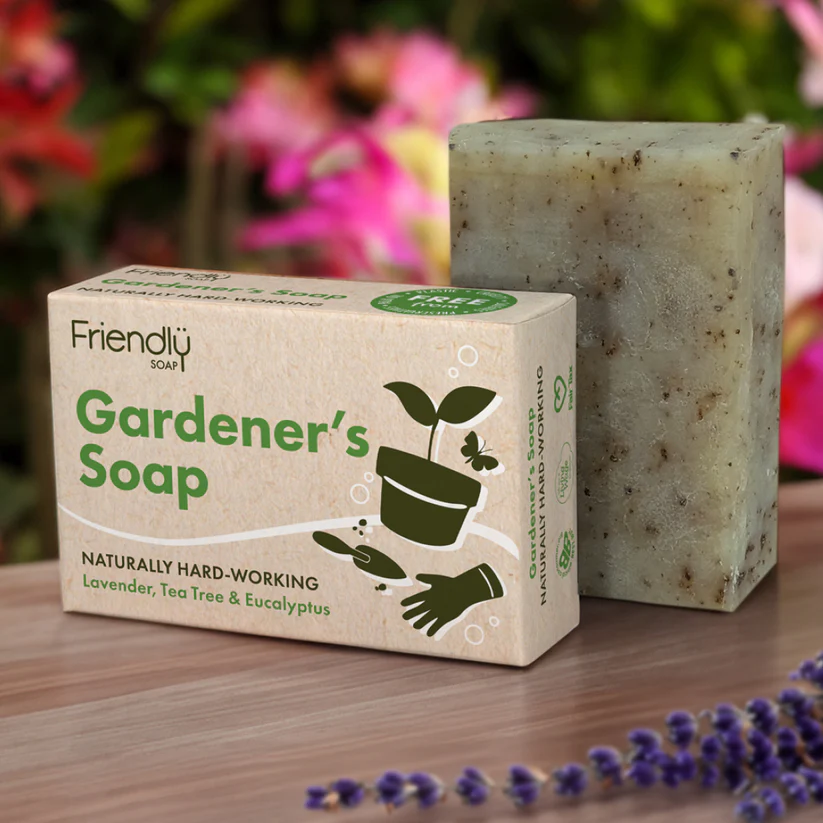
Friendly Gardener’s Soap (made in Northumberland) is specifically designed for people who work in the garden, to remove dirt and mucky stuff under your fingernails and on your palms. A nice bar to keep in the bathroom or your allotment shed! Also sold in packs of 12.
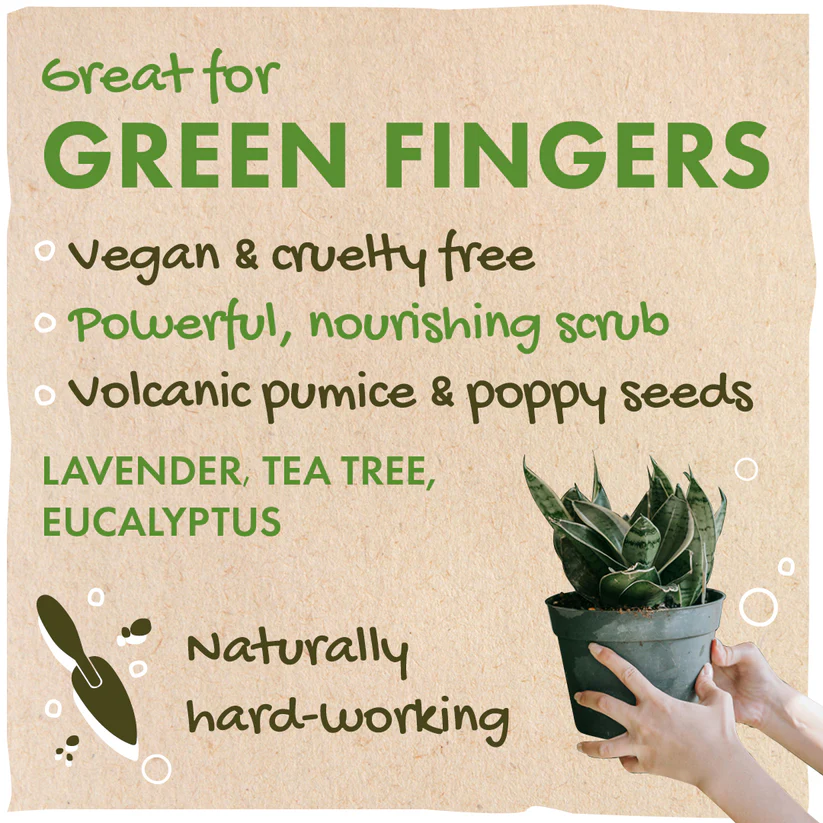
Made with coconut and rapeseed oil, it also contains nourishing shea butter (not for latex allergies) and volcanic pumice to naturally exfoliate. Also contains poppy seeds, comfrey and soothing aloe vera.
Read our posts on pet-friendly gardens and wildlife-friendly gardens. And how to help stop birds flying into windows.
A Friendly Soap Bar for Smelly Chef Hands!
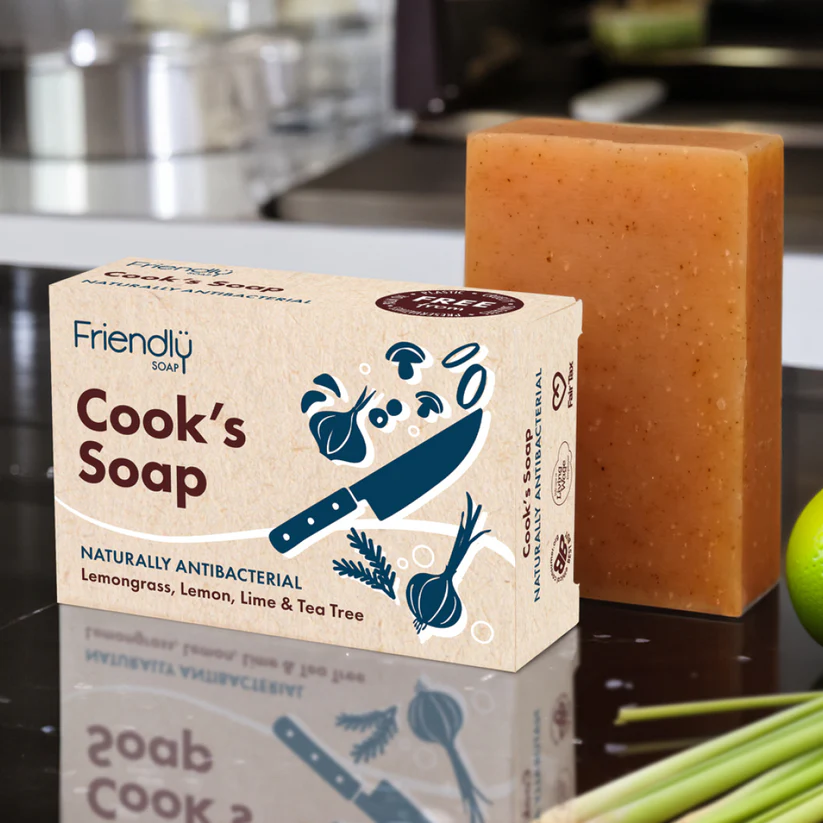
Friendly Cook’s Soap (made in Northumberland) is specifically designed for chefs who regularly work with smelly ingredients like onion and garlic. It’s ideal to keep in the kitchen, when you need to quickly wash your hands. Also sold in packs of 12.
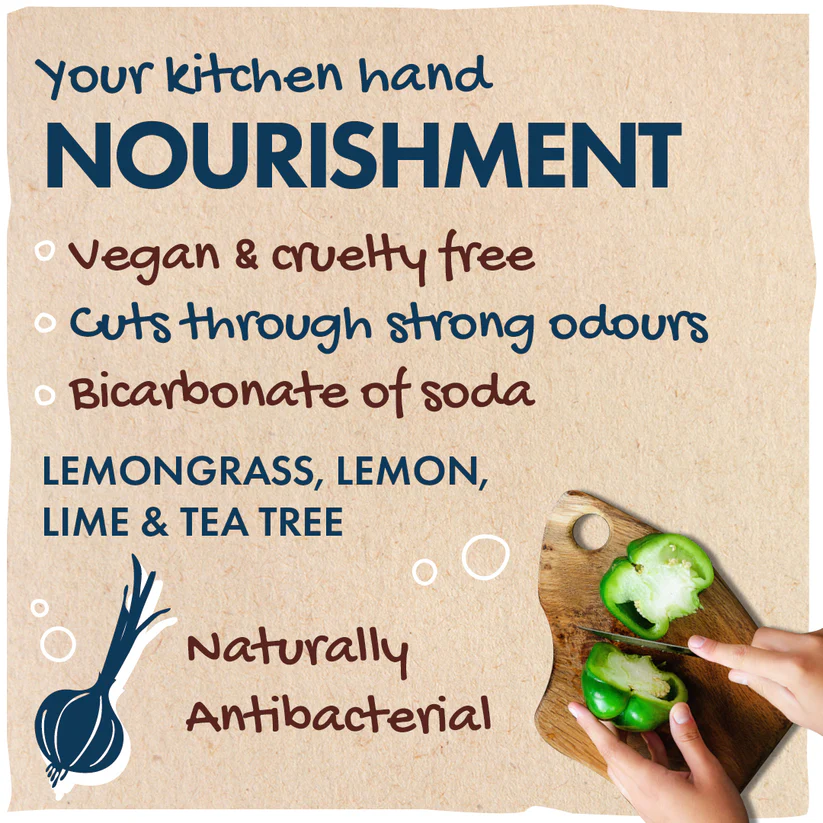
This bar contains coconut oil and shea butter (not for latex allergies) along with exfoliating bicarbonate of soda to remove odours, and essential oils of citrus and paprika.
Read our plant-based recipes for inspiration to start cooking! And our post on food safety for people and pets.

If you like baking your own cakes or cookies, ready-made pastry contains animal ingredients and nearly always palm oil (unsustainable use is harming habitats of orangutans and other endangered creatures). And is packed in plastic.
This homemade vegan pastry (Doves Farm) makes enough for one large pie (top and base) or 24 small tarts. Wrap and freeze leftovers in eco clingfilm alternative.
Keep fresh dough away from young children and pets, as it can expand in the stomach. Many other ingredients (salt, garlic, onion) are unsafe near animal friends. Read more on food safety for people and pets.
For flavoured pastry, bin allium scraps (onion, garlic, shallot, leeks, chives) as like tomato/citrus/rhubarb scraps, acids could harm compost creatures.
Use a vegan butter with no palm oil (Flora is a good brand). Baking blocks are better than margarine, as you can cube them chilled, for a better crumb. Use with Doves Farm or another artisan flour, natural sea salt and a little water.
Don’t knead pastry dough, this builds too much gluten, and creates tough pastry.
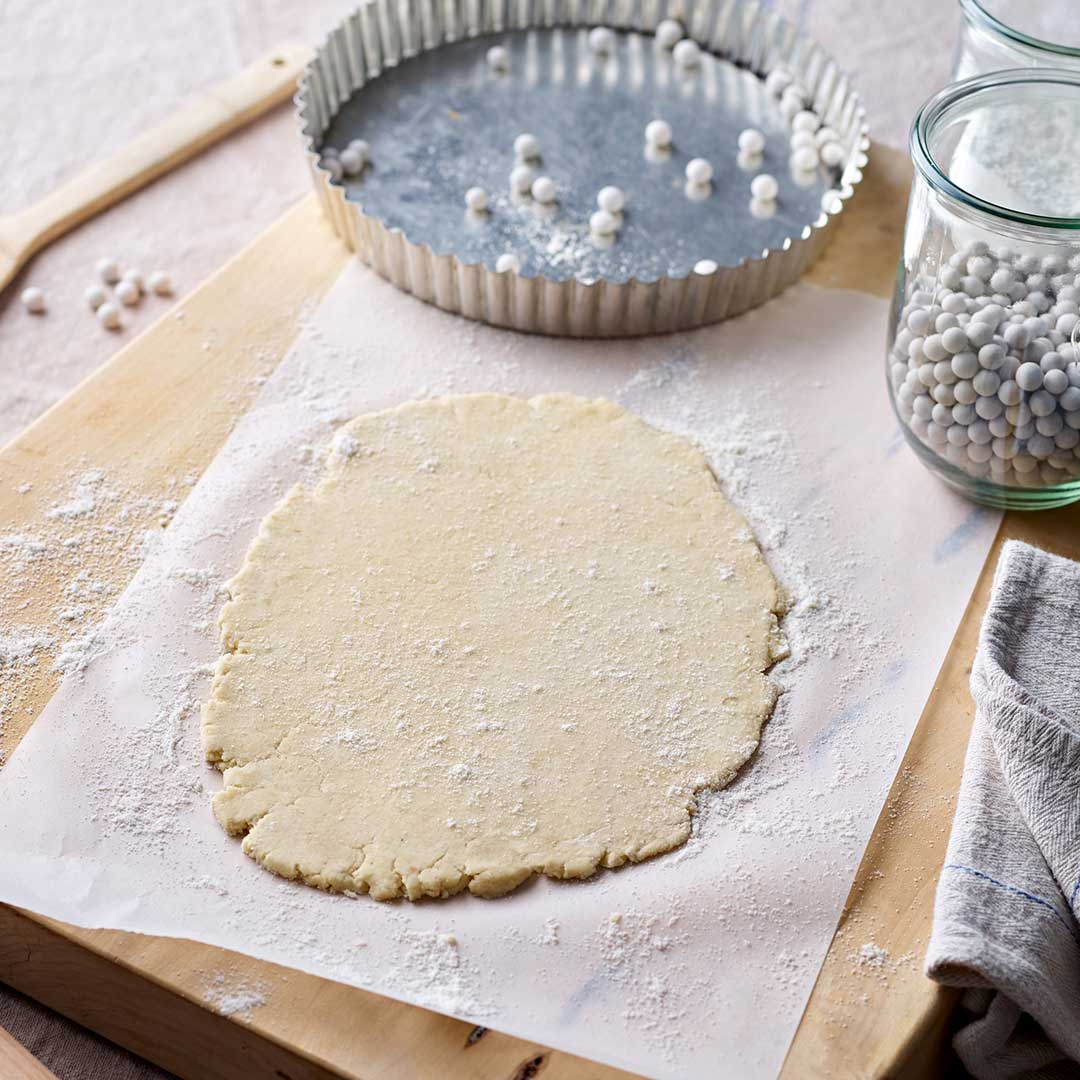
For gluten-free diets, coconut flour pastry recipe (Doves Farm) is made with ground almonds (more flaky, so press dough into a quiche dish).
Find coconut flour in health shops, and use organic European almonds for better ethics (some almonds use farming practices that harm bees). Most gluten-free baking recipes use xanthan gum.
How to Freeze and Thaw Homemade Vegan Pastry
Shape the dough into a flat disk and wrap securely in eco clingfilm alternative, label with the date, and freeze for up to 3 months.
When ready to use, thaw overnight in the fridge, and let the dough sit at room temperature (covered with a plate to stop it drying out) for 15 to 20 minutes. It should then be soft enough to roll out.
Homemade Vegan Puff Pastry Recipe
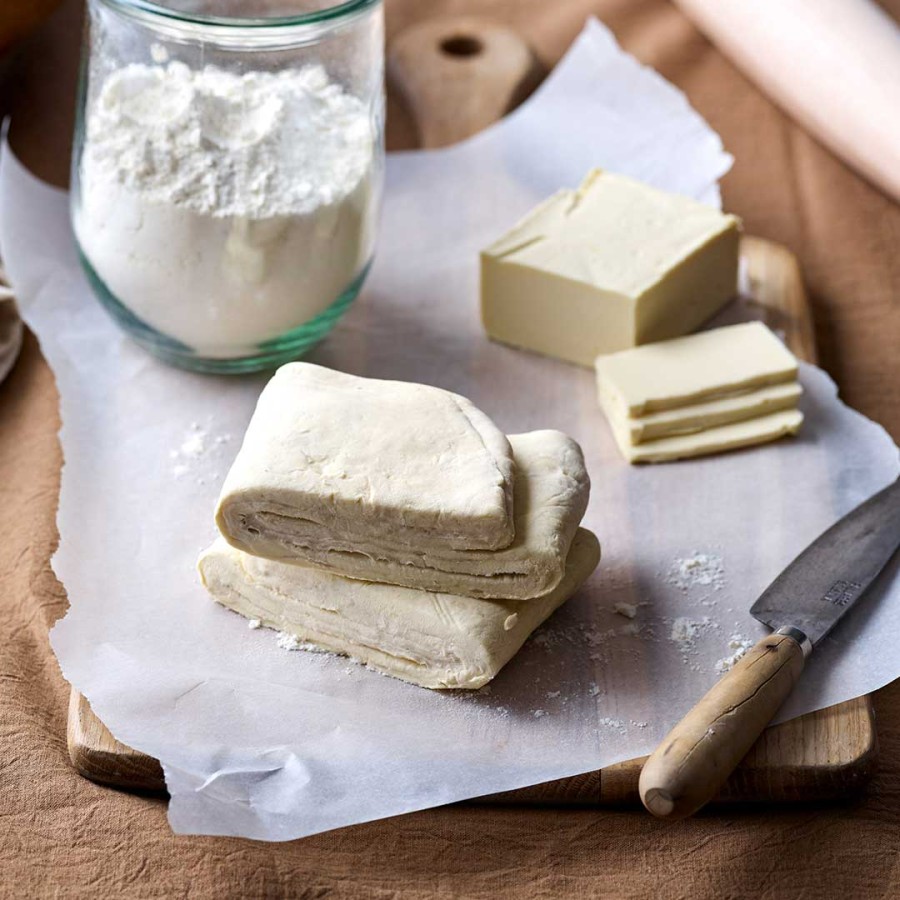
Puff pastry is good for making savoury dishes like:
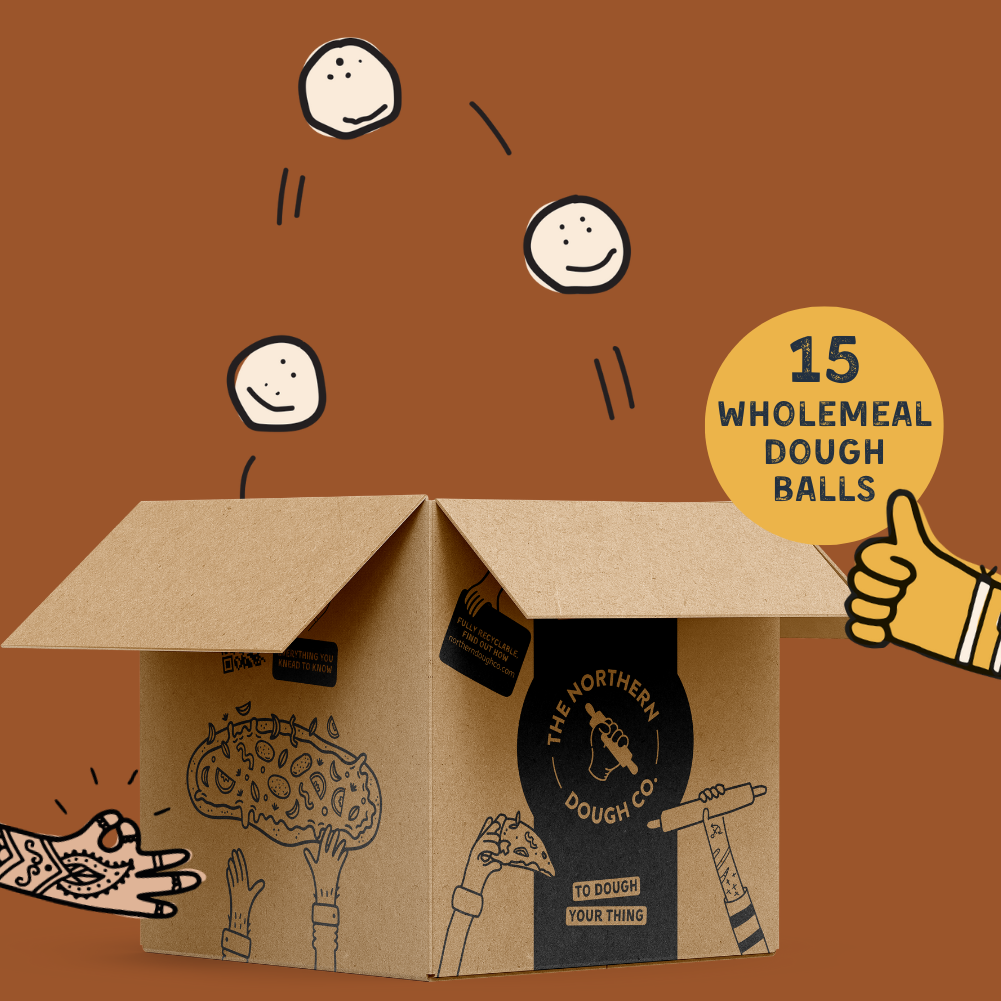
Northern Dough Co does make palm-oil-free pizza doughs and ready-made dough balls, if you want to cheat! Recycle packaging at supermarket bag bins, if your kerbside does not recycle.