Beyond the Bench: Sleeping Solutions for Homeless People
Rough sleepers find it difficult to drag around heavy coats and blankets, especially when wet. Fortunately there are a couple of really good inventions that let homeless people stay warm and dry, until they find stable homes.
Micro-shelters—often referred to as tiny homes—have transformed temporary transitional housing. These small, individual structures offer privacy, security, and protection from extreme weather, serving as a critical stepping stone between unsheltered living and permanent housing.
Amazing Grace Spaces (pop-up shelters)
Amazing Grace Spaces are just 8ft by 6ft, but feature a bed, toilet and USB socket, and can save lives in cold weather. Plus there a coded lock to protect the person inside.
Ideal for people waiting for more secure accommodation, these are created by a local ministry, so users have access also to free pastoral care.
It recommends to site two pods together, in an area with solar panels for charging. This lets users have their own space, but also the comfort and security of someone close.
The pods can be sited in church grounds, behind shops or in car parks. Almost anywhere as they are self-contained and easily installed.
Sleep Pod (a rain-wind resistant sleeping bag)
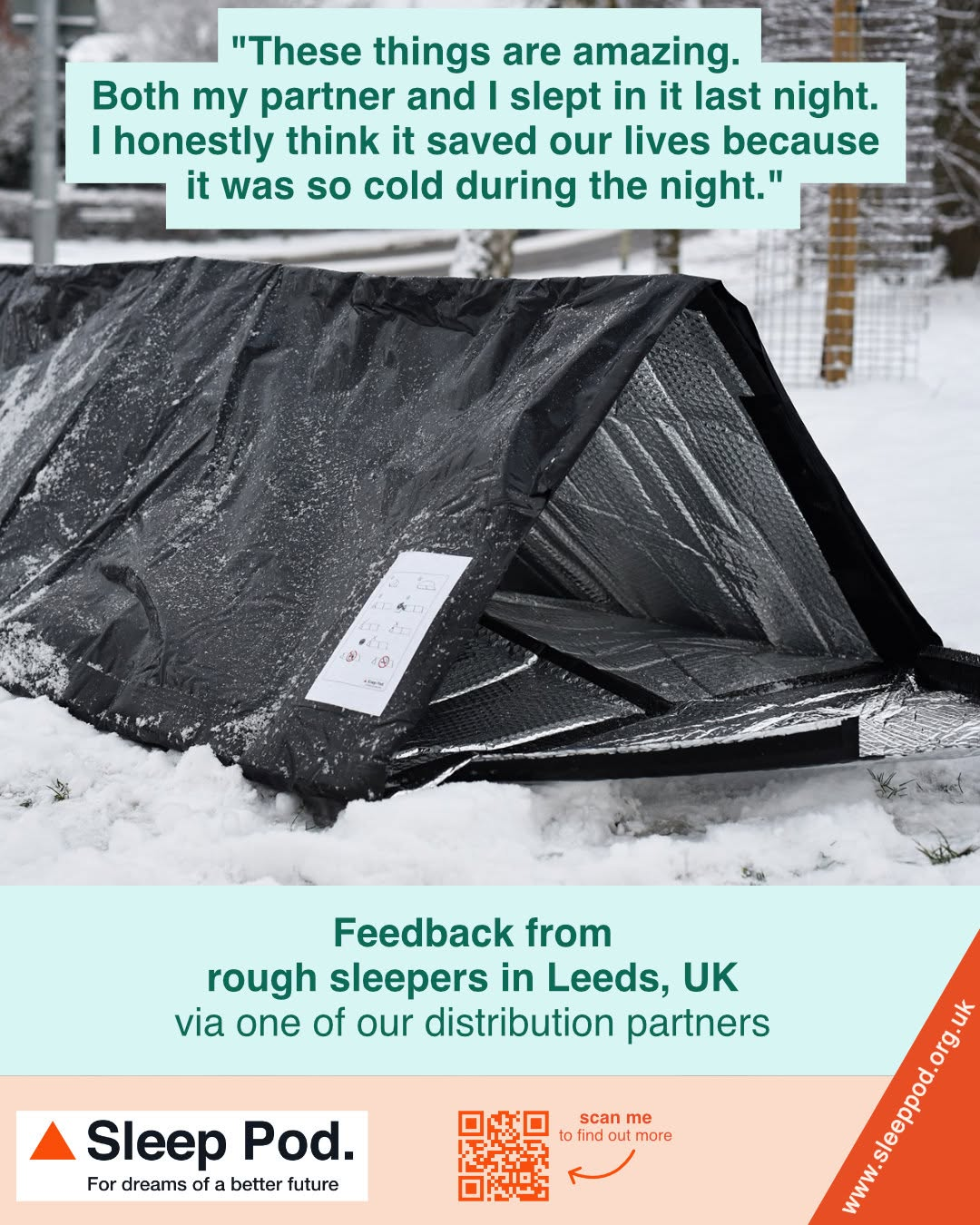
Sleep Pod is a £30 rain/wind-resistant ‘sleeping tent’ that is lightweight and easy to carry. It’s also easy to make, by teams of volunteers.
Some prison inmates are now making these, to provide meaningful work. Over 15,000 built and distributed already.
You can donate on the website to help pay for materials, for volunteers to build more sleep pods.
Shelterbag (a survival bag with tented hood)
Shelterbag is a high performance survival bag, with a large tented hood to provide full protection from the elements. It is waterproof, heavily insulated, and has a built-in mattress. It is also light, and is carried either over one shoulder or as a 2-strap backpack.
And crucially it sells for just £100, an ideal purchase for small homeless charities. Organisations can repurpose black canvas graphics.
You can donate to buy someone a Shelterbag at the website. £100 protects one person, a company donating £20K protects 200 people from the elements. You can also donate a Shelterbag in memory of a loved one.
Backpack Bed With Storage (from Australia)
Backpack Bed is a great idea from Australia, to help homeless people. It’s backpack with storage. But at night, rolls out into a comfortable bed, for people who are sleeping rough. It’s already in use by over 1000 shelters across Australia, with great success.
Why Backpad Bed is good for rough sleepers
- It’s lightweight (2.9kg). That’s around the weight of a house brick.
- It offers four-season protection.
- The fabric and mattress are fire-retardant
- It’s water and windproof.
- Adjustable hip, shoulder and chest straps
- 135 litre storage for bedding & belongings
- 4 storage pockets (to store up to 20kg)
- A body mosquito net (to stop insect bites)
According to 180 Degrees Consulting, each Backpack Bed distributed to a homeless person without shelter, savings over $3000 Aussie dollars (around £1,500) to the community, due to reduce costs for health.
How do people use Backpack Bed?
- Backpack Bed looks like a rucksack. But at night, converts to a bed. So homeless people can carry it around with dignity, without dragging around blankets, that get heavy after rain. And are unhygenic.
- It keeps belongings safe, when someone is sleeping. It’s easy to set up. Just roll it out and get in, for a good night’s sleep.
- The emergency foil blanket is made from space technology, and great to prevent hypothermia. Body warmth is trapped and reflected back towards the body, to protect from extreme weather.
- And during the day, it easily converts into a shelter. Just undo the zip and use the built-in ropes to shelter from the wind or sun. And the design means water drains off, to avoid mildew.
Why Hostile Architecture Should Be Illegal
Hosite architecture is a horrible idea, where councils or shops purposely design benches and bus stops, so that’s impossible for people to sleep on them. Councils should be helping homeless people, not making lives worse.
Placing spikes on bus seats that won’t allow people to sleep on them, also means that elderly and disabled people find it uncomfortable.
Hostile architecture aims to make public space unusable for those who need it most. It cruelly harms homeless people, without addressing the root causes. And makes the city feel unwelcome to all. Evan Puschak
How To Help Homeless People on the Street
If you see someone sleeping rough, send a report to StreetLink, whose outreach teams visit rough sleepers at night. To help homeless people find benefits and accommodation (if the person is under 18, call 999).
How Homeless People Can Help Themselves
Homeless people can claim benefits, giving the address of a family member/friend, hostel or job centre. This helps to pay for food (and pet food), interview clothes and rent deposits.
People without bank accounts can use the government’s Payment Exception Service to collect benefits from a local post office or PayPoint outlet.
How to Help Homeless People with Dogs
One great way to help is to have local shops use BillyChip, a token that can be given to homeless people, to pay for hot drinks or pets food. This complies with council advice not to give money, and helps also to prevent robbery.
Read more on how to help dogs with homeless people.